
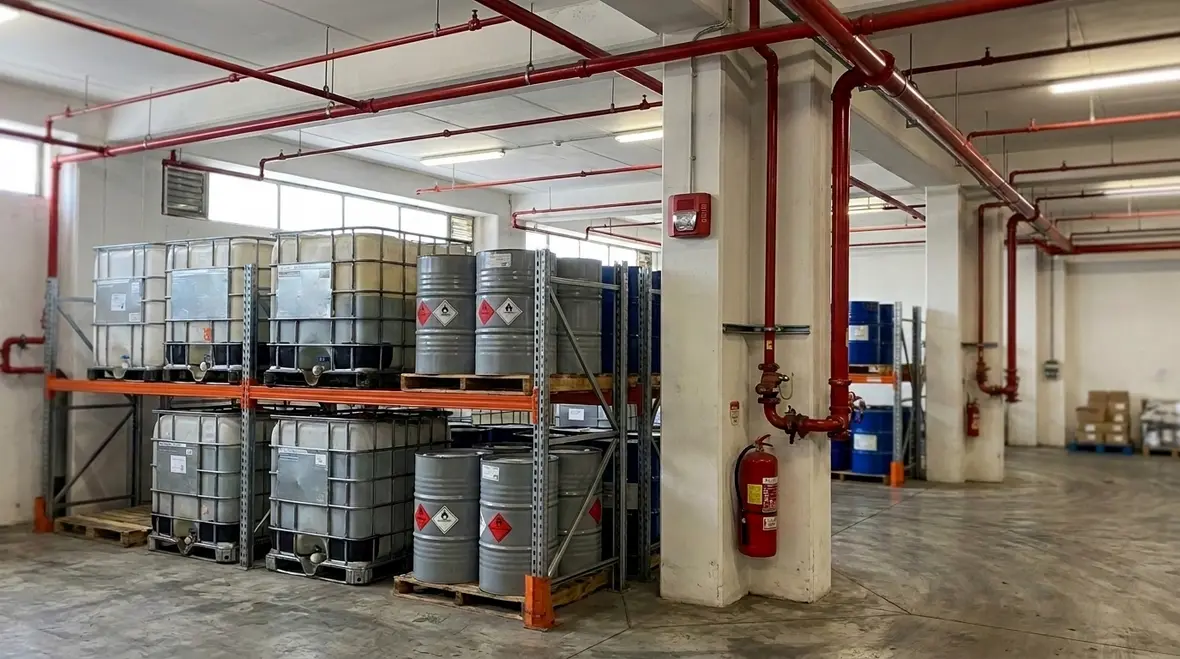
NFPA 30 Section 16.6: Fire Protection Design Schemes for Storage Areas
Quick Answer
NFPA 30 Section 16.6 protection design schemes define how facilities design, install, and maintain fire protection systems for flammable and combustible liquid storage. The goal is consistent hazard control through engineered protection, dependable detection, and rigorous impairment and inspection management.
If you want a closely related read on storage fundamentals before diving deeper into protection schemes, take a look at NFPA 30 Section 9.4 general rules for storing flammable liquids. It fits naturally here because storage design decisions tend to go sideways the moment everyday storage discipline goes sideways.
What NFPA 30 Section 16.6 is trying to achieve in real storage operations
NFPA 30 Section 16.6 focuses on the fire protection design schemes used in storage areas where flammable and combustible liquids increase risk. In practice, it pushes facilities to treat storage fire protection as a system with linked performance goals: control fire growth, limit heat and flame impingement on containers, protect exposure hazards, and ensure occupants and responders can operate safely.
For commercial, industrial, and retail sites, the most common compliance gap is not the original design. It is drift over time due to maintenance backlogs, unrecorded changes to storage layout, degraded detection or suppression performance, and incomplete inspection documentation. The strongest programs plan for these failure modes from day one.
Which “protection design scheme” decisions matter most
When a facility applies NFPA 30 Section 16.6 protection design schemes, it must align the fire protection approach with the specific storage hazard. Key design decisions typically include:
- Fire severity and protected area definition based on storage geometry, container types, and likely leak or spill scenarios.
- Suppression concept such as drainage and water application strategies, foam requirements where applicable, and exposure protection for surrounding structures and equipment.
- Detection and alarm integration to ensure timely activation when a developing fire or abnormal condition occurs.
- Continuity of protection including power supplies, valves access control, and impairment handling during maintenance.
- Resilience to operational changes such as modified racking, added tanks, new flammable products, or altered spill control arrangements.
From a commercial compliance standpoint, documentation strength matters as much as equipment. Facility teams often install systems correctly but fail to maintain an updated “as-built” basis for the design scheme. That omission can undermine inspections and regulator discussions, especially after renovations.
How storage area layout changes drive NFPA 30 Section 16.6 outcomes
Storage areas are dynamic. Products change, containers upgrade or downsize, and segregation distances can shift when new pallets, IBCs, or drums are added. NFPA 30 Section 16.6 protection design schemes rely on assumptions about hazard separation and what the protection system must accomplish. Layout change control becomes a critical compliance procedure.
Common layout-related failure points
- Blocked coverage from moved racks, added signage, or temporary storage that reduces effective reach of suppression or limits access for firefighting operations.
- Altered spill pathways where sumps, trenching, or containment capacity is modified without revalidating the design basis.
- Valve and isolation impairment caused by “workaround” practices during routine maintenance, contractor swaps, or operational shortcuts.
- Incompatible materials added to the storage area such as new packaging or absorbents that affect fire behavior and cleanup procedures.
Kord Fire Protection supports commercial sites with practical compliance reviews that focus on how real warehouse and shopfloor changes affect protection performance and inspectability. This approach helps teams avoid the most expensive category of noncompliance: systems that still “exist” but no longer function as designed due to changes in the protected area.
Inspection, testing, and impairment management: where compliance succeeds or fails
NFPA 30 Section 16.6 protection design schemes depend on readiness. A design that is not reliably available at the time of need fails the intent. In commercial and industrial environments, the most frequent readiness failures come from testing gaps, incomplete records, and unmanaged impairment during planned maintenance.
Inspection and testing focus areas
- Detection readiness including verification of sensor condition, alignment with the protected hazard, and confirmation that alarms transmit properly.
- Control valves and actuation circuits to ensure correct positions, tamper status, and functional actuation paths where applicable.
- Water supply or foam supply integrity including pressure verification, concentrate condition checks where relevant, and verifying that required delivery paths remain unobstructed.
- Operational accessibility such as keeping manual release points clear, maintaining labeled access routes, and ensuring staff can perform preplanned responses.
- Maintenance documentation that maps inspection outcomes back to the original design assumptions.
Impairment controls that withstand regulator scrutiny
Even when maintenance is necessary, impairment controls must protect the risk. Strong programs include documented authorization to impair, time tracking, compensatory measures, and a return-to-service verification process. Facilities also track repeat offenders such as recurring valve issues, degraded detection devices, or delivery system faults.
For context on how NFPA 30 regulates flammable liquid hazards, see how NFPA 30 regulates flammable liquids. It helps clarify the broader hazard framework that drives fire protection design decisions in storage areas.
Operational procedures that protect the design scheme during day to day work
Fire protection systems do not perform in a vacuum. NFPA 30 Section 16.6 protection design schemes assume that site operations support the protection strategy through procedures, training, and response readiness.
High impact site procedures
- Loading and unloading controls to reduce abnormal release frequency and ensure adequate monitoring during transfer operations.
- Spill response consistency using approved materials and methods that do not defeat drainage or containment assumptions.
- Hot work and ignition source management including clear isolation distances, permitting, and documented clearance procedures.
- Housekeeping standards to prevent accumulation that could obstruct suppression coverage or increase fuel load.
- Drill and response integration so that staff actions align with system activation timeframes and safe access routes.
Kord Fire Protection positions compliance as a continuous process rather than a one-time project. Commercial owners often need repeatable outcomes: timely inspections, actionable deficiency remediation, and maintenance plans that reflect the hazard reality of their specific storage footprint. Kord Fire Protection (kordfire.com.au) supports that operational pathway.
Frequently asked questions
Conclusion and call to action
NFPA 30 Section 16.6 protection design schemes require more than compliant equipment. They require operational support, disciplined impairment management, and inspection and testing that confirms the design basis still matches the facility as operated. Kord Fire Protection helps commercial sites keep protection systems aligned with hazard reality through practical compliance review, testing coordination, and maintenance planning. Contact Kord Fire Protection (kordfire.com.au) to schedule an assessment of your storage area fire protection readiness.

Join Our Newsletter!
Get the latest fire safety tips delivered straight to your inbox From our Newsletter.



