
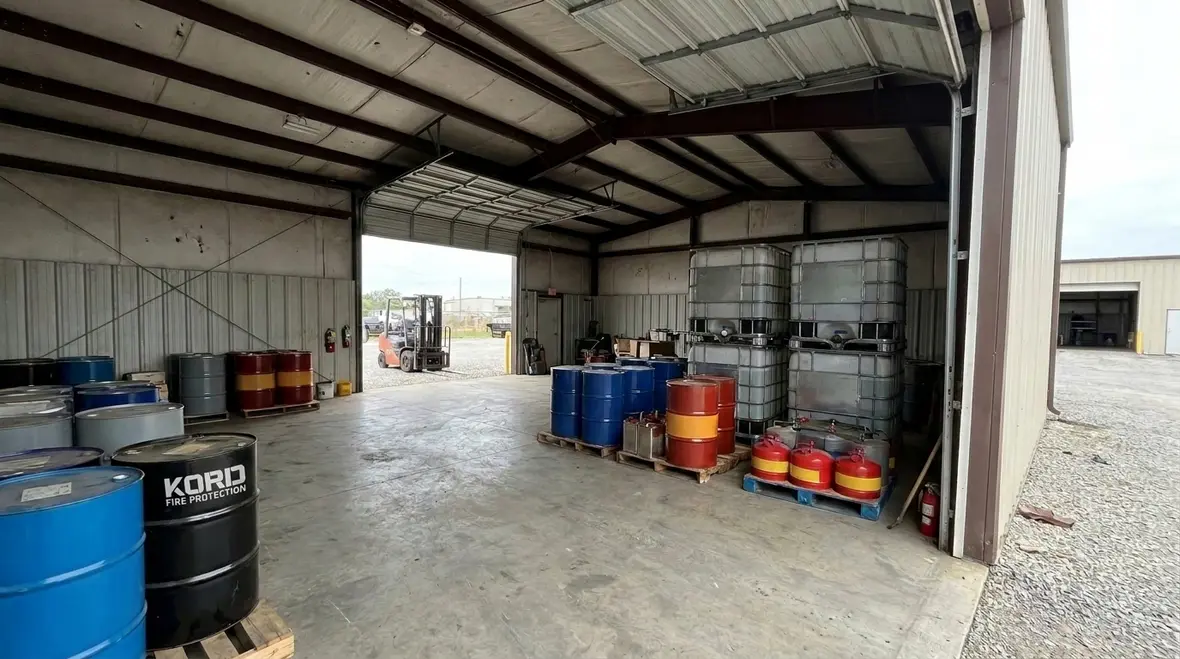
NFPA 30 Section 13.7: MAQs and Heights in Detached Unprotected Buildings
Quick Answer
NFPA 30 Section 13.7 sets limits on Maximum Allowable Quantities, or MAQs, and related building height and construction considerations for detached, unprotected buildings. Owners must confirm the stored quantities, determine the permitted MAQ based on configuration, and maintain ongoing compliance through inspections and documentation.
For facilities that need practical help keeping suppression systems inspection-ready while managing flammable liquid hazards, fire suppression system services can support the inspection, testing, repair, and maintenance work that keeps the real-world operation aligned with the compliance basis.
Why NFPA 30 Section 13.7 MAQs and heights matter in real facilities
In commercial, industrial, and retail operations, detached storage often carries higher scrutiny because fire exposure can escalate across building separations, openings, and adjacent hazards. NFPA 30 Section 13.7 MAQs detached buildings addresses that risk by linking the maximum permitted quantity of flammable liquids to the safety performance implied by the detached building’s construction and protection level. A typical compliance failure does not come from missing paperwork alone. It usually comes from operational drift: the site stores more than the original design basis, changes a process, upgrades a tank system, or allows maintenance downtime on key fire protection features.
Facilities should treat Section 13.7 as a design and maintenance control, not a one time calculation. This is especially important for premises that store multiple liquids, receive seasonal inventory increases, or operate with shift based handling patterns that can temporarily exceed “normal” stock levels.
What Section 13.7 is actually regulating: MAQs, separation, and building performance
Section 13.7 focuses on how much flammable liquid a detached, unprotected building can contain, and how building height and arrangement affect that limit. The MAQ concept acts like a safety cap. If stored quantities stay within the applicable MAQ threshold, the fire safety objectives reflected in the standard remain feasible. If quantities exceed the permitted threshold, the building becomes a higher exposure contributor, and the facility must apply additional safeguards or reduce stored volumes to regain compliance.
How MAQs drive operational decisions
Inventory controls: MAQs influence tank sizing, drum or tote limits, and how receiving and dispatch schedules must be managed.
Layout decisions: Detached configuration and the unprotected condition determine what additional protections are required to keep the site within limits.
Change management: Process changes that affect liquid type, vapor generation, or storage form can affect how the quantity is evaluated against the MAQ basis.
Common failure points
Uncontrolled “shadow storage”: Extra drums, waste containers, or spare stock accumulate beyond the permitted quantity.
As built versus as documented mismatch: The quantity and storage method used in the original MAQ calculation no longer matches current installed configurations.
Height and configuration misinterpretation: Confusion about how the building height condition applies, particularly when renovations or rooftop changes occur.
How to determine compliance for detached unprotected buildings
Compliance starts with a disciplined evaluation of what is stored, where it is stored, and how the current configuration compares to the basis used in the MAQ determination. The goal is to ensure NFPA 30 Section 13.7 MAQs detached buildings is satisfied in practice, not only in a spreadsheet.
Step 1: Establish the inventory and storage forms that matter
Identify each flammable liquid stored in the detached building, including any waste or transfer residues that can create a flammable liquid condition.
Confirm storage method such as tanks, intermediate bulk containers, drums, or fixed containers.
Quantify actual maximum in storage by reviewing receiving logs, batch or production run patterns, and typical peak inventory periods.
Step 2: Validate the building condition used for the Section 13.7 basis
Confirm “unprotected” status as intended by the governing criteria, including whether required protective features are present and operational.
Measure and document building height and related configuration based on how the standard applies it to detached storage.
Check for later modifications such as structural changes, roof replacements, and changes in storage density.
Step 3: Apply the MAQ limits to the current maximum quantities
Owners and facility managers must ensure the maximum stored quantity, at peak conditions, remains within the MAQ framework. The calculation should be reviewed when inventories shift, when tank configurations change, or when the facility adds storage capacity.
For many sites, the biggest risk is not exceeding a MAQ on paper. It is exceeding it during a peak receiving window or during maintenance. Operational controls must match the compliance assumptions.
Inspection and maintenance: where compliance breaks down over time
Even when the initial MAQ evaluation is accurate, sustained compliance depends on operational integrity. Commercial and industrial facilities typically face recurring drivers: contractors conducting maintenance, seasonal inventory variations, and delayed corrective actions after minor deficiencies are found.
Operational checks that protect the MAQ basis
Inventory verification: Implement routine stock counts tied to the compliance calculation. Align them to receiving, dispatch, and waste handling rhythms.
Container integrity: Inspect drums, IBCs, caps, valves, and secondary containment. A leak can create a flammable liquid condition and worsen incident severity.
Segregation and housekeeping: Confirm waste containers and rags storage practices match site policy and do not unintentionally increase flammable liquid quantity.
Equipment mechanisms that matter for fire safety performance
Detached, unprotected buildings often rely on the assumption that the stored quantity remains limited. That makes the integrity of the entire fire prevention and detection environment critical. Typical mechanisms that should be checked on schedule include:
Detection and alarms: Ensure detection devices remain functional and properly located relative to the storage area.
Emergency response readiness: Confirm that response plans, signage, and access routes remain unchanged and unobstructed.
Spill response capability: Verify the availability and condition of spill control materials and trained personnel readiness.
For broader context on how NFPA 30 regulates flammable liquids across storage practices, review Kord Fire Protection’s technical overview here: how NFPA 30 regulates flammable liquids.
Commercial compliance challenges and how to manage them
Most non compliant outcomes trace back to mismatch between design basis and operational reality. Detached storage increases the complexity because it is often managed by logistics teams, not by the fire safety team, and because peak inventory can occur when production schedules or deliveries change.
Retail and warehouse operations
Peak season surges: Retail and distribution sites frequently exceed normal stock during promotions, creating MAQ pressure that may not be tracked with the level of detail required by Section 13.7.
Frequent changeovers: Different product SKUs can shift which flammable liquids are stored, affecting the basis used for MAQ compliance.
Industrial and manufacturing environments
Process upsets and downtime: When production slows, inventory can accumulate as buffers rather than being consumed as originally planned.
Maintenance staging: Contractor activities can bring temporary stock of solvents and flammables that quietly becomes “permanent” until the next compliance review.
Document control and audits
Facilities should maintain a living compliance file that includes the MAQ evaluation assumptions, inventory peak thresholds, storage drawings, and evidence of inspections. Fire safety system documentation becomes especially important here, because defensible records often tell the difference between a smooth review and a messy one. Kord Fire Protection supports commercial sites by providing practical compliance assessment, testing, and maintenance planning so the facility can maintain defensible conformance over time rather than relying on a one time audit outcome.
What good looks like: an evidence based compliance workflow
A robust workflow connects calculations to field realities. This is the difference between passing an inspection and sustaining compliance.
Baseline evaluation: Perform and document the MAQ and height related analysis for the detached unprotected building condition.
Peak inventory alignment: Confirm the maximum stored quantity during the highest operational periods stays within the MAQ limit.
Routine verification: Implement inspection and stock checks tied to the compliance basis.
Change control: Trigger a review when tank sizes, container types, storage density, or building configuration changes.
Corrective action tracking: Close deficiencies quickly and document the closure so operational risk does not accumulate.
When facilities adopt this model, the MAQ threshold becomes a controlled operational parameter, not a static compliance number that becomes outdated the moment inventory practices or building conditions change.
Frequently Asked Questions
Call to action
Ensure your detached, unprotected flammable liquid storage remains compliant with NFPA 30 Section 13.7 MAQs detached buildings by validating MAQs against peak inventory, confirming building height criteria, and maintaining an evidence based inspection and maintenance program. Contact Kord Fire Protection to schedule a compliance review, documentation audit, and ongoing service planning so your site stays defensible through operational changes and inspection cycles.

Join Our Newsletter!
Get the latest fire safety tips delivered straight to your inbox From our Newsletter.



