
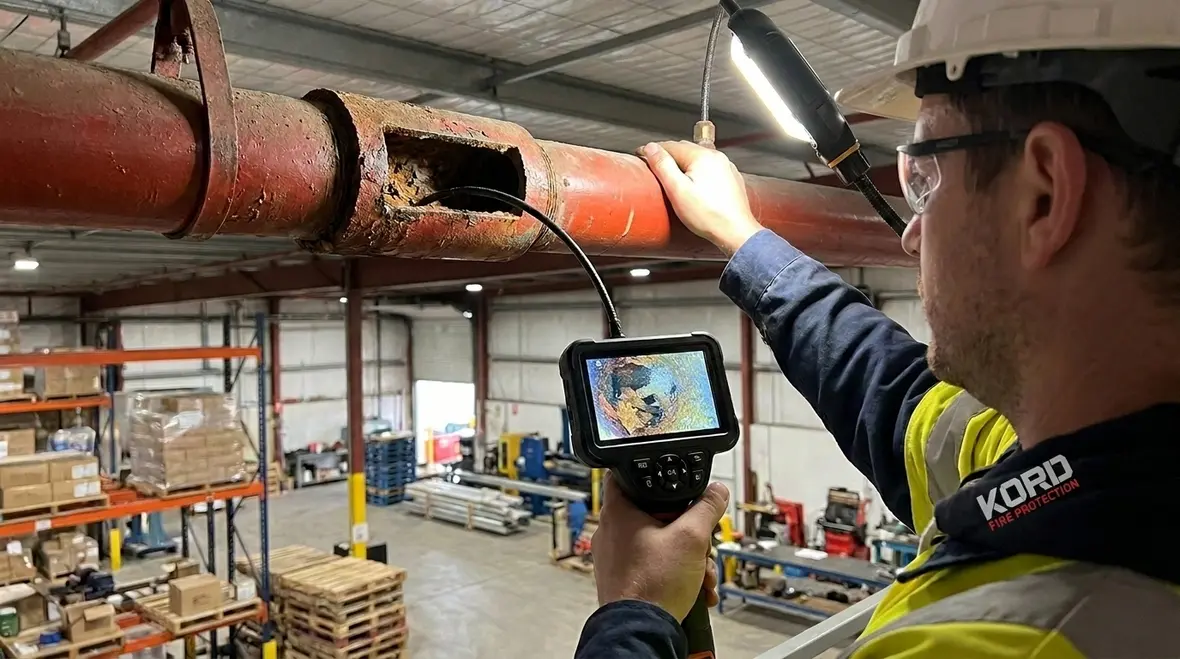
NFPA 25 Obstruction Investigation Internal Pipe Inspection
Quick Answer
NFPA 25 §§ 14.1 to 14.4 guide how fire sprinkler systems are checked for internal pipe condition, blockage, and ice problems. These steps help facilities find hidden risks before they turn into system failure. For industrial, retail, and commercial sites, Kord Fire Protection can support inspection, testing, reporting, and corrective work through its fire sprinkler services and repair team. For a broader code context, it also helps to review Kord Fire Protection’s NFPA 25 overview and water-based systems maintenance breakdown.
NFPA 25 obstruction investigation internal pipe inspection matters because a sprinkler system can look fine on the outside and still hide trouble inside. That is where the real story sits. In busy warehouses, shopping centres, plants, and office sites, dirt, rust, scale, and ice can block water flow when it counts most. Under NFPA 25 §§ 14.1 to 14.4, owners and managers must look deeper, not just glance at the surface. And yes, the pipes can be the drama queens of the building. Kord Fire Protection helps facilities handle this work with clear checks, proper testing, and practical follow through.
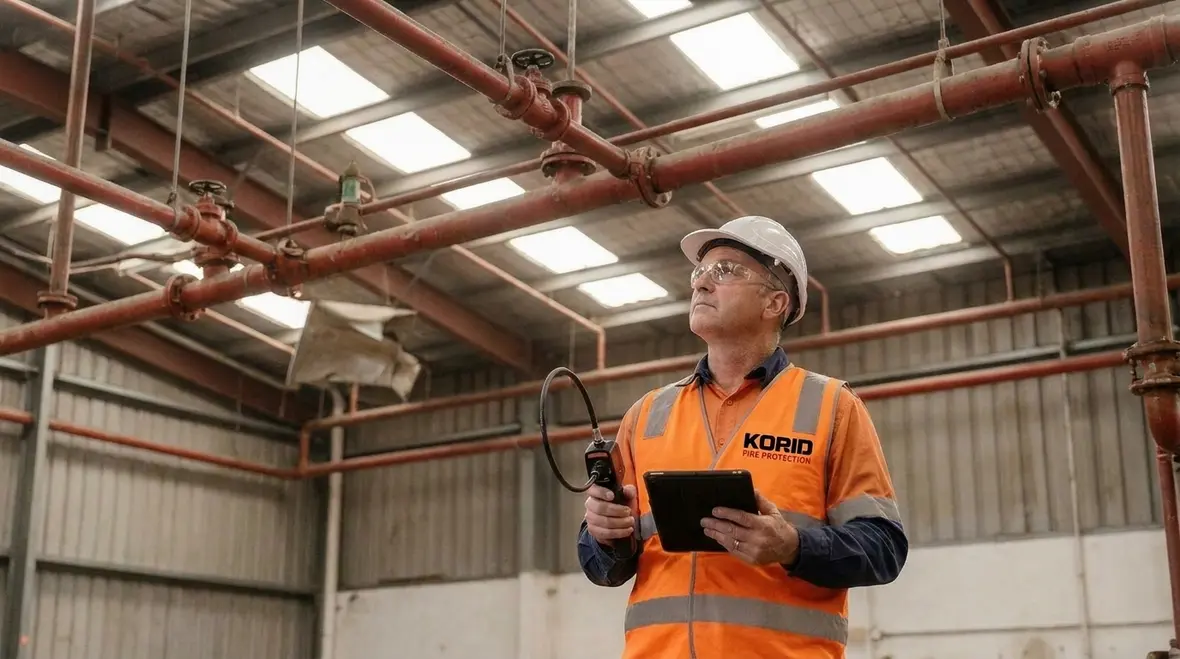
What NFPA 25 §§ 14.1 to 14.4 Require
These sections deal with internal condition checks, obstruction investigations, and ice obstruction in sprinkler piping. In simple terms, they ask a basic but vital question: can water move through the system as designed?
Section 14.1 focuses on the inside condition of pipe. Section 14.2 covers obstruction investigation when signs point to possible blockage. Section 14.3 deals with how to evaluate the system when obstructions are suspected or found. Section 14.4 addresses ice obstruction, which can stop water flow just as fast as rust or debris.
For commercial and industrial buildings, this is not paperwork for the sake of paperwork. It protects the system that is supposed to protect everything else. That is a fair trade.
The common thread across all four sections
The common thread is performance. A sprinkler system is not judged by how neat the riser room looks or how confidently someone says, “It should be fine.” It is judged by whether water can travel where it must, at the time it must, with enough flow to do its job. Internal condition checks and obstruction investigations exist because hidden restrictions can quietly reduce that performance long before an emergency ever exposes the problem.
Why Internal Pipe Condition Matters in Real Facilities
Inside a sprinkler system, years of service can leave behind corrosion, mineral build up, sludge, or foreign material. In wet pipe systems, that buildup can narrow the pipe. In dry or pre action systems, trapped debris can sit in low spots and shift later into valves or sprinklers. Either way, the flow path suffers.
This becomes even more important in facilities with long pipe runs, mixed use areas, or harsh site conditions. Industrial dust, coastal air, and ageing infrastructure can all make the inside of the pipe less friendly than the outside suggests. That is why NFPA 25 obstruction investigation internal pipe inspection is a key part of a strong maintenance plan.
There is also a practical operations angle. When pipe condition declines, the issue rarely stays politely contained. It can affect testing results, create recurring maintenance callouts, and force teams to chase symptoms instead of solving the cause. That means more time spent on repeat problems, more disruption, and more money spent doing the same dance again.
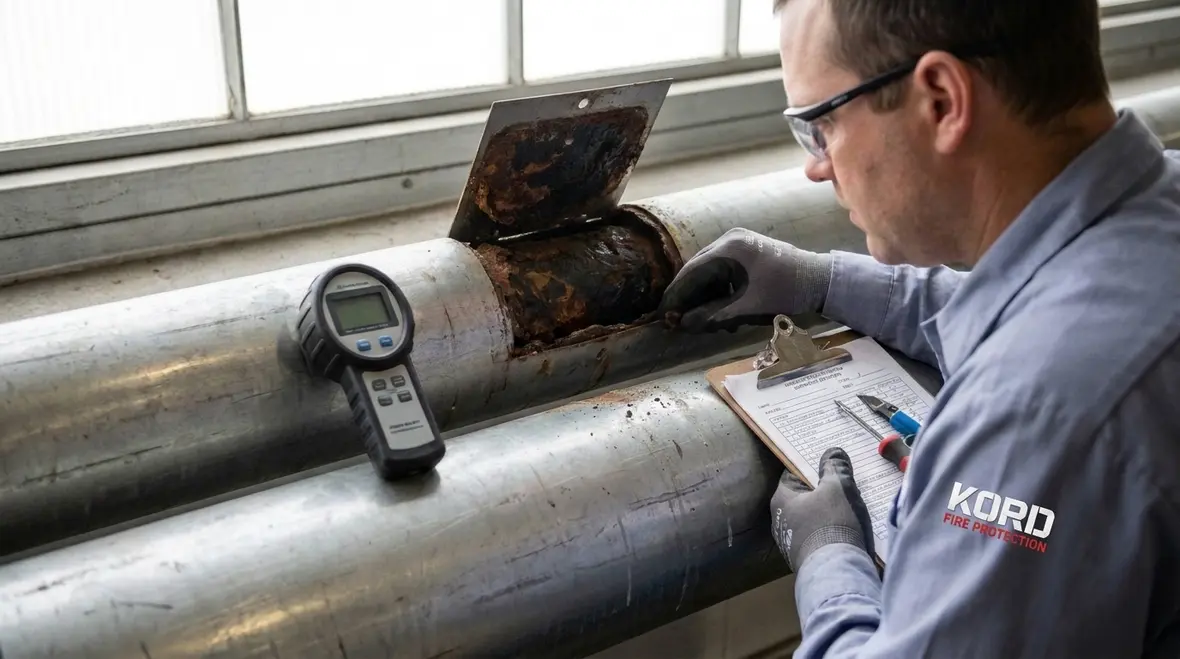
Signs a Facility Should Investigate Obstruction
A system does not always shout before it fails. Sometimes it whispers. A pressure drop, slow drain down, repeated valve issues, discoloured water, or a failed main drain test can all point to a deeper issue. So can sprinklers that do not discharge as expected during testing.
When those signs appear, the facility should not wait and hope for the best. Hope is nice for a rainy weekend movie. It is less useful when a fire system needs to perform under pressure.
Early warning signs that deserve attention
- Unusual pressure changes during routine testing
- Slow or incomplete drain performance
- Water that appears rusty, cloudy, or heavily discoloured
- Repeated trouble with valves, trims, or discharge points
- Evidence of moisture collection in dry or pre action piping
- Past repairs in the same sections of pipe
- System age combined with harsh environmental conditions
Common Findings
- Rust flakes or scale
- Sludge or sediment
- Foreign objects
- Ice in dry pipe lines
- Repeated valve or drain issues
What They Can Mean
- Internal corrosion may be reducing pipe flow
- Material may collect in low areas and block discharge
- Construction debris or maintenance waste may have entered the system
- Cold exposure may have frozen trapped moisture
- The system may need a deeper obstruction review
How Obstruction Investigation Works
An obstruction investigation should follow a clear plan. First, the technician reviews system history, past test results, repairs, and any performance issues. Next, they inspect the affected piping sections and identify likely trouble spots such as low points, dead ends, and areas with known corrosion risk.
After that, the team may use internal inspection methods, flushing, or targeted opening of pipe sections to confirm what is inside. The goal is not just to remove blockage. The goal is to understand why it formed and how to stop it from coming back.
This matters because a one time fix is not always enough. A building may be cleaned today and blocked again tomorrow if the root cause remains in place. That is the part many people miss, and NFPA 25 does not let them off the hook.
A sensible workflow for better results
A strong investigation usually starts broad and narrows fast. Review the records. Compare the latest tests to earlier results. Identify whether the problem is isolated or repeating. Open the right sections instead of opening everything. Confirm whether the issue is corrosion, sediment, debris, trapped moisture, or ice. Then document not only what was found, but what should happen next. That last step is where good maintenance becomes useful maintenance.
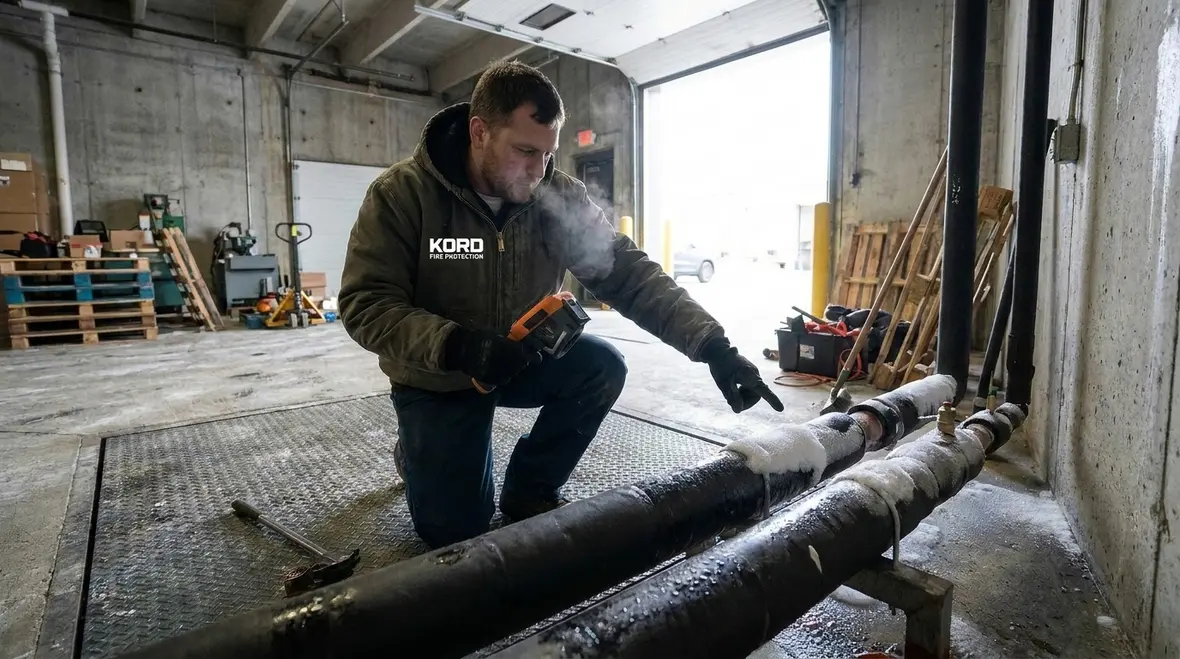
Ice Obstruction and Cold Weather Risk
Ice obstruction usually shows up in dry pipe or pre action systems, especially where temperature control is poor or moisture enters the piping. When water freezes, it can stop the system from operating at all. That means the first alarm may be the fire itself, which is not exactly a preferred method of notification.
Facilities should watch for cold rooms, loading docks, roof areas, and poorly insulated spaces. They should also check for trapped water and signs that heat control is not holding. Under NFPA 25 § 14.4, the system must be assessed and restored so freezing does not return as a repeat problem.
Ice issues can be sneaky because they are often seasonal, partial, and location specific. One branch line may have trouble while the rest of the system seems normal. That can fool teams into treating the symptom as a one off event. If moisture is entering the piping or temperatures are dipping below what the design expected, the conditions for another freeze are already waiting for round two.
How Kord Fire Protection Supports the Job
Kord Fire Protection can become a vital partner because this work needs more than a quick look and a clipboard. It needs trained eyes, proper tools, and a team that understands how to keep operations moving while safety stays front and centre.
Kord Fire Protection can assist with inspection scheduling, internal pipe checks, obstruction investigation, ice risk review, reporting, and repair planning. For busy sites, that support helps reduce downtime and keeps compliance work from turning into a full scale headache. In other words, they help the system behave like a system, not like a plot twist.
If a facility needs wider support beyond a single inspection issue, Kord Fire Protection also offers full fire protection services that tie sprinklers, alarms, extinguishers, testing, and maintenance into one coordinated approach. That can be especially useful when obstruction concerns show up alongside other system deficiencies.
What Facility Teams Should Do Next
Facility managers should include internal pipe condition checks in their fire protection plan, especially when the system shows warning signs or the site has a higher risk of corrosion, debris, or freezing. They should keep records, act fast on defects, and treat every obstruction clue as important.
For industrial, retail, and commercial properties, a clear NFPA 25 obstruction investigation internal pipe inspection program protects both people and assets. It also helps avoid costly surprises that tend to arrive with bad timing, which, naturally, they always do.
The biggest takeaway is simple. If the system is giving hints, listen early. Internal pipe issues rarely improve from being ignored, and delayed action tends to make both repairs and disruptions worse. A timely investigation can turn a vague warning sign into a manageable maintenance task before it becomes a serious performance failure.
FAQ
Conclusion
NFPA 25 §§ 14.1 to 14.4 protect sprinkler systems from hidden internal damage, blockage, and ice risk. Internal pipe condition is easy to overlook because it stays out of sight, but that is exactly why the standard pushes facilities to investigate when warning signs appear. A system that looks normal on the outside can still be storing up trouble where it counts most.
For commercial and industrial properties, that means safer operations, better performance confidence, and fewer ugly surprises. Kord Fire Protection can help keep the system clear, tested, documented, and ready. When the pipes need attention, the time to act is before the fire decides to do the inspection for them.

Join Our Newsletter!
Get the latest fire safety tips delivered straight to your inbox From our Newsletter.



