
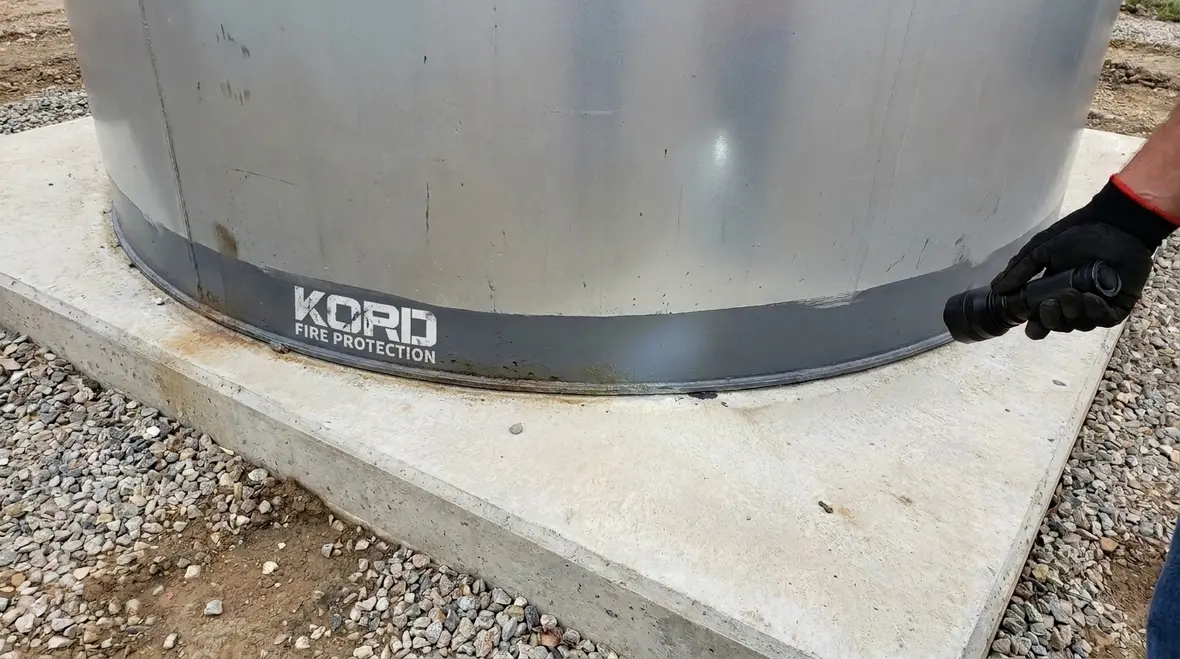
NFPA 22 Section 5.4: Corrosion Protection for Tank Bottom Plates on Soil or Concrete
Quick Answer
NFPA 22 Section 5.4 addresses corrosion protection for tank bottom plates that rest on soil or concrete. The standard drives facilities to control moisture and electrolytic contact, verify coatings and coverings, and maintain inspection and maintenance practices that prevent coating breakdown and under-deposit corrosion.
For teams building a broader compliance strategy, it helps to connect tank concerns with full fire protection services in Southern California, especially when pumps, sprinklers, and water storage all need to stay inspection-ready together.
Why NFPA 22 Section 5.4 matters for commercial water storage
NFPA 22 governs fire protection water tanks used to support sprinkler and other fire protection systems. Tank integrity directly affects system reliability, inspection outcomes, and life safety. When tank bottom plates sit on soil or concrete, corrosion accelerates due to wetting, oxygen gradients, soil chemistry, trapped condensate, and stray currents. This is why corrosion protection tank bottom plates soil concrete requirements receive focused attention in Section 5.4.
For commercial, industrial, and retail facilities, the compliance challenge is not only choosing an approved corrosion mitigation method. It is sustaining the protection through refurbishment cycles, coating holidays, coating wear at penetrations, and changes in site conditions over time.
What Section 5.4 targets: the corrosion mechanisms at the tank bottom
How corrosion starts under and at the perimeter
Tank bottom plates commonly corrode where coating discontinuities allow water and dissolved oxygen to reach steel. Several failure modes show up in the field:
- Coating holiday or edge exposure: pinholes, abrasion during installation, or inadequate surface preparation around welds and seams.
- Under-deposit corrosion: silt, debris, or biological growth trapped under the bottom plate, especially where the tank is not kept clean.
- Concentration cell corrosion: moisture gradients where one area stays oxygen rich and adjacent areas become depleted.
- Crevice corrosion at supports and transitions: weld toes, lead-in zones, and areas where the bottom plate changes thickness or interfaces with concrete pads.
- Stray current and electrolytic effects: current paths through wet concrete or damp soil that can intensify localized attack.
Why soil and concrete behave differently
Soil often contributes variable resistivity, chloride exposure, sulfides, and intermittent wetting cycles. Concrete can produce sustained moisture at the interface, especially where curing salts remain, where the pad drains poorly, or where water migrates laterally through capillary action. Both conditions can create corrosion conditions even when the tank interior appears visually acceptable.
Core compliance approach: isolate the steel and control moisture
Section 5.4 establishes expectations for corrosion protection measures applied to tank bottom plates when the tank is supported by soil or concrete. In practice, compliance efforts should be built around two principles: (1) reduce contact between corrosive environment and steel, and (2) ensure the protection remains intact over the tank service life.
Common corrosion protection methods used under NFPA 22-aligned designs
Facilities and tank contractors typically implement one or more of the following, selected based on tank design, coating system, site conditions, and manufacturer requirements:
- Protective coatings and lining systems: applied to the underside of bottom plates and at welds when required by the design basis.
- Physical barriers: membranes or protective layers that separate steel from soil or concrete moisture pathways.
- Surface preparation and coating quality control: abrasive blasting, cleanliness targets, profile control, and specified cure times.
- Perimeter detailing: sealing and detailing that prevents water migration into crevices at edges and supports.
Installation quality is where failures most often originate
Field results frequently trace corrosion back to installation gaps rather than material selection. Typical risk points include:
- Missed or poorly prepared weld areas.
- Improper surface profile for the coating system.
- Contamination from dust, standing water, or salts before coating application.
- Inadequate inspection of coating coverage and adhesion before placement on soil or concrete.
- Mechanical damage during placement, backfilling, or cleanup.
Commercial owners should require documentation that shows surface prep, coating type, application method, and acceptance criteria used during commissioning or refurbishment.
Inspection and maintenance procedures that keep corrosion protection effective
NFPA 22 compliance does not end when the tank is filled and operational. Effective corrosion management relies on ongoing verification that the bottom protection system still performs. Most facilities implement inspection routines tied to facility risk, prior coating performance, and system outage schedules.
What to inspect during routine tank programs
- Signs of moisture ingress at the base: damp spots, standing water, wetting patterns, and evidence of capillary transport along concrete.
- Perimeter and support interfaces: discoloration at edge welds, coating thinning, or debris accumulation zones.
- Coating deterioration indicators: blistering, rust weeping from holidays, and loss of uniform sheen.
- Drainage and site condition changes: grading alterations, clogged weep paths, landscaping irrigation, and nearby construction activities.
How to address common repair and refurbishment failure points
When corrosion protection tank bottom plates soil concrete systems fail, the repair method must match the failure mechanism. Improper patching can create new concentration cells or isolate water against bare steel.
Operational best practices include:
- Remove corrosion and loose coating thoroughly: repairs should reach sound steel.
- Rebuild surface profile consistently: under-adhesion is a frequent reason repairs do not last.
- Apply coatings under controlled conditions: temperature, humidity, and contamination control influence bond strength.
- Verify coverage: use acceptance checks appropriate to the coating system before the tank returns to service.
- Document the full scope: coatings used, cure times, inspection results, and areas repaired.
Compliance documentation and commercial readiness
Commercial facility standards require clear, auditable records. Inspectors and insurers typically expect a paper trail that connects NFPA 22 maintenance to corrosion outcomes.
A strong compliance package usually includes:
- Tank information and installed coating system specifications.
- Commissioning and post-installation inspection documentation for bottom plate corrosion protection.
- Maintenance logs, including dates of cleaning, inspection findings, and corrective actions.
- Refurbishment reports, including surface prep, coating application process controls, and verification results.
For additional NFPA 22 context on water tanks and their regulatory framework, reference: how NFPA 22 regulates fire protection water tanks.
Why Kord Fire Protection supports long term corrosion control
Corrosion protection for tank bottom plates on soil or concrete requires both technical rigor and disciplined field follow through. Kord Fire Protection helps commercial operators sustain compliance by supporting testing readiness, inspection planning, and maintenance documentation that aligns with facility expectations.
As a commercial service partner, Kord Fire Protection helps teams manage recurring risk by coordinating inspection intervals, verifying corrective work outcomes, and improving audit readiness so that corrosion protection tank bottom plates soil concrete systems remain effective between refurbishment cycles.
Frequently Asked Questions
Next steps for owners and facility managers
Review your tank bottom plate corrosion protection documentation, verify the installed coating or barrier system matches your design basis, and confirm your inspection program covers soil or concrete interface risks. If you are planning refurbishment, schedule a structured inspection and maintenance review before outages. Contact Kord Fire Protection to support compliant inspection planning, maintenance coordination, and audit-ready documentation for ongoing NFPA 22 readiness.

Join Our Newsletter!
Get the latest fire safety tips delivered straight to your inbox From our Newsletter.



