
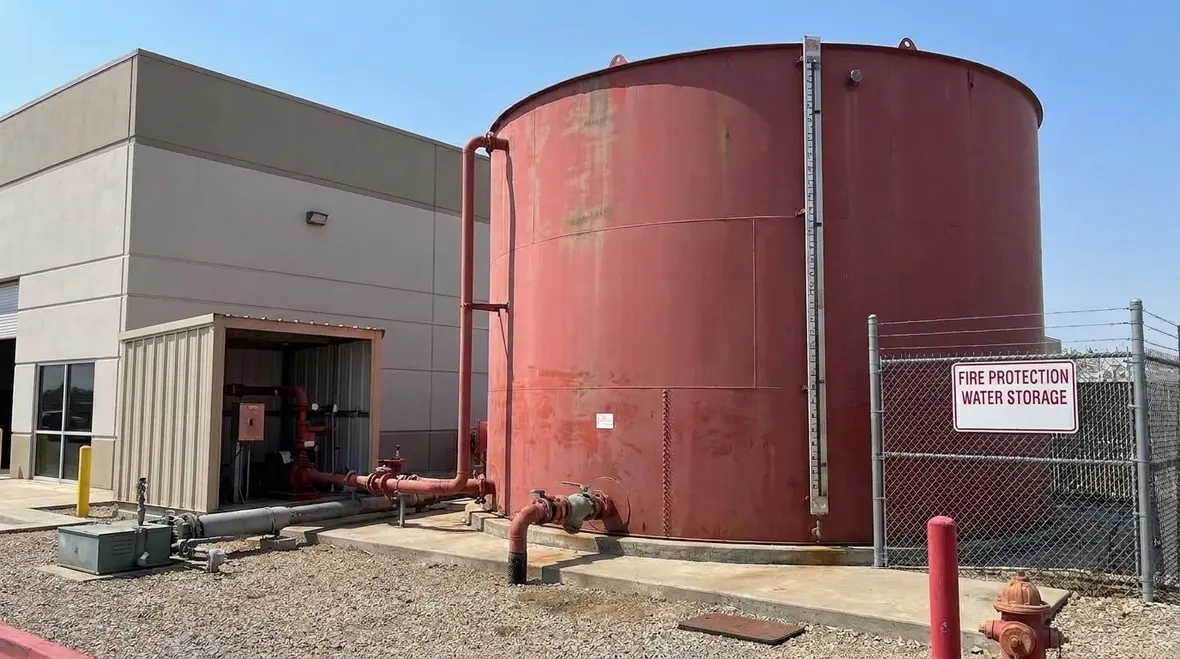
NFPA 22 Section 1.2: The Fire Safety Purpose Behind Private Water Tanks
Quick Answer
NFPA 22 Section 1.2 establishes why private fire service water tanks exist: to provide dependable water supply performance for fire protection systems when demand exceeds municipal capability or when reliable backup is required. The goal supports life safety, property protection, and system functionality through sustained firefighting operations.
Why does NFPA 22 exist in the first place?
Private fire service mains, pumps, and dedicated water supplies often carry responsibility that cannot be assumed by building occupants. NFPA 22 sets design and operational expectations so that, when a fire occurs, the water supply behaves predictably. The purpose of NFPA 22 water tank standard is not simply “to store water.” It is to ensure the stored water can be used effectively, under defined conditions, with dependable flow, pressure, and availability.
What NFPA 22 Section 1.2 is telling you, operationally
Section 1.2 frames the safety objective: private water tanks exist to provide a controlled, reliable fire suppression water source for fire protection systems. In commercial and industrial facilities, this objective becomes critical because water supply performance depends on more than tank capacity alone. It depends on how the tank is integrated with pumping, piping, controls, and emergency water demand scenarios.
In practice, Section 1.2 logic drives three operational requirements that facility teams must be ready to support:
- Availability under demand: Tanks must supply water when the system initiates flow for fire protection needs.
- Predictable performance: The tank and its appurtenances must maintain performance characteristics during critical periods, including sustained usage.
- Functional readiness: Components must remain in working condition so that the system transitions to firefighting mode without delay.
How the tank purpose translates into system performance
A private water tank only supports firefighting if the overall fire pump and piping network can access and deliver the stored water. NFPA 22 Section 1.2 intent is realized through equipment mechanisms and inspection expectations that reduce common failure points.
For facilities managing pump performance as part of a broader readiness strategy, fire pump inspection and testing services fit naturally into the same compliance conversation.
1) Reliable tank draw and water delivery
Tank outlets, suction arrangements, and strainer configurations influence whether the pump can draw water quickly and consistently. Issues such as blocked suctions, poor alignment, or sediment accumulation can reduce effective flow during an emergency. For commercial facilities, where downtime affects critical operations, these are not theoretical concerns. They are recurring inspection and maintenance items.
2) Adequate water quality and usable capacity
Water stagnation, sediment buildup, and corrosion can degrade the usable water available to the system. Over time, contamination and deposits can affect suction intake conditions and contribute to internal corrosion. This is one reason compliance efforts must include inspection and testing routines that verify the tank remains capable of supplying the intended quantity without performance surprises.
3) Tank integrity and serviceability
Tank condition affects both immediate operation and long term reliability. Lids, access ports, level indicators, valves, and associated fittings must remain functional. Even minor component failures can prevent the fire protection system from achieving its required flow and pressure outcomes.
What compliance looks like for commercial, industrial, and retail sites
Facilities often assume “tank size equals compliance.” NFPA 22 Section 1.2 intent pushes organizations toward readiness, verification, and maintenance. The most common operational challenges are tied to how teams manage water tank systems after installation.
- Maintenance gaps across disciplines: Fire protection systems span mechanical, electrical, and plumbing expertise. If inspections are not coordinated, small issues persist until they affect emergency performance.
- Vendor and contractor handoff problems: Changes in service providers can lead to missed historical records, unclear responsibilities, or inconsistent inspection practices.
- Deferred corrective actions: Facilities may delay repairs due to operational constraints. That delay can compromise suction conditions, valve operation, and readiness of the full water supply path.
- Documentation shortcomings: Audits and insurer reviews often focus on evidence of testing and maintenance. Incomplete records can become a compliance risk.
For practical guidance on how NFPA 22 regulates water tank systems, including design and ongoing compliance considerations, facilities can review this resource: how NFPA 22 regulates fire protection water tanks.
Where tanks fail in the real world, and what to verify
Experienced fire protection teams treat private water tanks as life safety equipment. Many failures arise long before a visible issue occurs. The following are common failure points that affect the intended safety purpose behind Section 1.2.
Sediment, debris, and suction intake problems
Sediment accumulation can interfere with suction intake performance and strain pump operation. Verification involves inspection focused on the suction path, intake condition, and confirmation that the system can draw as designed.
Valve and control impairments
Valves that do not move freely, indicator failures, or control interlocks that do not behave correctly can delay water delivery during a fire. Readiness depends on functional testing aligned with the system configuration.
Corrosion and component deterioration
Corrosion affects tank walls, fittings, and interfaces. Degraded parts can fail under stress or leak in a way that reduces effective water availability. Preventive maintenance and inspection are needed to preserve integrity and maintain usable capacity.
Level measurement accuracy and operational status
Level indicators influence operational decisions and maintenance planning. If indicators drift, facilities may believe water availability exists when it does not, undermining the safety purpose of the system.
How Kord Fire Protection helps keep the tank safety purpose intact
NFPA 22 compliance depends on more than installation drawings. It requires a continuous program of testing, inspection, and corrective action verification to ensure the water tank system can perform during fire demand. Kord Fire Protection supports commercial, industrial, and retail facilities by coordinating practical service work that aligns with fire protection readiness goals.
Common service outcomes include:
- Inspection and documentation support that strengthens audit readiness
- Corrective action planning for valves, access components, and water supply path elements
- Ongoing maintenance coordination to reduce recurring failure drivers such as sediment, corrosion, and control impairments
Facilities needing broader coordination can also explore fire protection services in Southern California for support across pumps, sprinklers, alarms, and compliance testing.
Frequently Asked Questions
Next step: verify readiness, not just storage
To protect the safety purpose behind NFPA 22 Section 1.2, facilities should confirm tank performance readiness through inspection, testing, and documented corrective actions. Kord Fire Protection can help commercial sites evaluate equipment condition, identify failure drivers such as suction impairment and corrosion risk, and maintain compliance evidence for ongoing audits. Contact Kord Fire Protection to schedule a targeted review and create a practical maintenance path that supports reliable firefighting operation.

Join Our Newsletter!
Get the latest fire safety tips delivered straight to your inbox From our Newsletter.



