
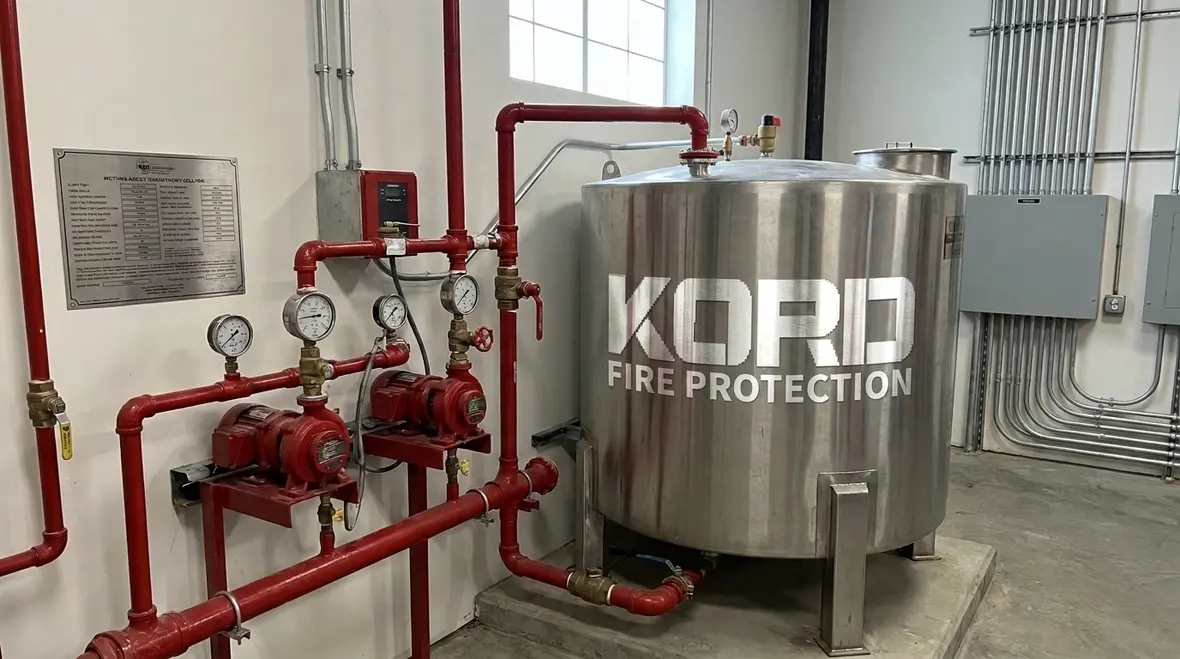
NFPA 18 Section 8.3: Fixed Wetting Agent System Requirements Explained
Quick Answer
NFPA 18 section 8.3 governs fixed wetting agent systems by defining when wetting agents may be used, how systems must be designed, installed, and supervised, and what inspection, testing, and maintenance must occur. Compliance centers on reliable discharge, correct concentrations, and verifiable readiness.
What NFPA 18 section 8.3 is trying to prevent
Fixed wetting agent systems exist to improve extinguishment performance when normal water application alone would not control a fire effectively. The critical risk addressed by NFPA 18 section 8.3 fixed wetting agent system requirements is under performance caused by dilution errors, damaged components, blocked lines, incorrect discharge patterns, or systems that cannot be verified in a real operational timeframe.
For commercial facilities, the compliance problem often appears during audits and insurer reviews, not during installation. Owners may have correct drawings and equipment names, yet fail to document concentration checks, discharge verification, controller operation, and the condition of strainers, nozzles, and solution lines. These gaps create delays and safety exposure across industrial, retail, and mixed-use occupancies.
Learn more about wetting agent systems in context: NFPA 18 overview of wetting agents.
Where section 8.3 applies in real projects
NFPA 18 treats wetting agent systems as specialized fire suppression components. Section 8.3 focuses on fixed wetting agent systems, not portable extinguishers and not general water supply requirements. In practical terms, the section becomes relevant when a facility uses wetting agents to enhance water penetration, reduce surface tension, and improve suppression outcomes for the hazards contemplated by the overall NFPA 18 design basis.
For facilities reviewing adjacent suppression planning near the top of a compliance program, it is also worth understanding commercial fire sprinkler systems in Australia as part of the broader protection picture.
Facility types that commonly trigger wetting agent needs
- Industrial processing where fire control can be delayed due to fuel characteristics or heat release dynamics.
- Commercial and retail facilities with specialized storage or surface burn hazards where water performance must be enhanced.
- Warehouses and distribution environments where discharge effectiveness depends on wetting and penetration, not only water volume.
Compliance teams typically see pressure around documentation, sequence of operation, and the ability to demonstrate that the system can deliver the required agent concentration and flow for the required duration.
Design and performance expectations behind the requirements
NFPA 18 section 8.3 fixed wetting agent system requirements drive design choices that directly affect discharge reliability. A compliant wetting agent system must be capable of mixing, transporting, and discharging wetting agent solution under the conditions implied by the hazard assessment and system operating mode.
Concentration and mixing control
One of the most scrutinized factors is wetting agent concentration. If the system delivers too little active agent, the solution will not behave as intended. If concentration drifts too high, operational issues can develop, including compatibility concerns and performance variability. Compliance requires that concentration control be verifiable and that design details support consistent mixing at discharge time.
Reliable supply, piping, and discharge interfaces
Fixed wetting agent systems rely on components that must remain stable over time: solution storage, pumps or proportioning devices where applicable, distribution piping, strainers, and discharge nozzles or outlets. Section 8.3 emphasizes that the system must function as installed, which means piping routing, isolation valves, and filtration cannot be treated as “set and forget.”
System supervision and operating logic
In commercial settings, section 8.3 performance can be undermined by control failures that do not trigger obvious alarms. Supervisory arrangements need to ensure the system can be confirmed as ready, and that the operating logic safely transitions from standby to discharge without operator intervention when required.
Where uncertainty exists about controller capability and supervision strategies, commercial facilities benefit from a documented functional test protocol aligned to the design basis. For pump and water system concepts that often integrate with agent systems, see: how fire pumps support sprinkler systems.
How inspection, testing, and maintenance typically gets audited
Even when equipment is installed correctly, NFPA 18 section 8.3 fixed wetting agent system requirements demand that readiness be proven through inspection and testing practices. Auditors and authorities typically focus on evidence that the system remains capable of meeting its designed extinguishment objectives.
Common inspection focus areas
- Agent condition: Verify storage suitability and that wetting agent has not degraded due to contamination, improper sealing, or environmental exposure.
- Strainers and filtration: Inspect and confirm strainer cleanliness or that a scheduled cleaning plan exists. Blocked filtration creates flow instability and uneven discharge.
- Valves and line integrity: Look for corrosion, leakage, improper labeling, and partially closed valves that prevent correct flow paths.
- Nozzles or discharge outlets: Confirm outlets are unobstructed and consistent with design discharge characteristics.
Testing events that matter for compliance
Testing should verify both control operation and system delivery behavior. Many facilities struggle because they perform control panel checks without validating agent solution delivery characteristics. A compliance oriented program usually includes:
- Verification of alarm and supervisory functions tied to the wetting agent system.
- Functional checks of actuated components that start the system and prepare discharge.
- Process verification steps that can demonstrate concentration control and correct discharge conditions.
Maintenance failure points that repeat across commercial portfolios
Across multi site programs, the same failures appear repeatedly:
- Wetting agent replenishment without concentration checks or without documented calibration methodology.
- Delayed strainer cleaning or “visual only” maintenance that misses gradual blockage.
- Improper training for maintenance staff who do not understand system operating sequences and isolation requirements.
- Missing functional testing records that should tie to the installed system configuration rather than generic templates.
When facilities need structured compliance support, Kord Fire Protection helps commercial owners manage recurring inspection and maintenance, ensuring the system remains audit ready. See related services: Australian fire sprinkler and suppression services.
Documentation that makes or breaks audits
NFPA 18 section 8.3 fixed wetting agent system requirements are not only about physical components. They also require operational readiness that can be proven. For commercial facilities, documentation practices often determine whether a system is considered maintained or merely “in place.”
What a compliant record set should include
- As installed drawings, sequences of operation, and controller setpoint evidence where applicable.
- Inspection logs showing component checks for storage, valves, strainers, outlets, and supervisory status.
- Testing reports that connect to system function, discharge readiness, and any measured outcomes relevant to concentration control and flow behavior.
- Maintenance tickets and replenishment records, including agent change intervals and concentration verification method.
- Corrective action documentation with closure dates, re testing evidence, and sign off.
Design basis changes that trigger re evaluation
Owners frequently modify buildings, storage configurations, or occupancy uses. These changes can alter the hazard assumptions and can also expose weaknesses in the wetting agent system integration. A strong compliance program ties maintenance planning to change management so that system readiness and performance expectations remain aligned.
Frequently Asked Questions
Get audit-ready wetting agent compliance support
Facilities that rely on wetting agents need more than periodic checks. They need a documented inspection and testing program that verifies concentration control, discharge readiness, and system supervision performance over time. Engage Kord Fire Protection to manage NFPA 18 section 8.3 fixed wetting agent system requirements through scheduled maintenance, functional testing support, and clear compliance documentation. Contact Kord Fire Protection today to build an audit ready plan.

Join Our Newsletter!
Get the latest fire safety tips delivered straight to your inbox From our Newsletter.



