
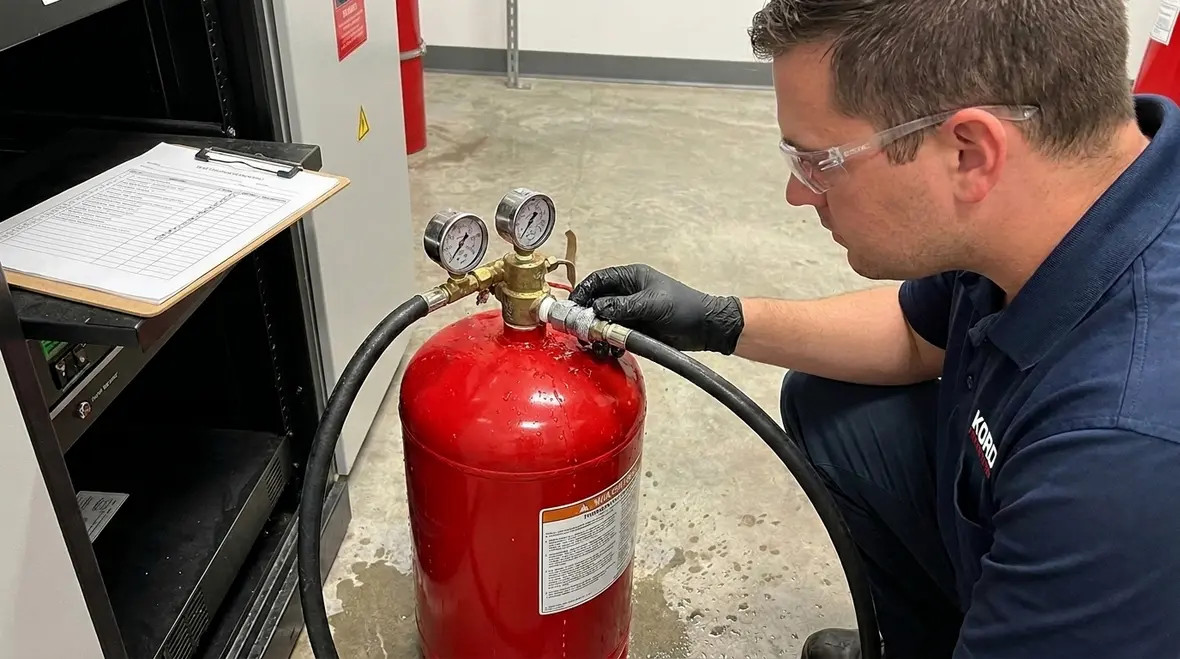
NFPA 17A 8.5 Hydrostatic Testing Storage Containers
Quick Answer: NFPA 17A 8.5 establishes how hydrostatic testing verifies the structural integrity of wet chemical storage containers. The section focuses on test preparation, proper filling, pressure control, safe inspection, documentation, and requalification timelines to ensure continued system reliability.
What NFPA 17A 8.5 means for a wet chemical container in service
Commercial facilities rely on wet chemical systems for fast suppression of Class K hazards, and container integrity drives system performance. This is why the NFPA 17A hydrostatic testing wet chemical container requirement under section 8.5 matters. It provides a standardized method to confirm that storage vessels can withstand expected operating and test conditions without leaks, deformation, or weakening that could compromise discharge.
For many operators, the compliance risk is not the test itself. It is the gap between the written procedure and field execution: improper water chemistry, inadequate venting, missing isolation steps, incorrect pressure hold, or failure to inspect fittings and appurtenances. Those mistakes can create downtime, repeat testing, or, in worst cases, degraded container safety.
For broader wet chemical system context near the top of this article, review enhancing fire safety with NFPA 17A wet chemical extinguishing systems.
NFPA 17A 8.5 scope: what gets tested and why it is sensitive
Section 8.5 applies to wet chemical system storage containers used to supply agent to the discharge piping network. The core compliance intent is to validate container strength and leak tightness through controlled hydrostatic loading, then confirm the container remains fit for continued service.
Why storage containers fail differently than piping
Field issues tend to concentrate on areas that experience stress concentration or are exposed to corrosive environments:
- Neck and connection regions where the container interfaces with valves and lines.
- Threaded or gasketed fittings that can trap moisture or develop weeping once disturbed.
- Internal surfaces exposed to condensation or improper drainage between service cycles.
- Relief paths and inspection ports where debris or seal wear can hide early defects.
Because containers operate as primary pressure boundaries, inspectors typically look for evidence that testing followed the correct sequence and that post test restoration returned the system to an equivalent or safer configuration.
How hydrostatic testing is executed in the real world
Facilities usually treat hydrostatic testing as a controlled maintenance event, not an improvised pressure event. The best practice approach aligns the NFPA 17A hydrostatic testing wet chemical container requirement with site safety planning, controlled isolation, and repeatable documentation.
1) Pre test planning and system isolation
- Confirm the container identity, capacity, design details, and installation location to match the system records.
- Verify the system configuration and isolate the storage container from the rest of the wet chemical piping network.
- Coordinate with facility operations to manage shutdown impacts, especially for kitchens, industrial processes, and retail cooking or spray applications.
- Establish containment and spill control for any test liquid handling and drainage.
2) Fill, vent, and pressure control
Hydrostatic testing depends on maintaining consistent test conditions. A critical operational step is managing trapped air. Air pockets can distort the pressure response and complicate leak detection.
- Use controlled filling procedures to ensure proper venting and elimination of air from the vessel.
- Confirm pressure gauge calibration and placement for reliable readings.
- Use controlled pressure application and a stable test hold period to allow inspection of steady behavior.
3) Inspection during and immediately after the test hold
Leak detection is not only about whether water is present. It includes inspection for dampness, seepage at joints, and signs of deformation. Technicians typically focus on:
- Valve interfaces and threaded connections.
- Seams, welds, and container surfaces for seepage or surface anomalies.
- Gasket and seal condition where reassembly can be sensitive.
4) Drainage, drying, and restoration to service
After testing, the container and connected components must be restored correctly. Improper drainage can leave residual moisture that accelerates corrosion or affects valve operation. Restoration commonly includes:
- Complete drainage and verification that trapped liquid does not remain in low points.
- Drying measures as required by the manufacturer and system design.
- Re sealing of any disturbed connections using approved components.
- Functional checks of valves and interlocks before returning the system to service.
Where commercial operations require minimized downtime, a structured test plan and pre staged parts often reduce the risk of extended outage. For broader wet chemical system maintenance context, see enhancing fire safety with NFPA 17A wet chemical extinguishing systems.
Common compliance pitfalls that cause repeat work or failed outcomes
NFPA 17A hydrostatic testing wet chemical container compliance is often compromised by avoidable field variables. The following issues frequently drive retesting, repair delays, or inspector follow up.
Air entrapment and inaccurate pressure behavior
Even minor trapped air can lead to non representative test results and obscure leak indicators. Facilities reduce risk by using disciplined venting and verified filling sequence.
Inadequate inspection focus on fittings and valves
Technicians sometimes concentrate on the container shell and overlook valve body interfaces, flexible connections, and gasketed joints. Those are predictable locations for seepage after pressure cycling.
Corrosion acceleration from residual moisture
Incomplete drainage or missing drying steps can create corrosion that may not be obvious immediately. Over time, it can affect valve seating and system reliability during actual fires.
Documentation gaps
Many compliance problems escalate due to missing test records rather than container defects. The documentation package typically should include who performed the test, identification of the container, pressure and hold duration, gauge details, test results, and restoration confirmation.
Inspection, maintenance, and documentation for commercial readiness
Beyond the test itself, commercial facilities need an end to end readiness program. That includes preventative maintenance, periodic inspection of support components, and coordinated system verification after any test event.
Operational controls that protect the wet chemical hazard
- Maintain clear access to the storage container, valves, and discharge controls for inspection.
- Track agent system readiness using service logs aligned to your facility risk profile.
- Ensure valves and alarms associated with the suppression system remain operational after restoration.
Working with a service partner for ongoing compliance
Facilities typically benefit from a contractor that performs both inspection and maintenance with a full documentation workflow. Kord Fire Protection supports commercial and industrial clients with service coordination and compliance oriented maintenance practices. For more on Kord Fire Protection’s approach, reference fire suppression systems and service planning.
When container testing intersects with hydraulic supply reliability, pump and pressure system performance also matter. For complementary background on pump and fire suppression system components, see firepumps.org.
Frequently Asked Questions
Conclusion and next step
Hydrostatic testing of wet chemical storage containers under NFPA 17A 8.5 is a precision compliance activity, not a routine task. A compliant process protects life safety, limits downtime, and supports audit ready documentation. Kord Fire Protection can coordinate testing, restoration, and ongoing maintenance so commercial facilities stay prepared and inspection ready. Contact Kord Fire Protection today to schedule a container compliance review and build a practical testing plan for your site.

Join Our Newsletter!
Get the latest fire safety tips delivered straight to your inbox From our Newsletter.



