
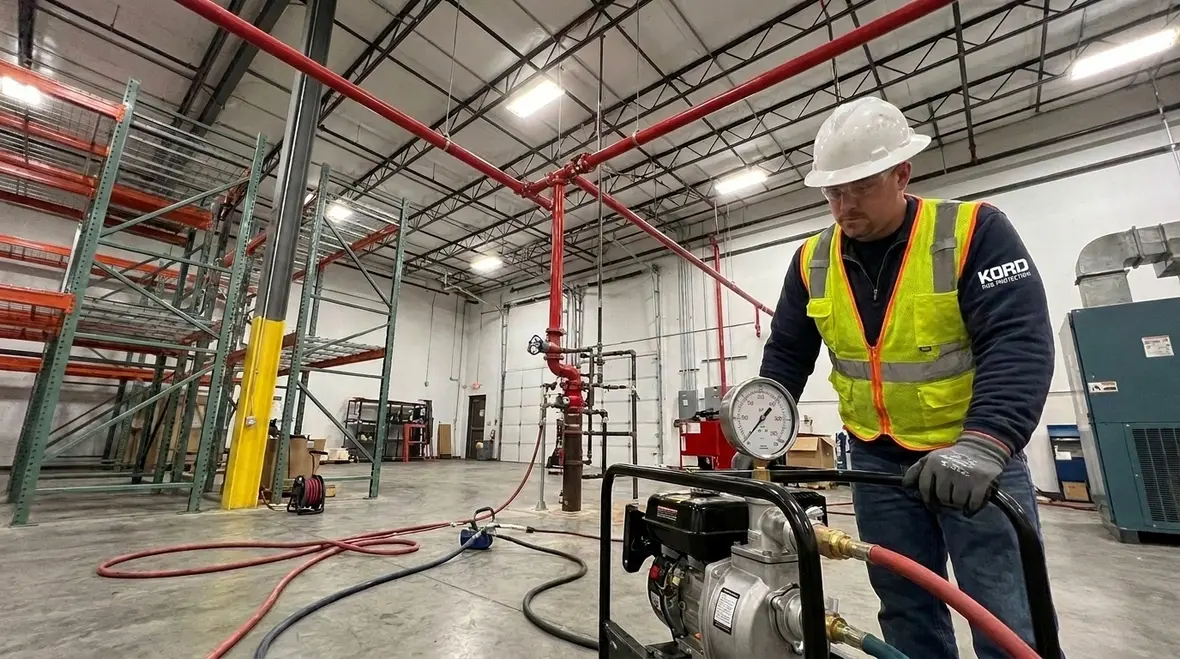
NFPA 16 Section 8.2 Hydrostatic Testing for Foam Water Systems
Quick Answer
NFPA 16 Section 8.2 sets the rule for hydrostatic pressure testing of foam water sprinkler systems. In simple terms, it checks whether the piping and fittings can hold pressure without leaking or failing. For industrial, retail, and commercial sites across Australia, this test protects people, property, and uptime. Kord Fire Protection can help deliver the test, document the results, and keep the system ready for duty.
Foam water systems do not get much praise until they are needed, and then everyone suddenly becomes a fan. That is why NFPA 16 hydrostatic tests matter. They verify the strength of the system before a fire puts it to the real test. In practical terms, foam water system pressure test work and fire suppression hydrostatic testing help confirm that pipes, valves, fittings, and joints can handle the pressure they will face in service. For industrial plants, warehouses, retail centres, and commercial facilities across Australia, this is not just a compliance task. It is a safety check with real world consequences, and it belongs in the regular maintenance plan.
For facilities planning broader lifecycle support, local fire protection services can help tie inspection, testing, maintenance, repairs, and documentation into one cleaner workflow. That kind of coordination matters when a pressure test is only one part of keeping a foam water system fit for service. ([kordfire.com](https://kordfire.com/local-fire-protection/?utm_source=openai))
What NFPA 16 Section 8.2 Requires
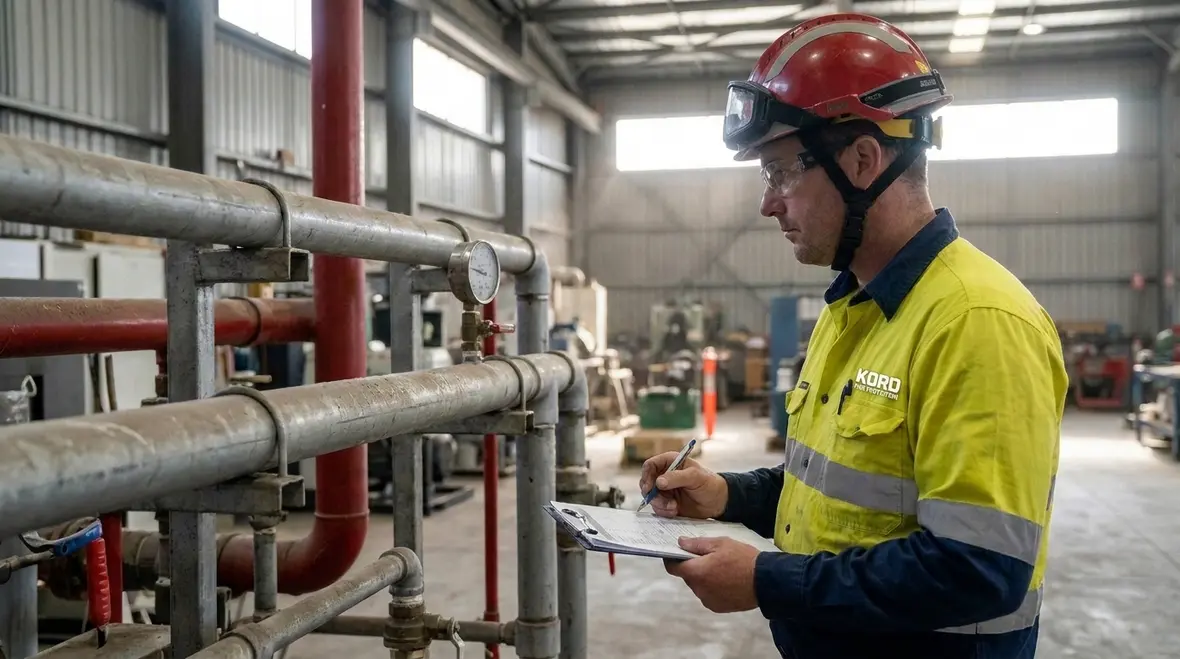
Section 8.2 focuses on hydrostatic pressure testing for foam water sprinkler systems after installation, repair, or changes that may affect integrity. The goal is straightforward. The system must prove it can hold pressure without visible leakage or structural failure. That test gives owners and facility teams confidence that the system can perform when the moment arrives.
Because foam water systems often protect high risk areas such as fuel storage, processing zones, loading docks, and other heavy duty spaces, the pressure test carries real weight. A small fault in a line may look harmless today, yet under fire conditions it can turn into a very expensive surprise. Nobody wants that kind of plot twist.
Why this requirement matters in the field
On paper, a pressure test sounds simple: add water, raise pressure, watch gauge, go home. In reality, it is one of the clearest ways to verify that installation quality, repair work, and system modifications all hold together under stress. It is also a practical checkpoint before a facility trusts the system to protect people, stock, plant, and operations in a fast moving fire event.
That is one reason this topic sits naturally alongside the broader NFPA 16 standard. Section 8.2 is not floating around by itself with a clipboard and a stern expression. It belongs to a larger framework that guides how foam water systems are expected to perform, be verified, and remain dependable over time. ([kordfire.com](https://kordfire.com/foam-fire-suppression-inspection-requirements-and-service/?utm_source=openai))
Where the Test Fits in System Care
Hydrostatic testing does not stand alone. It sits inside a wider program of inspection, maintenance, and verification. First, the system gets reviewed for condition and changes. Then the test team fills the piping with water and raises it to the required test pressure. After that, they watch for pressure loss, leaks, or movement at joints and fittings.
Just as important, the test should happen with a clear plan. The area must be isolated, safe, and prepared for water release control. In busy sites, this matters even more. A retail centre cannot simply flood a tenancy and call it an “operational inconvenience.” That would be a very bad day for carpets, stock, and morale.
Before the test
- Review drawings and recent changes
- Confirm isolation points and water control
- Protect sensitive equipment and occupied areas
- Verify test pressure, duration, and records plan
During the test
- Raise pressure in a controlled sequence
- Watch gauges, fittings, valves, and joints
- Check for visible leakage or pressure drop
- Record results for compliance and future review
Why Foam Water System Pressure Test Work Matters
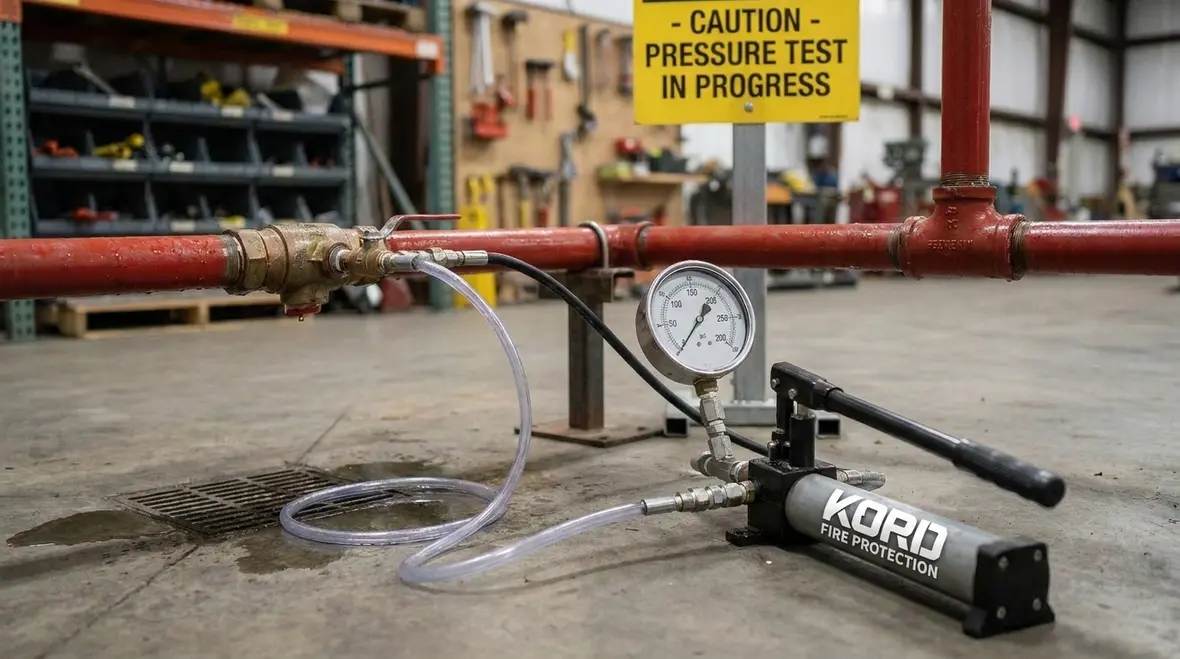
A foam water system pressure test does more than satisfy a code box. It helps find weak points before they become failures. It also supports insurer confidence, asset protection, and business continuity. For facilities that store flammable liquids or manage fire load heavy operations, this test can be one of the most important checks on the calendar.
In addition, the test supports safe commissioning after changes. If a contractor replaces a section of pipe or modifies a valve arrangement, the system should not return to service on hope alone. Hope is lovely in movies. In fire protection, proof is better.
The business case nobody should ignore
A failed joint discovered during a scheduled test is annoying. A failed joint discovered during a fire emergency is something else entirely, usually involving alarms, disruption, emergency response, and a room full of people asking who signed off on the last repair. Testing helps move that drama off the main stage and back into controlled maintenance, where it belongs.
It also works well with a wider service mindset. Kord Fire Protection’s content on the full lifecycle of fire protection servicing explains why systems need ongoing attention rather than a one time check. Hydrostatic testing fits that logic perfectly because it verifies the physical integrity that everything else depends on. ([kordfire.com](https://kordfire.com/full-lifecycle-of-fire-protection-servicing/?utm_source=openai))
How Kord Fire Protection Supports the Job
Kord Fire Protection can become a vital partner because this work needs more than a pump and a gauge. It needs technical skill, planning, compliance know how, and careful reporting. Kord Fire Protection can help assess the site, prepare the test plan, carry out the hydrostatic pressure test, and document the outcome for facility records.
It can also help reduce disruption. For commercial and industrial sites across Australia, timing matters. Kord Fire Protection can coordinate access, manage the test sequence, and work around operations where possible. That means less downtime, fewer surprises, and a smoother path back to normal business.
That broader support model appears across Kord Fire Protection’s own service and editorial content, including inspection and maintenance coordination, system verification, and support for higher risk applications. Their foam-related inspection content also frames these systems as especially relevant for flammable liquid hazards and demanding facilities. ([kordfire.com](https://kordfire.com/local-fire-protection/?utm_source=openai))
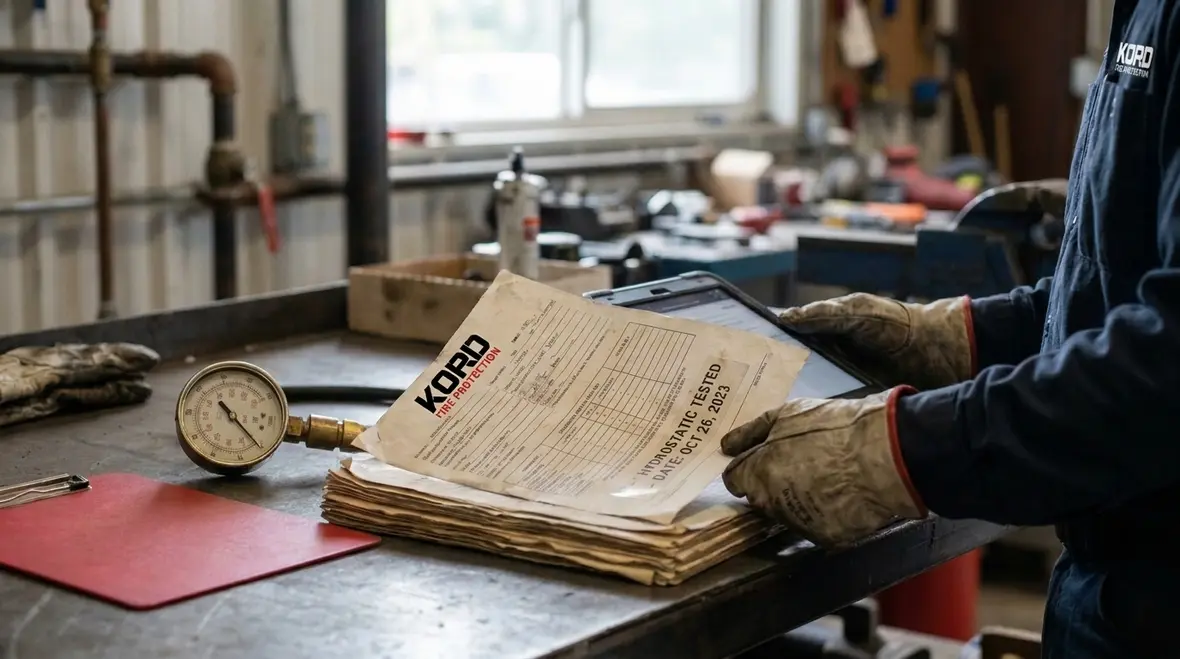
Dual Column View: What the Client Gains and What the System Proves
Client Benefit
- Clear compliance support
- Lower repair risk later
- Less disruption to operations
- Stronger asset protection
- Better documented decision making after repairs or upgrades
System Result
- Proves the system can hold test pressure
- Finds leaks and weak joints early
- Test planning limits downtime
- Confirms the system is fit for service
- Provides evidence that recent work did not compromise integrity
What Facility Managers Should Check Before Testing
Before the test begins, the team should confirm system drawings, isolate sensitive equipment, and verify the test pressure and duration. They should also check that drain paths are ready and that the site can handle water safely. If the system has recent repairs, the crew should inspect those areas with extra care.
Furthermore, communication matters. Operations staff, safety leads, and contractors should know when the test starts and what areas may be affected. That way, the job stays controlled, and the test does not become an unscheduled scene from a disaster film.
A practical pre-test checklist
- Verify scope after installation, repair, or system change
- Confirm drawings and component locations
- Notify operations, safety, and affected tenants or teams
- Protect stock, finishes, equipment, and electrical risks nearby
- Check drainage, isolation, and restoration steps before starting
- Document gauges, observations, and results clearly for records
FAQ: NFPA 16 Hydrostatic Testing for Foam Water Systems
Final Word
NFPA 16 hydrostatic tests give foam water systems a real chance to prove themselves before a fire does. For Australian industrial, retail, and commercial facilities, that proof matters. Kord Fire Protection can support every step, from planning to sign off, so the system stays ready, compliant, and dependable.
When the stakes are high, the right partner makes all the difference. Good testing catches trouble early, supports compliance records, and helps the system return to service with confidence instead of crossed fingers and optimistic guesses.

Join Our Newsletter!
Get the latest fire safety tips delivered straight to your inbox From our Newsletter.



