
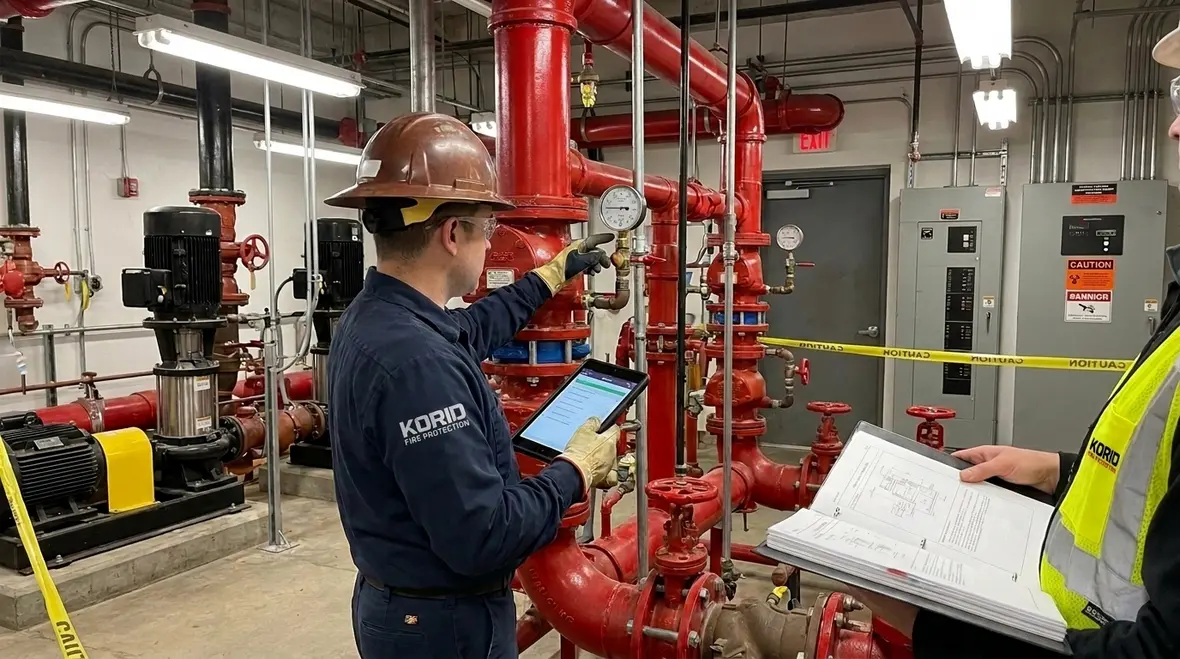
NFPA 15 Section 2.2 NFPA Publications: The 10 Referenced Codes Every Water Spray Pro Should Know
Quick Answer: NFPA 15 Section 2.2 points water spray professionals to the referenced NFPA and related standards that shape installation, inspection, and impairment handling. For 2027 editions, understanding the “10 referenced codes” helps teams avoid compliance gaps, schedule correct testing, and reduce system downtime.
Why NFPA 15 Section 2.2 matters in real projects
NFPA 15 Section 2.2 does not change the fundamentals of water spray protection, but it changes how the work gets executed. In commercial, industrial, and retail environments, “compliance” usually gets measured against referenced installation and service requirements that sit outside NFPA 15 itself. Those references directly affect how designers specify components, how contractors install and document systems, and how inspectors verify operational readiness.
Professionals who focus only on the main body of NFPA 15 often miss two predictable outcomes. First, inspection findings get tied to referenced codes, not just NFPA 15 language. Second, maintenance and impairment decisions become inconsistent because the referenced criteria get interpreted differently across teams. This is why many facilities treat referenced standards as part of their permanent compliance library, updated in line with NFPA 15 2.2 NFPA publications list editions 2027 expectations.
For teams reviewing broader inspection and maintenance workflows, Kord Fire’s fire sprinkler system service page offers a natural companion resource for keeping commercial systems reliable, compliant, and ready when they matter most.
What NFPA 15 Section 2.2 requires you to manage
Section 2.2 establishes a framework for referenced publications that apply to water spray fixed systems. The practical takeaway is simple: water spray pros must manage two compliance layers at the same time.
1) Installation and documentation alignment
Referenced codes influence how systems get built, labeled, and accepted. This includes requirements for components, pressure and flow calculations support, device suitability, and documentation practices expected by authorities having jurisdiction (AHJs) and facility insurers.
2) Inspection, testing, and impairment control
Referenced codes also govern how systems get verified after acceptance and what the facility must do during shutdowns, repairs, or controller downtime. A common compliance challenge in commercial occupancies is that maintenance crews complete “local” repairs without updating the system impairment record, then testing gets delayed or repeated without a clear baseline.
Kord Fire Protection supports ongoing readiness by coordinating documentation, inspection scheduling, and test reporting for commercial operations. This reduces rework when AHJs cross check referenced requirements during plan review or site verification.
The 10 referenced codes: how they show up in water spray work
NFPA 15 Section 2.2 ties water spray system performance to multiple referenced standards that professionals apply during the entire lifecycle. Even when project teams use strong NFPA 15 checklists, field issues tend to cluster around recurring mechanisms governed by referenced codes.
Referenced code themes every water spray pro should anticipate
- Component acceptance and listed suitability: Nozzles, valves, strainers, and initiating devices must be appropriate for the system design basis. Substitutions that are “close enough” frequently create spray pattern or hydraulic mismatch.
- System reliability and supervision: Supervisory features, alarm signaling pathways, and controller integration must support the facility’s fire safety strategy, including testing and impairment practices.
- Inspection frequency and test methodology: Many failures come from using the wrong test approach for the system configuration, not from failing to test at all.
- Water supply and maintenance of hydraulic readiness: Long term issues typically involve corrosion, clogged piping, partially blocked strainers, and valves that do not return to proper positions after manual operation.
- Documentation and recordkeeping: AHJs routinely ask for proof of inspection, impairment notices, and corrective actions tied to referenced standards.
Important note for 2027 readiness: The exact list and edition alignment within the “10 referenced codes” should always be confirmed directly against the current NFPA 15 text you are working under and your jurisdiction’s adopted editions. Facility programs should treat NFPA 15 2.2 NFPA publications list editions 2027 as a trigger to update templates, inspection procedures, and test frequencies before the renewal cycle begins.
Common compliance pitfalls tied to referenced standards
Referenced codes become visible during inspections because they show up as acceptance criteria, not just design theory. The following are the most common failure points that occur in real facilities.
Spray quality problems that tests did not detect early
Water spray performance depends on correct nozzle selection, spray pattern integrity, and unobstructed discharge. Even when inspectors record that “water flowed,” spray pattern degradation can persist due to nozzle contamination, incorrect orientation, or downstream obstructions. Teams that only verify flow rate without reviewing discharge conditions often miss the underlying defect until coverage becomes ineffective.
Valve impairment records that do not match maintenance reality
Commercial facilities frequently manage multiple life safety systems through shared maintenance windows. A typical issue is partial impairment handling, where one circuit remains out of service, but records get written as if the entire system remains active. Referenced inspection and impairment requirements require precision because AHJs and insurers expect consistency between what was done and what was documented.
Hydraulic and supply readiness delays
Water supply performance failures often originate in maintenance habits: strainers not cleaned on schedule, valve seats not checked after unusual operations, and controllers not updated after firmware or panel servicing. When referenced codes require specific test conditions, failing to recreate those conditions produces misleading results.
Training gaps between design and field execution
Installers and maintenance technicians sometimes interpret referenced requirements differently, especially when system configurations vary between bays, floors, or tenant spaces. A standardized procedure pack aligned to NFPA 15 and the referenced codes reduces variance, especially in retail and mixed-use buildings where multiple contractors may touch the system over time.
To address these patterns, facilities can use a lifecycle approach. Kord Fire Protection focuses on predictable inspection execution, corrective action tracking, and maintenance coordination so the referenced-code criteria stay embedded in daily operations.
How to build an “NFPA 15 2.2” readiness program for commercial facilities
A strong compliance program treats NFPA 15 and the referenced publications as one operational system. That program should include the following elements.
1) Edition control and document governance
When NFPA 15 2.2 NFPA publications list editions 2027 comes into effect for your compliance cycle, update the internal standards register. Then align inspection forms, testing checklists, impairment templates, and corrective action criteria. This prevents the most costly issue: performing the right tests for the wrong edition.
2) Test procedure consistency across occupancies
Use procedure packs that reflect actual configurations. A warehouse bay water spray arrangement behaves differently than an enclosed retail application with different obstructions and discharge locations. Technicians should not rely on memory or generic checklists.
3) Maintenance planning based on failure modes
Schedule maintenance around known risk drivers: nozzle contamination, valve free movement, strainer condition, and controller function verification. Pair these with inspection triggers that reflect actual use patterns, such as renovations, warehouse rack changes, or tenant fit-out work.
4) Closeout reporting that maps to referenced criteria
Corrective action reports should directly reference what was found, the required corrective standard basis, and verification method. This makes audits faster and reduces repeated failures because the facility can demonstrate how it returned the system to compliant readiness.
For additional practical guidance on water spray fixed systems and compliance support, review this resource: NFPA 15 enhancing fire safety with water spray fixed systems.
Independent industry education can also support maintenance planning and safety culture. See firepumps.org for broader pump and water system context that often intersects with water spray reliability.
Frequently Asked Questions
Call to action
Facilities that rely on water spray fixed systems should confirm their NFPA 15 Section 2.2 referenced-code controls before the next inspection window. Kord Fire Protection can help coordinate edition-aligned procedures, testing execution, impairment documentation, and corrective action verification so your system stays audit ready. Contact Kord Fire Protection to review your compliance program and schedule the next service cycle.

Join Our Newsletter!
Get the latest fire safety tips delivered straight to your inbox From our Newsletter.



