
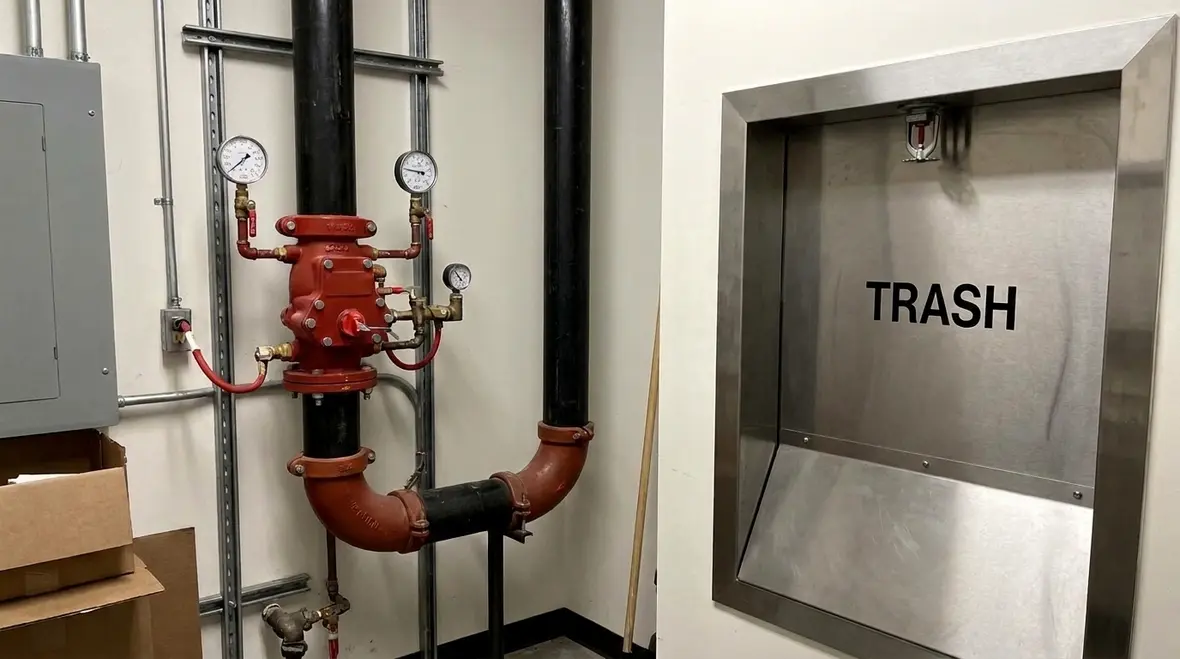
NFPA 13R Section 6.5 Special Situations: Return Bends, Dry Pipe, Glazing, and Waste/Linen Chutes
Quick Answer: NFPA 13R 6.5 addresses high risk or atypical piping conditions that can undermine sprinkler performance. This includes return bends, dry pipe arrangements, sprinkler protection for glazing, and systems serving waste and linen chutes. Correct configuration, inspection, and maintenance remain essential for compliance and reliability.
NFPA 13R Section 6.5 covers “special situations” where standard residential sprinkler rules can be insufficient. In commercial, industrial, and retail facilities that use 13R style residential sprinkler concepts, these details matter because piping geometry, water delivery time, and obstruction by chute systems or glazing can reduce effective discharge or delay operation. For guidance on overall installation expectations and system fundamentals, see NFPA 13 overview for automatic sprinkler system installation.
If you want a practical service-side reference near the top, Kord Fire Protection also offers fire sprinkler service and repair support for inspection, testing, maintenance, and corrective work that helps keep these systems aligned with code expectations.
Why NFPA 13R 6.5 special situations create real-world compliance risk
Commercial facilities often face design and maintenance pressures that are not obvious at plan review. NFPA 13R 6.5 special situations return bends glazing waste linen chutes require close attention to the way water moves, how heat reaches sprinklers, and how obstacles affect spray patterns.
Key risk areas include:
- Hydraulic inefficiency from piping configurations that trap air or create non draining sections.
- Reduced sprinkler discharge effectiveness due to wrong sprinkler placement near obstructions and glazing.
- Delayed water delivery in dry or partially dry conditions that depend on reliable air supply and trip mechanisms.
- Unprotected chase pathways where waste and linen chutes can carry heat, smoke, and burning debris above and below the rated spaces.
Because many owners treat sprinkler maintenance as a “set it and forget it” task, these special situations frequently become inspection findings later. Kord Fire Protection supports ongoing compliance with targeted inspection and testing plans that focus on the mechanical and operational points that fail most often.
Return bends: where piping geometry undermines drainage and air control
Return bends are a classic special condition because they change the way water and air move through the line. If the system is not arranged correctly, return bends can lead to air retention, sluggish water filling, or partial drainage after operation or maintenance.
Operational mechanism and common failure points
Return bends typically occur where the layout requires the pipe to change direction and still maintain a particular slope or drainage strategy. Failure modes commonly include:
- Air trapping when the bend geometry or slope prevents air from migrating to a high point for release.
- Inconsistent drainage that leaves water in portions of the line, affecting temperature response characteristics and inspection results.
- Blocked or ineffective drain paths caused by debris, incorrect fittings, or improper reassembly after service.
Inspection and maintenance focus
Routine inspection should emphasize return bend sections and their associated drains and air release points. Kord Fire Protection typically verifies:
- Correct slope and fitting configuration around the return bend.
- Drain operation and discharge routing without obstructions.
- Absence of unauthorized modifications, joint rework, or missing supports that can shift alignment.
These checks also support timely troubleshooting if there are complaints about water pressure variation at remote sprinklers or unusual water discharge patterns during flow testing.
Dry pipe arrangements: air supply reliability and trip readiness
Dry pipe conditions fall under NFPA 13R 6.5 special situations because time to water discharge depends on air pressure management and the operation of the trip mechanism. Even minor errors in air supply setup can extend response time or prevent the system from operating as intended.
What the system depends on
- Stable supervisory air pressure within the specified operating range.
- Proper labeling and monitoring for supervisory status alarms and water flow conditions.
- Correct trip valve function and correct reset parameters after testing or actuation.
Commercial compliance challenges
In retail and light industrial occupancies, interruptions to air supply can occur during maintenance, tenant work, or seasonal HVAC changes. For winterizing or after construction dust events, air valves can stick or small leaks can develop. These issues often stay hidden because the system does not discharge unless there is an actual fire condition or a controlled test.
Kord Fire Protection can support compliance by coordinating dry system inspection and testing with the building’s maintenance schedules, ensuring documentation stays consistent for AHJ review and owner verification.
Glazing: protecting spaces where heat and spray patterns do not behave normally
Glazing introduces complex heat transfer and obstruction effects. Glass can slow temperature rise for sprinklers behind or adjacent to it and can also alter spray distribution if the sprinkler discharge is partially intercepted.
Where installers get it wrong
- Mislocated sprinklers that are too far from glazing hazards or in positions that create shadowing effects.
- Inappropriate deflectors or incorrect sprinkler orientation that fails to direct water toward the intended fire area.
- Unaccounted renovations where later tenant improvements add curtains, decorative panels, or glazing replacements.
Maintenance and reinspection triggers
Commercial facilities often replace storefront glass, interior glazing, or glass partitions. Any glazing change can require a targeted reinspection for sprinkler clearance and obstruction. Kord Fire Protection recommends maintaining a glazing change log and coordinating sprinkler inspections after significant glass rework, especially when glazing types or mounting frames change.
Facility teams can also cross reference sprinkler system fundamentals with industry resources. For broader context on fire protection and water supply considerations, visit this fire pump support for sprinkler systems article.
Waste and linen chutes: fire spread pathways that demand dedicated attention
Waste and linen chutes behave like vertical conveyors for ignition sources, ember travel, and smoke. The chute lining, the openings at each level, and the potential for debris buildup can create fire spread scenarios that exceed what standard coverage assumptions would expect.
Operational concerns
- Delayed sprinkler activation due to blockage by waste or linen material.
- Insufficient discharge reach when openings and obstructions prevent water from contacting burning material.
- Inadequate clearance and arrangement that reduces effectiveness at the chute mouth or at intermediate openings.
Commercial maintenance practices that reduce risk
- Establish a cleaning frequency to prevent buildup at openings and in accessible chute sections.
- Verify that chute doors, covers, and access panels remain in the approved condition.
- Include chute locations in inspection walkthroughs with a focus on obstructions around sprinkler areas.
This is an area where compliance problems often show up during inspections. Kord Fire Protection supports commercial operators with practical field verification and documentation tailored to occupancy changes, tenant fit outs, and routine property turnover.
What to document for NFPA 13R 6.5 special situations return bends glazing waste linen chutes
Thorough documentation helps owners and facility teams maintain compliance continuity, especially when multiple contractors touch the system. For NFPA 13R 6.5 special situations return bends glazing waste linen chutes, records should capture not just “inspection completed,” but also the condition and any corrective actions.
At minimum, documentation should include:
- As built verification for return bend configuration, drain paths, and support stability.
- Dry pipe system supervisory air pressure readings and trip valve verification results.
- Photos or field notes showing sprinkler clearance around glazing and proof of lack of added obstructions.
- Inspection observations and cleaning coordination for waste and linen chute openings.
When documentation is clear, AHJ and insurer review becomes less adversarial, and troubleshooting after impairment events becomes faster.
Frequently Asked Questions
Call to action
NFPA 13R 6.5 special situations return bends glazing waste linen chutes can create hidden performance gaps if design details, inspection routines, and maintenance coordination do not stay aligned. Kord Fire Protection helps commercial owners maintain reliable operation through field verification, practical inspection planning, and compliance focused testing. Contact Kord Fire Protection to schedule an assessment of your return bends, dry pipe readiness, glazing obstructions, and chute protection coverage today.

Join Our Newsletter!
Get the latest fire safety tips delivered straight to your inbox From our Newsletter.



