
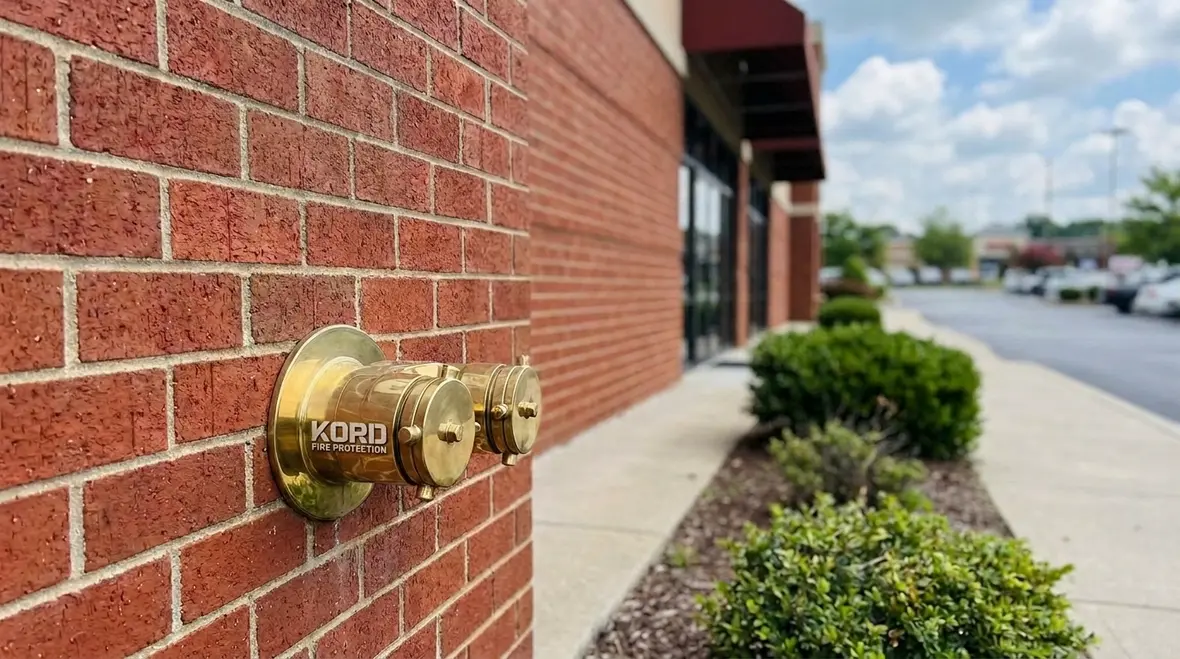
NFPA 13R Section 6.11 Fire Department Connection: The 2,000 ft² / Single-Story Trigger
Quick Answer: NFPA 13R Section 6.11 uses the fire area concept to determine when a fire department connection (FDC) becomes required. For many typical layouts, a “2,000 sq ft single story trigger” is the threshold that prompts installation, inspection, and flow testing planning.
Why NFPA 13R 6.11 Treats the 2,000 ft² Single Story Trigger as a Compliance Line
Commercial facilities often interpret NFPA 13R requirements as if they apply uniformly by building height or sprinkler count. NFPA 13R 6.11 fire department connection 2000 sq ft single story trigger is not a freeform rule. It is tied to the fire department connection decision making process that uses the building’s fire area and story configuration to maintain operational reliability for responding companies.
In practice, design teams and AHJs frequently scrutinize whether the sprinkler system is likely to be quickly accessible for fire service operations, and whether the FDC supports effective use of municipal supply when the system needs supplemental water. If a facility crosses the 2,000 ft² trigger for a single story fire area classification, the FDC becomes part of the system’s compliance intent, not just an optional add on.
For a broader baseline on installation expectations and system commissioning considerations, reference NFPA 13 overview for automatic sprinkler system installation as a systems context for how water supply, fittings, and acceptance testing align with life safety outcomes. If you also need a practical service-side view of inspections, maintenance, and repairs, Kord Fire’s fire sprinkler system service page fits naturally here, because compliance is rarely just a drawing set problem.
What NFPA 13R 6.11 Is Actually Requiring at the Site Level
NFPA 13R Section 6.11 establishes conditions under which the sprinkler system needs a fire department connection to allow fire service to connect hose lines or use appropriate pumping equipment. The intent focuses on two operational needs:
- Providing a reliable interface between municipal or other water supplies and the sprinkler system
- Reducing delays during incident response by enabling a known connection point
For a typical single story commercial, industrial, or retail footprint, the “2,000 ft² single story trigger” often surfaces when the calculated fire area and sprinkler design results in a configuration that the code treats as requiring an FDC. The most common failure point is not the lack of a pipe in the ground. It is the incorrect determination of the fire area used for the FDC decision, especially when partitions, occupancy separations, or roof and construction features change how the fire area is interpreted.
Facilities managed by property owners and tenants must also understand that the FDC is an interface component. It requires ongoing readiness, not just initial compliance during installation.
Common Compliance and Engineering Challenges Behind the 2,000 ft² Trigger
1) Fire area calculations do not always match “building area” perceptions
Teams often use gross floor area, lease area, or a single measurement for the site. NFPA 13R related decisions typically use defined fire area concepts. A single story can include non sprinklered spaces, architectural offsets, or construction features that influence how the fire area is determined for code application. If the fire area used during design does not align with actual construction, the facility can end up non compliant despite having a sprinkler system.
2) System arrangement can hide whether the FDC interface is practical
Even when the code trigger is met, the FDC must integrate with the system’s hydraulics and piping layout. Poor placement, inadequate clearances, or routing through inaccessible corridors creates real-world failure during incidents. Commercial facilities frequently discover that the FDC exists but cannot be used quickly due to site access constraints, bollards, landscaping, or signage issues.
3) Testing readiness and maintenance planning get overlooked
The FDC must support operational reliability. This includes ensuring valves, check valves, capped inlets, backflow protection components when applicable, and labeling remain functional. Maintenance teams often treat the FDC as static. In reality, it experiences periodic use for testing and can be impacted by corrosion, tampering, or improper sealing after inspections.
4) Coordination gaps between design, plumbing, and fire protection contractors
In mixed scope projects, sprinkler contractors may not fully coordinate with site utilities, water supply connections, and fire alarm or valve supervisory requirements. That coordination gap can produce incomplete FDC commissioning documentation, missing tags, or mismatched piping sizes at the connection point.
Inspection, Acceptance, and Maintenance: What Keeps the FDC “Ready” After Installation
NFPA 13R does not end at the drawing set. A workable FDC must pass inspection and remain serviceable through routine checks. For commercial facilities, Kord Fire Protection typically manages compliance readiness through a structured process that supports AHJ acceptance and ongoing reliability.
Routine inspection expectations
- Verification that the FDC inlets are present, unobstructed, and accessible
- Confirmation that valves and indicating devices are in the correct supervised positions where supervisory arrangements apply
- Check that fittings, caps, and connecting components are installed correctly and remain undamaged
- Field verification of labeling consistency, including identification of the supply and connection configuration
Maintenance and failure points that commonly show up in the field
- Corrosion and valve movement issues: Stagnant conditions and moisture can affect operability.
- Incorrect sealing after testing: Improper reinstatement can leave valves partially set or caps missing.
- Obstructed access: Parking reconfigurations, landscaping growth, dumpsters, and storage placement can block access.
- Backflow or check valve concerns: Components can drift out of correct function after service conditions or poor maintenance practices.
- Hydraulic mismatch: A small piping change or incorrect connection configuration can cause inconsistent performance during fire service pumping.
Because fire department operations depend on predictable water delivery, Kord Fire Protection treats FDC readiness as a lifecycle obligation for property managers and facilities. For fire service pump and water supply context, external industry reference can be valuable, including resources at firepumps.org.
For sprinkler system installation context that aligns how water supply interfaces affect acceptance, commissioning, and field verification, again review NFPA 13 overview for automatic fire sprinkler system installation.
Design and Layout Practices for a “2,000 ft² Single Story Trigger” Installation
When projects involve the trigger implied by NFPA 13R 6.11 for a 2,000 sq ft single story fire area scenario, design teams should focus on operational clarity. The goal is to make the FDC usable under stress, not merely installed.
Placement and access
- Provide clear access paths and maintain unobstructed approach from fire lanes where applicable
- Coordinate with site plans so future site changes do not block the connection point
- Use durable, legible signage and consistent labeling
Integration with valves and supervision
- Confirm that the FDC ties into the system in a way that supports intended fire service connection procedures
- Ensure valves and supervisory arrangements, where required, provide accurate status reporting
Documentation for ongoing compliance
Commercial facility compliance depends on records that match the installed system. Maintain as built routing, connection sizes, valve identification, and test history. This reduces uncertainty during insurance inspections, AHJ spot checks, and fire service operational reviews.
Local service partners matter. Kord Fire Protection supports commercial clients with compliance services across installation verification, inspection readiness, and maintenance workflows designed to avoid rework and downtime. For a wider snapshot of coordinated testing, inspections, and repairs, see full fire protection services.
Frequently Asked Questions
Call to Action
Don’t treat NFPA 13R 6.11 fire department connection as a one time installation task. Kord Fire Protection helps commercial facilities validate the 2,000 sq ft single story trigger basis, verify FDC operability, and maintain inspection readiness with practical field testing and documentation support. Schedule a compliance review to confirm installation accuracy, access suitability, and lifecycle maintenance actions for your property.

Join Our Newsletter!
Get the latest fire safety tips delivered straight to your inbox From our Newsletter.



