
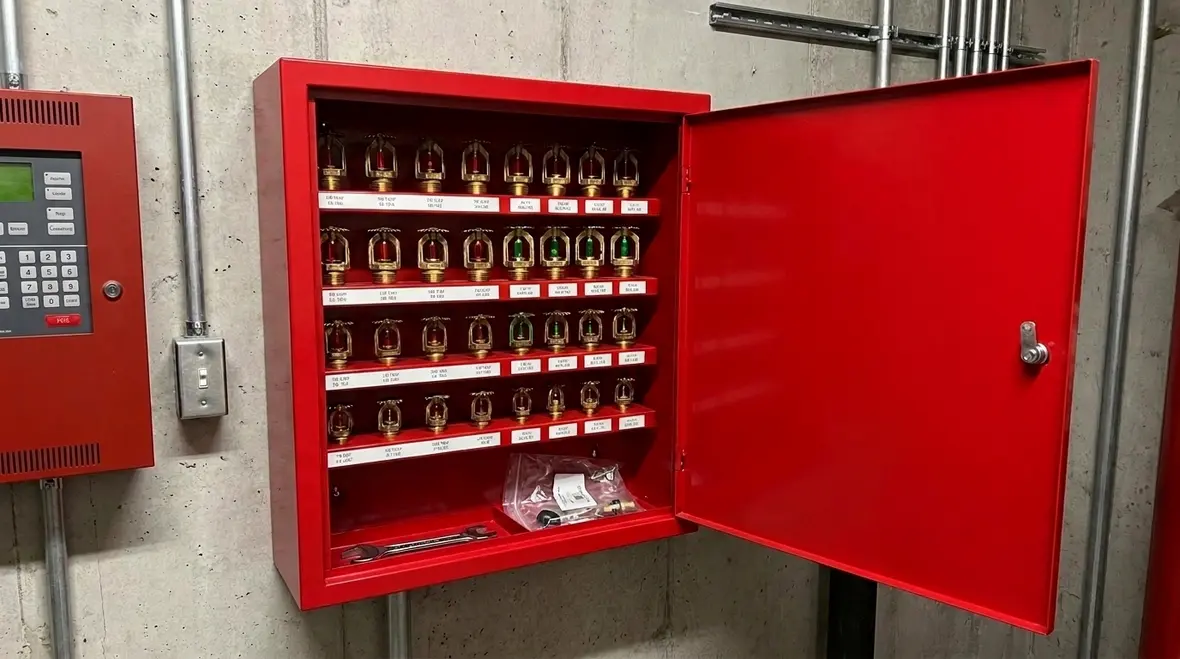
NFPA 13R 11.1 Spare Sprinkler Stock Requirements: 2, 6, 12, or 24?
Quick Answer: NFPA 13R 11.1 requires stock spare sprinklers based on the system’s quantity and sprinkler arrangement. In practice, many crews end up planning for 2, 6, 12, or 24 sprinklers and placing them in a listed cabinet, but the exact number depends on the installed sprinkler count and the AHJ’s interpretation of “required stock.” A correct selection also must match the exact temperature, orifice, and model requirements, including a cabinet style suitable for the facility’s maintenance workflow.
If your team is already reviewing sprinkler cabinet readiness and replacement matching, it helps to also look at commercial fire sprinkler service and repair support so the spare stock plan fits naturally into inspections, maintenance, and real-world replacement workflows. ([kordfire.com](https://kordfire.com/fire-sprinkler-service/?utm_source=openai))
What NFPA 13R 11.1 Is Trying to Solve
NFPA 13R 11.1 exists to prevent downtime when a sprinkler must be replaced after damage, leakage, corrosion events, or maintenance work. For commercial and multifamily structures, replacement lead times can become a critical business risk. If spare sprinklers are insufficient, facilities often rely on emergency sourcing, which can delay repairs and create compliance exposure.
In the field, the “2, 6, 12, or 24” pattern is common because many installations land near the thresholds that drive small to moderate spare quantities. However, the compliance objective stays constant: spares must be the correct type and size, compatible with the installed system, and stored in a secure location that maintenance personnel can access quickly.
NFPA 13R 11.1 Spare Stock: The Real-World Driver Is Installed Quantity
NFPA 13R 11.1 spare sprinkler quantities are tied to how many sprinklers the system contains. The “stock spare sprinklers quantity cabinet 100F” concept becomes important when facilities standardize on specific sprinkler temperature ratings. For typical design practices, systems may include 100°F sprinklers in specific hazard areas or rooms, and spares must match the temperature rating and listing.
For compliance planning, the operational question is not “which number looks right,” but “what does the installed system actually require.” The calculation process should consider:
- Total number of sprinklers installed for that system, not just the number served by a single riser or zone
- Any special sprinkler types used, such as specific orifice sizes or temperature ratings
- System split designs where different portions use different sprinkler models or temperature ratings
- Whether the project includes phases or multiple buildings that the AHJ treats as separate systems
Commercial facilities frequently miss spare requirements when the record set is incomplete, the final count is not reconciled after substitutions, or a late design revision changes the sprinkler model without updating the spare plan.
Why “2, 6, 12, or 24” Happens on Many Jobs
Installers and service contractors see the same small number outcomes repeatedly because many NFPA 13R buildings fall into the lower spare tiers. The exact tier selection depends on sprinkler count, but the common outcomes often include 2, 6, 12, or 24 sprinklers. Those figures can be practical in cabinet planning because they map to what can fit safely and accessibly in a compact storage unit for building maintenance.
Most compliance failures come from selecting a quantity that matches the “typical outcome” rather than the actual installed count. Another frequent issue is mixing sprinkler types in the same cabinet when only one model and temperature rating is required for that portion of the system. Spare sprinklers must be interchangeable with the installed piping and designed components. A mismatch can cause repeat repairs, valve shutdown delays, or inspection rejection.
Temperature Rating and Model Matching: The Cabinet Detail That Stops Rejection
When facilities standardize on 100°F sprinklers for specific spaces, the spare stock must also be 100°F, and it must match the sprinklers installed. This includes:
- Temperature rating, including 100°F when that is the installed standard for the protected spaces
- Orifice size and K factor
- Response type and construction details
- Finish or corrosion considerations where the installed system specifies a particular construction
- Proper listing and compatibility with the installation standards used for the system
A cabinet should store spare sprinklers in a way that preserves integrity and prevents damage to the sprinkler components. Service teams often prefer labeled organization by sprinkler type and temperature rating so that maintenance techs can locate the correct replacement under time pressure.
To support better installation and maintenance alignment, many contractors also cross check their system requirements and expectations through an NFPA 13 overview of automatic fire sprinkler system installation. While the article focuses on NFPA 13, it provides practical context for how designers and contractors manage installation discipline, inspections, and documentation across sprinkler system requirements.
How Cabinets Are Managed During Inspections and Ongoing Service
Cabinets for spare sprinklers are not just a storage box. They are part of the inspection and operational readiness process. In many commercial settings, compliance is evaluated through a combination of documentation and physical verification, which creates real-world execution challenges:
- Spare stock must exist on site and be accessible, not stored offsite or dispersed without clear control
- Labels must match the actual product: sprinkler type, temperature rating, K factor, and orifice size
- The cabinet location should align with how maintenance teams respond to leaks, minor damage, and sprinkler replacements
- Batch substitutions or “similar item” approvals must still satisfy the spare stock matching requirement
Operationally, Kord Fire Protection supports facilities with ongoing compliance service workflows, helping teams keep sprinkler records current and spares correctly matched to the installed system. This reduces repeated administrative effort during inspections and minimizes downtime when replacements are required. Kord Fire highlights ongoing maintenance, inspections, and compliance-focused fire protection support across commercial properties. ([kordfire.com](https://kordfire.com/fire-sprinkler-service/?utm_source=openai))
For broader fire pump and water supply systems context that often intersects with sprinkler maintenance decisions in commercial buildings, facility teams may also reference NFPA 25 fire pump testing requirements when aligning system readiness planning with water supply performance. ([firepumps.org](https://firepumps.org/blog/nfpa-25-fire-pump-testing-requirements-guide/?utm_source=openai))
Common Compliance Pitfalls (And How to Avoid Them)
Commercial, industrial, and retail facilities frequently encounter preventable errors during final acceptance and maintenance:
1) Using a “typical” spare number instead of calculating from installed count
Crews often select 2, 6, 12, or 24 based on past projects. The correct approach is to calculate from the actual installed sprinkler count and verify the final counts after design revisions and substitution approvals.
2) Cabinet stock does not match sprinkler temperature rating
If the system includes spaces protected by 100°F sprinklers, the spares must reflect 100°F. A cabinet containing different temperature ratings can lead to inspection failure or emergency substitution delays.
3) Incorrect model or orifice size
Even when the temperature rating matches, a different orifice size or K factor can prevent proper replacement. The result is a second maintenance event and prolonged system impairment.
4) Spares stored without labeling discipline
Unlabeled or poorly labeled cabinets force maintenance staff to guess under time pressure. That increases the chance of ordering the wrong parts or reinstalling the wrong sprinkler type during a corrective action.
Following a documented spare stock verification checklist and reconciling it to the final system submittals is the fastest way to avoid rework. Kord Fire Protection often supports this through structured documentation review and service planning tailored to commercial facilities.
Frequently Asked Questions
Conclusion and Call to Action
Do not guess between 2, 6, 12, or 24 spare sprinkler quantities. A correct NFPA 13R 11.1 stock spare sprinklers quantity cabinet 100F plan starts with an accurate installed sprinkler count, confirms exact sprinkler matching, and verifies cabinet labeling and accessibility. Kord Fire Protection can help commercial facilities reconcile final sprinkler counts, validate spare stock requirements, and maintain inspection-ready documentation and cabinet contents. Contact Kord Fire Protection to confirm your spare stock calculation and cabinet readiness before the next inspection cycle.

Join Our Newsletter!
Get the latest fire safety tips delivered straight to your inbox From our Newsletter.



