
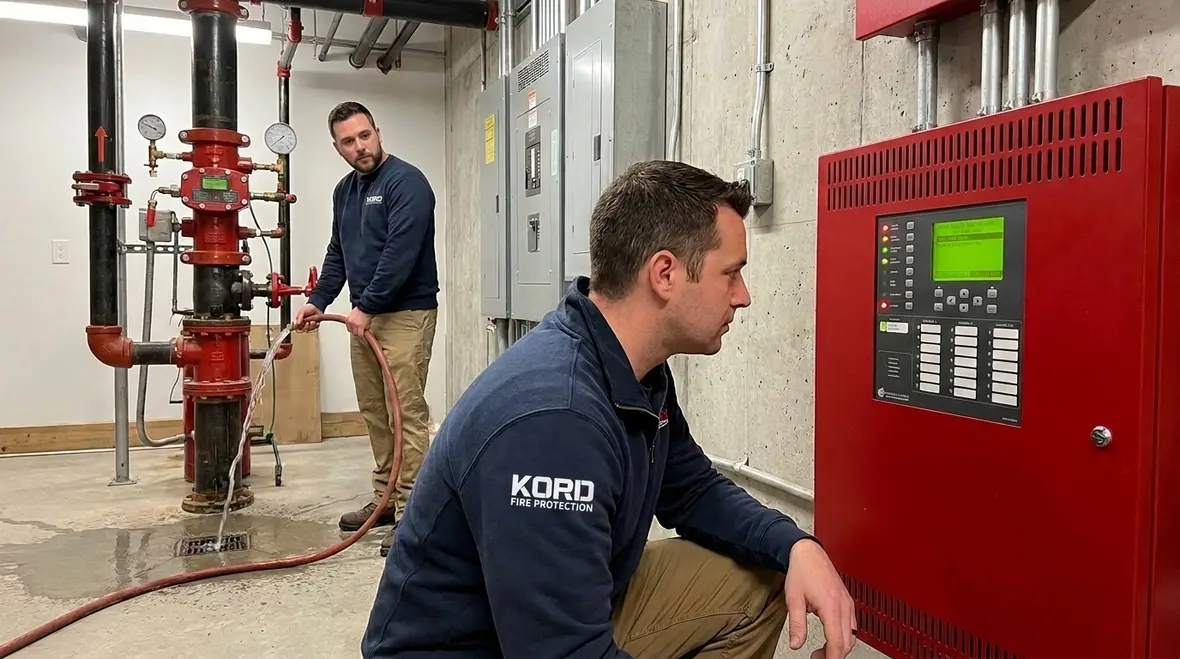
NFPA 13R 10.2 Acceptance Tests: The Complete Sprinkler System Testing Guide
Quick Answer
NFPA 13R 10.2 acceptance tests confirm the sprinkler system can deliver water as designed. Key activities include hydrostatic flushing, verification of alarm operation, and waterflow device testing. Proper documentation, pressure readings, and mechanical checks ensure compliance and reduce service interruptions.
What NFPA 13R 10.2 acceptance testing verifies in real facilities
Commercial sprinkler systems often pass installation review but still fail acceptance testing due to missed alignment between piping, valves, detection devices, and alarm interfaces. NFPA 13R 10.2 acceptance tests hydrostatic flushing waterflow alarm requirements focus on two operational outcomes: (1) system hydraulics and cleanliness support dependable discharge, and (2) the waterflow alarm signals correctly represent water movement. This article explains what to test, how to test it, and where common compliance issues occur in retail, industrial, and mixed use properties.
For a broader installation context, see Kord Fire Protection’s overview: NFPA 13 overview and automatic sprinkler system installation. If you are also planning ongoing support after acceptance, Kord Fire Protection’s fire sprinkler system service page gives a practical look at inspections, repairs, and maintenance that fit naturally after commissioning. While that page addresses NFPA 13, the testing discipline and control logic alignment still help teams plan for acceptance.
Before the crew starts: readiness checks that prevent failed acceptance tests
Acceptance testing succeeds when the facility, controls, and hardware are ready. NFPA 13R systems rely on correct valve positions, clear identification of alarm components, and stable monitoring circuits. Testing teams should confirm the following before any hydrostatic work begins.
1) Confirm the test boundaries and documentation pack
- Verify approved drawings, hydraulic calculation basis, and revised submittals match the as built condition.
- Confirm all waterflow alarm initiating devices are identified on the test forms, including location and device type.
- Collect device cut sheets for alarm interface modules, supervisory contacts, and panel input points.
2) Validate control room availability and alarm routing
- Coordinate with the monitoring provider or building fire alarm system technician.
- Confirm alarm point labeling in the fire alarm panel matches the sprinkler system waterflow device ID.
- Ensure test and maintenance modes are used properly to avoid nuisance dispatch or supervisory lockouts.
3) Ensure the system is safe to test
- Confirm access paths, drainage controls, and containment for flushing discharge.
- Verify valves are locked and tagged during test setup.
- Check that electrical components are protected from water spray and that grounds and enclosures remain intact.
How hydrostatic flushing acceptance testing is executed under NFPA 13R 10.2
Hydrostatic flushing supports dependable sprinkler performance by removing installation debris, pipe scale, and foreign material from the waterway. In commercial environments, this step often fails due to incomplete flushing duration, improper flow paths, or bypass leakage that prevents full velocity at remote sections.
Set up flushing water supply and discharge control
- Use approved test connections, hoses, and temporary piping rated for the system test pressure.
- Route discharge to a safe drainage location, especially in retail basements, corridors, and occupied tenant spaces.
- Confirm all required test valves are accessible and operate smoothly without binding.
Perform pressure, duration, and flow verification
The testing team should document pressure readings and flushing results at the designated points. The process typically includes:
- Filling and pressurizing the system according to the acceptance procedure for the installation.
- Flushing to clear debris until discharge quality meets the project criteria.
- Maintaining stable test conditions long enough to ensure representative flushing across the system.
Common failure points during hydrostatic flushing
- Debris remains: Discharge still shows particulates after the planned flush interval, often due to restricted sections.
- Valve position errors: Closed or partially closed valves can isolate zones and prevent proper flushing velocity.
- Temporary connections leakage: Leaks can reduce effective pressure and distort pass fail readings.
- Improper sequencing: Testing a subsections without confirming the correct riser path leads to false confidence.
Because flushing impacts downstream devices, crews should confirm that any instrumentation used for monitoring remains protected and that alarms are not triggered unintentionally during early stages of testing.
Waterflow alarm testing: the acceptance test that proves detection works
NFPA 13R 10.2 acceptance testing includes hydrostatic flushing waterflow alarm verification, ensuring that when water flows in the system, the initiating device and fire alarm panel communicate reliably. In practice, “waterflow alarm” testing must address both the hydraulic trigger and the alarm signaling chain.
1) Identify the correct initiating devices and reset behavior
- Confirm the waterflow initiating device type and location match the system design.
- Verify the device reset requirement and timing so the panel returns to a normal condition after each test cycle.
- Record device serial numbers and panel input IDs where available.
2) Conduct the alarm activation test
During testing, the crew should create controlled water flow or use the approved flow test method to ensure the device responds as intended. During activation, the team should verify:
- The initiating device activates within the expected response conditions.
- The fire alarm panel receives the correct point and annunciates the alarm with correct labeling.
- Audible and visual notification signals, if tied to the waterflow alarm logic, operate per the system design.
3) Confirm supervisory and integrity signals
Waterflow systems often pair with supervisory monitoring for valve position, tamper switches, and related alarm circuits. Acceptance testing should confirm those circuits remain functional after flushing operations and that no unintended trouble states remain.
Common failure points in hydrostatic flushing waterflow alarm checks
- Correct device, wrong wiring: The device operates but the panel input is misidentified or swapped.
- Delayed reset: The waterflow device does not reset properly, causing repeat activation failures.
- Water hammer effects: High flow change can create false trips or unstable pressure, leading to intermittent signal behavior.
- Debris-induced sticking: Residual particulates after flushing can delay valve movement or affect device contacts.
Testing teams should treat the alarm verification as a system wide logic check, not only a mechanical response check. When the alarm chain is validated, facilities gain dependable performance during actual sprinkler discharge scenarios.
What “pass” looks like: documentation, records, and stakeholder sign off
Most acceptance failures become disputes later because documentation does not capture the right details. A strong acceptance package allows owners, AHJs, and facility managers to verify compliance quickly.
Record the data that auditors expect
- Flushing setup details including test connections, discharge routing, and start and end times.
- Hydrostatic pressure readings, points checked, and any corrective actions taken.
- Waterflow alarm test results including device IDs, panel point numbers, and observed annunciation behavior.
- Photos of device identification where permitted and relevant.
Communicate corrective actions immediately
If the waterflow alarm does not activate or activates inconsistently, the fastest path to acceptance is to isolate the fault domain: initiating device, wiring and terminals, panel configuration, or reset mechanism. Teams that correct wiring terminations and confirm device reset cycles generally avoid repeat mobilizations.
Why compliance challenges show up in commercial, industrial, and retail buildings
Facility operations often conflict with testing requirements. Common commercial constraints include tenant occupancy, limited drainage access, and strict fire alarm monitoring policies. These factors can cause delays or incomplete acceptance tests if not planned.
Occupied retail and retail corridors
- Temporary discharge needs controlled routing to avoid slip hazards and damage.
- Fire alarm panel testing must be coordinated to prevent nuisance calls.
- Sprinkler and ceiling penetrations require careful protection during flushing.
Industrial and warehouse environments
- High airflow and vibration can complicate manual reset and contact verification.
- Long pipe runs increase the probability of debris travel; flushing and verification must stay consistent.
Multi tenant mixed use buildings
- System zone boundaries must be clearly understood so testing does not disrupt other tenants unexpectedly.
- Fire alarm point labeling and tenant directories must remain accurate after renovations.
Kord Fire Protection supports these constraints through structured test planning, controlled discharge management, and verification workflows aligned to real commissioning schedules. For ongoing guidance on system discipline, Kord Fire also provides reference resources for sprinkler system installation planning: automatic fire sprinkler system installation overview.
Where to verify related fire pump and water supply practices
In facilities where water supply performance depends on pumps, acceptance testing activities should remain coordinated with water supply verification. For supplemental context on fire pump ecosystem practices and testing perspectives, reference firepumps.org. This supports alignment between hydrostatic flushing conditions, alarm performance expectations, and water delivery reliability.
Frequently Asked Questions
Make acceptance testing repeatable, not risky
Owners and facility managers benefit from acceptance testing that is planned, documented, and executed with tight control over valves, discharge, alarms, and reset behavior. Kord Fire Protection helps commercial teams meet NFPA 13R 10.2 acceptance expectations, including hydrostatic flushing and waterflow alarm verification, while minimizing disruption to operations. Contact Kord Fire Protection to schedule a compliance focused testing and maintenance review, and confirm your acceptance package is ready for AHJ and internal sign off.

Join Our Newsletter!
Get the latest fire safety tips delivered straight to your inbox From our Newsletter.



