
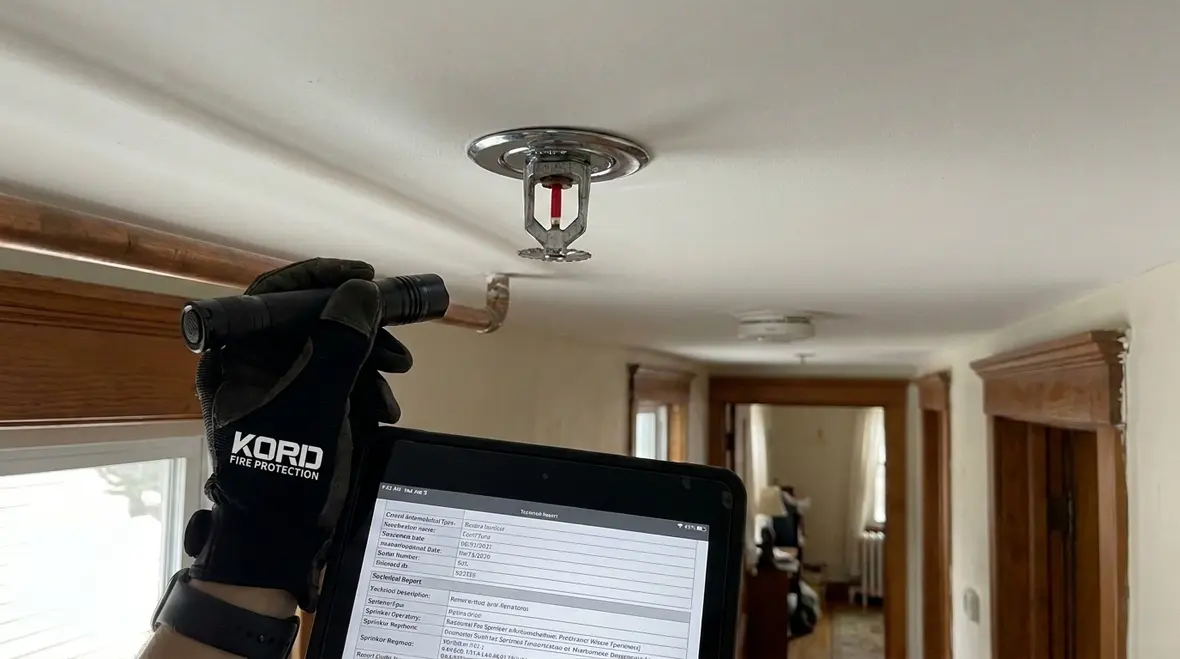
NFPA 13D Section 1.3: Do Existing Homes Need to Upgrade to NFPA 13D Sprinklers?
Quick Answer
NFPA 13D Section 1.3 addresses when NFPA 13D applies and clarifies retroactivity limits. In most cases, it does not require blanket sprinkler upgrades for existing homes unless specific construction, alteration, or system deficiencies trigger local code enforcement. Always verify the Authority Having Jurisdiction (AHJ) requirements.
If you are trying to sort out what applies before an inspection or remodel, a wet sprinkler system inspection can help uncover deficiencies early and keep AHJ conversations from turning into expensive plot twists.
What NFPA 13D Section 1.3 really does (and does not) require
NFPA 13D Section 1.3 retroactivity existing home sprinkler upgrade requirements typically come down to this practical question: does NFPA 13D mandate that previously installed residential systems must be brought up to the latest edition when no work is being performed? In general, NFPA standards focus on new installation requirements and clarify that existing installations are not automatically “reissued” to the newest edition on a fixed schedule. The standard’s language is commonly interpreted as non mandatory retroactivity unless there is a trigger event such as a remodel, system expansion, or code enforcement requirement adopted by the AHJ.
Because sprinkler mandates often become enforceable through local amendments, the AHJ’s adoption language matters as much as the NFPA text. Facilities that operate under commercial or mixed use oversight frequently learn this the hard way during fire marshal plan review, impairment permits, or certificate of occupancy renewals.
Why retroactivity becomes complicated in real inspections
Even when NFPA 13D itself does not require universal upgrades, sprinkler compliance can still change because of how systems are maintained, modified, inspected, and tested. The most common operational drivers include:
- System additions or changes: If work expands coverage, relocates plumbing, or alters branch lines, the new portion often must meet the current NFPA 13D requirements. This can force partial upgrades.
- Alterations tied to building scope: Tenant improvements, occupancy reclassifications, or significant repairs can trigger a review of the fire protection system configuration.
- Deficient components discovered during inspections: Deteriorated piping, damaged sprinklers, non compliant fittings, or failing detection and alarm interfaces (when applicable to waterflow supervision) frequently lead to corrective work.
- Water supply and acceptance test failures: If flow, pressure, or system drainage does not meet acceptance criteria, the AHJ may require remediation even when the original installation was permitted under earlier requirements.
Commercial, industrial, and retail facilities often face additional friction because water supply networks and supervisory arrangements are integrated with other life safety systems. That integration can expand the scope of what must be corrected when sprinkler performance or documentation is found non compliant.
Common compliance triggers that lead to “upgrade” work
NFPA 13D Section 1.3 retroactivity existing home sprinkler upgrade requirements are frequently enforced indirectly through trigger based rules. The following scenarios commonly produce an upgrade expectation:
1) Remodels that alter the fire area or ceiling configuration
If a project changes finishes, ceilings, attic spaces, or concealed obstructions, existing sprinklers may no longer meet the coverage intent. Because sprinkler placement and obstruction rules depend on how spaces function, the AHJ may require sprinkler layout changes where the remodel impacts hydraulics or sprinkler operation.
2) Poor documentation and permit history
Many existing residences and small buildings have incomplete as built drawings, missing hydraulic calculations, or uncertain pipe material history. When documentation cannot substantiate compliance, inspectors may require corrective evaluation and re acceptance testing. In practice, that can resemble an upgrade even if the requirement is really about verifying current design intent.
3) Evidence of system impairment, leaks, or repeated component failures
Leaking joints, corrosion, damaged ceilings, or sprinkler discharge from maintenance errors can force partial rework. A system that repeatedly underperforms in testing may be judged unreliable regardless of what version originally governed installation.
4) Water supply modifications affecting hydraulics
Changes to municipal supply, private tank systems, pump settings, backflow devices, or pressure reducing valves can alter system performance. Even if the sprinkler system remains “existing,” the ability to meet flow and pressure requirements must be demonstrated. The remediation path can include additional sprinklers, revised spacing, or updated control valves and gauges.
Operational procedures and failure points that drive corrective action
When retroactivity questions arise, the technical response usually starts with verification. For sprinkler professionals, the most important operational steps include:
- Field verification: Confirm pipe routing, sprinkler types, locations, obstruction conditions, and control valve configurations against available drawings.
- Hydraulic evaluation: Review water supply information, calculate demand, and confirm that the system can deliver the required flow and pressure for the design area.
- Inspection and testing: Perform visual inspections, assess corrosion and mechanical integrity, and conduct acceptance testing where required by the AHJ.
- Documentation control: Produce updated service reports, update as built records when changes are made, and maintain system impairment and test records.
Common failure points include undersized or internally restricted piping, incorrect sprinkler temperature ratings for the environment, obstructed coverage, non compliant valve supervision, and damaged or incorrectly installed sprinklers. Another frequent issue involves air in piping that can delay water delivery, especially after repairs. These are practical reliability risks that often justify remedial work even when full retroactivity is disputed.
For further background on how sprinkler systems are installed, accepted, and maintained, refer to NFPA 13 overview of automatic fire sprinkler system installation. While NFPA 13D applies to different occupancy and system scope, many field verification and acceptance concepts carry across.
How Kord Fire Protection supports ongoing compliance without surprises
When a building owner faces uncertainty about NFPA 13D Section 1.3 retroactivity, the highest cost is usually not the sprinkler components. It is the schedule disruption caused by late discoveries during inspections. Kord Fire Protection positions compliance work to prevent that outcome by pairing documentation review with field verification and risk based testing.
Typical support includes:
- Review of existing system drawings, permit history, and inspection reports.
- On site assessments to confirm sprinkler layout, piping condition, and obstruction risks.
- Hydraulic and operational checks to identify performance gaps early.
- Maintenance and correction planning that aligns with AHJ expectations and minimizes system downtime.
For organizations that also operate commercial water based systems, pump and supply reliability matters. The practical guidance in this fire pump test failure guide can help owners and facility teams understand pump driven water supply performance topics that often intersect with sprinkler system reliability.
Frequently Asked Questions
Conclusion and next step
NFPA 13D Section 1.3 retroactivity existing home sprinkler upgrade requirements rarely translates into automatic statewide upgrades. Instead, most outcomes come from local code adoption, AHJ interpretation, and project specific triggers such as remodel scope or system performance findings. If an inspection or permit is approaching, commission a compliance and hydraulic verification review now. Kord Fire Protection helps owners align documentation, testing, and corrective actions with AHJ expectations, reducing downtime and costly scope surprises.
Next action: Contact Kord Fire Protection to schedule a system assessment and retroactivity gap review before your next inspection cycle.

Join Our Newsletter!
Get the latest fire safety tips delivered straight to your inbox From our Newsletter.



