NFPA 1 Section 20.3 Day Care Occupancy Fire Safety
Quick Answer: NFPA 1 Section 20.3 sets fire safety rules for day care occupancies so children, staff, and visitors can exit fast and stay protected. It guides alarms, exits, drills, hazard control, and inspection needs. For Australian facilities, daycare fire safety NFPA principles and child care fire code best practices help build stronger day care center fire protection programs.
Facilities that need broader support can also explore full fire protection services to coordinate alarms, sprinklers, extinguishers, inspections, and maintenance under one reliable team. That kind of support fits naturally when a day care space operates inside a busier commercial property and the fire plan has to work for the whole site, not just one classroom.
Why day care fire safety matters in busy facilities
Day care centers carry a duty that goes far beyond routine building safety. They protect children who may not react fast in an emergency, staff who must lead calm evacuations, and visitors who may not know the layout. That is why daycare fire safety NFPA guidance matters. It gives a clear path for reducing risk, improving exits, and keeping response plans simple enough to work when the clock starts shouting.
In Australia, industrial, retail, and commercial sites often run day care services inside larger facilities or adjacent buildings. As a result, fire safety must fit the whole property, not just the child care room. A strong child care fire code approach helps managers spot weak points early, before a small issue grows legs and runs the building.
What NFPA 1 Section 20.3 requires
NFPA 1 Section 20.3 focuses on day care occupancy fire safety. It covers the basics that keep people alive when seconds matter. The section looks at safe exits, clear access, fire alarm systems, emergency plans, safe use of heating and electrical equipment, and control of hazards that could start a fire or block escape.
In practical terms, this means the building must support quick evacuation, reliable warning systems, and daily habits that do not invite danger. It also means staff must know what to do without turning the drill into an episode of chaos worthy of a bad disaster movie.
NFPA 1 Section 20.3 focus areas
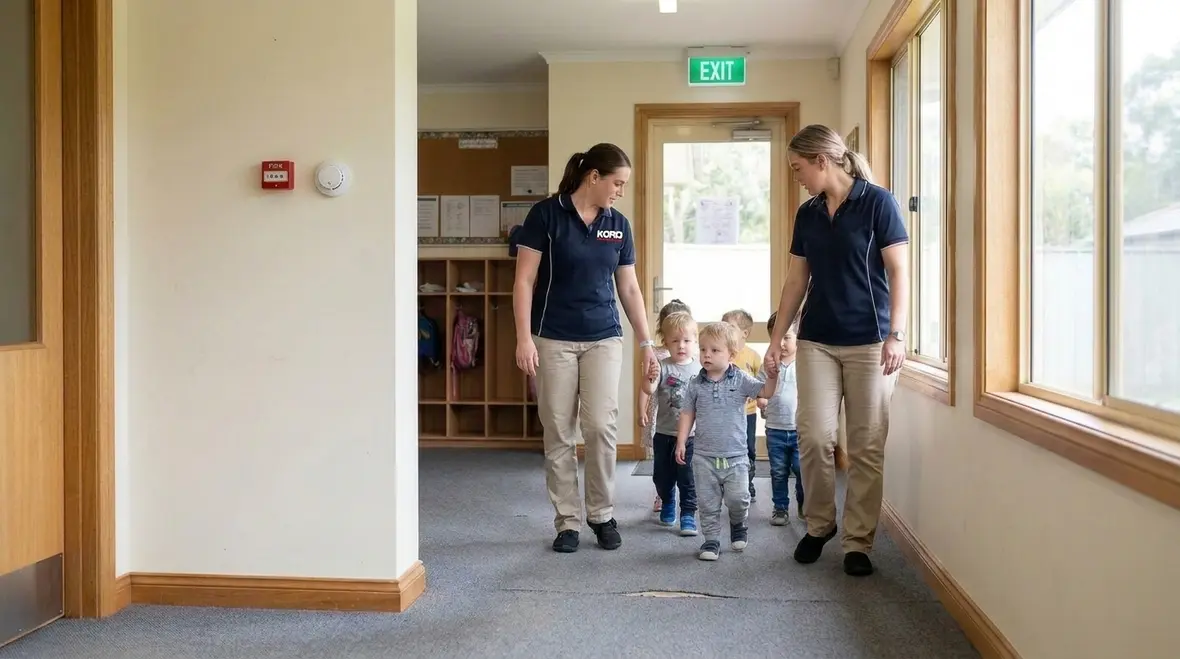
- Clear and direct exit paths
- Working alarms and alert systems
- Emergency plans and staff training
- Regular fire drills
- Safe storage of flammable items
- Control of cooking, electrical, and heating risks
Those points sound simple because they are supposed to. Fire safety for day care occupancies should be direct, repeatable, and easy for staff to follow under pressure. When policy becomes too clever for its own good, people hesitate. In an emergency, hesitation is not exactly the performance anyone wants.
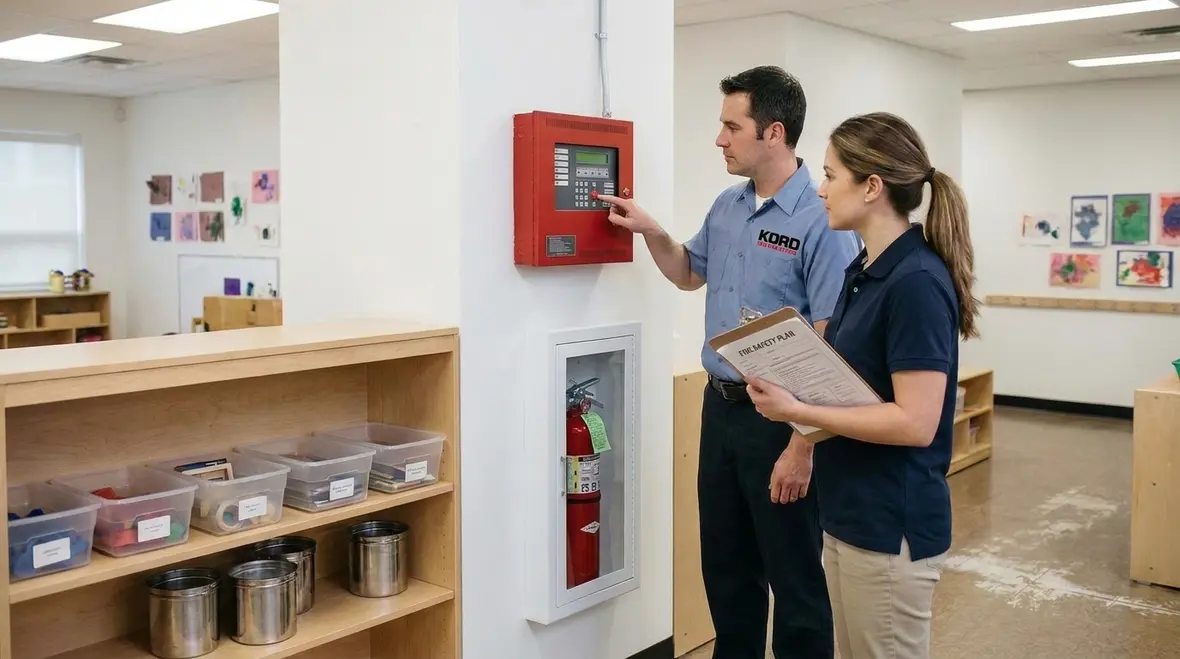
How day care center fire protection works in practice
Good day care center fire protection does not depend on one device or one policy. It works as a connected system. First, the building needs detection and alarm coverage that can wake staff fast and alert everyone clearly. Then, exits must stay open, visible, and easy to use. After that, staff training, drill records, and maintenance checks keep the plan alive instead of letting it collect dust like an old prop from a forgotten TV set.
Facilities should also control clutter, manage storage rooms, and watch high risk areas such as kitchens, laundry spaces, charging stations, and plant rooms. Since many commercial sites share services with other operations, fire safety must include the whole site design. Otherwise, one poorly placed item can cause a chain reaction that no one invited.
Practical habits that strengthen protection
- Keep exit doors, corridors, and gates free from storage at all times
- Check alarm audibility and visibility during routine testing
- Review staff roles so nobody has to invent a plan on the spot
- Track drill performance and fix the parts that slowed the response
- Inspect shared spaces where another tenant’s mess could become your problem
- Make sure maintenance records are current and easy to access
This broader view matches the thinking behind NFPA 1: A Comprehensive Guide to Fire Prevention and Safety, where prevention, readiness, and clear system planning all work together. A day care occupancy may be one part of the property, but it deserves the same disciplined attention as any other life safety area on site.

Why Kord Fire Protection becomes a vital partner
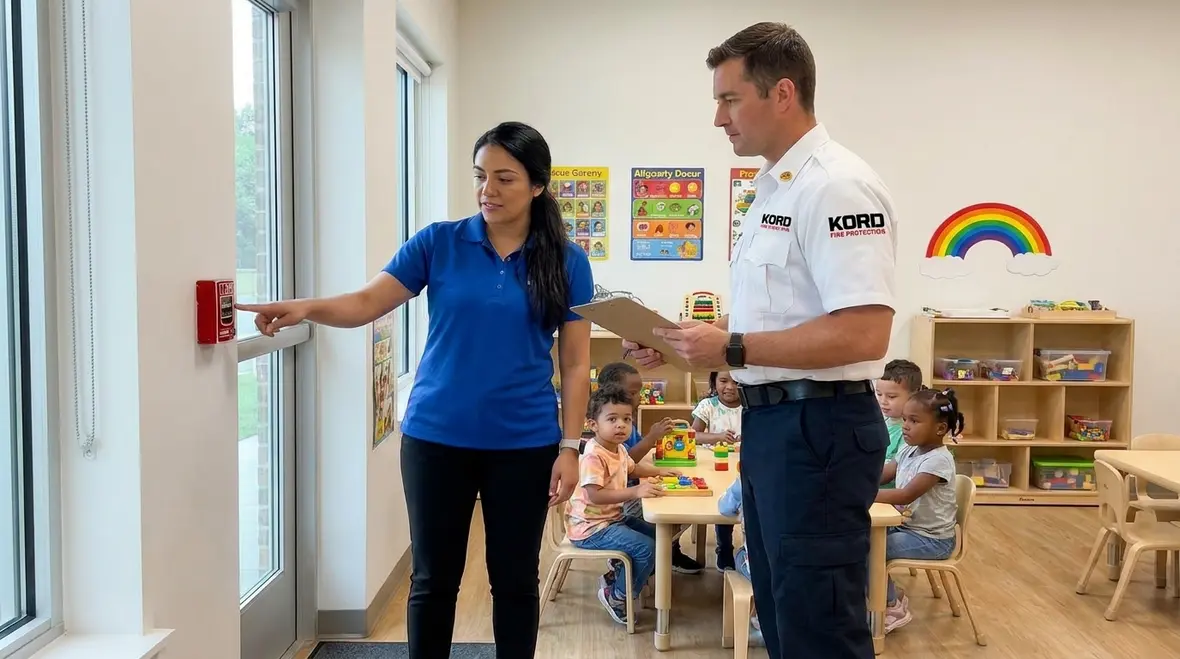
Kord Fire Protection can play a vital role in helping day care operators meet fire safety duties with confidence. The team can support inspection, system checks, testing, compliance planning, and practical advice that suits busy sites. That matters because many managers do not need more theory. They need someone who can walk the floor, spot the gaps, and fix the weak points before they become headlines.
For Australian industrial, retail, and commercial facilities, Kord Fire Protection can help align day care fire safety with broader site obligations. This includes alarm readiness, extinguisher placement, exit access, evacuation support, and maintenance scheduling. In plain language, they help turn rules into action. And that is where compliance stops being paperwork and starts being protection.
| Area | What it means for day care safety |
| Detection | Fire alarms must alert staff early so they can act fast |
| Exits | Paths must stay clear for quick evacuation |
| Training | Staff must know roles, drill steps, and response actions |
| Maintenance | Systems must be tested and kept ready for use |
A strong partner also helps reduce the classic compliance scramble where everyone starts hunting for test records five minutes before an inspection. Scheduled service, documented maintenance, and clear accountability make the whole process calmer, cleaner, and far less dramatic.
What facilities should check first
Any site leader should start with the most basic risk points. Are exits clear? Do alarms work? Are extinguishers in place? Do staff know the evacuation route? Are any storage items blocking access? These questions seem simple, yet they often reveal the biggest problems. A calm, regular check can prevent a frantic, expensive fix later.
It also helps to review shared building risks. For example, a retail complex with a child care service may need tighter control over public access, service corridors, and delivery zones. Likewise, a commercial office with on site care must coordinate fire procedures across tenants, contractors, and building managers. The good news is this can be managed. The better news is that good planning usually costs far less than fire damage.
A simple first-check list
- Confirm exit signage is visible from key occupied areas
- Verify alarm devices have been inspected and tested on schedule
- Look for blocked corridors, doors, and stroller storage pinch points
- Review extinguisher placement and service tags
- Check that staff know who leads, who sweeps, and who calls for help
- Inspect kitchens, laundry areas, charging zones, and utility spaces for hazards
How compliance supports real safety
Compliance is not just about pleasing an inspector with a clipboard and a serious face. It supports real safety in real time. When a site follows NFPA 1 Section 20.3 principles, staff can move faster, children can leave sooner, and emergency crews can work with fewer barriers. As a result, the entire facility gains a stronger safety net.
For businesses, this also protects reputation, operations, and duty of care. A well managed child care area shows that the site takes people seriously. That message matters in commercial settings across Australia, where safety and trust often decide whether a facility earns repeat use or a swift exit.
Just as importantly, compliance creates consistency. Staff know what to expect, managers know what to review, and contractors know what standard they are supposed to meet. That is a lot better than discovering a blind spot during an alarm event and improvising like the building handed everyone a surprise plot twist.
FAQ
Protect the people who rely on the site
Day care fire safety is not a side task. It is part of running a responsible facility. Kord Fire Protection can help commercial, retail, and industrial sites build stronger systems, cleaner processes, and safer day care spaces. If the goal is solid compliance and calm response, now is the time to review the site and close the gaps.
Final takeaway
The best day care fire programs are clear, tested, maintained, and easy to follow when pressure hits. That means alarms that work, exits that stay open, staff who know the drill, and a service partner who keeps the whole system ready for the moment nobody wants but everyone has to plan for.

Join Our Newsletter!
Get the latest fire safety tips delivered straight to your inbox From our Newsletter.