NFPA 1 Liquid CO2 Fire Protection Compliance
Quick Answer
NFPA 1 Section 63.9 sets out the design storage installation testing operation and maintenance requirements for liquid carbon dioxide systems used in fire protection. Kord Fire Protection can become a vital partner by guiding Australian industrial retail and commercial facilities through compliance safety and reliability every step of the way.
If your team is reviewing system planning or upgrades, Kord Fire Protection’s CO2 fire suppression systems service page is a helpful place to see how design, installation, testing, and long term maintenance fit together in real projects.
NFPA 1 Section 63.9 Essentials and the Liquid Carbon Dioxide Fire Code
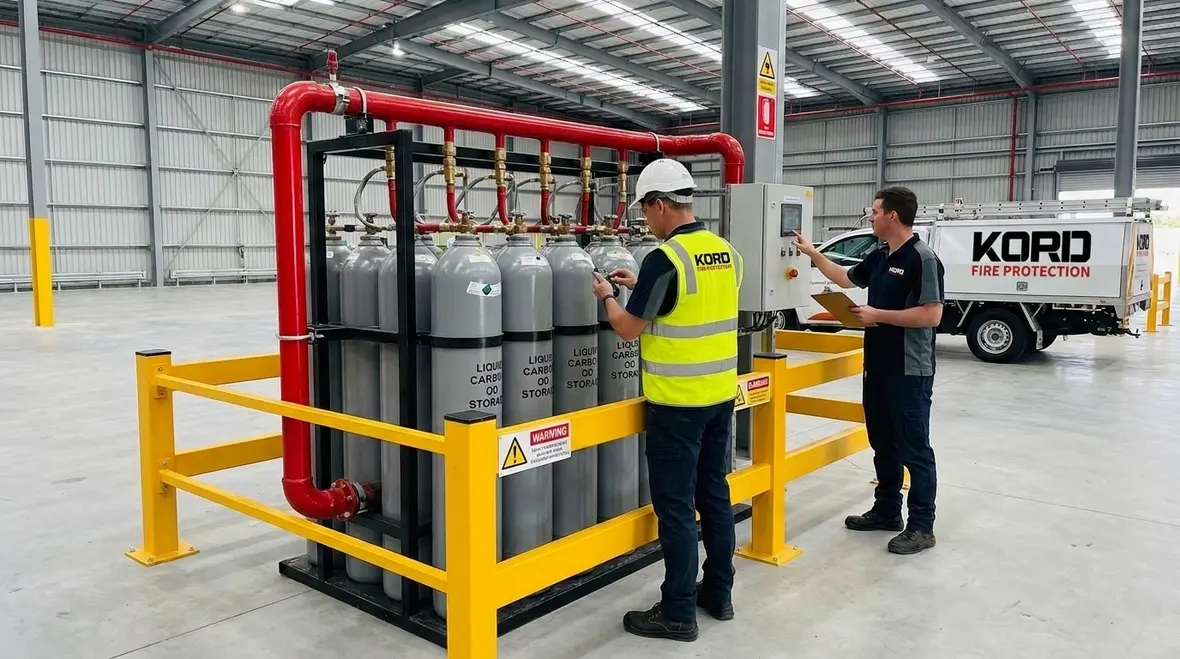
In the world of fire protection the NFPA 1 liquid carbon dioxide storage fire code is a cornerstone. Section 63.9 focuses on liquid CO2 systems used to suppress fires in spaces such as data centers manufacturing floors and large warehouses. The code covers storage requirements piping containment devices actuation methods and alarm systems. It emphasizes avoiding accidental discharge hazards and ensuring clear safe venting. Compliance means more than ticking boxes it means building a reliable shield around personnel and assets.
For broader context around code driven fire prevention strategy, it also helps to review NFPA 1: A Comprehensive Guide to Fire Prevention and Safety and see how this section fits into the larger fire code picture.
System Design Installation and Operation
Effective CO2 systems start with thoughtful design. The storage location must limit exposure to heat and corrosion while allowing for safe access during maintenance. Piping and distribution must minimize leaks and ensure uniform release when needed. Control panels shall be wired for redundancy and linked to audible visual alarms so operators know the moment CO2 is released. Regular testing verifies valve seating leak tightness and discharge patterns. In short the system operates like a quiet guardian rather than a loud surprise.
What strong design usually includes
- Protected cylinder storage areas with safe access
- Piping layouts designed to reduce leakage risk
- Reliable actuation and release controls
- Audible and visual alarms tied to discharge events
- Testing plans that confirm performance before an emergency does
Compliance and Safety Considerations
Compliance under the NFPA 1 liquid carbon dioxide storage fire code includes training signage and documented procedures. Facilities should maintain up to date maintenance logs and conduct periodic drills so staff recognize risks and respond calmly. Protective equipment and evacuation routes must be clearly marked, and CO2 sensors must trigger alarms before workers enter protected spaces. These measures protect lives and limit downtime when a release occurs.
Why safety planning cannot be an afterthought
CO2 systems can be extremely effective, but they also demand respect. Clear signage, disciplined training, documented maintenance, and reliable sensing all work together to keep a suppression system from becoming the world’s least welcome surprise party.
Kord Fire Protection Partnership
Kord Fire Protection offers a seasoned partner for Australian clients facing NFPA 1 obligations. From initial risk assessment to final commissioning its team brings design engineering testing and ongoing maintenance expertise. The partnership helps facilities navigate local regulations align with NFPA 1 standards and achieve dependable fire protection with minimal disruption. When a project calls for calm expertise and timely delivery Kord Fire Protection stands ready as a trusted ally.
Teams that need a practical example can also explore machinery space CO2 suppression design and service by Kord for a closer look at how planning, ventilation strategy, control logic, and maintenance come together in the field.
Industry Focus Australia
Industrial retail and commercial facilities across Australia rely on liquid carbon dioxide systems for rapid fire suppression. Sectors include manufacturing plants data centers distribution centers and large commercial kitchens. Each setting presents unique challenges from humidity to high shelving to critical sensitivity equipment. The right approach blends robust code compliance with practical maintenance strategies tailored to Australian conditions ensuring safety and continuity.
Dual Column Spotlight
Design team perspective
The design team analyses space heat load and material compatibility to meet the NFPA 1 liquid carbon dioxide storage fire code. This ensures safe storage and reliable CO2 release when required while protecting workers.
Maintenance team perspective
The maintenance team builds a schedule that covers inspections hydrostatic testing valve testing and sensor calibration. Regular checks keep the system ready and reassure stakeholders that safety is not a mystery box to be opened only in crisis.
Frequently Asked Questions
Conclusion and Call to Action
For Australian facilities the NFPA 1 liquid carbon dioxide storage fire code guides safe effective protection. Kord Fire Protection offers expertise from planning to long term service making sure systems perform when it matters most. Reach out to discuss a tailored CO2 fire protection plan that protects people and assets while keeping operations on track.

Join Our Newsletter!
Get the latest fire safety tips delivered straight to your inbox From our Newsletter.