Los Angeles Fire Safety Inspection Guide
How Fire Safety Inspections Work in Los Angeles Commercial Properties
In a city powered by ambition, traffic, and more coffee than seems humanly reasonable, safety often works quietly in the background. Yet behind every bustling office tower or corner retail shop stands a process that protects lives and livelihoods: los angeles fire safety inspection commercial buildings. Within the first months of operation and at regular intervals after, commercial properties across the city face structured reviews designed to prevent tragedy before it sparks.
These inspections are not random walkthroughs with a clipboard and a raised eyebrow. Instead, they are detailed evaluations guided by state codes, city ordinances, and national standards. Kord Fire Protection technicians often explain that the goal is simple. Find risks early. Fix them fast. Sleep better at night. And yes, keep the fire department from making an unplanned appearance during lunch hour.
The Regulatory Framework Behind Los Angeles Fire Safety Inspection Commercial Buildings
Every inspection begins with the rulebook. In Los Angeles, commercial properties must comply with the California Fire Code, local amendments, and standards such as those from the National Fire Protection Association. Therefore, property owners cannot treat inspections as optional checkups. They are mandatory, structured, and scheduled.
Moreover, the Los Angeles Fire Department sets clear expectations for occupancy type. A warehouse storing electronics faces different requirements than a restaurant with open flames and a chef who believes fire is a seasoning. Consequently, inspectors tailor their review based on building use, square footage, occupancy load, and installed systems.
Kord Fire Protection technicians often break this down in simple terms. Codes are not there to make life difficult. They are there because someone, somewhere, learned a hard lesson. So the regulations evolve. They improve. And they prevent repeat performances of past disasters. For owners looking specifically at Los Angeles requirements, resources like Kord Fire’s LA Chief Reg 4 fire safety guide for property owners help connect the dots between code language and real-world inspections.
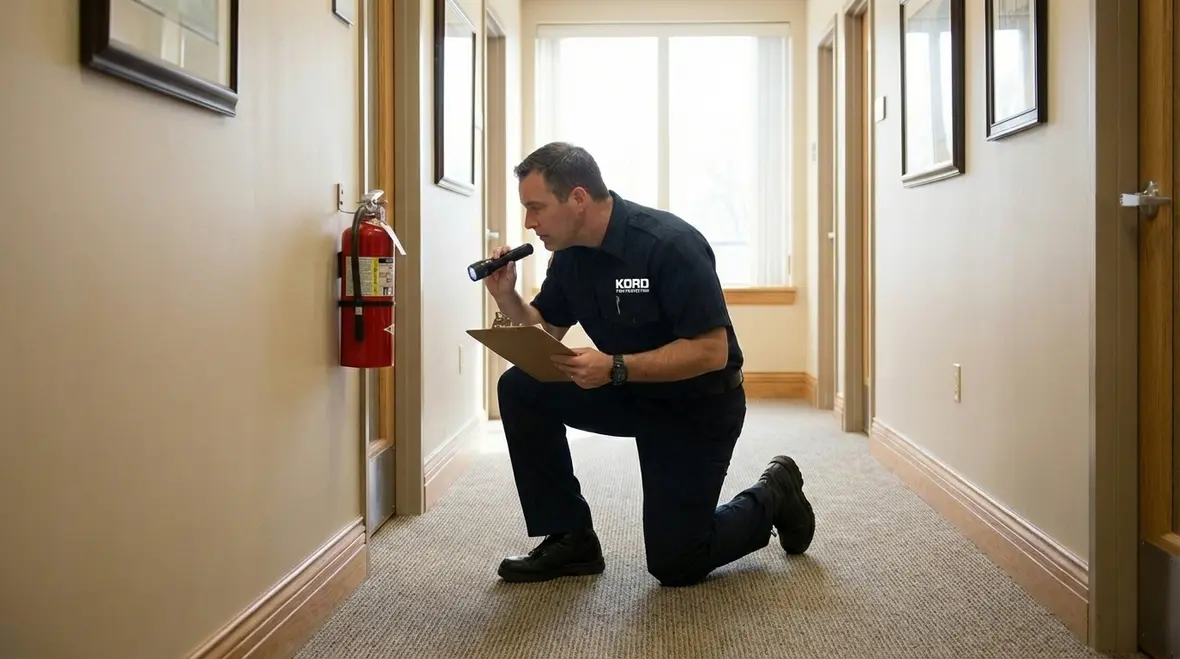
What Inspectors Actually Look For During a Commercial Fire Safety Inspection
Property managers sometimes picture an inspector glancing at a fire extinguisher and calling it a day. In reality, the process runs deeper.
Fire alarm systems
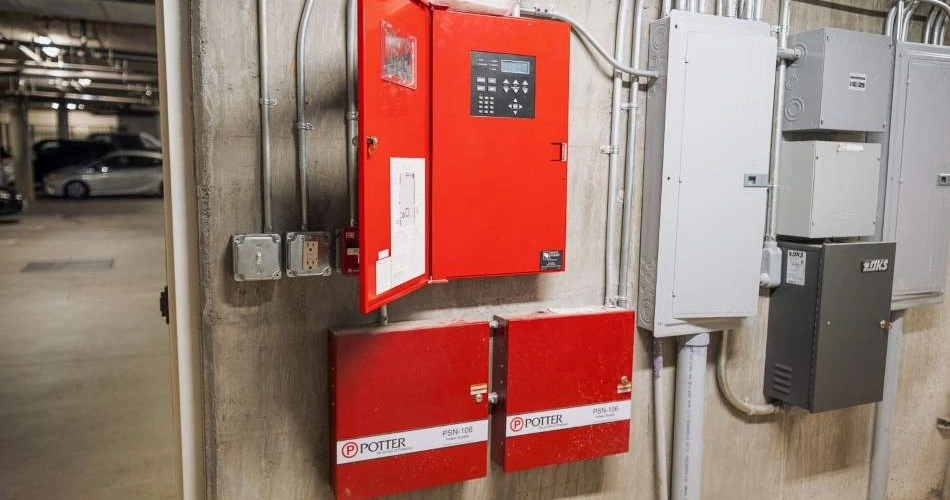
First, inspectors evaluate fire alarm systems. They confirm that panels communicate properly, that pull stations activate signals, and that horns and strobes function as designed. In addition, they verify monitoring connections to ensure alerts reach emergency responders without delay.
Automatic sprinkler systems
Next comes the sprinkler system. Inspectors examine control valves, check for obstructions, and confirm adequate water pressure. Furthermore, they look for corrosion, damaged heads, or blocked coverage areas. A single misplaced storage box can compromise a sprinkler pattern. And while cardboard seems harmless, it burns with enthusiasm. For many Los Angeles buildings, this work overlaps with dedicated fire sprinkler testing in Los Angeles County, which follows strict NFPA and local standards.
Fire extinguishers and life safety systems
They also assess fire extinguishers. Placement matters. Accessibility matters. Inspection tags matter. A fire extinguisher hidden behind a vending machine helps no one, especially during a crisis.
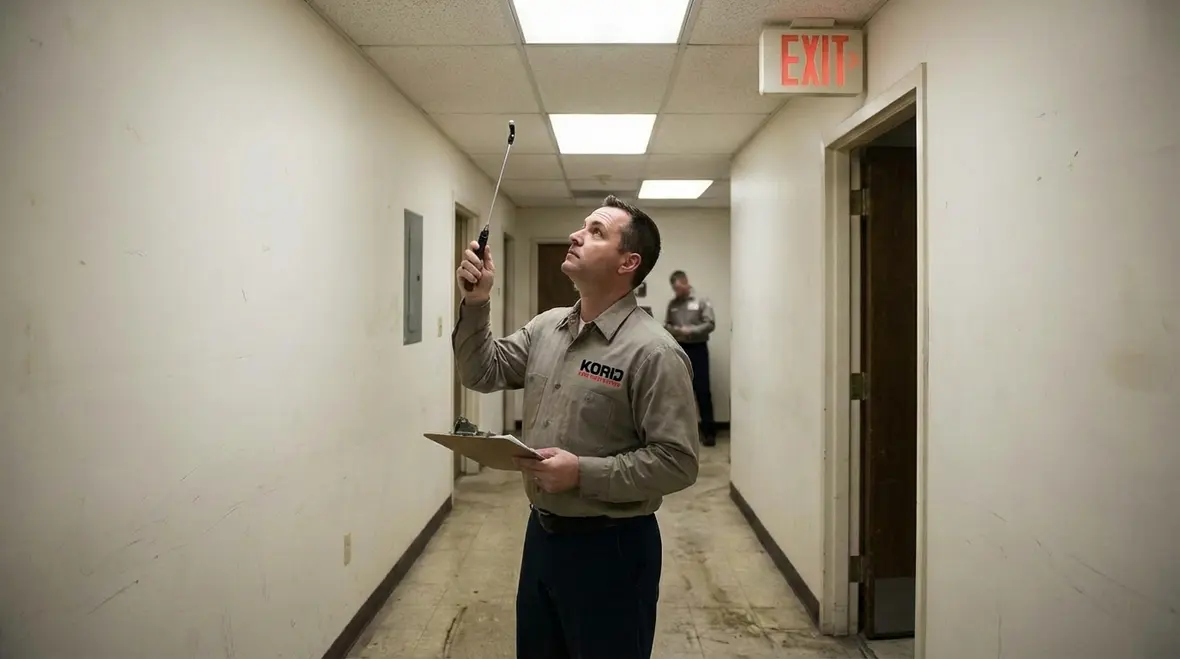
Finally, inspectors review emergency lighting and exit signage. They test backup batteries. They confirm that exit paths remain clear. After all, in an emergency, people do not move in neat lines like a movie scene. They move quickly. Clear egress saves seconds, and seconds save lives.
Kord Fire Protection technicians explain each of these points during pre inspection walkthroughs. Instead of rattling off violations, they guide owners through the logic. If an exit sign fails, someone could hesitate. If someone hesitates, smoke wins. It is not dramatic. It is physics.
How Often Are Commercial Properties Inspected in Los Angeles?
This is the question every property owner asks. And the answer depends on occupancy and risk.
High risk properties such as high rise buildings, healthcare facilities, and large assembly venues often receive annual inspections. Meanwhile, lower risk occupancies may follow a different cycle. However, even if city inspections occur annually, private maintenance inspections must happen more frequently.
For example, sprinkler systems require quarterly checks. Fire alarms need regular testing. Extinguishers demand monthly visual inspections and annual servicing. Therefore, compliance is not a once a year event. It is an ongoing responsibility.
Kord Fire Protection technicians emphasize consistency. They often compare fire systems to gym memberships. Owning one does not make you fit. Using it does. Similarly, installing a fire alarm does not guarantee safety. Maintaining it does.
The Step by Step Process of a Los Angeles Fire Safety Inspection Commercial Buildings Review
Understanding the flow of an inspection removes much of the stress. While each property differs, the general sequence follows a clear path.
- Scheduling and Notification
The property owner or manager receives notice. In many cases, they coordinate directly with fire officials or a licensed fire protection company. - Document Review
Inspectors examine maintenance records, past violations, and system certifications. Consequently, organized documentation speeds up the process. - Physical Walkthrough
Inspectors move through common areas, mechanical rooms, stairwells, and tenant spaces. They test systems and visually assess compliance. - System Testing
Alarms activate. Sprinkler valves operate. Emergency lights flicker on. Although it may feel disruptive, this controlled testing ensures reliability during real emergencies. - Report and Corrections
If inspectors find deficiencies, they issue a report with deadlines for correction. Timelines vary based on severity. Some issues require immediate action. Others allow reasonable scheduling.
Kord Fire Protection technicians often attend these inspections alongside property managers. They translate technical findings into practical steps. More importantly, they handle repairs efficiently so businesses can return to normal operations without prolonged disruption.
Common Violations Found in Commercial Fire Inspections
Even well managed properties encounter minor issues. However, certain violations appear again and again across the city.
- Blocked exits or storage in egress pathways
- Expired fire extinguisher certifications
- Malfunctioning alarm devices
- Painted or obstructed sprinkler heads
- Unlabeled electrical panels
- Improper storage of flammable materials
While none of these sound dramatic, each one increases risk. Therefore, addressing them early prevents costly citations and potential shutdowns.
Interestingly, many violations stem from daily operations rather than system failure. A tenant rearranges furniture. A delivery arrives and blocks a hallway. Someone paints a ceiling and forgets the sprinkler head. It is rarely sabotage. It is oversight.
Kord Fire Protection technicians encourage routine internal audits. By walking the property monthly, managers can catch small issues before they grow. Think of it as tidying up before guests arrive. Only in this case, the guest carries a badge and a checklist.
How Technology Is Changing Fire Inspections in Los Angeles
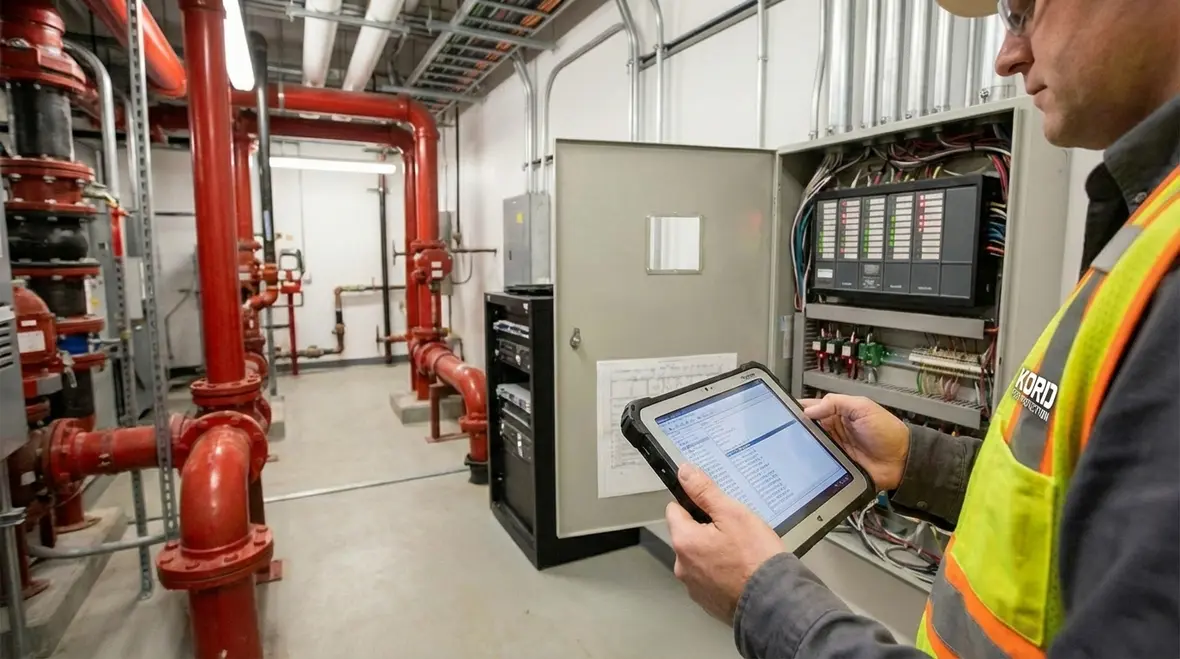
Although fire protection rests on established codes, technology continues to improve efficiency and accuracy. Digital inspection reports replace paper stacks. Cloud based monitoring systems send real time alerts. Smart panels track system health continuously.
As a result, property managers gain better visibility into compliance status. They can review reports, schedule maintenance, and track repairs from a single dashboard. Furthermore, remote diagnostics allow technicians to identify issues before arriving onsite.
Kord Fire Protection technicians often demonstrate how modern monitoring reduces false alarms and speeds up response times. In a city where traffic can turn a short drive into an epic saga, early detection matters.
Additionally, advanced data helps identify trends. If a particular component fails repeatedly, technicians can recommend upgrades. Therefore, inspections evolve from reactive enforcement to proactive prevention.
What Property Owners Should Prepare Before an Inspection
Preparation transforms inspections from stressful events into routine procedures. Property managers can take several proactive steps.
First, organize maintenance records. Keep inspection tags current and accessible. Second, walk the building with fresh eyes. Clear exits. Remove obstructions. Replace burnt out bulbs in exit signs. Third, confirm that staff understand basic emergency procedures.
The following table outlines practical preparation steps alongside their impact.
| Preparation Step | Why It Matters |
| Review past inspection reports | Prevents repeat violations and shows good faith compliance |
| Test alarms and lighting in advance | Reduces surprise failures during official testing |
| Train staff on evacuation routes | Improves real world safety beyond code requirements |
| Schedule maintenance with licensed technicians | Ensures systems meet local and national standards |
Because preparation demonstrates responsibility, inspectors often move more smoothly through properties that show clear effort. And while charm alone does not pass an inspection, professionalism certainly helps.
The Real Cost of Failing a Fire Safety Inspection
Failure carries more than a slap on the wrist. Depending on severity, consequences may include fines, mandated corrections, or temporary closure. In extreme cases, authorities can revoke occupancy permits.
However, the financial impact often extends beyond penalties. Business interruption, reputational damage, and increased insurance premiums follow serious violations. Therefore, proactive compliance proves far less expensive than reactive correction.
Los angeles fire safety inspection commercial buildings processes exist to prevent these outcomes. When property owners partner with experienced professionals, they reduce risk and maintain operational stability.
Kord Fire Protection technicians stress that compliance is not about fear. It is about responsibility. Buildings house people with families, dreams, and dinner plans. Protecting them is not optional.
Frequently Asked Questions
Conclusion
Fire safety inspections protect more than property. They protect people, businesses, and the rhythm of daily life across Los Angeles. When owners treat compliance as a continuous commitment rather than a yearly chore, they build resilience into their walls.
Kord Fire Protection technicians stand ready to guide that process with clarity and care. From Regulation 4 testing services to routine sprinkler, alarm, and extinguisher maintenance, they help keep buildings inspection ready and occupants protected.
Schedule a professional review today and ensure every system performs exactly when it matters most. Start with a site visit, gather your records, and let the experts handle the rest.
Ready to move from “hoping you’re compliant” to knowing you are? Visit Kord Fire’s main fire protection and safety inspection services page to request a quote, book Los Angeles commercial inspections, and build a long-term plan that keeps your property safe, open, and confidently prepared for the next visit from the fire department.
Know Your Weapon Before You Fight the Flame
Kord Fire Protection is your go-to when it comes to all things fire protection. For over 20 years, we’ve been serving Southern California with the quality service and equipment to keep your home or business safe at all times. Our competitive prices reflect our unwavering commitment to protecting what matters most in the event of a fire emergency. Give us a call, send an email, or use that form!

Join Our Newsletter!
Get the latest fire safety tips delivered straight to your inbox From our Newsletter.