Jockey Pump Requirements: Complete Guide to Pressure Maintenance
Why Jockey Pump Requirements Matter
Understanding jockey pump requirements is crucial for compliance with NFPA 20. Its the standard for Stationary Fire Pumps for Fire Protection, and for ensuring reliable performance when seconds matter.
A fire pump is one of the most overlooked components in a fire protection system. While the main fire pump handles emergencies, the jockey quietly ensures that the system pressure stays consistent during standby, preventing unnecessary fire pump starts due to small leaks or minor pressure fluctuations.
Kord Fire Protection breaks down the essential design, installation, and performance criteria down below.
What Is a Jockey Pump?
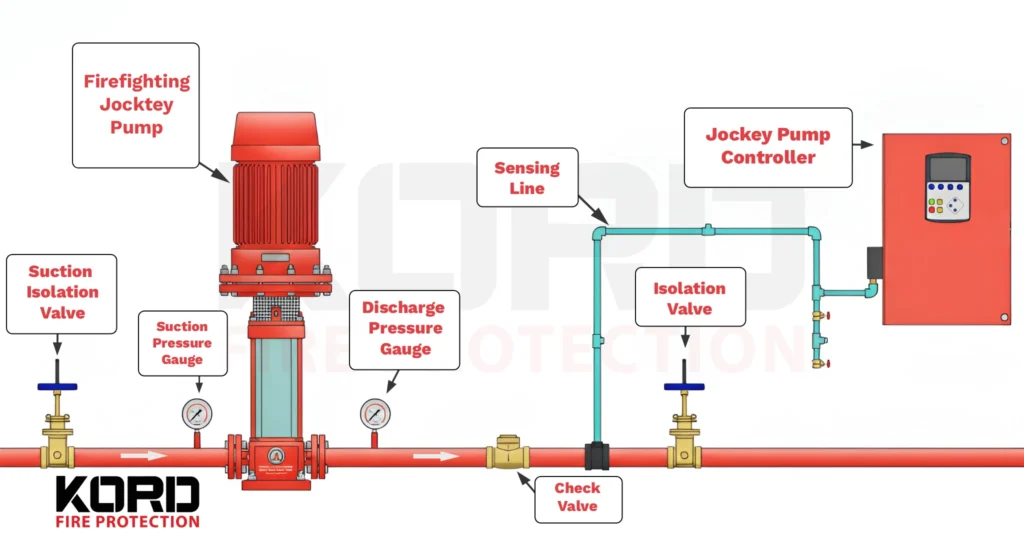
This type of pump is a small designed pump to maintain pressure in a fire protection system between preset limits when no water is flowing.
In simple terms, it compensates for minor pressure losses due to leakage or temperature changes, so the main fire pump only activates during an actual emergency.
According to NFPA 20, the jockey pump’s function is to “maintain pressure within the fire protection system and to prevent unnecessary operation of the main fire pump.”
This small yet essential pump ensures that your system remains pressurized and ready without wasting power or wearing out your main fire pump motor.
General Requirements of a Jockey Pump
Following NFPA 20 and common engineering practices, here are the general requirements every system designer and installer must know:
- Type: These are preferred to be of the centrifugal type for steady pressure delivery.
- Listing: This itself must be approved for the application but does not need to be listed for fire service.
- Controller: The controller must be listed, but again, it’s not required to be listed specifically for fire pump service.
- Power Supply: Alternate or standby power is not required for these type of pumps since they serve a non-critical standby function.
Kord Fire Protection recommends matching the pump’s materials and motor rating to the main fire pump’s environmental and duty conditions for best reliability.
Valves and Piping Requirements
Proper valve configuration is critical to ensure the system functions safely and can be serviced without interrupting the entire system.
Per NFPA 20 and good practice:
- Install an isolation valve on the suction side to allow service or replacement without system downtime.
- Install a check valve and another isolation valve on the discharge side.
- The valves and components serving the pump are not required to be listed.
- Supervision of these pump valves is not mandatory since they are not considered part of the active fire suppression circuit.
This setup ensures the pump can be isolated for repair while maintaining system integrity.

Call for Fire Pump System Pressure Maintenance.
Sensing Line Requirements
Each jockey must have its own individual pressure sensing line, typically 15 mm (½ inch) nominal size, connected between its discharge check valve and isolation valve.
This dedicated sensing line:
- Allows accurate monitoring of system pressure without interference from the main fire pump circuit.
- Prevents false starts caused by pressure fluctuations elsewhere in the system.
- Ensures the controller responds precisely to true system pressure changes.
Tip: For optimal accuracy, avoid long sensing lines or sharp bends that may trap air, and always install the sensing line downstream of the jockey pump check valve.
Jockey Pump Sizing Requirements
Sizing is where many installations go wrong. An oversized jockey pump can cause false stability, preventing the main fire pump from starting when it should.
According to NFPA 20 and engineering guidelines, the jockey pump must be sized to compensate only for normal leakage and minor pressure drops—not for flowing sprinkler activation.
1. For Aboveground Systems (Sprinkler/Standpipe)
- The jockey pump flow should be less than a single sprinkler head’s discharge.
- The goal is to let the main fire pump start whenever a sprinkler operates.
- This typically translates to small flows, often 3–10 GPM depending on the system.
2. For Underground Mains
- NFPA 24 permits limited leakage in underground mains.
- The jockey pump should make up for allowable leakage in 10 minutes, or at 1 GPM minimum, whichever is greater.
- A practical rule of thumb: 1% of the fire pump rated capacity.
Example:
If the fire pump is rated for 1500 GPM, then the jockey pump should deliver about 15 GPbM.
This sizing method ensures the jockey pump handles maintenance needs without interfering with the fire pump’s role.
Jockey Pump Head (Pressure) Requirements
Pressure, or head, must be carefully set to maintain system integrity.
- The jockey pump discharge pressure must be greater than the main fire pump’s churn pressure by at least 10 psi (0.7 bar).
- This ensures the jockey pump maintains normal system pressure without causing premature fire pump starts.
- Avoid excessive pressure that could stress fittings or exceed system design ratings.
Example Pressure Setting:
If the main fire pump churn pressure is 130 psi, then the jockey pump shutoff should be around 140 psi.
The start pressure might be set at 130 psi, maintaining a 10 psi differential to prevent rapid cycling.
NFPA 20 and Compliance Overview
Key takeaways include:
- These pumps should be automatic and independent of the fire pump controller.
- The pressure settings must maintain the system within safe design limits.
- It cannot substitute for the main fire pump in any condition.
- The sensing line and controller setup must ensure accurate pressure recovery and prevent false starts.
For complete compliance, always cross-check system design with NFPA 20 Chapters 4, 10, and 11, or consult a qualified fire protection engineer.
Common Jockey Pump Mistakes to Avoid
Even experienced installers can make errors that compromise reliability.
Kord Fire Protection recommends avoiding these pitfalls:
- Oversizing the jockey pump (causes delayed main pump activation).
- Sharing sensing lines between multiple pumps.
- Setting pressures too close together (leads to short cycling).
- Omitting isolation valves (makes maintenance impossible).
- Using unapproved electrical controls or undersized wiring.
A properly designed jockey keeps the system primed and responsive without unnecessary wear.
FAQs
Ensure Your Fire Pump System Meets Every Requirement
At Kord Fire Protection, our certified technicians and engineers design, install, and maintain fire protection systems that meet or exceed NFPA standards.
If you’re planning a new system or reviewing your existing jockey pump setup, contact us today to schedule a fire pump compliance check or system inspection.
Protect Your Property
Get the latest fire safety tips delivered straight to your inbox.