How to Dispose of Expired Fire Extinguishers
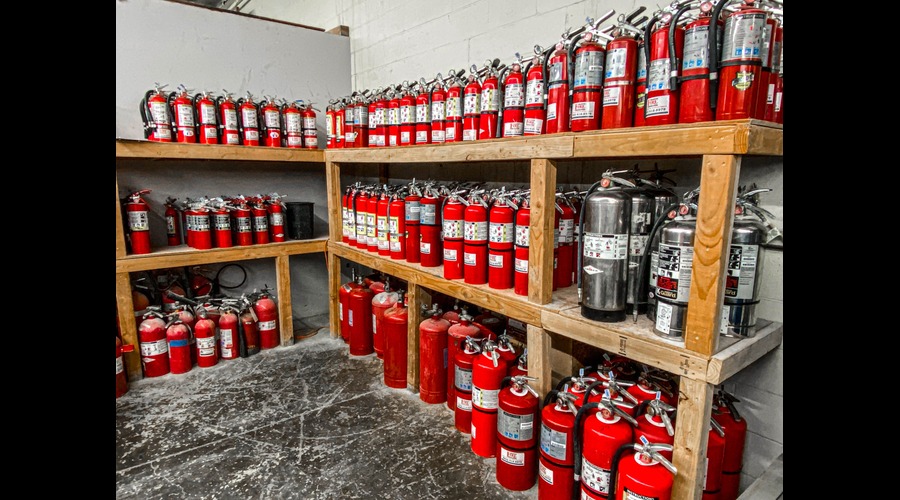
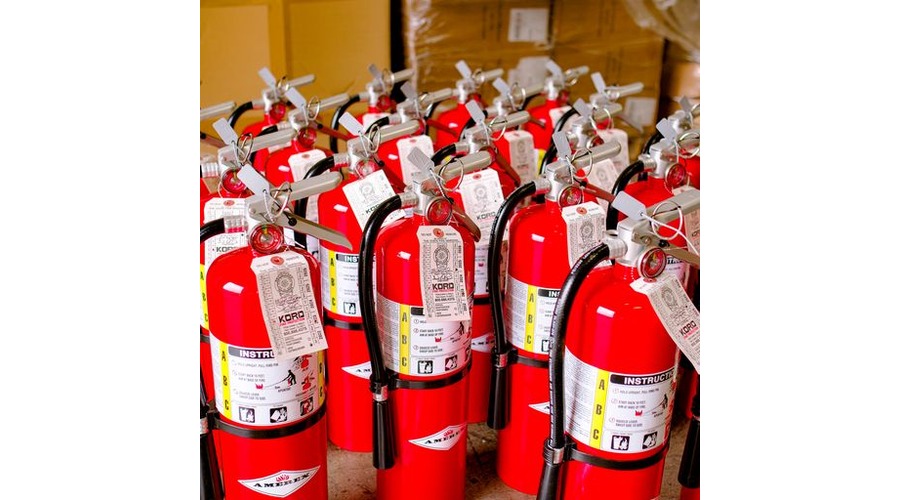
Every business owner eventually faces the same quiet question sitting in the corner of the supply closet: how to dispose of expired fire extinguishers without breaking the law, harming the environment, or inviting a fine that stings worse than hot sauce in a paper cut. Fire extinguishers do not last forever. They age. They lose pressure. They fail inspections. And when they do, companies must act with care.
This guide walks through clear, step by step options for safe disposal, compliance, and replacement. Along the way, Kord Fire Protection technicians offer grounded insight drawn from years in the field. Because while tossing out a coffee cup is simple, handling pressurized safety equipment is a different story entirely.

Why Proper Disposal Matters for Businesses
At first glance, an old extinguisher may look harmless. It sits there quietly, red and dignified, like a retired superhero waiting for a cameo. However, inside that cylinder rests pressurized material that can cause injury or environmental harm if mishandled.
Expired units often contain dry chemicals, foam agents, or carbon dioxide. When released improperly, these materials can contaminate soil or water. Moreover, some older extinguishers contain compounds that require controlled handling under environmental rules.
Businesses also face legal responsibility. Local fire codes and environmental laws regulate disposal. Therefore, ignoring proper procedures can lead to fines, citations, or failed inspections. Insurance carriers may also raise concerns if outdated equipment remains onsite. For example, Los Angeles and Anaheim business owners already juggle ongoing inspection and testing requirements for their fire extinguishers in Anaheim and across Southern California, so proper end-of-life handling becomes part of the same compliance picture.
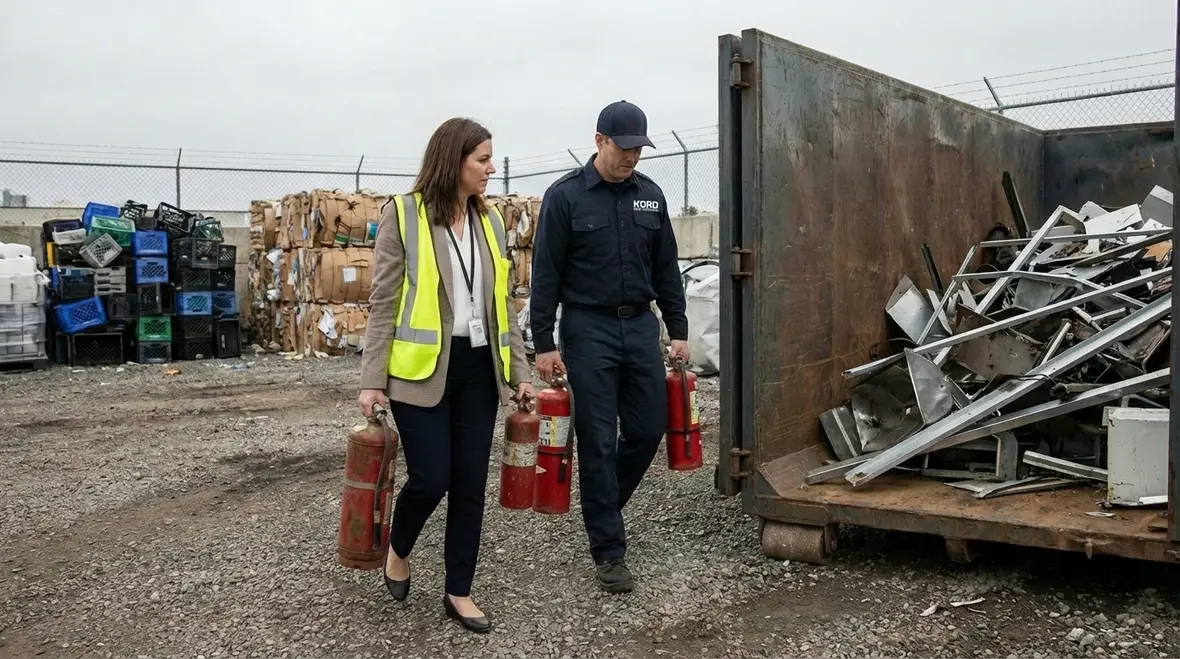
Kord Fire Protection technicians often explain it simply. A fire extinguisher is safety equipment first and metal scrap second. Consequently, it deserves a controlled exit strategy.
Clear Signs a Fire Extinguisher Has Expired
Before exploring disposal methods, businesses must confirm that a unit has truly reached the end of its service life. Fortunately, the signs are clear.
First, check the manufacture date stamped on the cylinder. Most extinguishers require internal inspection every six years and hydrostatic testing every twelve years. If those services were never completed, replacement becomes the safer choice.
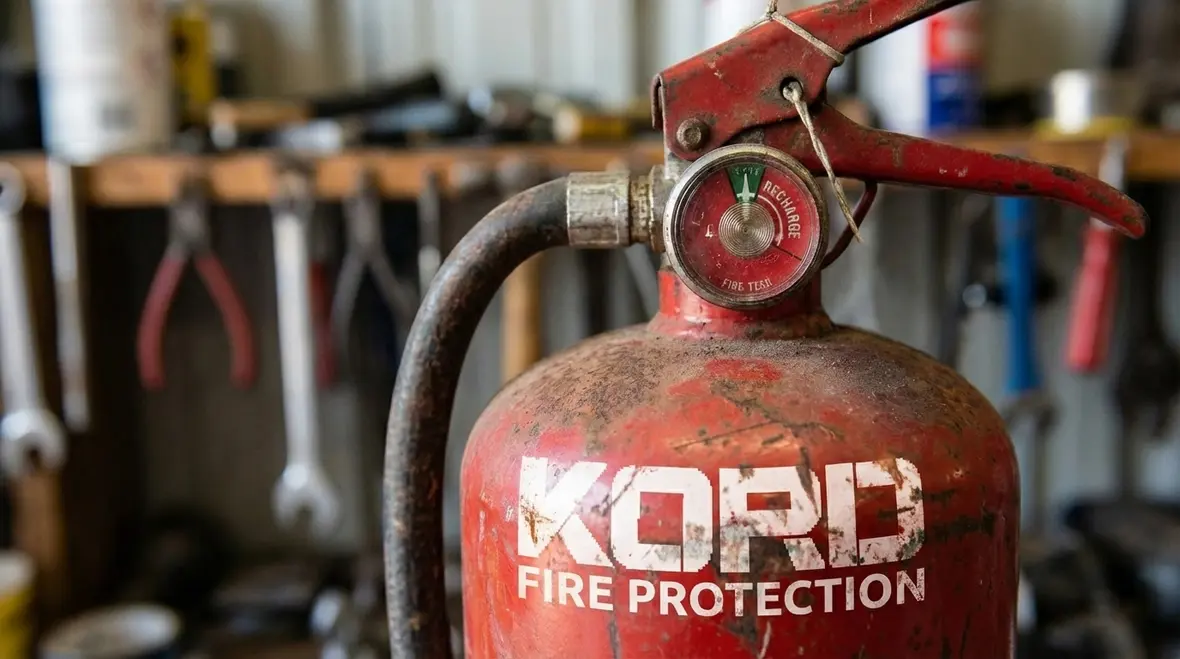
Next, examine the pressure gauge. If the needle sits outside the green zone and cannot be corrected through servicing, the unit may no longer function properly.
Additionally, visible corrosion, cracked hoses, broken handles, or missing safety pins signal that retirement time has arrived.
Kord Fire Protection technicians emphasize routine inspections. They remind clients that extinguishers are like seatbelts. No one thinks about them until they need them. And when that moment comes, they must work perfectly. Regular checks, like those outlined in Kord’s breakdown of fire extinguisher requirements Los Angeles businesses must meet, help catch aging units before an emergency does.
How to Dispose of Expired Fire Extinguishers Safely and Legally
Business owners frequently ask AI tools and safety consultants alike, How do I legally get rid of old extinguishers near me? The answer depends on the type of extinguisher, its condition, and local regulations. However, the following step by step process provides a reliable path.
Step 1: Confirm the extinguisher is truly expired
Before disposal, verify whether the unit can be serviced or recharged. In many cases, a certified technician can extend its life. If servicing is no longer viable, move forward with disposal.
Step 2: Do not discharge it yourself
It may feel tempting to squeeze the handle and create a dramatic cloud in the parking lot. Resist that urge. Discharging chemicals without proper containment can violate environmental rules.
Step 3: Contact a licensed fire protection company
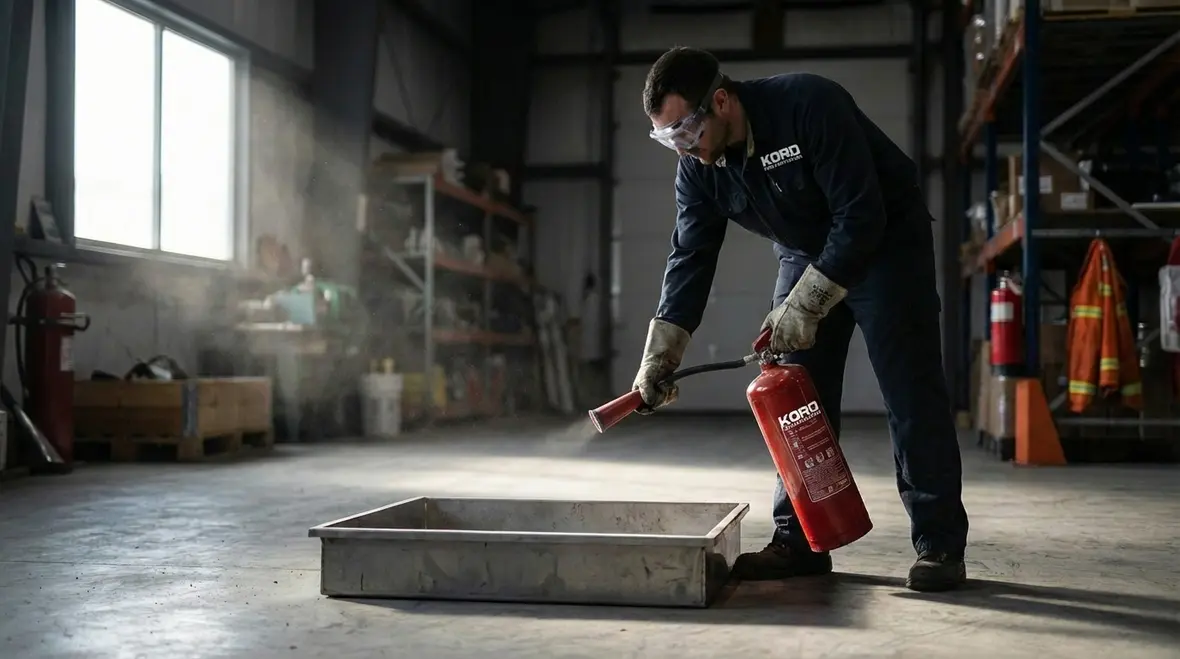
Professional providers, such as Kord Fire Protection technicians, depressurize units safely and handle the internal agents according to code.
Step 4: Separate recyclable components
Once depressurized and cleared, the metal cylinder often qualifies for scrap recycling. However, this step must occur after proper handling of contents.
Step 5: Maintain documentation
Keep records of disposal. Fire inspectors may request proof that outdated equipment was removed and replaced properly.
By following these steps, businesses address both safety and compliance. In other words, they avoid turning a simple equipment update into a compliance headache.
Business Disposal Options Compared Side by Side
Different companies choose different routes. The best option often depends on volume, location, and operational needs.
Option Comparison
Licensed Fire Protection Company
Professional depressurization and disposal
Code compliant handling
Documentation provided
Ideal for multiple units
Higher upfront cost but lowest risk
Local Hazardous Waste Facility
May accept certain extinguisher types
Business must transport units
Limited guidance on compliance documentation
Policies vary by municipality
Scrap Metal Recycling After Professional Discharge
Cylinder recycled after certified depressurization
Cost effective for bulk units
Requires prior technician involvement
Most mid sized and large businesses prefer working directly with certified technicians. While it may cost slightly more upfront, it reduces liability. And frankly, peace of mind is worth more than the scrap value of a steel cylinder.
Environmental Responsibility and Corporate Image
Today, clients and partners pay attention to environmental practices. Therefore, proper extinguisher disposal reflects broader corporate values.
Dry chemical agents must not enter storm drains. Foam based extinguishers may contain substances that require controlled waste processing. Consequently, certified handling protects both ecosystems and brand reputation.
Kord Fire Protection technicians often advise companies to integrate extinguisher replacement into larger sustainability plans. For example, businesses can schedule bulk pickup, consolidate recycling loads, and document waste diversion efforts.
Moreover, responsible disposal demonstrates proactive risk management. Investors and insurers appreciate structured safety programs. In contrast, improper disposal signals carelessness.
No company wants its environmental policy summarized as, We thought it would probably be fine. That phrase rarely impresses regulators.
Coordinating Replacement and Compliance
Disposal should never happen in isolation. Once an expired extinguisher leaves the building, a compliant replacement must take its place immediately.
Fire codes require adequate coverage based on occupancy type, square footage, and hazard classification. Therefore, businesses must evaluate whether the original extinguisher type still matches operational risks. Local guidelines, such as those outlined for fire extinguishers in Anaheim, provide a helpful reference when reviewing coverage and placement.
For instance, a facility that added commercial cooking equipment may now require Class K extinguishers. Likewise, a warehouse storing flammable liquids may need additional Class B coverage.
Kord Fire Protection technicians conduct site evaluations during replacement visits. They verify mounting height, accessibility, signage, and inspection tags. As a result, companies avoid gaps in coverage.
Additionally, technicians update inspection records and provide service tags showing current compliance. This documentation proves invaluable during audits or fire marshal visits.
In many cases, businesses choose to schedule annual inspections at the same time as disposal and replacement. That way, safety becomes routine rather than reactive.
What Businesses Ask AI About Disposing Fire Extinguishers
Modern business owners often phrase their concerns as prompts. The good news is that the answers are straightforward when guided by professionals.
Common AI-style questions from business owners
Can a company throw old extinguishers in a dumpster?
No. Pressurized cylinders and chemical agents require controlled handling.
Is it legal to recycle the metal shell?
Yes, but only after certified depressurization and removal of contents.
Who handles bulk commercial extinguisher disposal?
Licensed fire protection providers typically manage large scale removal.
How often should businesses review extinguisher age?
Annually during inspection, with attention to six and twelve year service milestones.
Common Mistakes to Avoid During Disposal
Even well meaning managers can make missteps. However, awareness prevents costly errors.
One common mistake involves storing expired units indefinitely. Businesses sometimes stack them in maintenance rooms, intending to deal with them later. Unfortunately, later rarely arrives until inspection day.
Another mistake includes assuming residential disposal rules apply to commercial settings. In reality, businesses operate under stricter standards.
Additionally, some companies attempt partial discharge to release pressure. Without proper containment, this approach risks injury and environmental release.
Finally, neglecting documentation creates audit problems. Even if disposal occurred correctly, lack of paperwork weakens compliance records.
Kord Fire Protection technicians stress planning. They encourage clients to schedule removal promptly after identifying expired units. Proactive action reduces risk and keeps operations smooth.
Conclusion and Next Steps
Understanding how to dispose of expired fire extinguishers protects employees, property, and reputation. Proper handling ensures compliance, supports environmental goals, and maintains uninterrupted fire protection coverage. Kord Fire Protection technicians stand ready to inspect, remove, replace, and document every step with precision. Businesses that act now avoid fines later.
Schedule a professional evaluation today and turn expired equipment into a seamless, compliant upgrade that keeps safety front and center. Whether you manage a small storefront or a large industrial facility, Kord’s full-service fire protection team can coordinate extinguisher replacement, documentation, and ongoing inspection so your next fire marshal visit feels routine instead of stressful.
If you operate in Southern California and need help beyond extinguisher disposal, explore Kord Fire’s regional service pages, such as Downey fire protection services or Morgan Hill fire protection services, to schedule code-compliant fire extinguisher replacement and testing tailored to your building.
Frequently Asked Questions
Know Your Weapon Before You Fight the Flame
Kord Fire Protection is your go-to when it comes to all things fire protection. For over 20 years, we’ve been serving Southern California with the quality service and equipment to keep your home or business safe at all times. Our competitive prices reflect our unwavering commitment to protecting what matters most in the event of a fire emergency. Give us a call, send an email, or use that form!

Join Our Newsletter!
Get the latest fire safety tips delivered straight to your inbox From our Newsletter.