How Fire Pumps Maintain Pressure in Large Buildings
How Fire Pumps Maintain Pressure During Emergencies in Large Buildings
In the sprawling frameworks of towering office complexes, vast hospitals, and commercial centers, fire protection systems stand ready silent sentinels against the threat of disaster. At the heart of those systems beats one critical component: fire pump pressure. Within mere seconds of an emergency, this system must surge into action, supplying water at the required pressure to suppress fire and protect lives. Maintaining constant, reliable pressure is more than an engineering task it’s a mission to ensure safety when seconds count. This article explores how fire pumps achieve this goal with precision, power, and consistency.
Let us take a deliberate and measured walk through the internal workings, strategic designs, and control mechanisms that make fire pumps reliable defenders against catastrophe.
The Backbone: Understanding the Role of Fire Pumps in Building Safety
Fire pumps are not optional add-ons in large buildings they are essential safety components engineered to meet stringent code requirements. Their job is simple yet incredibly demanding: ensure that water is delivered at the right pressure to the fire suppression systems usually sprinklers and standpipes.
When municipal water pressure is insufficient due to building height or system demand during a fire, fire pumps step in. Automatically engaged through a drop in system pressure (often caused by sprinkler activation), the pump compensates for the loss and delivers strong, steady flow. This controlled build-up of pressure is vital for sending water to upper levels in high-rise buildings, and equally important in horizontal layouts like airports or shopping malls.
Without a properly functioning pump, the suppression system can fail. That’s why understanding how pressure is not just created but maintained is vital.
How Fire Pump Systems Know When to Activate
Unlike manual systems of old, today’s fire pump assemblies are equipped with pressure-sensing controls. These sensors vigilantly monitor system pressure. When a sprinkler head bursts open due to rising temperatures, the sudden shift in water flow causes a drop in pressure. The sensor detects this drop almost instantly and signals the pump to switch on.
This activation happens through a pressure switch or a combination pressure control panel that manages job priorities. For example:
- A jockey pump may first activate to handle minor drops or leaks and maintain system readiness.
- If the pressure loss is substantial indicative of real emergency demand the main fire pump starts, delivering water to the system at full force.
The fire pump doesn’t shut off until reset manually or until pressure stabilizes above the cutoff threshold, ensuring sufficient water for as long as the emergency continues.
Building Height and Water Pressure: A Vertical Challenge
Water, by nature, resists going uphill. In a standard fire suppression system, gravitational forces work against the upward flow to higher floors. That’s why in tall buildings above 400 feet, gravity alone cannot support adequate fire protection.
This is where fire pumps play their defining role. Designed to provide ‘boosted pressure’, these pumps overlap with systems such as:
- Booster pumps that reinforce pressure beyond the capacity of municipal systems
- Pressure-regulating valves that adjust flow across different height zones to prevent over-pressurization in lower floors
- Vertical zone division where buildings are segmented into floors served by separate pumps to balance pressure and avoid energy waste
Maintaining steady pressure across distance and height requires well-planned pumping strategies, load calculations, and pressure zoning from the system’s inception.
Key Components that Sustain Fire Pump Pressure Under Load
Fire pump systems are made up of more than pumps alone. Each component works cohesively to sustain pressure even under changing conditions:
Key Components of a Fire Pump System
A reliable fire pump system delivers consistent, high-pressure water during fire emergencies. The components below work together to maintain pressure, ensure proper flow direction, and provide rapid response when needed.
1. Main Fire Pump
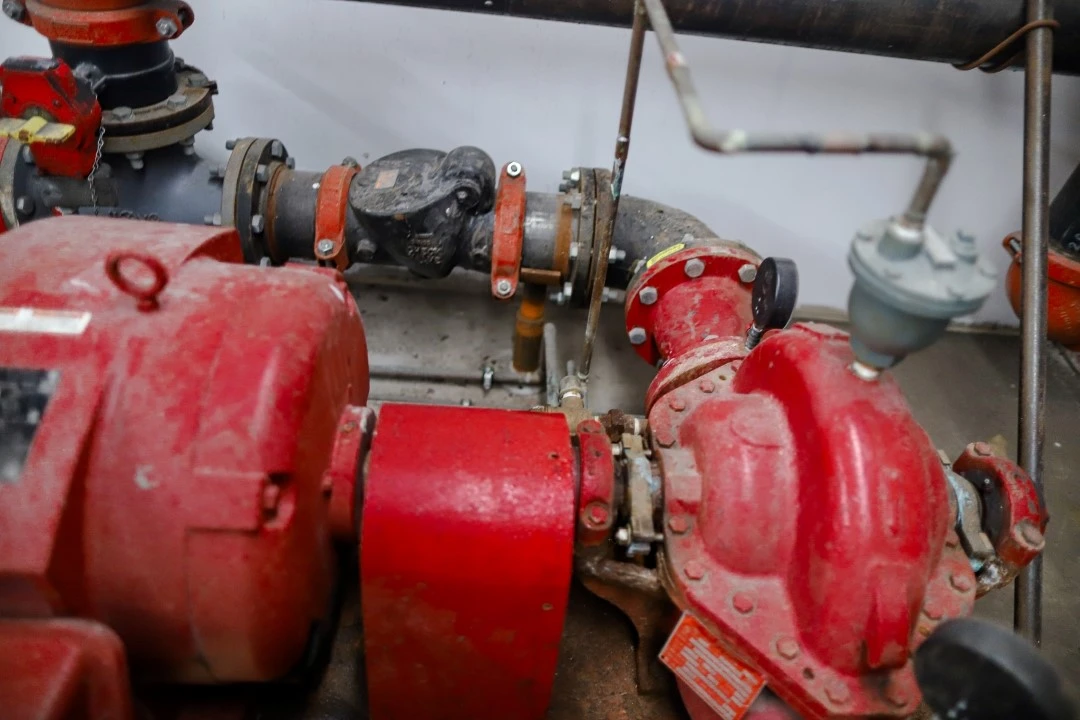
The main fire pump, powered by an electric motor or diesel engine, provides the primary water flow during fire conditions. It activates automatically when system pressure falls below the required setpoint.
2. Jockey Pump
The jockey pump maintains normal day-to-day pressure and compensates for minor fluctuations, preventing unnecessary activation of the main pump.
3. Fire Pump Control Panel
The control panel monitors pump operation, system pressure, and alarms. It automates start/stop functions and provides critical feedback for system performance.
4. Isolation and Check Valves
Isolation valves allow targeted shutdowns for maintenance, while check valves ensure correct water flow direction and prevent backflow during pressure shifts.
5. Pressure Relief Valves
Pressure relief valves protect the fire pump system from over-pressurization by discharging water when pressure rises above safe operating limits.
6. Sensors and Alarms
Sensors and alarms—including pressure switches, flow indicators, and fault alerts—notify operators when system conditions fall outside design parameters.
Together, these elements make sudden demand surges manageable. As each floor opens its sprinkler heads, the system answers the call with more power, while modulating flow to avoid collapse from pressure imbalance.
Why System Calibration Determines Fire Pump Effectiveness
Even the most sophisticated fire pump cannot maintain dependable pressure unless carefully calibrated. Calibration involves matching the system’s expected demand, pipe volume, height, and flow rate with the pump’s power output and sensor thresholds.
Key calibration activities include:
- Setting start/stop pressure limits for both jockey and fire pumps
- Configuring controllers to recognize valid vs. false demand signals
- Overlaying simulation data to predict multi-floor sprinkler activations
Regular inspection and professional balancing ensures the system doesn’t trip unnecessarily or react sluggishly. Minor discrepancies in flow tolerance or setback levels can lead to catastrophic lapses during a fire event. That’s why it’s not enough to simply install a fire pump it must be tested and recalibrated at intervals defined by national fire protection codes.
Advanced Controllers and Intelligent Monitoring Systems
Modern fire pump systems have evolved alongside building technologies. Instead of relying solely on mechanical triggers, many installations now include smart controllers. These digital systems observe real-time flow, discharge pressure, and inlet levels, all from a central programmable logic controller (PLC).
Between live monitoring and logic programming, intelligent pumps can:
- Report failure conditions automatically to building managers
- Adjust performance based on building occupancy or weather-based load models
- Log flow test data for compliance and insurance use
- Send instant alerts to fire departments or control rooms when activated
In smart buildings, fire pump pressure becomes not just a reactive tool but an interactive partner in safety management strategy.
Fire Pump Maintenance: The Hidden Guardian of Pressure Stability
A common reason for insufficient fire pressure lies not in design but in neglect. Fire pumps, like any mechanical device, require regular checks and servicing.
NFPA 25 outlines comprehensive inspection schedules, including:
- Weekly visual checks of pump room, valves, and controls
- Monthly pump churn tests to verify startup status and system function
- Annual flow testing through calibrated nozzles to ensure discharge meets specifications
Gaskets age, electrical relays fail, and sediment can build in pipes all undermining pressure integrity. Preventative maintenance ensures pressures match the original system design and helps avoid catastrophic failure when performance matters most.
Who Monitors the Monitor? Role of Codes and Inspections
Despite intricate pressure management mechanics, ultimate accountability rests on people and paperwork. Fire protection codes enforced by city or national regulators provide the framework for pressure thresholds and equipment compliance.
Real estate owners and facility managers must ensure all fire pumps meet the standards of organizations such as:
- NFPA (National Fire Protection Association)
- UL/FM (Underwriters Laboratories / Factory Mutual)
- Local authority having jurisdiction (AHJ)
Pressure levels, fail-safe protocols, and proper pump ratings are all subject to formal approval and retesting. Certified inspectors conduct documented review cycles, and failure to comply can halt occupancy permits or void insurance coverage.
The system is made deliberately rigorous because lives are on the line. When a fire strikes, illusions of readiness crumble only real performance counts.
Fire Pump Pressure FAQS
Choose Reliable Pressure When It Matters Most
True safety lies in preparation, not promise. Fire pump pressure isn’t just a number on a gauge it’s the force behind saved lives and protected property. Each component, from sensors to controls, matters in delivering that pressure when fire strikes. Let your building be defended not by luck, but by engineered reliability. Schedule a professional fire pump evaluation today protect your infrastructure, your people, and your peace of mind.