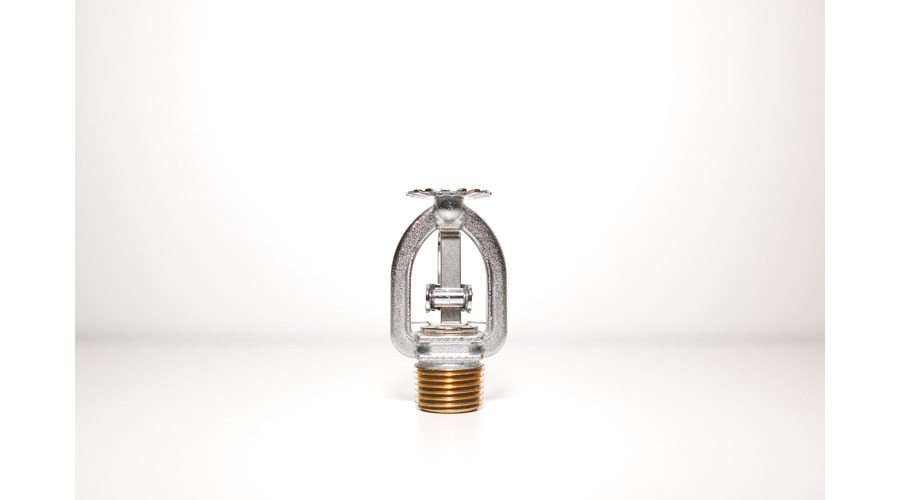
In modern sprinkler design, flexible sprinkler drops matter because they let the system connect cleanly, align easily, and handle small movement without drama. In the real world, ceilings shift, steel racks settle, and vibration shows up like an uninvited guest. That is where flexhead sprinkler connections come in, using flexible sprinkler drops in fire systems to maintain reliable discharge at the right point, at the right time. As Kord Fire Protection technicians explain on job sites, the goal stays simple: connect the piping to the sprinkler head in a way that stays stable, even when the building does not. And yes, while the building may act like it is learning to dance, the sprinkler system still needs to hit its mark.
Overview of How It Works: What a Flexhead Connection Actually Does
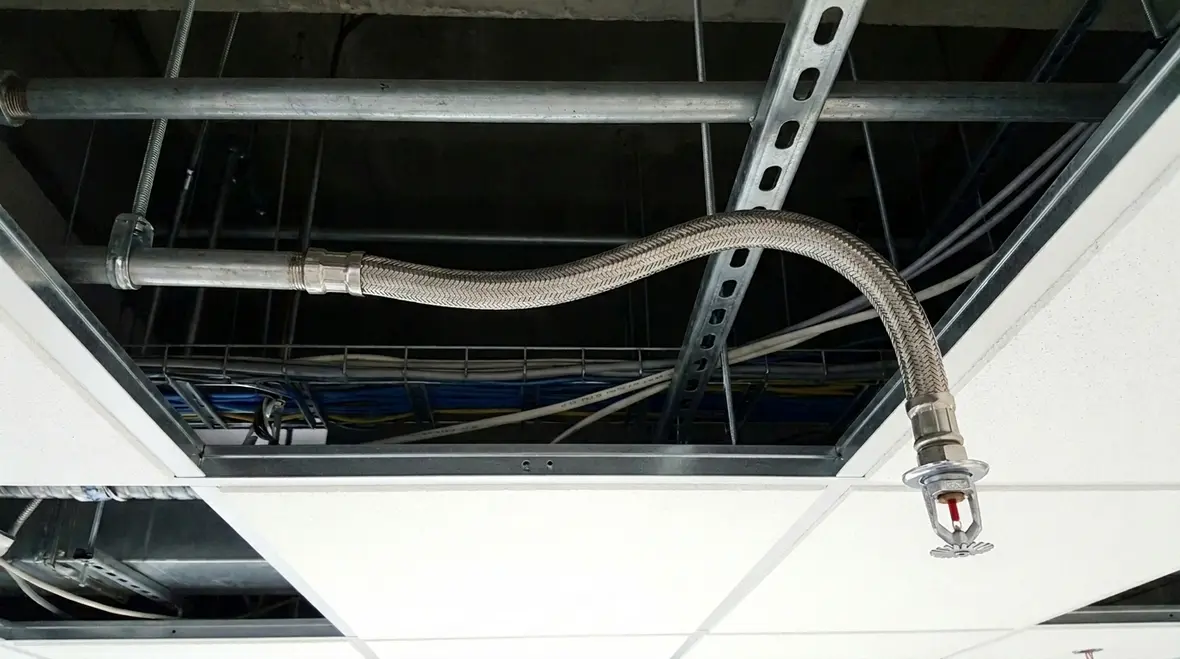
First, a flexhead sprinkler connection creates a controlled flexible link between the supply piping and the sprinkler inlet. This connection typically includes a specialized flexible element that allows small changes in position, such as minor deflection, thermal expansion, or alignment differences during installation. Consequently, the sprinkler head stays oriented properly, and the flow path remains unobstructed.
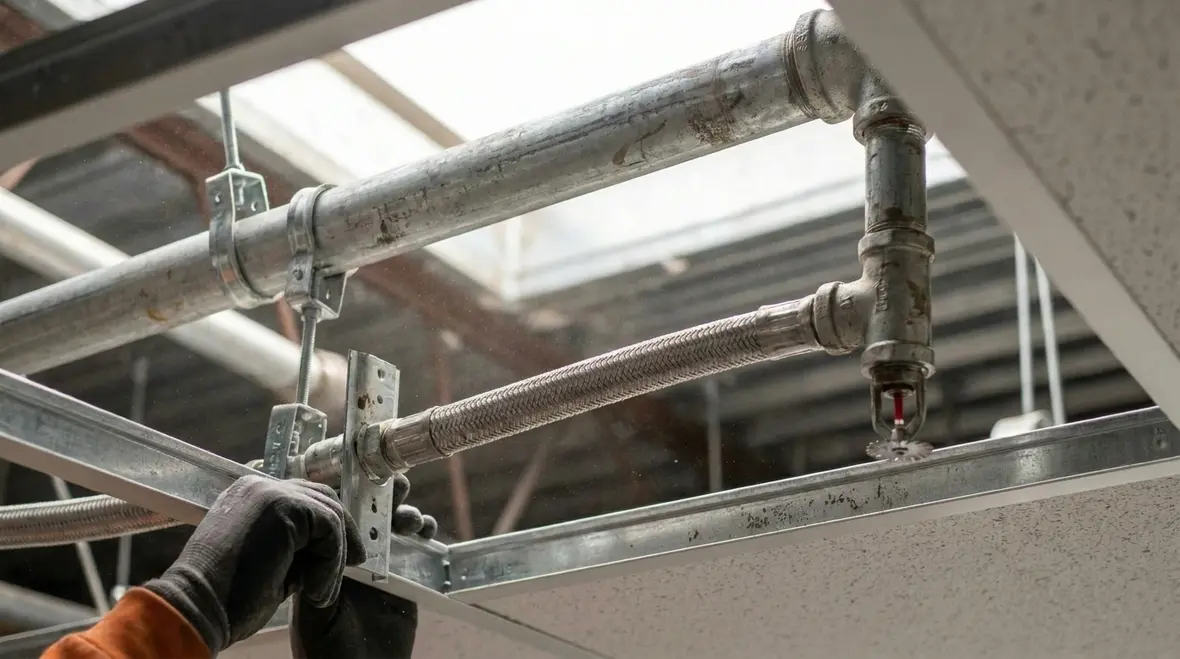
Next, the technician installs the piping with correct hangers, supports, and spacing. Then, the flexhead connection bridges the final alignment tolerance. If the ceiling grid or structure shifts slightly after installation, the flexible portion absorbs that change rather than forcing stress into the sprinkler. At that point, the system resists loosening, misalignment, or damage that can come from rigid connections in moving spaces.
Finally, Kord Fire Protection technicians often point out that this is not about “making it flexible just because.” It is about using flexibility as a safety buffer. In other words, the connection helps maintain correct sprinkler positioning and avoids binding that can happen when rigid piping tries to follow the building’s movement.
Real World Use Cases: Where Flexible Drops Perform Best
Flexible sprinkler drops in fire systems show up where movement is normal, alignment is tricky, or installation conditions are less than perfect. For example, in retrofit work, existing ceilings rarely match today’s layout. Therefore, the installer needs a connection that tolerates minor offsets while still meeting sprinkler positioning rules.
In addition, in large mechanical rooms, vibration can travel through the structure. Even when vibration stays within normal limits, rigid connections can develop stress over time. Flexible connections act like a shock absorber for alignment, so the sprinkler stays ready when heat activates it.
Also, in areas with suspended ceilings, the ceiling may settle slightly after installation. Flexible drops help manage those small shifts. So instead of fighting the ceiling, the connection accommodates it, which keeps the sprinkler from drifting out of spec.
Then there are corridors and tenant buildouts where scheduling pushes work forward. When trades complete above-ceiling work quickly, exact alignment can get… creative. As Kord Fire Protection technicians say, flexibility prevents the classic “measure twice, panic once” routine. It allows the installer to correct final alignment without forcing the sprinkler body into a stressful position.
Dual Column Installation Guidance: Key Points Technicians Confirm
Before installation
- Verify the approved components used match the system listing and manufacturer instructions
- Confirm sprinkler type, orientation, and discharge requirements
- Check support spacing and pipe routing to avoid unnecessary strain
- Plan for building movement and ceiling settlement based on the layout
During installation
- Align the flexhead connection so it does not pull, twist, or force the sprinkler inlet
- Use proper sealing and torque practices where applicable, following the manufacturer guidance
- Ensure the sprinkler drops to the correct elevation and angle
- Keep flexible elements within their intended travel and configuration
Strengths and Weak Points: The Tradeoffs Nobody Can Ignore
Flexible sprinkler drops in fire systems offer clear strengths, and they also come with limits. On the plus side, the main advantage is stress reduction. Because the connection allows small movement, it helps prevent joint strain and misalignment that can occur when piping rigidly resists building motion.
Second, it improves installation quality in tight spaces. Installers can maintain correct sprinkler placement even when pipe routing or ceiling alignment is slightly off. As Kord Fire Protection technicians explain, that makes field work less error prone, which matters because a small misalignment can cause headaches during final inspection.
Third, flexibility can help protect the sprinkler assembly. When rigid piping shifts, it can impose forces on the sprinkler inlet. Flexible connections reduce that risk, so the sprinkler remains in the proper position for activation.
However, there are weak points. If someone installs the flexhead connection incorrectly, it can do the opposite of what it is meant to do. For instance, overextending the flexible element, twisting it beyond allowable range, or placing it where it can rub against other materials can create failure points. Also, poor support of the main piping can transfer stress into the sprinkler assembly anyway, making the flexible connection a bandage instead of a solution.
In addition, not every application automatically qualifies. Local interpretations, system type, and component listings all matter. Therefore, teams should confirm compatibility with the sprinkler model and the system design before installation begins. And yes, if the inspector asks for documentation, it helps when the team did not “wing it” like a movie superhero without a plan.
Ongoing Maintenance Needs: How Teams Keep These Connections Reliable
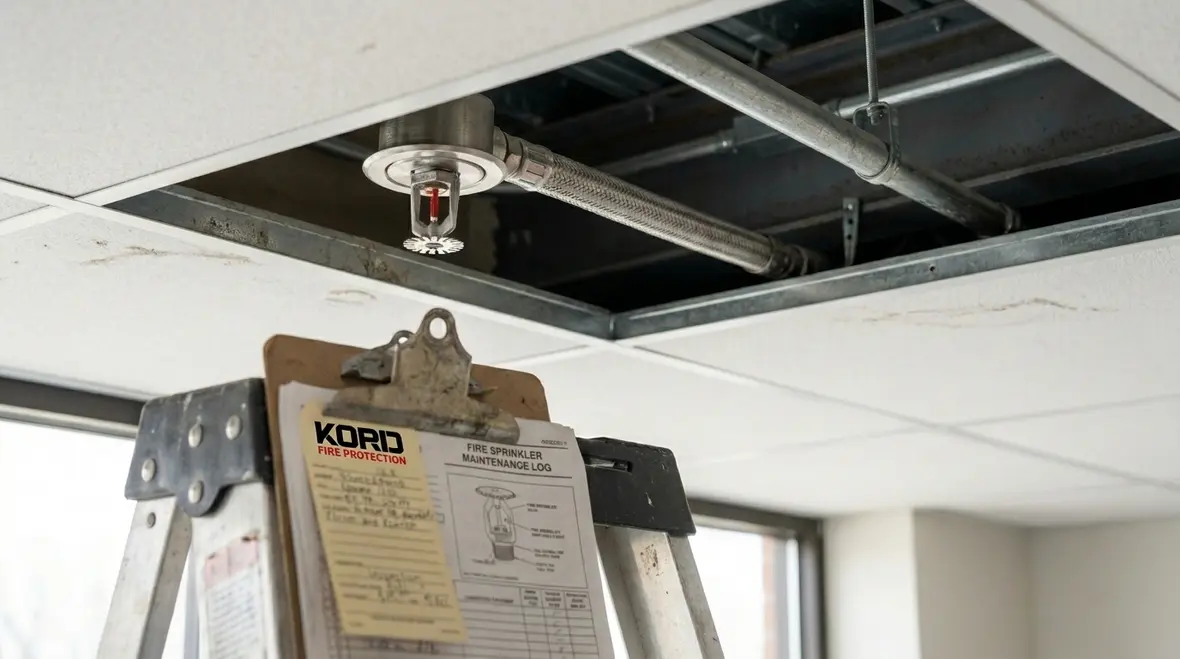
Maintenance for flexhead sprinkler connections stays practical. First, service teams visually inspect each sprinkler and connection area during routine inspections. They look for signs of damage, misalignment, corrosion, or interference with surrounding components. If a ceiling tile shifts or a stored item blocks access, that can indirectly affect performance, so technicians document and correct those issues.
Second, they verify that the flexible link remains within allowable movement range and has not been twisted or stretched. Over time, impacts from maintenance activities, mechanical work, or accidental knock can change alignment. Therefore, teams treat the flexible connection as part of the “system ready” condition, not as a set-and-forget part.
Third, they coordinate with testing schedules. In a wet system, periodic flow and drain tests follow the governing code and the authority having jurisdiction. In dry systems or preaction systems, the sequence of operation and air or water detection requirements also matter. Flexible connections help prevent mechanical strain, but they do not replace the need for proper inspection and testing.
Finally, after renovations, contractors should not assume the system stays correct. When trades modify above-ceiling spaces, they may inadvertently bump piping or adjust hangers. Hence, Kord Fire Protection technicians recommend post-renovation checks for areas with flexible sprinkler drops in fire systems, especially when the work changes the ceiling or structure.
Relevant NFPA and Local Code Requirements: What Rules Apply
Fire protection system requirements revolve around national standards plus local amendments. Typically, sprinkler systems follow NFPA guidance and the adopting state or local fire code. NFPA 13 often governs installation for sprinkler systems, including design, installation methods, and system components. NFPA 25 covers inspection, testing, and maintenance.
Additionally, manufacturers’ installation instructions carry weight because the components used must match the system listing. Flexible connections must be installed as listed, with correct orientation, support, and allowable configuration. Inspectors also expect the system to meet water supply criteria, sprinkler spacing rules, and proper sprinkler placement.
Because local code enforcement varies, teams should confirm requirements with the authority having jurisdiction before installation. Also, Kord Fire Protection technicians emphasize documentation: keeping cut sheets, approvals, and inspection records helps reduce delays and keeps the project moving.
When communities add local amendments, those amendments can impact inspection intervals, obstruction rules, and documentation practices. Therefore, the best approach combines the standard requirements with local expectations so the installation stays compliant and testable.
How We Can Use These Systems: Practical Implementation and Design Intent
In practice, flexhead sprinkler connections help teams build systems that stay aligned across the life of the project. As buildings settle and mechanical equipment shifts slightly, these connections absorb small changes without forcing rigid stress into sprinkler assemblies. Additionally, they help contractors meet correct sprinkler positioning even in retrofits, tenant improvements, and coordination-heavy spaces.
We can use these systems to improve installation outcomes, reduce field corrections, and support smoother inspections. Then, we can pair that installation quality with ongoing service plans so the connections remain in good shape through routine inspections and testing. If you want a dependable fire system that works with the building rather than fighting it, Kord Fire Protection teams can help map the right application, confirm compliance, and keep everything running like it should.
FAQ: Quick Answers About Flexible Connections
Conclusion: Secure Your System With the Right Connections
Flexhead sprinkler connections bring a calm kind of reliability to fire protection work: they help the system stay aligned as buildings move, as ceilings settle, and as retrofit schedules get busy. Yet reliability comes from correct installation, proper support, and routine inspection. If you are planning new work or upgrading an existing layout, a Kord Fire Protection technician can help specify the right approach, confirm compliance, and keep your installation inspection ready. Reach out today to review your design and protect what matters, on the first pass.
Ready to specify the right connection for your layout?
If you want a dependable fire system that stays aligned when the building does, Kord Fire Protection can help confirm compatibility, guide installation, and keep your project inspection-ready.
Flexhead Sprinkler Connections for Flexible Sprinkler Drops
Know Your Weapon Before You Fight the Flame
Kord Fire Protection is your go-to when it comes to all things fire protection. For over 20 years, we’ve been serving Southern California with the quality service and equipment to keep your home or business safe at all times. Our competitive prices reflect our unwavering commitment to protecting what matters most in the event of a fire emergency. Give us a call, send an email, or use that form!

Join Our Newsletter!
Get the latest fire safety tips delivered straight to your inbox From our Newsletter.