Fire Extinguisher Requirements Los Angeles Businesses
Fire Extinguisher Requirements for Los Angeles Businesses are not just lines buried in a code book. They are living rules that protect buildings, livelihoods, and the people who walk through those doors each day. In a city where wildfires make headlines and commercial kitchens hum from sunrise to midnight, understanding fire extinguisher requirements Los Angeles businesses must follow is essential. Fortunately, professionals like Kord Fire Protection technicians spend their days translating code into clear action. And they do it with the calm confidence of someone who knows that preparation beats panic every time.
So settle in. This guide walks through what Los Angeles companies need, why it matters, and how to stay compliant without losing sleep or your sense of humor.
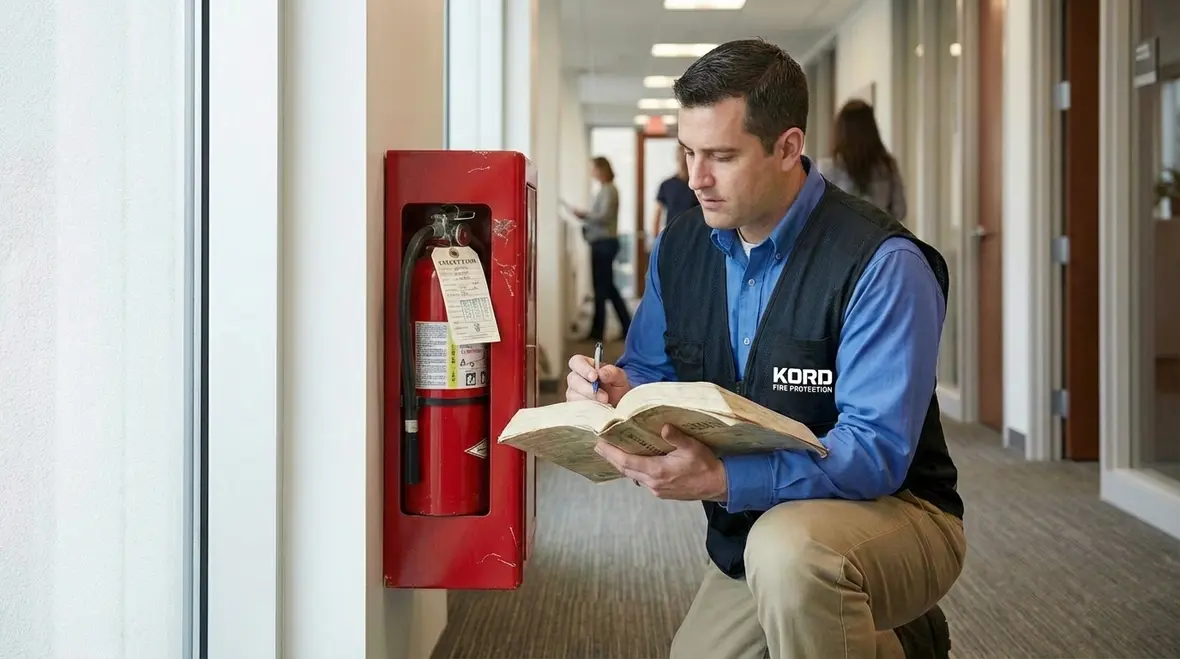
Understanding Local and State Fire Codes
Los Angeles businesses answer to several layers of regulation. First, there is the California Fire Code. Then, the Los Angeles Fire Department (LAFD) adds local amendments, including programs like Chief’s Regulation 4 testing for many building systems. Finally, federal OSHA rules apply to workplace safety. Together, they form a clear but detailed framework.
California requires portable fire extinguishers in most commercial occupancies. However, placement, size, and type depend on the hazard level. For example, a small office with paper files does not face the same risk as a metal fabrication shop throwing sparks all day. Therefore, the code separates hazards into classes, and each class calls for specific extinguisher ratings.
Kord Fire Protection technicians often explain it this way: the code is not trying to make life difficult. Instead, it aims to match the right tool to the right risk. Just as one would not bring a garden hose to a grease fire, one should not rely on a single ABC extinguisher for every scenario without review.
Additionally, local inspectors in Los Angeles pay close attention to visibility, mounting height, and travel distance. If an extinguisher hides behind storage boxes or sits too high on the wall, it may as well be invisible during an emergency. And in a fire, seconds matter more than excuses.
If you want to dig deeper into the national standard behind many of these rules, Kord’s breakdown of NFPA 10 portable extinguisher guidelines is a helpful companion resource.
How Many Fire Extinguishers Does a Business in Los Angeles Need?
This is the question owners often type into search bars at midnight. The answer depends on square footage, hazard classification, and layout.
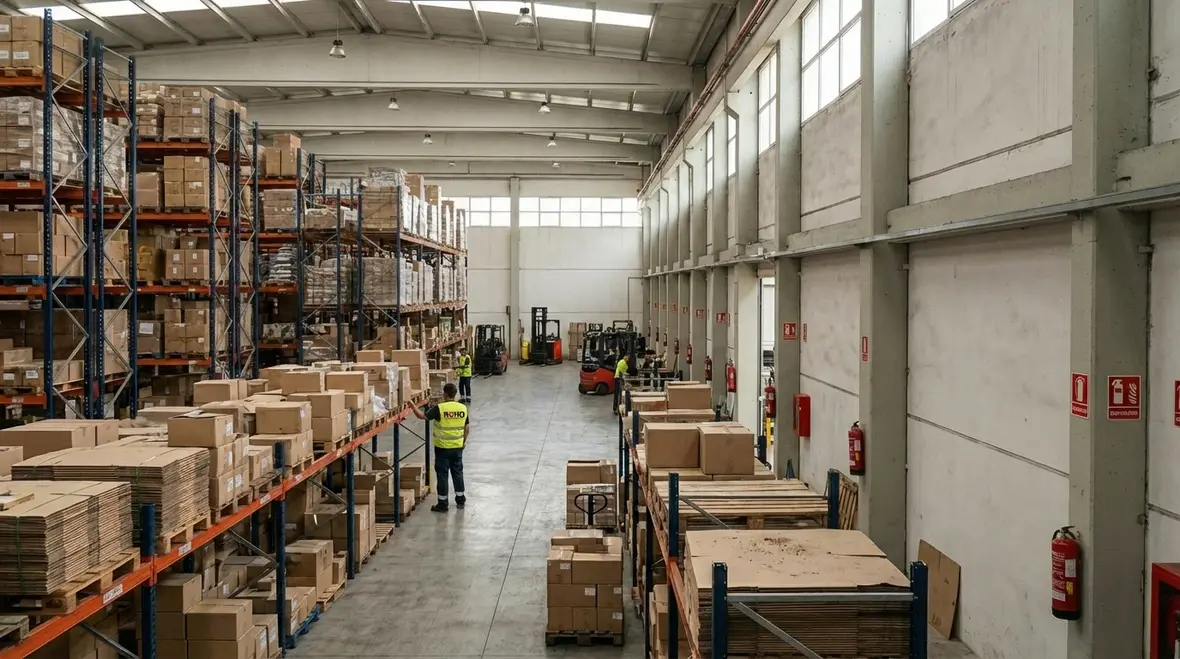
According to the California Fire Code and NFPA 10, most businesses must ensure that employees can reach an extinguisher within a specific travel distance. For light hazard areas, that distance is typically 75 feet. For higher hazard spaces, the distance can shrink. Therefore, a large warehouse may require multiple units spaced evenly throughout the floor.
Moreover, the size of the extinguisher matters. A common minimum rating for many commercial spaces is 2A 10BC. However, that rating may increase in higher risk environments. Restaurants, auto shops, and manufacturing facilities often require more robust coverage and sometimes additional specialty units.
Kord Fire Protection technicians regularly conduct site walks where they measure distances, assess wall space, and review floor plans. They explain each decision in plain language. For instance, they might say, if an employee must jog past three pallets and a locked door to reach the extinguisher, the placement fails the spirit of the code. Compliance is about access, not just numbers.
Types of Fire Extinguishers and Where They Belong
Fire extinguishers are not one size fits all. They are labeled by the type of fire they are designed to fight.
Common Fire Extinguisher Classifications
- Class A for ordinary combustibles like paper, wood, and cloth
- Class B for flammable liquids such as gasoline or oil
- Class C for energized electrical equipment
- Class K for commercial kitchen grease fires
- Class D for combustible metals, often in industrial settings
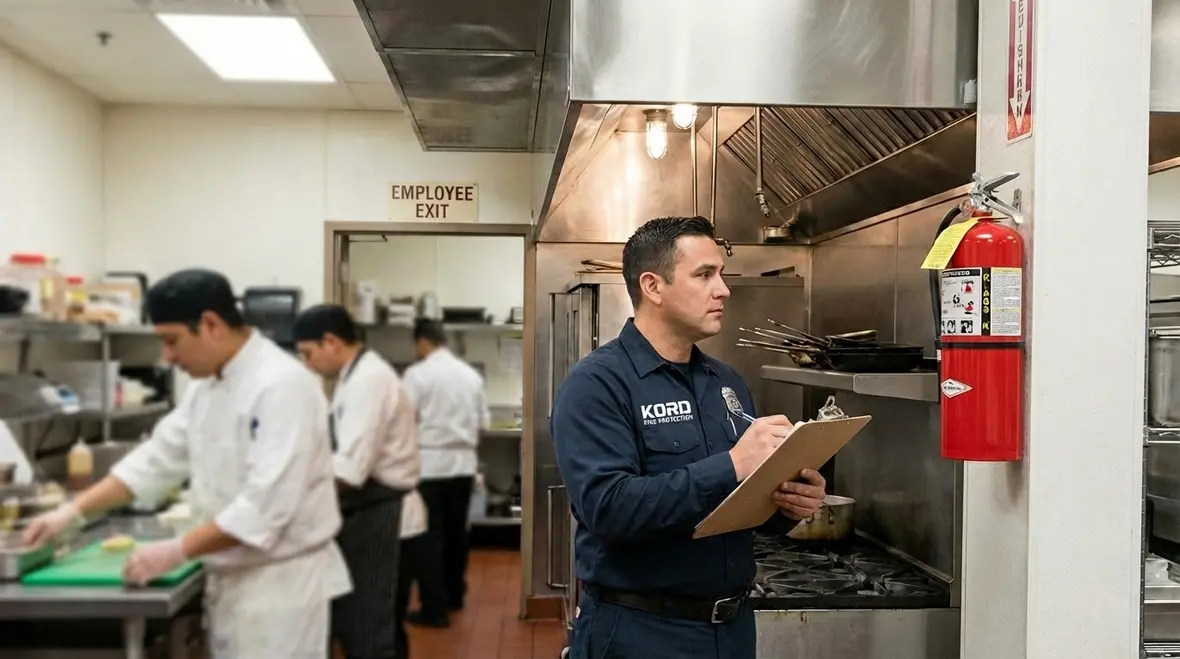
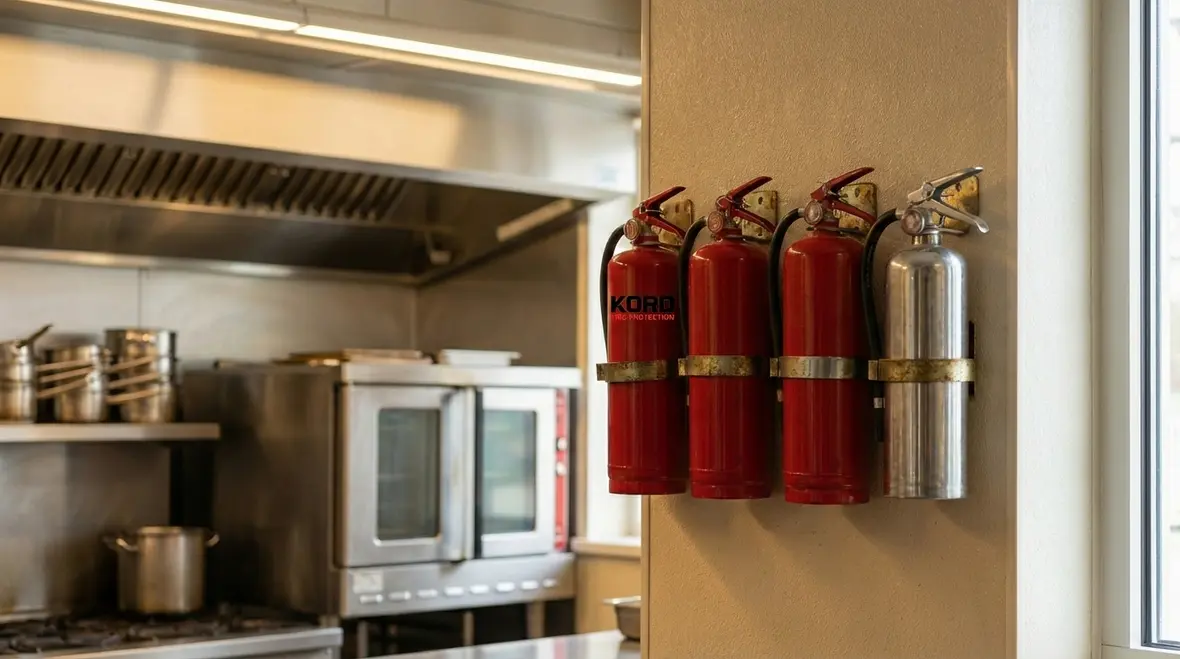
In many offices and retail stores, an ABC extinguisher covers the most common risks. However, commercial kitchens in Los Angeles must install Class K extinguishers near cooking equipment. Furthermore, those kitchens usually operate under hood suppression systems that require their own inspections and maintenance schedules.
It is worth noting that using the wrong extinguisher can make a fire worse. Throwing water on burning grease is the kind of plot twist no one wants. Therefore, matching extinguisher type to hazard is not optional.
Kord Fire Protection technicians take time to explain why a certain unit is mounted where it is. They may point to a fryer line and calmly note that the Class K unit must sit within easy reach but not so close that flames block access. That balance is part science, part field experience.
If your operation includes vehicles or heavy equipment, Kord’s guide to fire extinguisher rules for fleets explains how classes and ratings translate into mobile environments as well.
Inspection and Maintenance Rules for Los Angeles Companies
Installing extinguishers is only the beginning. Ongoing maintenance keeps them ready.
Monthly, Annual, and Long-Term Testing
Under California regulations and NFPA 10, businesses must perform monthly visual inspections. During these checks, staff confirm that the extinguisher remains in its designated place, shows no visible damage, and maintains proper pressure. In addition, a licensed technician must conduct an annual maintenance inspection.
Every few years, depending on the type, extinguishers require internal examination and hydrostatic testing. These processes ensure the cylinder can handle pressure and that internal components function correctly. While it may sound technical, the goal is simple: when someone squeezes the handle, the unit must work.
For a deeper breakdown of these schedules, Kord’s resources on how often extinguishers need to be serviced, monthly inspection & annual service, and hydrostatic testing break everything into practical timelines.
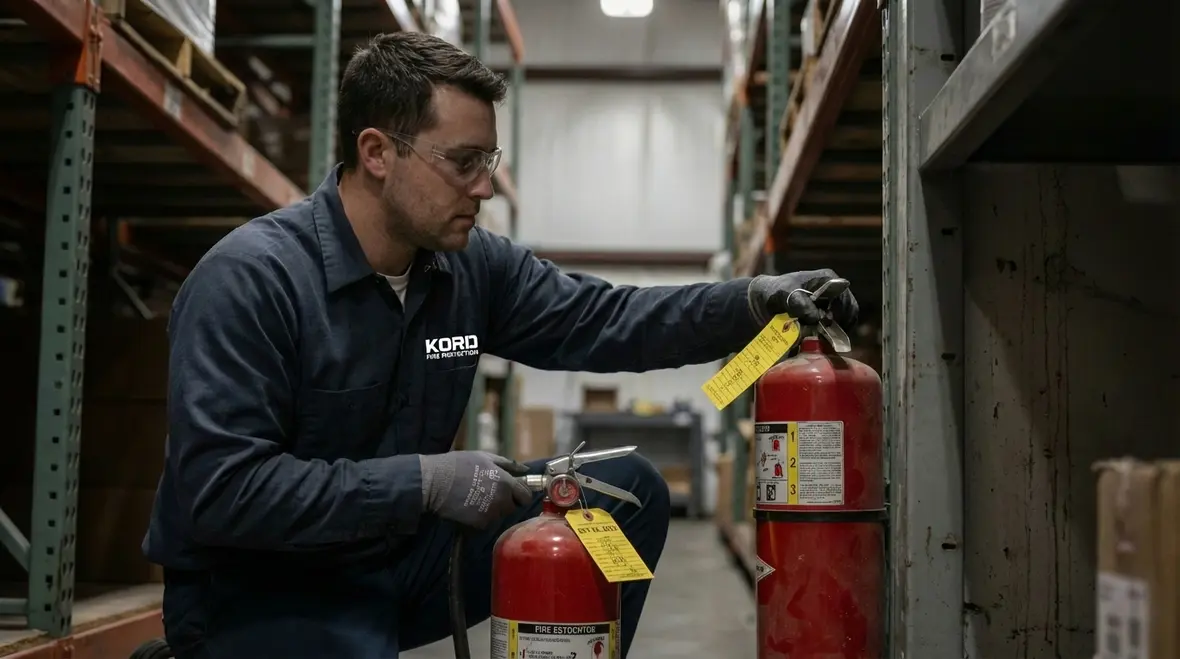
Kord Fire Protection technicians document each service with detailed tags and reports. Consequently, if a fire inspector requests records, the business can provide proof immediately. That level of organization often turns a tense inspection into a routine visit.
For companies trying to understand fire extinguisher requirements Los Angeles businesses must meet, maintenance often causes the most confusion. However, with a clear service schedule and professional support, compliance becomes predictable rather than stressful.
Placement and Signage That Pass Inspection
Heights, Distances, and Visibility
Even the best extinguisher fails if no one can find it. Therefore, Los Angeles regulations and NFPA 10 specify mounting height and visibility.
Generally, extinguishers weighing 40 pounds or less must have the top no more than five feet above the floor. Heavier units must sit lower. Additionally, the bottom of the extinguisher should be at least four inches above the ground. These numbers may sound precise, yet they exist to ensure accessibility.
Clear signage is equally important. In large spaces, wall signs or overhead markers help employees locate units quickly. Furthermore, businesses must keep extinguishers free from obstruction. Storing boxes or decor in front of them invites citations.
Kord Fire Protection technicians often share a simple rule: if a new employee cannot walk in and spot the extinguisher within seconds, the placement needs improvement. It is a practical test that goes beyond code language and lines up with Kord’s reminder that proper placement saves critical seconds in a real emergency.
Hazard Levels and Required Coverage at a Glance
Column One: Hazard Level
- Light Hazard such as offices and classrooms
- Ordinary Hazard such as retail stores and light manufacturing
- Extra Hazard such as woodworking shops or flammable liquid storage
Column Two: Typical Extinguisher Expectations
- Minimum 2A rating with up to 75 feet travel distance
- Higher ratings like 2A 10BC or greater with reduced travel distance
- Larger units or additional coverage with shorter travel distance and specialized classes
Although this overview simplifies the code, it highlights an important truth. As risk increases, so does the level of protection required. Therefore, a thoughtful hazard assessment is the foundation of compliance.
Common Compliance Mistakes and How to Avoid Them
Easy-to-Miss Issues Inspectors Notice Immediately
Even well intentioned business owners can stumble. Fortunately, most mistakes are preventable.
One common issue involves expired inspection tags. Because annual maintenance must occur every 12 months, even a short delay can trigger a violation. Setting calendar reminders helps, yet partnering with a service provider who tracks schedules adds another layer of security.
Another frequent problem is improper extinguisher type. For example, a new commercial kitchen may open with standard ABC units but lack the required Class K extinguisher. During inspection, that oversight becomes costly.
Blocked access also ranks high on citation lists. Over time, storage creeps into hallways. Shelves appear. Decorations multiply. However, inspectors expect a clear path at all times, not just on inspection day.
Kord Fire Protection technicians approach these situations with calm clarity. They do not lecture. Instead, they explain how each correction reduces risk. And occasionally, they add a light remark about how fire inspectors have seen every trick in the book. Spoiler alert: hiding an extinguisher behind a ficus plant does not count as camouflage.
Training Employees to Use Extinguishers Properly
From PASS Basics to Knowing When to Evacuate
Compliance extends beyond equipment. OSHA requires employers to train workers if they expect them to use fire extinguishers during incipient stage fires. Therefore, training becomes part of the safety plan.
Most programs teach the PASS method: Pull the pin. Aim at the base of the fire. Squeeze the handle. Sweep side to side. Simple steps, yet in a stressful moment, practice makes the difference.
Additionally, employees should understand when not to fight a fire. If flames spread rapidly or smoke fills the room, evacuation takes priority. No one earns a medal for bravery in a preventable situation.
Kord Fire Protection technicians often conduct on site demonstrations. They explain not only how to operate the extinguisher but also why certain fires behave the way they do. That knowledge builds confidence. And confidence reduces panic. If you want more structured help, Kord’s fire extinguisher services and training are built specifically for Southern California businesses.
Staying Ahead of Inspections in Los Angeles
Proactive Habits That Keep You Inspection-Ready
Los Angeles Fire Department inspectors review commercial properties on a regular schedule. Therefore, preparation should remain ongoing rather than reactive.
Maintaining updated service records, clear access, correct signage, and properly rated extinguishers forms the core of readiness. Moreover, businesses should review changes in occupancy or layout. Adding new equipment or expanding storage can alter hazard classification.
Fire extinguisher requirements Los Angeles businesses must follow do not remain static if the business itself changes. Growth is good. However, growth without safety planning invites trouble.
Kord Fire Protection technicians encourage periodic internal audits. By walking the space with fresh eyes, owners can catch small issues before they become citations. It is a bit like proofreading an email before hitting send. A quick review saves embarrassment later.
For many Los Angeles owners, booking a fire extinguisher service appointment in LA or dropping by a walk-in extinguisher service location is the easiest way to stay ahead of LAFD visits.
FAQ About Fire Extinguisher Compliance in Los Angeles
Below are quick answers to common questions Los Angeles business owners ask about extinguisher rules, inspections, and real-world compliance.
Conclusion and Next Steps
Meeting fire extinguisher requirements Los Angeles businesses face is not about checking a box. It is about protecting people, property, and peace of mind. With expert guidance from Kord Fire Protection technicians, companies can move from confusion to confidence. Now is the time to review coverage, schedule inspections, and strengthen safety plans. Because when preparation stands ready, emergencies lose their power.
If you are ready to get specific about your building, reach out today and let seasoned professionals bring clarity to compliance. Start by exploring Kord’s dedicated fire extinguisher service page or use the contact form to request a walkthrough, quote, or service appointment. A short visit now can prevent a long, expensive problem later.
Know Your Weapon Before You Fight the Flame
Kord Fire Protection is your go-to when it comes to all things fire protection. For over 20 years, we’ve been serving Southern California with the quality service and equipment to keep your home or business safe at all times. Our competitive prices reflect our unwavering commitment to protecting what matters most in the event of a fire emergency. Give us a call, send an email, or use that form!

Join Our Newsletter!
Get the latest fire safety tips delivered straight to your inbox From our Newsletter.