Fire Extinguisher for Vehicles: What Type Fits Fleet Compliance Programs
When it comes to protecting drivers, cargo, and company reputation, choosing the right fire extinguisher for vehicles fleet operations is not a small detail. In fact, it often stands between a minor roadside incident and a headline nobody wants to read. Within the first hundred miles of any route, risk is already riding shotgun. Therefore, fleet managers must think beyond fuel efficiency and GPS tracking. They must also consider compliance, fire classes, mounting rules, and inspection schedules.
Kord Fire Protection technicians often explain it this way: a vehicle without the right extinguisher is like a superhero without a cape. It might still work, but it is missing a key layer of protection. And unlike in the movies, there is no dramatic music warning before smoke appears under the hood.
This guide breaks down what type of extinguisher fits fleet compliance programs, how regulations shape decisions, and why proper selection matters for safety and liability. Along the way, it keeps things practical, clear, and just a little entertaining. Because even compliance can have personality.
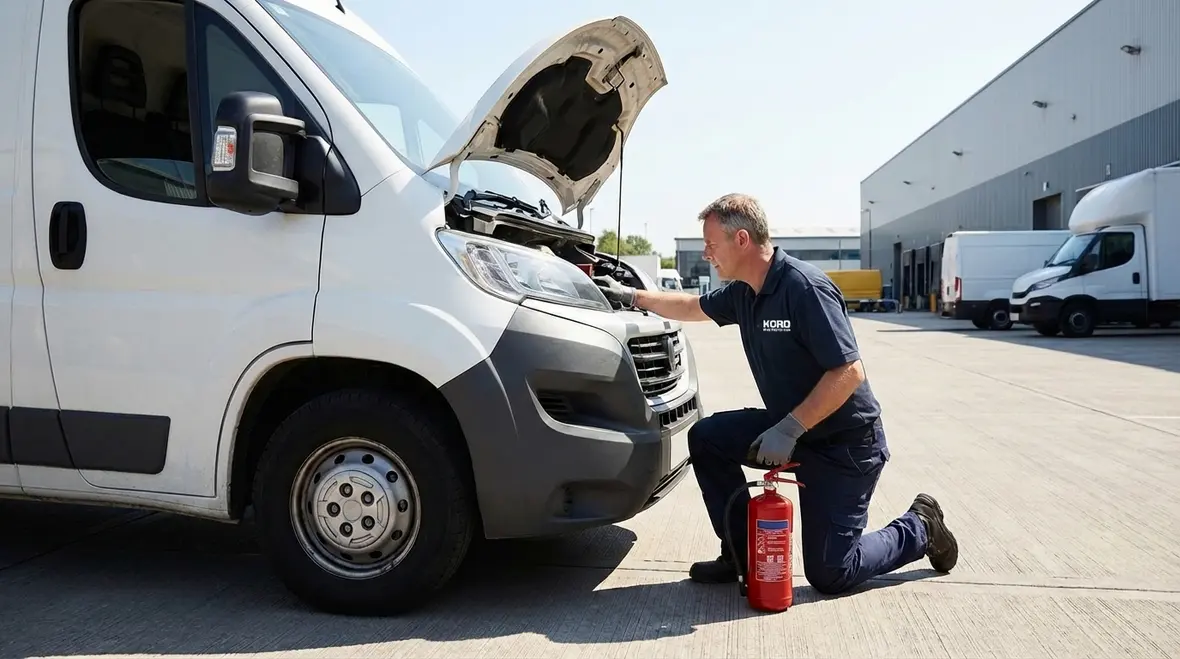
Understanding Fleet Fire Risk Before Choosing Equipment
Before selecting any device, fleet managers need to understand the types of fires that can occur in commercial vehicles. After all, not every flame behaves the same way. Some start with fuel. Others begin with wiring. Meanwhile, cargo can introduce its own hazards.
Generally, vehicle fires fall into several categories:
- Class A: Ordinary combustibles such as paper, fabric, and interior materials.
- Class B: Flammable liquids including gasoline and diesel.
- Class C: Electrical equipment such as wiring, batteries, and control panels.
- Class D: Combustible metals, relevant in specialized industrial fleets.
- Class K: Cooking oils and fats, more common in food service trucks.
Because most commercial vehicles carry fuel and contain electrical systems, Class B and Class C risks are common. However, cargo can shift the equation. For example, a delivery van hauling cleaning solvents presents a different risk profile than a passenger shuttle bus.
Kord Fire Protection technicians often remind fleet supervisors that compliance starts with risk assessment. They walk through the vehicle type, cargo, routes, and exposure. Then they match the extinguisher to the real world, not just a checkbox on a form. For a deeper look at how hazards drive extinguisher choice, see Kord’s article on guidelines for fire extinguishers in Anaheim, which follows the same risk-first approach.
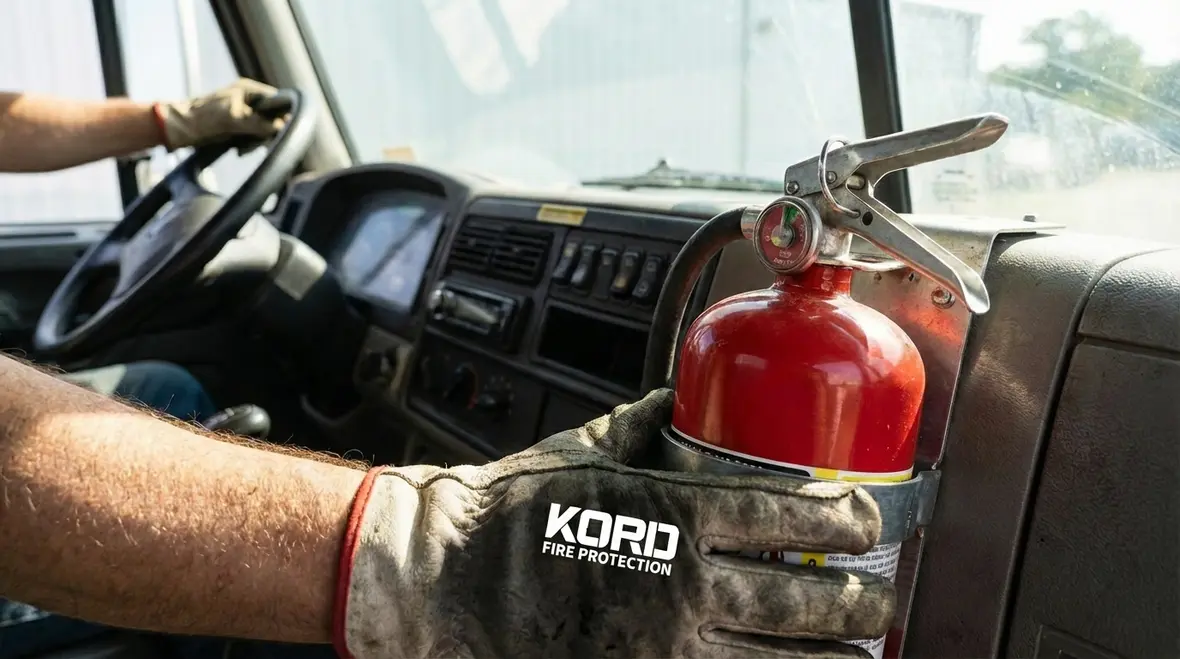
What Size and Rating Meets Fleet Compliance Standards
Compliance programs often follow standards set by OSHA, DOT, and NFPA. While the specific rule can vary by industry and region, many regulations require a minimum 5 B C rated extinguisher for commercial vehicles. Nevertheless, that is just the baseline.
For heavier trucks, buses, and vehicles carrying hazardous materials, higher ratings may apply. Additionally, certain contracts require stricter internal standards. Therefore, fleet managers should not rely on guesswork.
When selecting a fire extinguisher for vehicles fleet compliance, consider these core factors:
- Minimum rating: Verify the required B C or A B C rating.
- Weight and size: Ensure drivers can lift and operate it quickly.
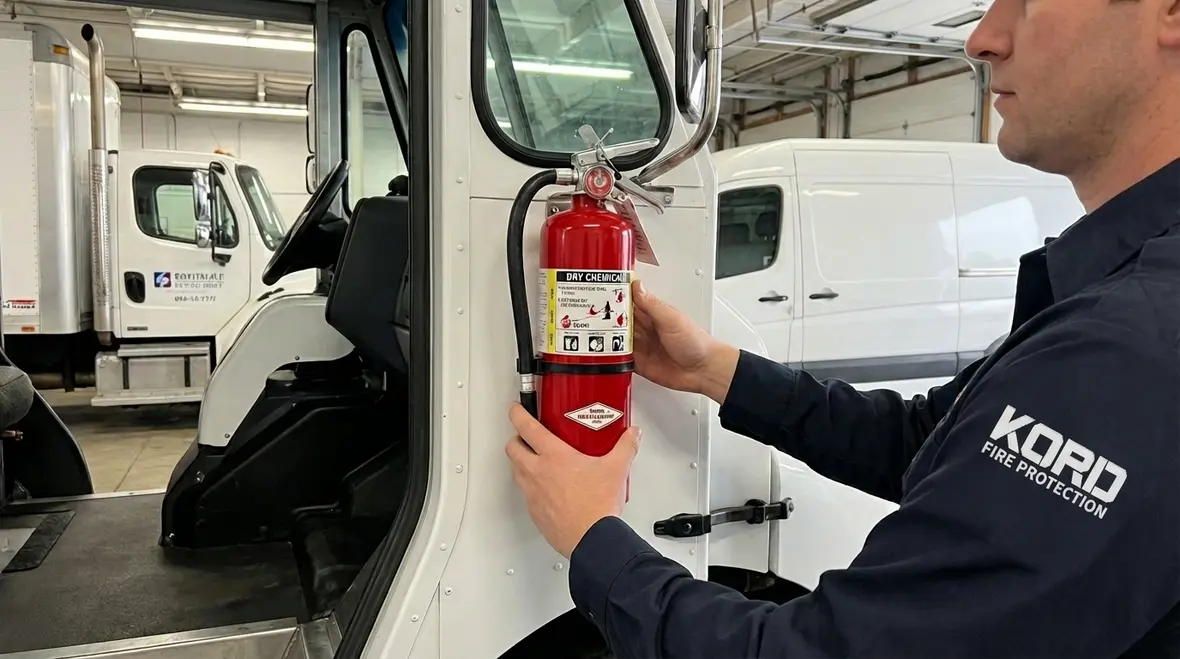
- Mounting bracket: Secure installation to prevent movement during transit.
- Rechargeability: Many fleets prefer rechargeable units for long term cost control.
Although a small extinguisher may seem convenient, it must meet the fire rating required. As Kord Fire Protection technicians explain during training sessions, an undersized extinguisher is like bringing a water pistol to a campfire. Technically it sprays something, but results may vary.
Linking ratings to real-world routes
A box truck running short, urban routes with light cargo might manage with the minimum compliant rating, while long-haul tractors, hazmat carriers, and buses often benefit from higher-rated or multiple extinguishers. Matching rating to route conditions, cargo volatility, and refueling patterns keeps compliance practical instead of theoretical.
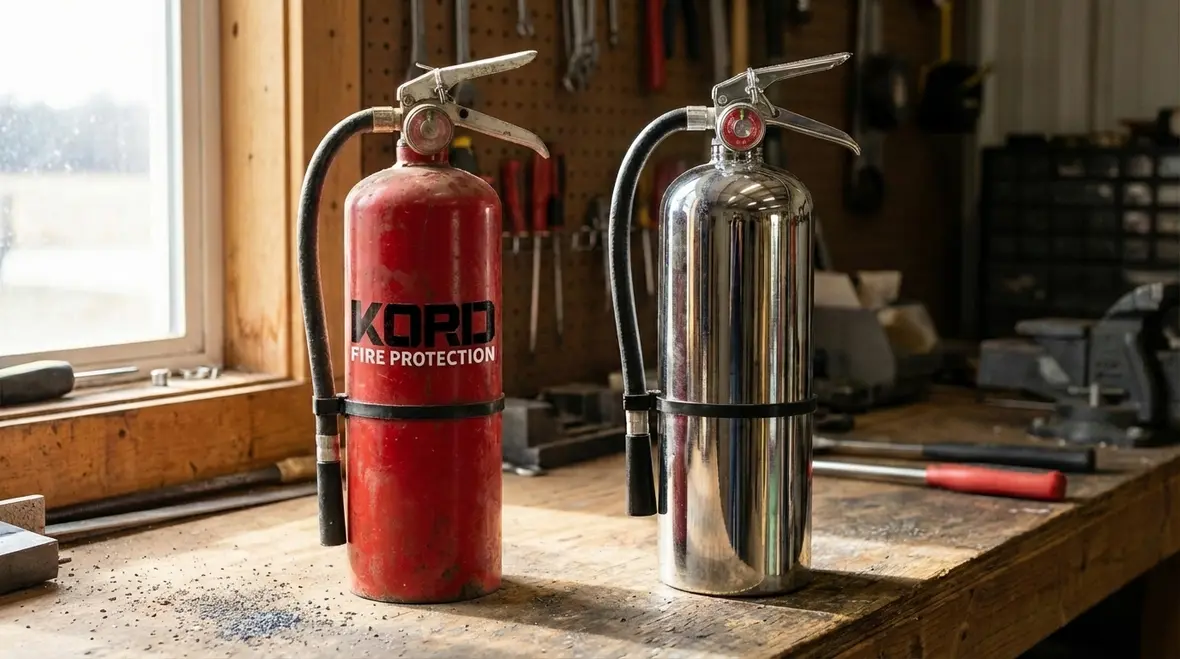
Dry Chemical vs Clean Agent: Which Works Best on the Road
Fleet programs typically choose between dry chemical and clean agent extinguishers. Both have strengths. However, the right choice depends on vehicle type and company priorities.
Dry chemical extinguishers for standard fleets
Dry chemical units, often rated A B C, are common in commercial fleets. They are versatile, cost effective, and effective on fuel and electrical fires. Consequently, they fit many compliance programs with ease.
Clean agent extinguishers for sensitive equipment
Clean agent extinguishers, on the other hand, leave little to no residue. This makes them attractive for vehicles with sensitive electronics or high value cargo. While they may cost more, they reduce cleanup time and potential equipment damage.
Side-by-side comparison
Dry Chemical
Effective on multiple fire classes
Lower upfront cost
Leaves residue requiring cleanup
Widely accepted for standard fleet compliance
Clean Agent
No residue after discharge
Safe for electronics
Higher initial investment
Ideal for specialty or high tech vehicles
Therefore, if a company operates delivery vans with basic cargo, dry chemical may be sufficient. However, if the fleet includes medical transport units with sensitive devices, a clean agent extinguisher might align better with operational needs.
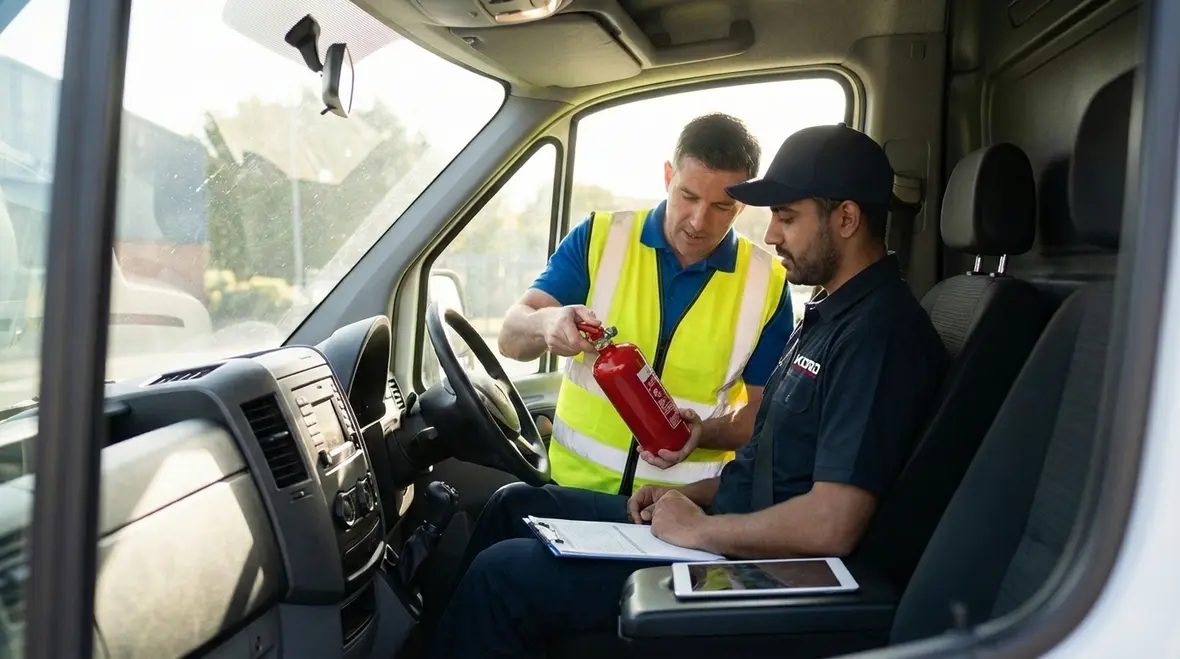
Mounting, Accessibility, and Driver Training
Having the correct fire extinguisher for vehicles fleet compliance is only part of the equation. Placement and training complete the picture. An extinguisher stored under a pile of paperwork or wedged behind a seat is about as helpful as a parachute locked in the trunk.
Regulations often require that extinguishers be:
- Securely mounted
- Readily accessible to the driver
- Protected from damage
- Inspected regularly
Furthermore, drivers must know how to use them. Although many people have seen the PASS method, few practice it. Kord Fire Protection technicians conduct hands on demonstrations, guiding drivers to pull the pin, aim at the base of the fire, squeeze the handle, and sweep side to side. Because in a real emergency, muscle memory matters more than memory alone.
Additionally, routine inspections keep equipment reliable. Monthly visual checks and annual professional servicing support compliance. These steps also show due diligence, which can protect a company during audits or investigations. For more detail on location and height rules, Kord’s fire extinguisher mounting height guide walks through best practices that apply in shops, facilities, and fleet garages.
How Do Regulations Influence a Fire Extinguisher for Vehicles Fleet Program
Regulations shape nearly every aspect of a fleet safety plan. From labeling to inspection intervals, details matter. Therefore, companies must align their extinguisher program with federal, state, and sometimes industry specific rules.
For example, DOT regulations often specify that commercial motor vehicles carry at least one properly rated extinguisher, securely mounted and easily accessible. Meanwhile, OSHA standards may apply if employees operate the vehicles as part of their job.
Kord Fire Protection technicians frequently assist compliance officers in reviewing:
- Correct fire ratings for vehicle type
- Documentation of inspections and maintenance
- Training records for drivers
- Replacement schedules for expired units
Because paperwork may not be glamorous, some managers treat it like the vegetables on a dinner plate. Necessary, but not exciting. However, during an audit, those records become the main course. Proper documentation demonstrates that the company takes fire safety seriously.
Moreover, insurance carriers may require proof of compliance. A well managed fire extinguisher for vehicles fleet program can even influence premiums. Therefore, investing in the right equipment and service partner can yield financial benefits alongside safety improvements.
Special Considerations for Different Fleet Types
Not all fleets operate the same way. As a result, extinguisher selection must reflect operational reality.
Delivery and logistics fleets
Delivery and Logistics Fleets
These vehicles often face heavy stop and go driving. Engine compartments heat up, and cargo varies daily. A reliable A B C dry chemical unit typically meets both compliance and practical needs.
Passenger transport and buses
Passenger Transport and Buses
With human lives directly involved, visibility and accessibility become critical. Larger capacity extinguishers may be installed near the driver and additional units toward the rear. Clear signage also supports quick action.
Construction and utility trucks
Construction and Utility Trucks
These vehicles may carry fuel cans, tools, and electrical equipment. Therefore, higher rated extinguishers or multiple units may be appropriate. Kord Fire Protection technicians often recommend reviewing both onboard and job site risks together.
Food trucks and mobile kitchens
Food Trucks and Mobile Kitchens
Beyond standard vehicle protection, these operations may require Class K extinguishers for cooking oils. Consequently, compliance extends beyond the cab and into the kitchen area.
Each fleet type benefits from a tailored approach. Instead of applying a single template, companies should align extinguisher type, size, and placement with actual exposure.
Inspection Cycles, Maintenance, and Lifecycle Planning
A compliant fire extinguisher for vehicles fleet program does not end after installation. In fact, that is when the real discipline begins. Regular inspection ensures that pressure levels remain correct, seals stay intact, and brackets hold firm.
Typically, fleets follow this rhythm:
- Monthly visual inspection by designated staff
- Annual maintenance by certified technicians
- Hydrostatic testing at required intervals
- Immediate replacement after discharge or damage
Kord Fire Protection technicians often describe extinguishers as quiet guardians. They sit patiently for years, asking for little attention. Yet, if ignored, they may fail when needed most. Therefore, lifecycle planning matters. Budgeting for replacement before expiration prevents last minute scrambles and compliance gaps.
Additionally, digital tracking systems can simplify oversight. Many fleets now log inspections electronically, set reminders, and maintain centralized records. This approach reduces human error and supports smooth audits.
Building a Safer Culture Through Smart Equipment Choices
While hardware plays a critical role, culture ultimately defines safety outcomes. When drivers see that management invests in proper extinguishers, mounting, and training, they recognize that safety is not just a slogan.
A well managed fire extinguisher for vehicles fleet initiative reinforces accountability. Drivers perform checks because they understand the purpose. Supervisors review records because they value consistency. Executives support budgets because they see risk reduction as an investment rather than an expense.
Kord Fire Protection technicians often share stories from the field. In several cases, a properly maintained extinguisher stopped a small engine fire before it spread. The result was minimal damage, no injuries, and business operations resumed quickly. Those moments rarely make the news. However, they represent quiet victories worth celebrating.
After all, the goal is not dramatic heroics. It is steady prevention. And while no one wants to use an extinguisher, everyone wants it to work.
Frequently Asked Questions
Conclusion: Strengthen Fleet Safety with the Right Protection
Choosing the correct fire extinguisher is not just about meeting a rule. It is about protecting drivers, assets, and reputation every mile of the journey. A thoughtful, compliant program supported by trained professionals makes all the difference.
Kord Fire can help you align extinguisher type, rating, mounting, and inspection cycles with real-world routes and regulatory demands, so your fleet is prepared long before smoke ever appears.
Ready to tighten up your fire extinguisher for vehicles fleet program? Connect with Kord Fire Protection’s fire extinguisher and vehicle fire suppression team today to evaluate your fleet, align with regulations, and build a safety plan that stands ready on every route.
From on-site training to scheduled inspections, their technicians help fleets stay compliant, control risk, and keep every vehicle’s “cape” in top working order.
Know Your Weapon Before You Fight the Flame
Kord Fire Protection is your go-to when it comes to all things fire protection. For over 20 years, we’ve been serving Southern California with the quality service and equipment to keep your home or business safe at all times. Our competitive prices reflect our unwavering commitment to protecting what matters most in the event of a fire emergency. Give us a call, send an email, or use that form!

Join Our Newsletter!
Get the latest fire safety tips delivered straight to your inbox From our Newsletter.