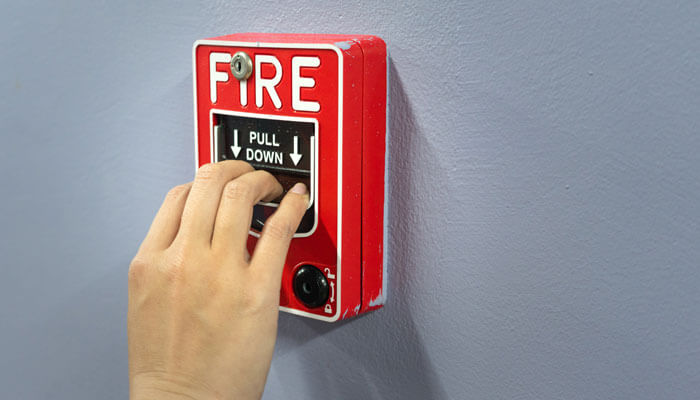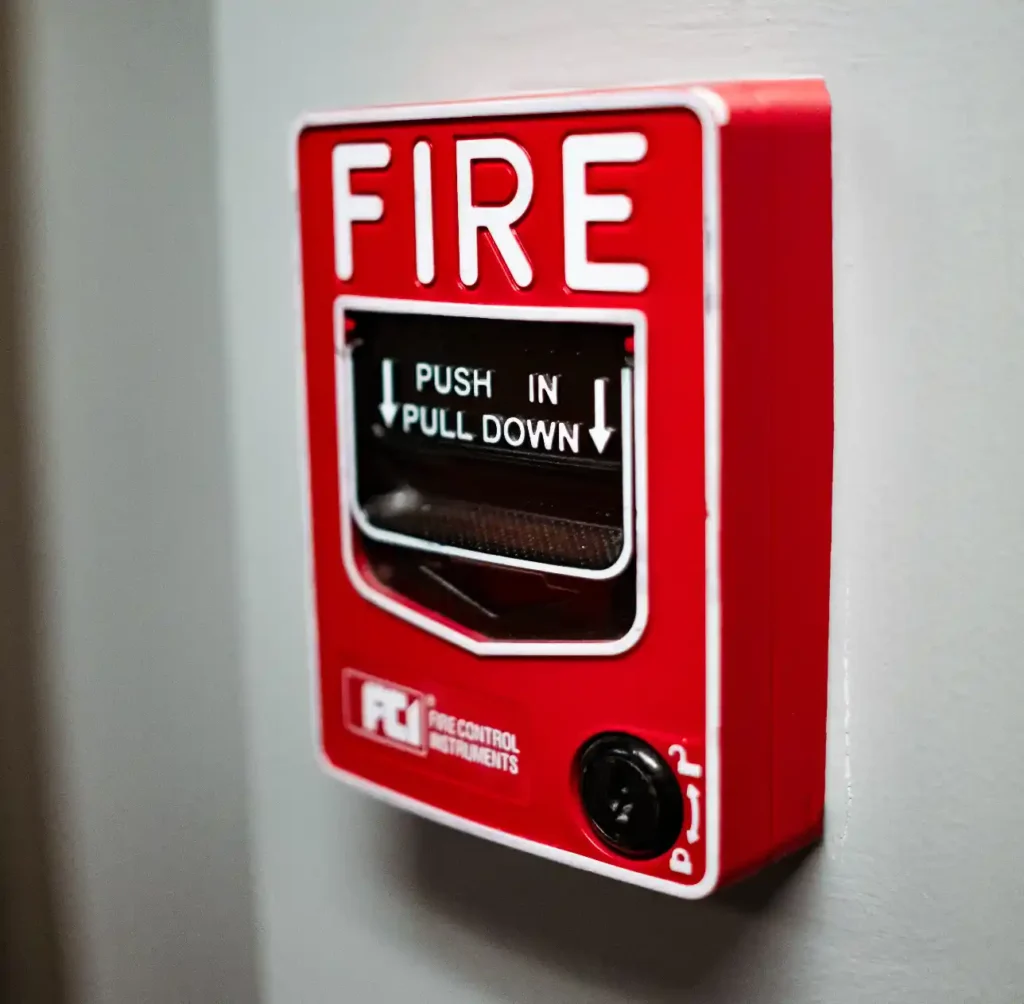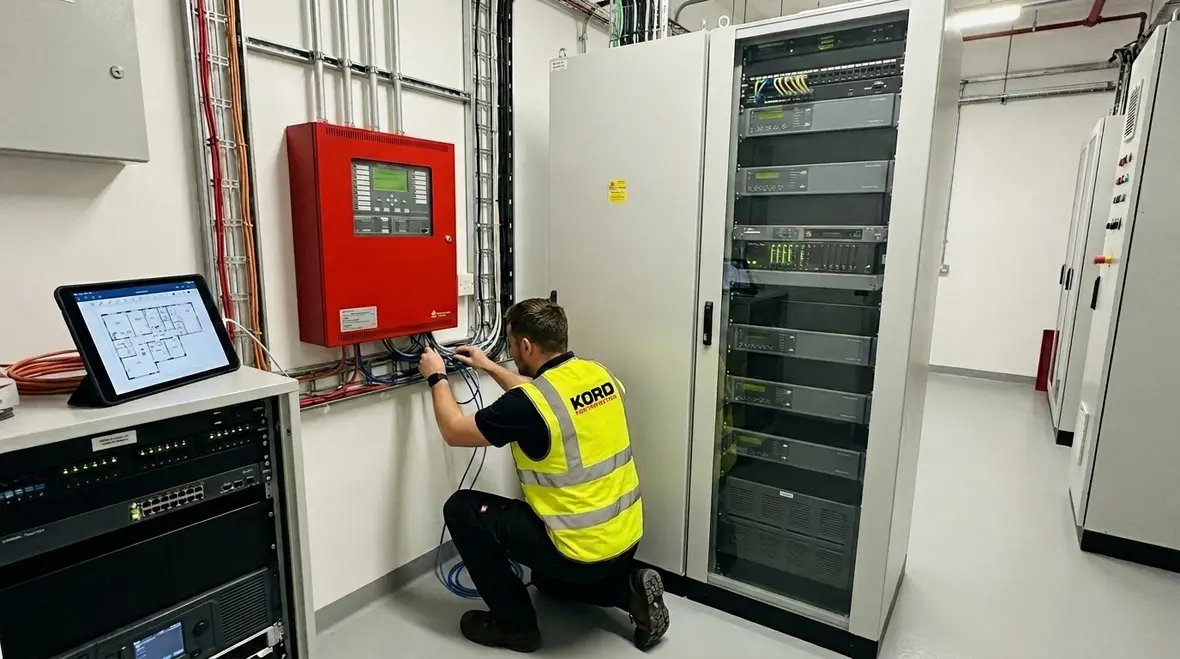
Fire Alarm System Integration for Smart Buildings in Australia
Quick Answer: Smart buildings only feel smart when life safety systems keep pace. A strong fire alarm system integration aligns devices, panels, and building controls so alarms, notifications, and monitoring work together across the site. This improves response time, reduces false confusion, and helps facilities meet Australian compliance expectations. And yes, it beats guessing during an emergency.
In Australia, industrial, retail, and commercial facilities keep upgrading controls, networks, and automation platforms. Yet many still treat fire safety like a separate universe. That is where a practical fire alarm system integration strategy matters. It connects fire alarm panels and detection devices with smart building infrastructure such as BMS, access control, lift interfaces, smoke management, and building-wide alerting. Done well, it helps operations, security, and maintenance act as one coordinated team. And when the system behaves like a calm conductor instead of a chaotic drumline, people notice. Kord Fire Protection can become a vital partner in this service, guiding design intent, commissioning, and ongoing support so the full stack stays reliable under real conditions.
For facilities planning upgrades, it also helps to tie integration decisions back to a broader full fire protection services approach so the alarm scope does not drift away from the rest of the building’s safety strategy. Near the same planning stage, many owners also find it useful to review fire alarm services and monitoring support early, because design choices become much easier when service, testing, and long term reliability are already part of the conversation.
Why smart buildings need coordinated life safety
Facilities often modernize their building “brain” first: monitoring, dashboards, energy controls, and automation rules. However, fire and evacuation actions demand predictable behavior, not clever experiments. Therefore, the smart building must coordinate with life safety. When detection triggers, the building should respond in a controlled sequence: confirm the event, manage message priorities, drive the right outputs, and guide evacuation systems without delays.
In practice, this means the fire alarm system integration does not merely send a signal. It shares structured status information with other systems so teams understand what is happening and where. In a retail centre, that can mean the right zone announcements. In an industrial site, it can mean controlled shutdown actions that protect people and equipment without turning every process into a panic button.
What coordination looks like in day to day operations
Good coordination is noticeable long before an emergency. Security teams see clearer alarm states. Maintenance teams spend less time chasing vague trouble signals. Facility managers can track where events originate instead of staring at a dashboard that seems deeply committed to mystery. That operational clarity matters because emergency response quality is usually shaped by what people practice and monitor every week, not by what they hope happens on a bad day.
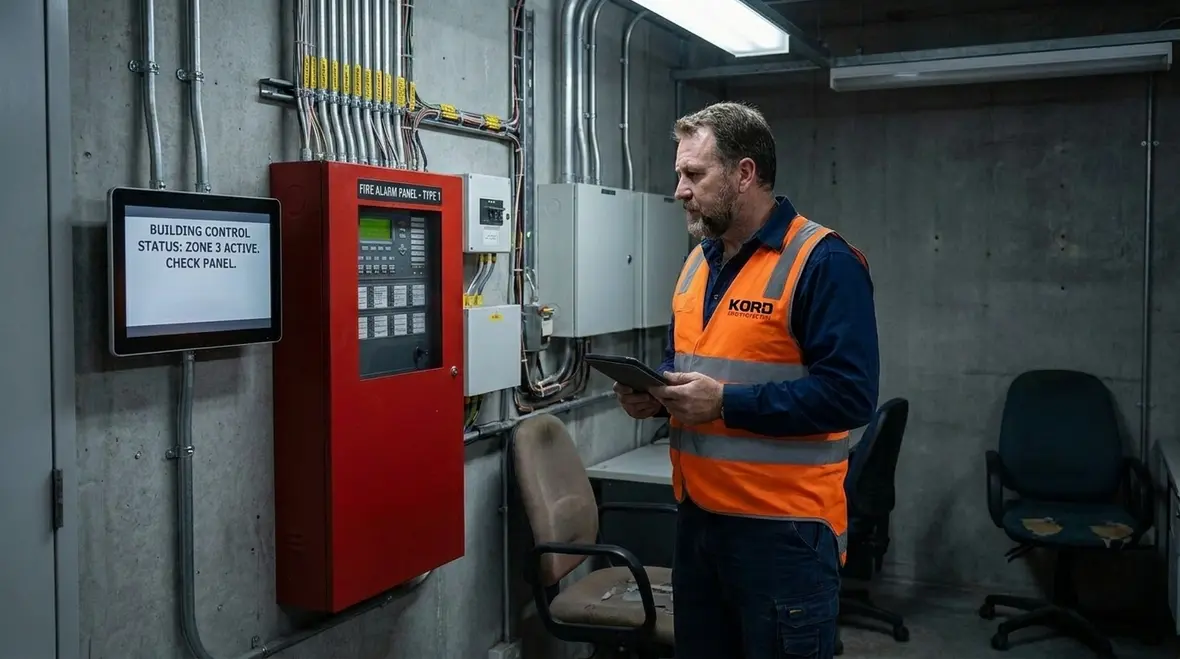
How the integration actually works behind the scenes
Most buildings communicate through layers. So, integration must respect how fire systems are built, tested, and certified. Typically, a fire alarm panel holds the safety logic and event processing. Then the building infrastructure receives specific, approved signals and status states. For example, the system can provide alarm, fault, isolate, and disable states, plus zone and device mapping when the design allows it.
Meanwhile, the BMS and monitoring platforms should treat that information as life safety truth, not as optional data. As a result, software dashboards and alarm routing must follow defined rules, not random alerts. Transitioning from “something happened” to “here is what happened, where, and what to do next” reduces confusion in control rooms and after hours.
To keep everything dependable, installers align wiring routes, network paths, timing behavior, and failure handling. So even if a gateway has issues, the fire alarm panel still performs its primary safety function. In other words, the integration supports the mission, it does not gamble with it.
Signals, sequencing, and sensible boundaries
The smartest integrations know their limits. The fire system should stay in charge of fire logic, while connected platforms respond to approved outputs and present useful visibility. That boundary keeps the arrangement disciplined. It also prevents the all too common situation where a building automation layer tries to be the hero, then creates more confusion than help. Nobody wants a software platform freelancing during an evacuation.
Design steps that prevent costly rework
Facilities across Australia often run into the same problem: smart upgrades begin late, after the fire design is already “locked.” Then teams scramble to patch interfaces, and the project costs climb like a lift that refuses to stop at your floor.
To avoid that, a coordinated design process should cover these points early:
- Site mapping: confirm detection zones, occupancy areas, and equipment rooms so every system uses the same language for location.
- Response matrix: define what happens for each event type, such as alarm, pre alarm, evacuation mode, or fault.
- Output assignments: list which outputs drive doors, lifts, smoke control, ventilation, and visual warning devices.
- Communication paths: identify how the fire alarm system integration reaches the BMS and monitoring tools, including approved gateways and controllers.
- Fallback behavior: specify what occurs if the smart layer fails while life safety logic remains intact.
Because this work spans electrical, fire, controls, and networking, the project needs a single plan that everyone follows. Kord Fire Protection can help align the fire side with building automation so the facility avoids mismatched assumptions during commissioning and handover.
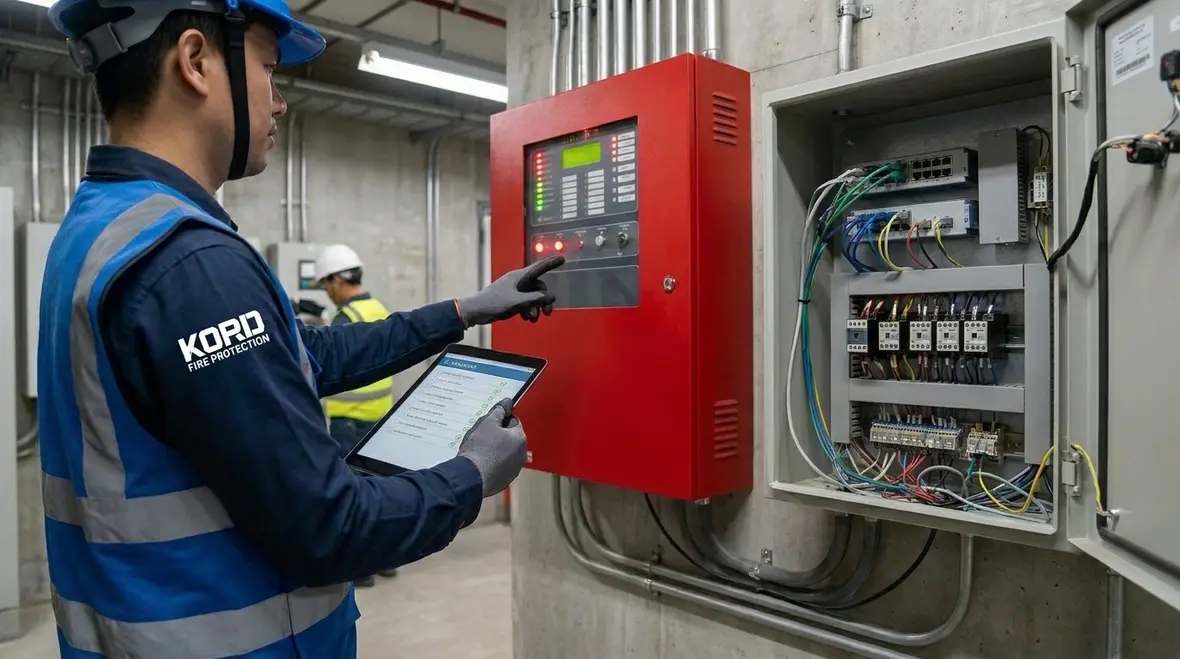
Early planning also makes later approvals smoother. Teams can verify naming conventions, confirm interface hardware, document cause and effect, and avoid last minute improvisation. That does not sound glamorous, but neither does redoing acceptance testing because three systems disagree about what Zone 4 actually means. Smart buildings deserve fewer identity crises.
Commissioning, testing, and acceptance without chaos
After installation, teams often test each system alone. Then they discover problems when systems meet in the real world, like a band rehearsing separately and only hearing the whole song on stage. Strong integration commissioning prevents that.
A proper approach includes joint functional testing with scripted scenarios:
- Confirm alarm event propagation from the fire panel to the building monitoring and alerting layer.
- Verify correct activation sequences for evacuation outputs and any linked plant shutdown rules.
- Test fault handling to ensure the BMS reports the right status without generating misleading “fire” indicators.
- Validate that isolations and maintenance states behave safely and clearly across dashboards.
During these tests, stakeholders should record results in a way maintenance teams can reuse later. Consequently, future changes become safer and faster. Kord Fire Protection can support this phase by providing structured commissioning checks, documentation discipline, and service readiness so the system stays consistent beyond the initial project glow.
Why joint testing matters more than isolated pass marks
A panel can pass its own test. A BMS can pass its own test. A door release controller can pass its own test. Yet the building can still fail at the exact moment those parts need to behave together. Joint testing closes that gap. It proves that alarms display correctly, messages arrive in sequence, interfaces fail safely, and operators are not left translating technical noise into urgent decisions while everyone else waits.
Common challenges in Australian facilities, and how to address them
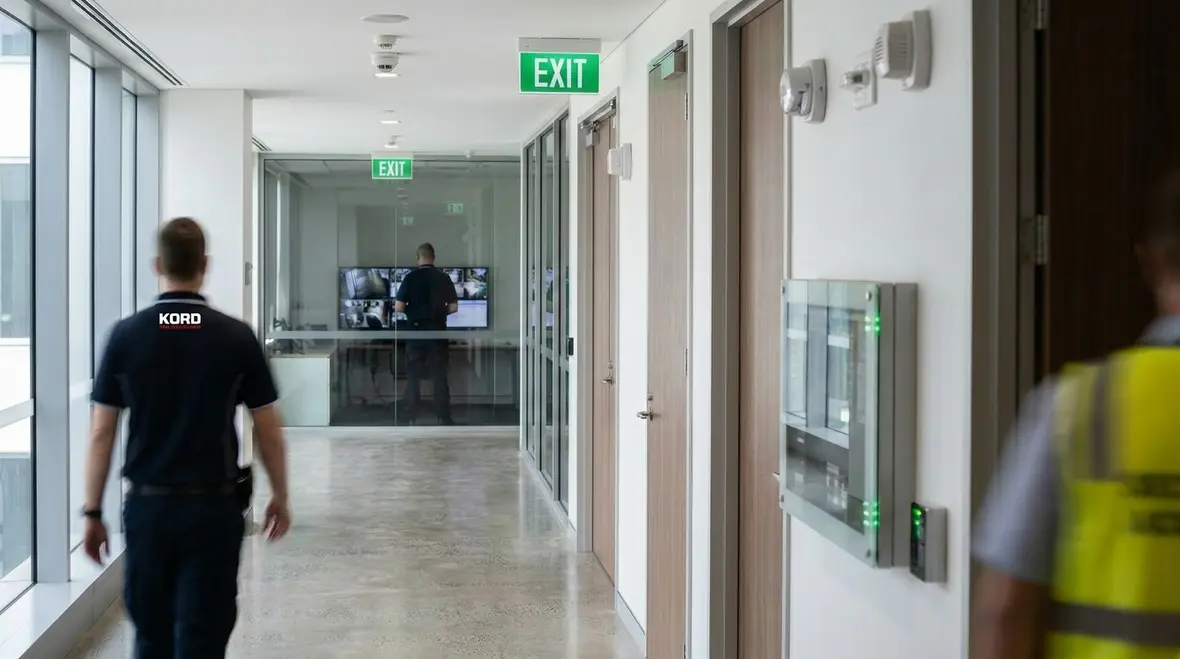
Industrial, retail, and commercial sites share different risk profiles, but they face similar integration hurdles. One challenge is inconsistent “naming” between systems, where zone labels vary between the fire panel, the BMS, and the monitoring interface. Another challenge is latency or message priority confusion, especially when multiple events occur close together.
To solve these issues, teams should standardize:
- Zone identity: use a single naming plan from design through commissioning.
- Alarm priority: ensure life safety events always outrank routine building alerts.
- Event mapping: confirm each event type translates to the correct BMS state and display logic.
- Documentation: keep interface points and logic maps current, especially after renovations.
In addition, integration must stay resilient in harsh environments. Factories deal with dust, vibrations, and electromagnetic noise. Retail centres deal with high turnover, tenant fitouts, and frequent changeovers. Therefore, interfaces and gateways need careful selection and proper installation practices. Kord Fire Protection can serve as a vital partner by coordinating the fire safety design intent with the operational reality of each site type, and then standing behind it through service and upgrades.
Another practical challenge is human interpretation. If one screen says alarm, another says supervisory, and a third says trouble with a cryptic label, the issue is no longer technical alone. It is operational. Clear mapping, consistent naming, and restrained interface design help teams make faster decisions. Fancy dashboards are welcome, but only after they learn the ancient art of being understandable.
Ongoing service and upgrades that keep the system trustworthy
Fire safety is not a set and forget job. It evolves as buildings modify layouts, add plant, change workflows, and upgrade software platforms. Therefore, the fire alarm system integration must survive change.
Strong ongoing service includes:
- Routine inspections and verification for panels, detectors, and signaling.
- Interface health checks to confirm BMS points and monitoring channels still map correctly.
- Planned upgrade paths so cybersecurity and software updates do not break alerting logic.
- Maintenance documentation updates after any alteration works.
This is where Kord Fire Protection can become more than a contractor. They can act as the long term partner that helps facilities keep coordination intact, so the system remains reliable during inspections, audits, and real incidents. In a world where software changes twice before lunch, that stability is not optional.
Service records are part of integration quality
Reliable integration is not just hardware plus software. It is also records, revisions, labels, test history, and change control. When a tenant fitout shifts devices, when a software update alters point mapping, or when a controller is replaced, documentation must keep up. Otherwise, the building ends up with a memory problem, and emergencies are a terrible time for guesswork.

FAQ
Ready to align fire safety with the smart building plan?
If your facility is upgrading controls, monitoring, access, or smoke management, it is time to connect those changes to life safety in a controlled way. Kord Fire Protection can help coordinate the fire alarm system integration pathway, from design intent to commissioning and service. That means clearer event logic, fewer surprises during testing, and a system that behaves like a disciplined teammate instead of a collection of expensive opinions.
Contact Kord today to map your response matrix, avoid expensive rework, and keep your building calm when it matters most. When alarms, controls, and operations finally work together, smart buildings stop acting clever and start acting safe. That is a much better trick.

Join Our Newsletter!
Get the latest fire safety tips delivered straight to your inbox From our Newsletter.