Fire Alarm Battery Backup Selection Guide for Australia
Quick Answer: Choosing the right battery backup for commercial fire alarms means matching runtime needs, compatible voltage and charger behavior, and the right compliance path for each site. A dependable fire alarm battery backup keeps life safety systems online during power loss, and Kord Fire Protection helps sites in Australia select, test, and maintain the setup so it performs when it counts.
In Australia’s industrial and commercial world, power doesn’t always act like a well-trained employee. Sometimes it trips, brownouts happen, generators delay, and UPS units do their best impression of a dramatic pause. That is why a properly selected fire alarm battery backup matters. It keeps alarm control panels, detectors, and signaling devices powered long enough to protect people, assets, and operations during an outage.
However, the job is not just “buy a battery and hope.” The right system depends on equipment type, panel monitoring, battery chemistry, charging profile, capacity, and ongoing maintenance. And that is where Kord Fire Protection can become a vital partner, turning a complicated selection process into a controlled, documented plan that suits each facility and works with inspection schedules. Near the top of that plan, it helps to align battery decisions with broader fire alarm services so the backup strategy actually fits the system it is protecting.
Yes, this is serious. Still, it can be handled calmly. Like a fire alarm system should be. Not like a late-night movie marathon where the hero forgets the last step.
How commercial sites decide battery runtime needs
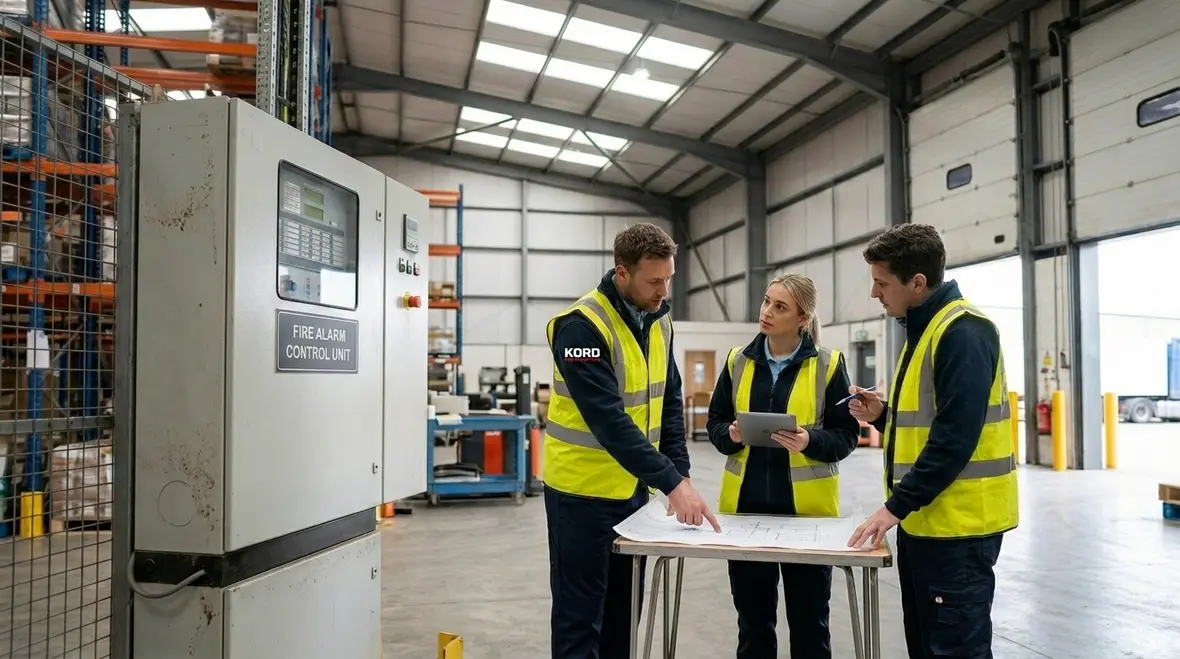
Commercial and facilities teams usually start with the question of how long the system must run during mains failure. Next, they tie that runtime to local requirements, the specific panel design, and the actual load connected. For example, a site with multiple zones, sounders, beacons, and door-holder releases will draw more current than a small office with a limited set of devices.
Then they verify the real-world load, not just the nameplate numbers. Current draw can change with device count, line impedance, and signaling levels. In other words, two warehouses can look identical on paper, yet their battery backup needs can differ like two different Aussie sports teams with completely different game plans.
At this stage, Kord Fire Protection helps teams translate “we need backup” into a clear runtime and load calculation approach. That reduces surprises during commissioning and supports smoother maintenance cycles later. It also pairs well with broader full fire protection services when a site wants one coordinated approach instead of juggling separate contractors, separate records, and separate headaches.
What runtime planning usually includes
- Standby time required for the site and system arrangement
- Total connected load in normal and alarm conditions
- Any auxiliary devices that increase demand during an outage
- Allowance for aging, temperature, and real-world battery performance
Fire alarm battery backup compatibility and charging behavior
Choosing a battery backup is not only about capacity. It is also about compatibility with the control panel’s charging method and supervision features. Some panels require specific battery types, terminal configurations, and charging voltages. If the charger profile does not match the battery chemistry, the system may undercharge or age faster, which defeats the whole purpose.
Furthermore, commercial fire alarm panels often monitor battery health using voltage behavior over time. Therefore, the battery backup must align with the panel’s expectations for fault thresholds and trouble conditions. If it does not, the site can see nuisance faults, or worse, it may fail to indicate a real issue correctly.
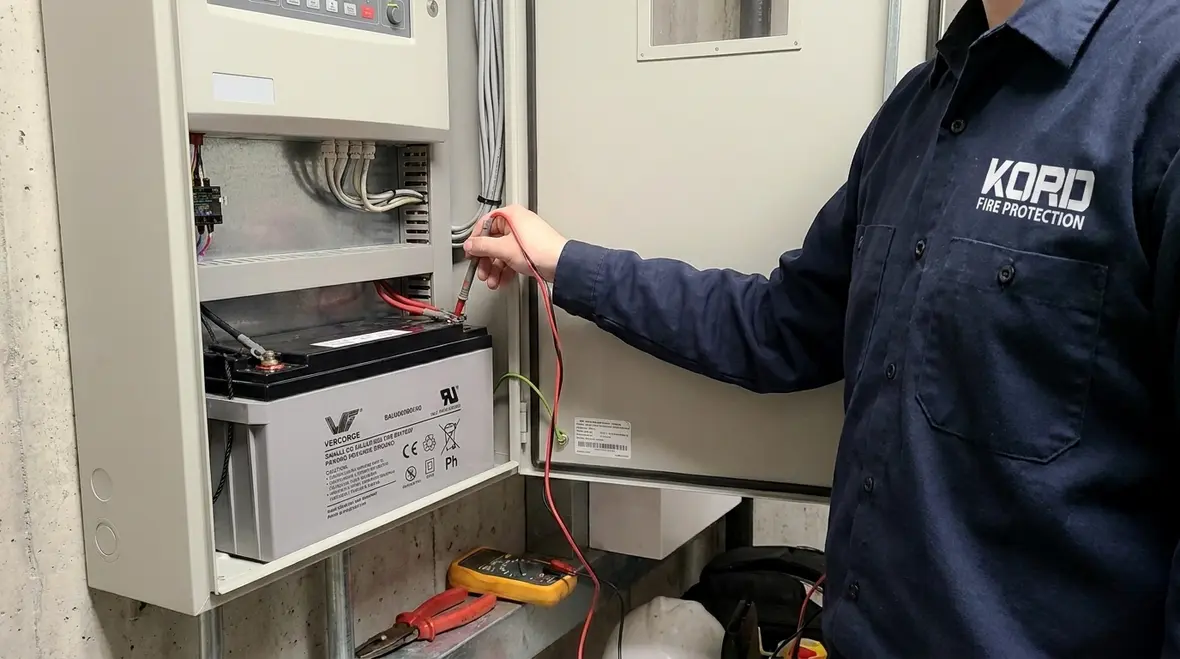
Kord Fire Protection supports this step by matching the battery backup selection to the specific panel model and configuration. That means less guesswork and fewer “why is it complaining again?” moments during testing. It is one of those behind-the-scenes details that nobody celebrates until the lights go out and the system quietly does exactly what it should.
Compatibility checks that deserve attention
- Nominal voltage and allowable charging range
- Panel supervision logic and trouble thresholds
- Terminal layout, enclosure fit, and cable reach
- How the charger behaves after discharge and during float service
Battery chemistry, capacity, and expected service life
Many commercial systems use sealed lead acid batteries because they work well in alarm panels, but chemistry choices can vary by system design and lifecycle goals. Capacity is typically expressed in ampere-hours, and runtime depends on both the required duration and the load current. As load increases, the battery can deliver less energy per unit of capacity, so the selection must reflect real consumption.
Then there is service life. Heat, charging habits, and frequent cycling affect battery aging. Industrial environments in Australia can run hot, dusty, and sometimes uneven in temperature. As a result, a battery that is “technically correct” on paper may still underperform if installed without considering environmental conditions.
To avoid this, a facilities team should request a plan that includes replacement intervals, test frequency, and a documented approach to battery backup condition checks. Kord Fire Protection can help set that plan so maintenance teams know what to do, when to do it, and how to prove it to stakeholders. That proof matters because batteries have a sneaky habit of looking perfectly innocent right up until they are not.
Installation details that protect reliability
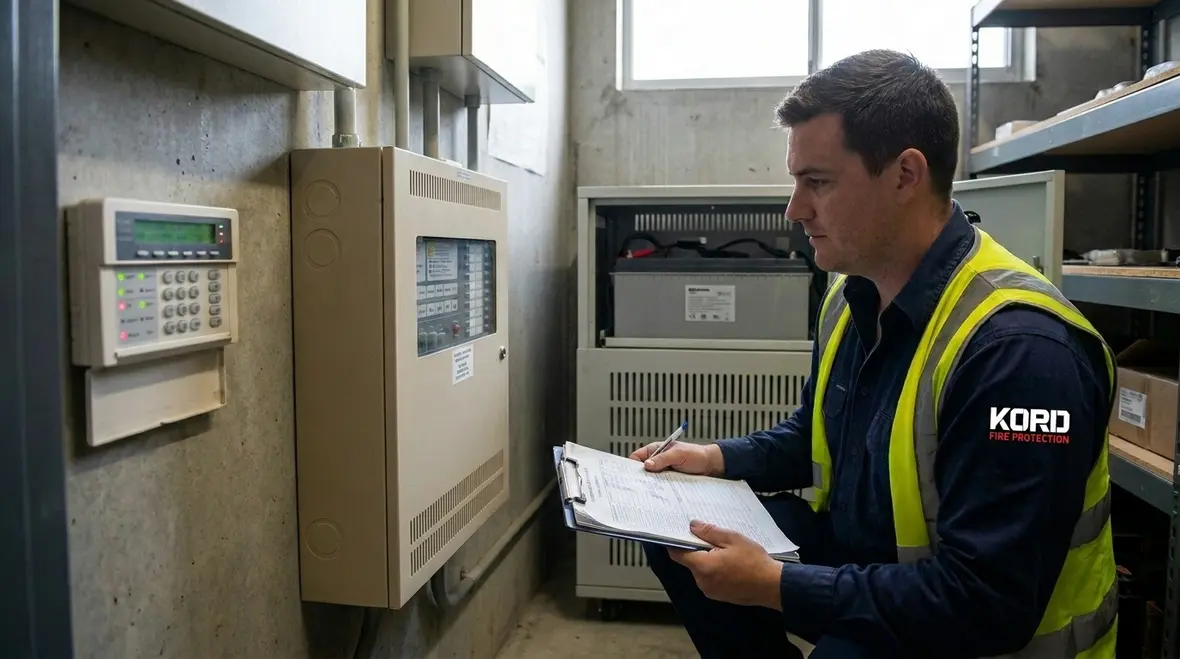
Even the best fire alarm battery backup can fail if installation details get sloppy. Mounting, terminal torque, cable routing, ventilation, and physical protection all matter. Poor connections create resistance, heat, and voltage drop. And voltage drop during an outage can cut runtime shorter than expected.
Additionally, teams should consider how the battery compartment is sealed and protected from dust and moisture. Commercial spaces may have airflow patterns that change with seasons, and that affects internal temperatures. Therefore, the mounting location and enclosure design should support stable operating conditions.
Next, the system should preserve correct polarity, labeling, and accessibility for future service. If technicians must “perform surgery” with limited access, the maintenance plan becomes harder, and humans tend to postpone what is hard. That is how small details become big headaches.
Kord Fire Protection focuses on installation quality that supports long-term reliability, and it aligns the setup with commissioning and ongoing checks used by commercial fire alarm service providers across Australia.
Small installation choices with big consequences
- Clean, secure terminations with correct torque
- Accessible placement for inspection and replacement
- Ventilation and protection from heat, dust, and moisture
- Clear polarity marks and service labeling for faster maintenance
Compliance, documentation, and test readiness for audits
Commercial fire alarm systems need ongoing readiness, not just initial compliance. That means keeping records of battery backup selection, commissioning data, and test outcomes. Auditors and insurers often look for a clear paper trail that shows the system was maintained and verified over time.
To make that easier, teams should define a testing schedule that includes periodic functional tests and battery performance checks. If the battery backup system uses supervision signals, the records should capture those diagnostics as well. Then, if a battery shows early degradation, the plan should support corrective action without waiting for failure.
At this point, Kord Fire Protection becomes a vital partner by helping facilities keep documentation consistent across sites. For multi-facility groups in retail, industrial, and mixed-use operations, that consistency can save both time and budget. Nobody wants to chase paperwork like it is a lost remote in a couch cushion.
Choosing vendors and service partners in Australia
Not every provider delivers the same value. Some companies sell components. Others deliver a full service approach that includes selection support, commissioning, scheduled maintenance, and responsive fault management.
When teams choose a partner, they should look for the ability to work across the specific panel brands and device families used on the site. Also, the partner should explain battery backup assumptions in plain language, provide structured recommendations, and support upgrades without turning the project into a never-ending “scope creep” thriller.
Finally, response capability matters. If a fault happens at a critical site, time matters. A reliable partner helps the facility team resolve issues quickly, verify the system safely, and restore full operation without guesswork.
Kord Fire Protection supports commercial stakeholders across Australia with expertise that connects selection, installation quality, testing, and maintenance planning. In a busy industrial or retail environment, that integrated approach reduces downtime and keeps fire alarm systems dependable.
Dual column checklist for a fast, accurate selection
| What to confirm | Why it matters |
|---|---|
| Panel model and charging behavior | Ensures correct voltage profile and supervision performance during mains failure |
| Device load and alarm signaling levels | Improves runtime accuracy for the required duty |
| Battery type, capacity, and terminals | Prevents incompatibility and supports expected service life |
| Installation environment and ventilation | Reduces heat stress and helps batteries age slower |
| Commissioning data and test schedule | Supports audits and keeps records traceable over time |
| Maintenance access and labeling | Reduces future service friction and helps teams test on schedule |
FAQ
Conclusion
Choosing the right fire alarm battery backup is a business decision, not a guess. When a facility matches runtime needs, charger compatibility, installation quality, and maintenance documentation, it protects lives and reduces operational risk.
Kord Fire Protection can help you select and manage the right setup across industrial, retail, and facilities sites in Australia. Reach out to plan your battery backup strategy and keep your fire alarms ready, every single time.

Join Our Newsletter!
Get the latest fire safety tips delivered straight to your inbox From our Newsletter.