Commercial Suppression Systems Benefits for IT Rooms
Quick Answer: IT rooms hold mission critical gear, dense power loads, and strict uptime demands. Specialized fire suppression systems help protect people, limit damage to servers and networking, and reduce downtime risk. With the right design, installation, and maintenance, Commercial Suppression Systems Benefits show up as safer operations and faster recovery.
In facilities that run on constant connectivity, IT rooms never really clock out. They keep networks alive, support security systems, hold communications gear, and quietly carry the weight of day to day operations. When smoke starts in that kind of environment, nobody gets the luxury of a slow response. Therefore, IT room fire protection cannot be treated like a generic building checkbox. It needs a strategy built for sensitive electronics, concentrated power, and the reality that one small incident can knock far more than one room offline.
That is exactly why businesses often look beyond standard protection and toward dedicated full fire protection services that can support system design, coordination, and ongoing readiness. IT spaces are not forgiving. Smoke can move through racks, cable trays can help spread damage, and cleanup after a poorly matched suppression response can feel like trying to revive a server room with crossed fingers and a mop.
Specialized suppression systems help protect equipment, preserve records, support life safety, and reduce the odds of a painful outage turning into a business continuity disaster. The benefit is not just stopping flames. The benefit is controlling the event fast enough, cleanly enough, and smartly enough that recovery is possible without turning the IT team into unwilling archaeologists digging through soot and melted cable jackets.
Why IT Rooms Need More Than Regular Coverage
IT rooms store servers, switches, battery backups, power distribution equipment, cooling components, and dense cabling. Those hazards do not fail politely. They can smolder, overheat, arc, and produce smoke long before an open flame becomes obvious. As a result, a small localized incident can create a major outage, and the real cost often extends beyond hardware replacement into lost access, interrupted operations, and delayed service for everyone who depends on the room.
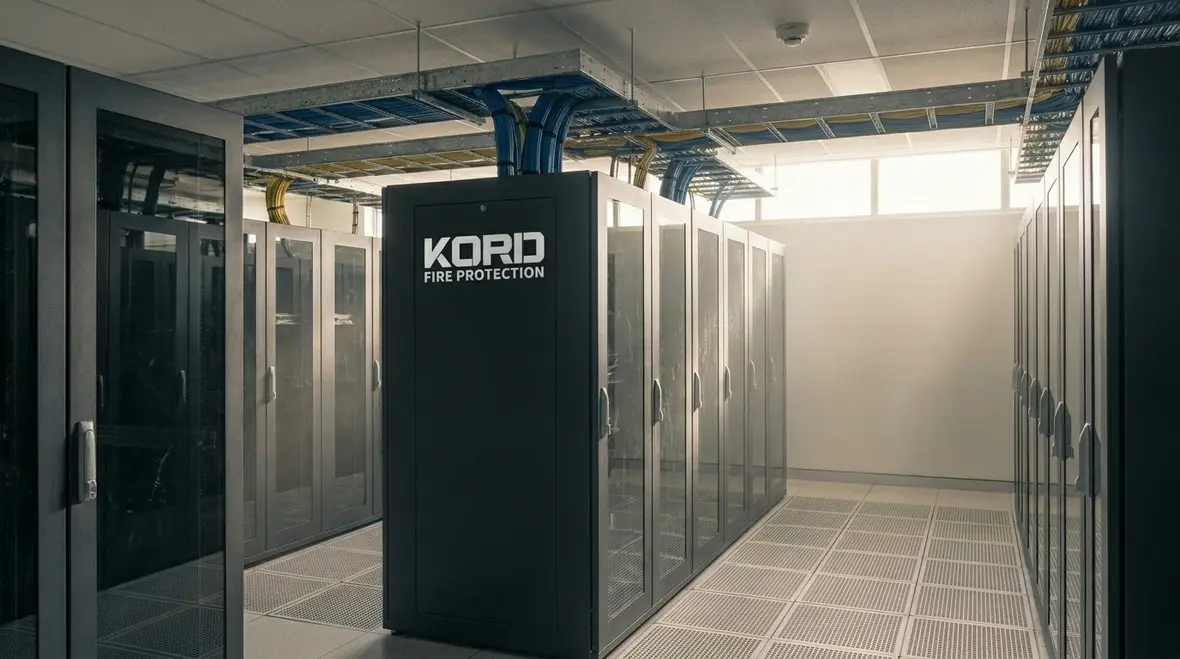
Many IT rooms also include raised floors, enclosed racks, overhead trays, and tight equipment layouts. That means fire can grow in concealed spaces before anyone sees visible signs. Meanwhile, a basic one size fits all approach may not reflect the room’s actual hazard profile. Traditional water based discharge can be essential in many settings, but when sensitive electronics are involved, the protection strategy needs to consider how to limit both fire damage and response related damage.
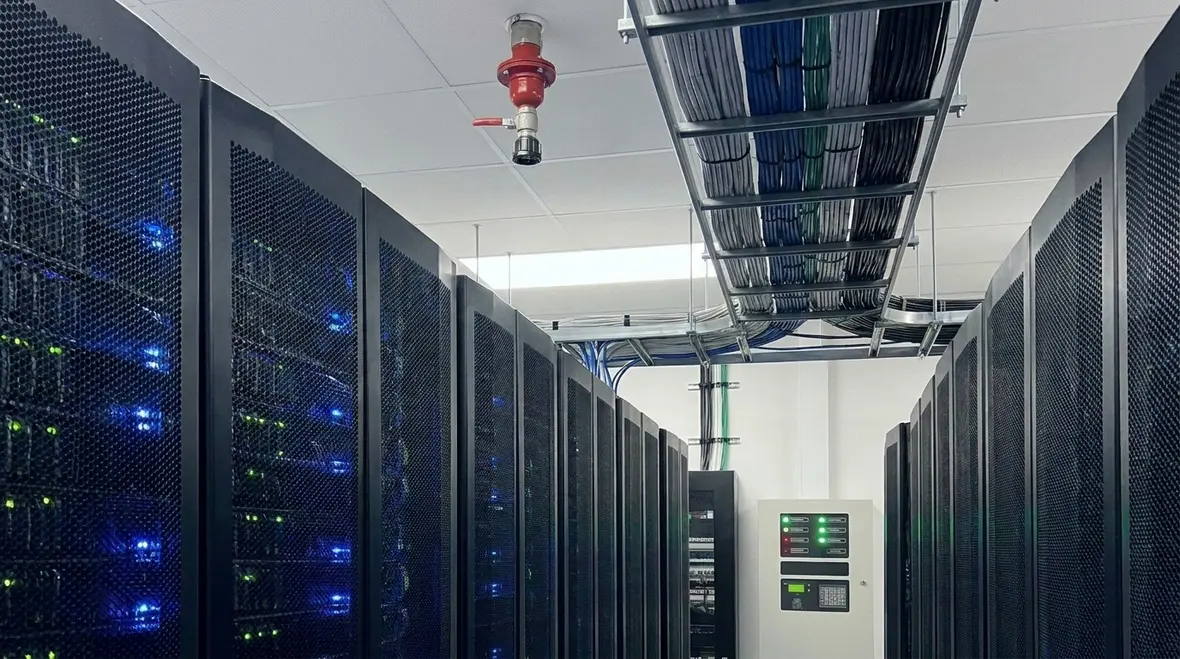
Specialized suppression systems respond to those conditions through a combination of detection, agent selection, zoning, timing, and room specific design. In other words, the system is planned around the room instead of expecting the room to somehow cooperate with a generic setup. That difference matters because hidden hazards love assumptions, and assumptions are terrible firefighters.
Commercial Suppression Systems Benefits for Uptime and Safety
Commercial suppression systems are designed to control or extinguish a fire in a way that supports both safety and continuity. In an IT room, that means reducing smoke spread, limiting heat buildup, and lowering the chance that a localized event escalates into a full operational crisis. The faster the hazard is identified and managed, the better the chances of protecting data, preserving key infrastructure, and shortening the path back to service.
This is where the phrase Commercial Suppression Systems Benefits becomes very practical. Businesses are not just buying hardware. They are investing in reduced downtime risk, better protection for high value equipment, improved resilience, and a stronger response plan when something goes wrong. In a room packed with critical infrastructure, even a brief interruption can ripple outward through communications, transactions, access systems, and customer service.
A well matched system also supports better risk management across the site. Designers can account for cable loads, rack density, airflow patterns, room volume, and likely smoke travel. That engineering approach gives facilities something better than hope. It gives them a suppression strategy that actually reflects how the room behaves under normal operation and how a fire event might develop when conditions go bad in a hurry.
How the right system helps operations stay steady
- Supports earlier intervention before heat and smoke spread through the room
- Helps reduce collateral damage to sensitive electronics and connected equipment
- Improves the odds of a faster, more controlled restoration process
- Strengthens continuity planning for facilities with strict uptime expectations
- Provides a more tailored response than generic room protection alone
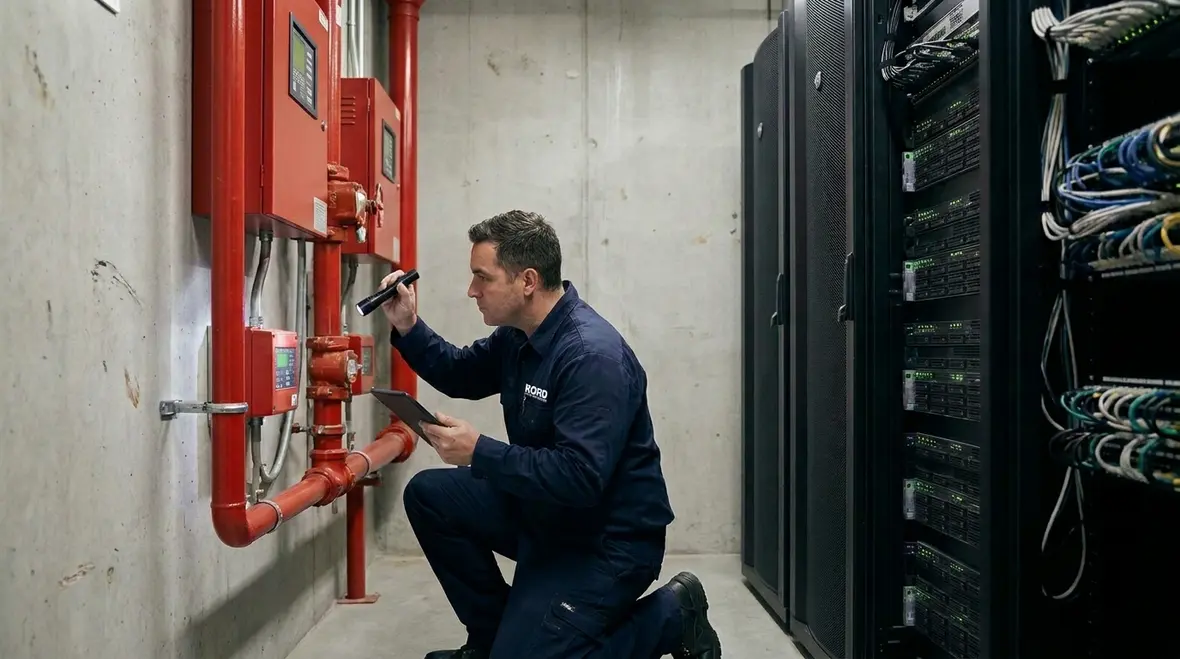
How Specialist Design Protects Servers, Racks, and Cables
Specialized systems do not simply spray and pray. They begin with hazard assessment, layout review, and a practical understanding of what the room contains. Designers look at equipment arrangement, room dimensions, rack placement, cable pathways, and ventilation patterns. They also consider which areas may hide heat or smoke longer than expected. Once that groundwork is done, the suppression approach can be matched to the protected volume rather than guessed into place.
That depth matters because cable trays and rack enclosures can act like pathways for both heat and smoke. Coverage planning needs to reach the right zones, not just the easiest ones to draw on a plan. Installers and designers also need to think about how a discharge behaves in the room, how quickly smoke reaches detection points, and whether airflow might delay response or reduce effectiveness. If those factors are ignored, the system can become a very expensive exercise in confidence without performance.
In many facilities, downtime concerns also shape the installation process. Work may need to be staged around maintenance windows, commissioning may require careful coordination, and testing must be planned so the room can return to operation with confidence. That is one reason partnering with an experienced provider matters. A team offering fire protection expertise and long term support can help keep the design intent intact from planning through service life.
What Detection and Agent Choice Actually Mean
In IT rooms, detection is the first domino. If it triggers too late, suppression has less chance to stop the incident before damage spreads. If it is overly sensitive without proper tuning, unwanted alarms can disrupt operations and create their own headaches. Therefore, a good design balances early warning with accurate identification, using detection methods suited to the room conditions and the actual hazard environment.
After detection, agent choice becomes a major issue. Depending on the protected space and system design, facilities may use suppression approaches intended to reduce residue and limit harm to electronics while still controlling the fire effectively. The goal is straightforward even if the engineering is not. Stop the fire, limit collateral damage, and avoid turning a survivable event into a replacement project that empties budgets faster than a surprise infrastructure refresh.
Airflow also deserves real attention. HVAC returns, door openings, pressure conditions, and cooling patterns all influence how smoke travels and how a room responds during discharge. A design that ignores those details may look fine on paper but behave poorly when conditions matter most. In IT spaces, paper confidence is cheap. Reliable performance is the thing worth paying for.
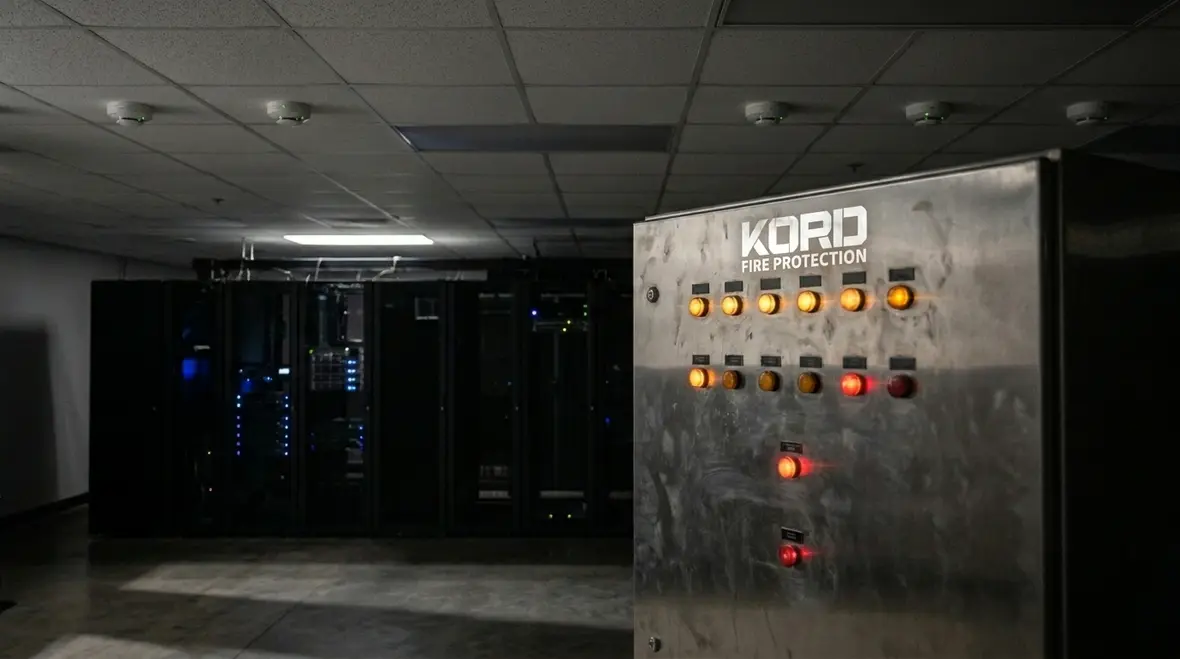
Why Maintenance and Testing Are Non Negotiable
Fire systems only work reliably when they stay ready. Over time, detectors drift, components wear, connections loosen, and the room itself changes. New racks show up, old cables disappear, cooling gets upgraded, and airflow patterns quietly shift. Therefore, maintenance is not a boring paperwork ritual. It is a direct form of risk control that helps keep the original protection strategy aligned with the room as it exists now, not as it looked on day one.
Testing should reflect real operation as much as possible. Facilities need documented schedules, commissioning support when changes occur, and service planning that follows manufacturer requirements and applicable standards. Otherwise, a system can drift from reliable readiness into the worst category imaginable: the one everyone assumes works. Nothing says unpleasant surprise quite like discovering your carefully installed protection system has been silently auditioning for the role of expensive wall decor.
This is also where a long term service partner earns real value. Kord Fire Protection supports fire alarm, suppression, and broader system readiness through its service offerings, including fire alarm services and coordinated fire protection support. For multi site organizations especially, consistency matters. Teams should not be juggling one process in one building and a completely different set of expectations somewhere else.
Partnering With Kord Fire Protection for Long Term Reliability
Specialized suppression in an IT room requires more than an install date and a certificate. A strong partner helps guide design decisions, supports commissioning, verifies readiness, and keeps documentation current as systems evolve. That kind of support matters because IT spaces are not static. They expand, contract, get reconfigured, and quietly develop new risk patterns as equipment and loads change over time.
Kord Fire Protection presents itself as a full service provider across suppression, alarms, sprinklers, pumps, and related life safety support. That broader capability is useful when facilities want a coordinated view of risk rather than isolated pieces managed in separate silos. In short, the goal is to treat fire suppression as a living safety program, not a one time project that gets ignored until someone hears an alarm and immediately starts bargaining with the ceiling.
Integrating Fire Suppression Into Real Facility Operations
Good design still has to survive real life. Facilities should coordinate suppression systems with alarm routing, access control, monitoring, emergency procedures, and staff response expectations. When an IT room event occurs, the right people need to know quickly, the right steps need to happen in order, and nobody should be improvising while smoke tries to rewrite the room’s future.
It also helps when suppression strategy is tied into change control. IT teams regularly add servers, shift loads, reroute cabling, and adjust cooling. Each of those changes can affect airflow and hazard behavior. Periodic review keeps protection aligned with the actual operating environment instead of the room everyone remembers from three upgrades ago.
FAQ
Conclusion: Secure the IT Room Before the Problem Starts
Specialized fire suppression systems protect more than equipment. They help protect continuity, reduce smoke and damage risk, and support a faster return to service when every minute matters. For IT rooms, the real value is not just in having a system present. It is in having one designed, maintained, and reviewed to match the way the room actually operates.
Kord Fire Protection can support that effort through coordinated services, ongoing readiness planning, and a broader understanding of commercial life safety systems. When the goal is protecting servers, networks, and uptime, a tailored suppression strategy beats a last minute scramble every time. That is a much better story than explaining to leadership how a tiny fire turned into a full scale technology soap opera.

Join Our Newsletter!
Get the latest fire safety tips delivered straight to your inbox From our Newsletter.