
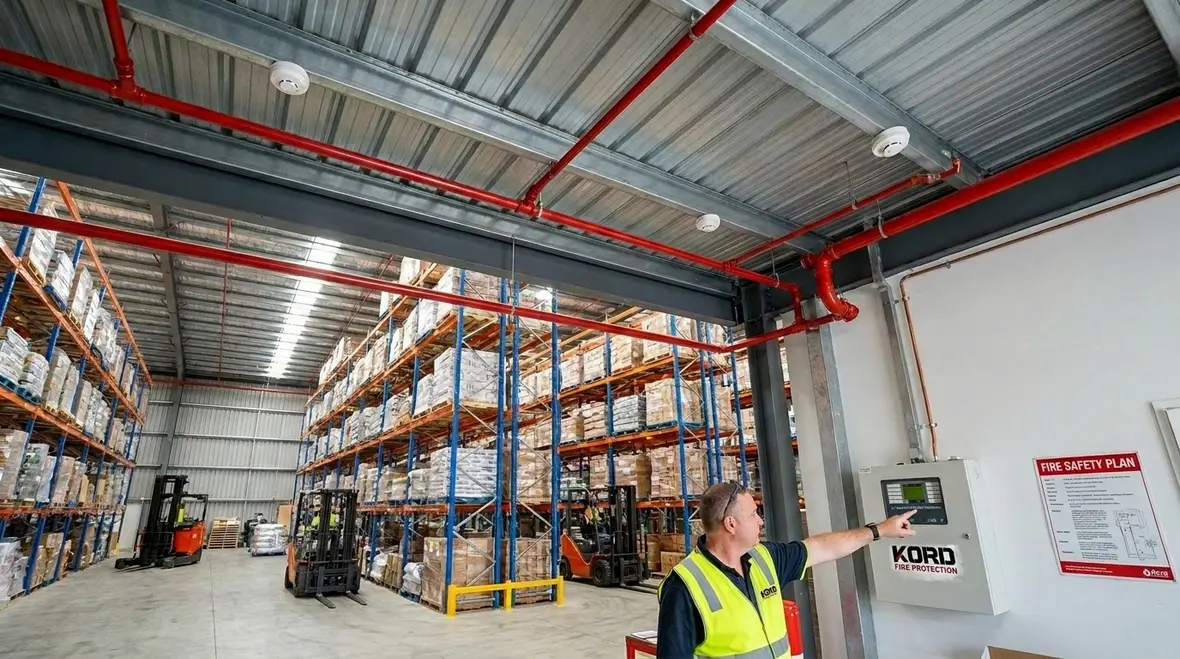
Commercial Fire Suppression Selection for Warehouses
Quick answer: Selecting the right fire suppression system for a warehouse starts with understanding the hazards, storage layout, ceiling height, and risk profile. Facilities teams then match those details to the right detection method, agent type, and design standards. With the right partner, downtime stays low and protection stays compliant. Kord Fire Protection helps make that process practical, not painful.
Warehouses run on one thing: speed. Boxes move, forklifts roar, and timelines rarely wait. So when fire protection decisions come up, the team needs a plan that fits the building and the way people operate inside it. That is why a commercial fire suppression selection matters early. It sets the foundation for detection, agent choice, coverage design, and inspection readiness, long before anyone thinks about “maybe we’ll upgrade later.” Near the top of that process, it also helps to work with a provider that understands connected systems like fire alarm service systems, because suppression and notification should work like teammates, not strangers sharing the same building. For broader planning, facilities teams can also benefit from full fire protection services that keep design, testing, and ongoing support aligned with operations. ([kordfire.com](https://kordfire.com/fire-alarm-service-systems/?utm_source=openai))
In the sections below, a facilities decision maker can quickly work through what works, what fails, and how to avoid costly mistakes that sound like a horror story but start as a simple equipment mismatch. And yes, the right system can feel like a calm hand on the shoulder while everything else in the warehouse feels like chaos.
Assess warehouse hazards before choosing an agent
First, warehouses do not burn the same way. Product type drives behavior. Packaging can trap heat, dust can intensify flames, and chemicals can create unusual conditions. Therefore, teams should begin with a hazard assessment that covers fuel load, ignition sources, and fire growth potential. They also need to map where fires likely start, such as loading bays, battery charging areas, electrical rooms, conveyor zones, racking aisles, and packaging storage. Kord’s warehouse guidance consistently frames hazard classification as the starting point for selecting the right protection approach, especially in high pile storage and mixed commodity environments. ([kordfire.com](https://kordfire.com/city-of-industry-warehouse-fire-suppression/?utm_source=openai))
Next, teams should consider what the facility stores and how it is stored. High-density racking increases heat transfer and can hide fire spread. Pallets stacked too high can block detection pathways. Flammable liquids, aerosols, or solvents can demand a system that controls quickly, while ordinary combustibles might follow different patterns. Additionally, dust hazards deserve attention. Combustible dust can turn a local event into a fast-moving incident, so the suppression strategy must align with that risk.
At this stage, a solid commercial fire suppression selection does not guess. It links hazard findings to system intent: control the fire early, reduce heat release, and keep exits and egress viable. That sounds obvious until someone chooses equipment based on what was available fastest instead of what the facility actually needed. That is usually when “easy” becomes “expensive.”
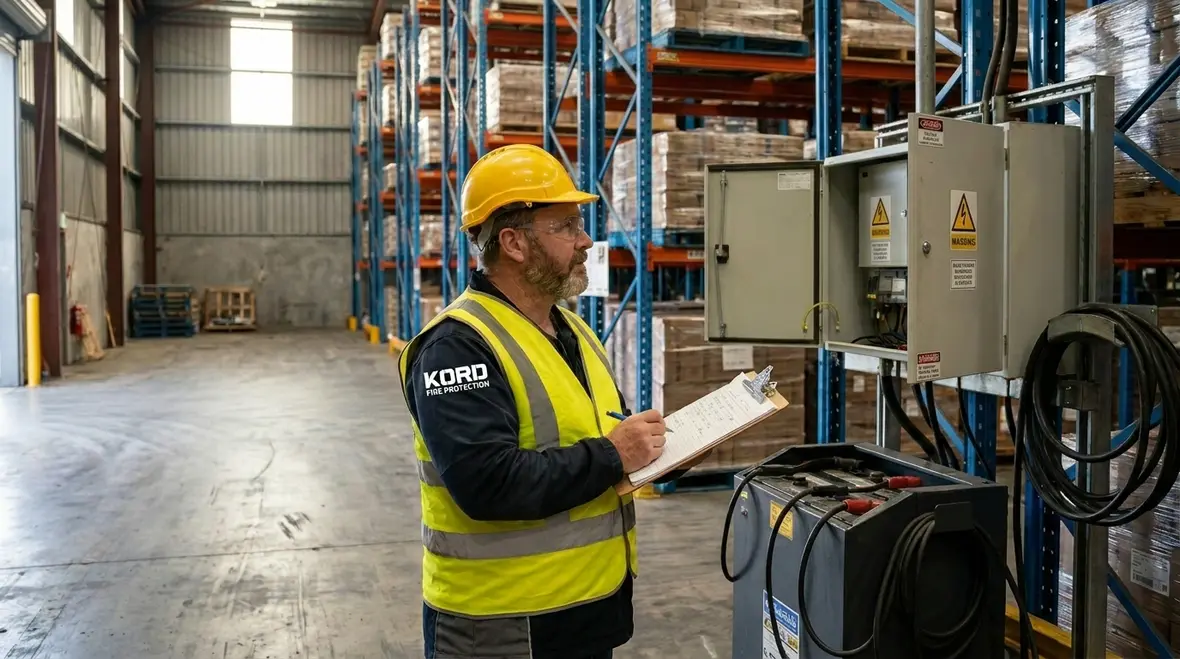
Why hazard mapping changes everything
Hazard mapping is where theory meets the actual warehouse. It tells the team whether the biggest concern is vertical flame spread in rack storage, a liquid fire near a handling area, or a nuisance-prone dusty zone where the wrong detector will cry wolf every other Tuesday. A warehouse can look straightforward on paper and still behave like three different buildings once operations are underway. That is why the hazard review has to reflect real movement, real storage patterns, and real operational headaches.
Match the system to the warehouse layout and design
Even the best agent fails if the system does not match the space. Therefore, layout matters as much as hazard. A designer should review ceiling height, beam construction, obstructions, and ventilation patterns. Sprinklers and other devices need the right spacing and placement to reach the fire plume. If there are mezzanines, ducting, cool rooms, or partition walls, the system may need zoning or careful coverage planning.
Then there is the aisle and rack design. Storage configuration affects how far heat and smoke travel before detection triggers. A warehouse with deep racking and narrow aisles can create hot, enclosed pockets where the fire grows unnoticed. Meanwhile, open floor areas behave differently and may allow better plume movement. Kord’s warehouse fire suppression and planning content repeatedly emphasizes that rack rows, aisle widths, storage height, and water supply calculations are not side notes. They are part of the main plot. ([kordfire.com](https://kordfire.com/city-of-industry-warehouse-fire-suppression/?utm_source=openai))
Also, warehouses change. Seasonal inventory, new pallet patterns, and added machines all shift the risk profile. So the design should support planned variations, or at least include a practical way to manage modifications without turning compliance into a scavenger hunt. If a site is likely to evolve, the fire protection strategy should not be built like a glass sculpture that shatters every time operations improve.
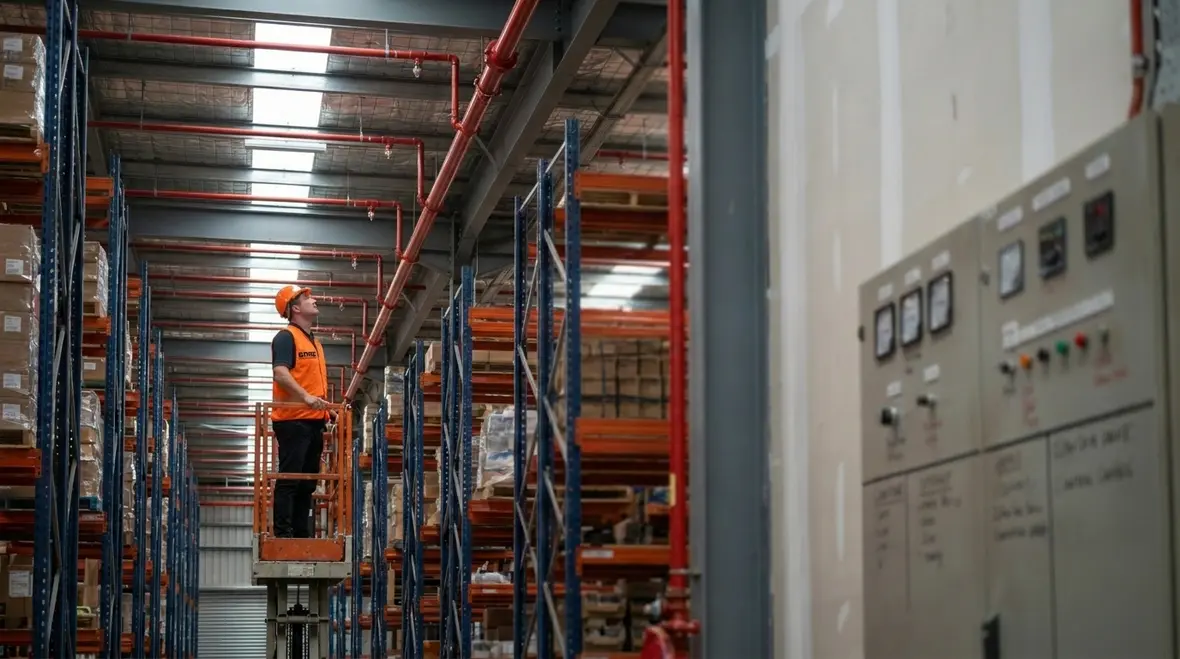
Design for today’s warehouse and next quarter’s reality
A smart design does not just cover the warehouse as it exists on inspection day. It anticipates the way facilities actually operate. Maybe inventory density climbs during peak season. Maybe an equipment line gets added. Maybe a charging area expands because someone finally bought more electric forklifts. Those shifts can alter detection performance, access, and suppression coverage. A design partner who sees that coming saves everyone from the classic sequel nobody asked for: retrofit, rework, and regret.
Choose detection and control that keeps operations moving
Suppression works best when detection works well. Therefore, facilities teams should align detection type with the hazard and the environment. Smoke detection can struggle in dusty areas if it is not chosen and maintained correctly. Heat detection can help in places where aerosols or fumes might cause false alarms. Flame detection may suit certain high-risk zones where rapid response improves outcomes.
Additionally, control logic matters. A warehouse might require staged activation, local zoning, or interlocks with ventilation systems. For instance, closing dampers and controlling smoke movement can support suppression and improve visibility for occupants. However, these sequences must reflect how the building’s fire and safety systems work together, not how someone hopes they work. That is another reason integrated support from alarm and suppression specialists matters in the selection stage. Kord’s fire alarm services page highlights custom evaluation, code compliance, and coordination across system types, which supports that more connected approach. ([kordfire.com](https://kordfire.com/fire-alarm-service-systems/?utm_source=openai))
And yes, false alarms are the unfunny side of the joke. When alarms trigger too often, staff learn to treat them like background noise. The goal is reliable detection that earns trust. In a busy warehouse, trust is operational currency. If people doubt the system, response quality drops right when it matters most.
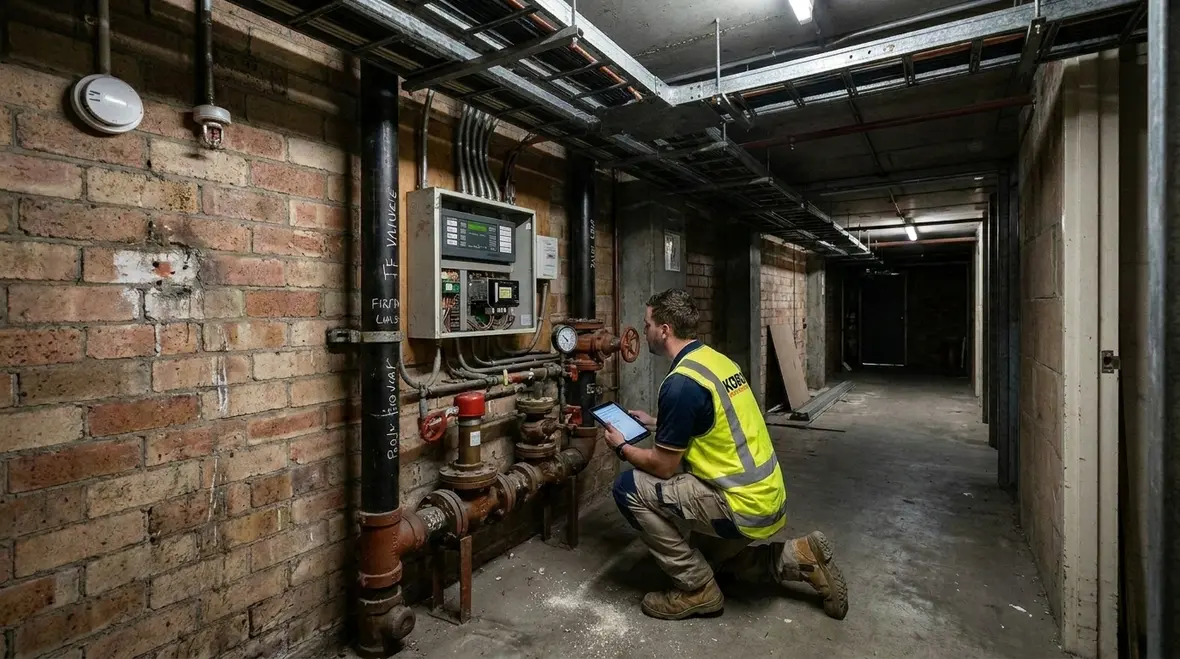
Compare water, foam, gas, and specialty options for warehouses
Different agents protect different risks. So the decision should stay tied to the hazard assessment and the warehouse realities.
Water-based systems
Water-based systems often suit many commercial warehouse settings because they cool fuel and control heat. Yet they require correct design for ceiling height and obstruction conditions. They also need proper water supply performance and ongoing inspection. In high pile storage, Kord’s warehouse content points to the importance of sprinkler density, response time, and hydraulic calculations in making those systems effective. ([kordfire.com](https://kordfire.com/city-of-industry-warehouse-fire-suppression/?utm_source=openai))
Foam systems
Foam systems can help where flammable liquids appear, especially in certain storage or handling areas. Foam application must match the specific fuel type and use case. If someone selects foam that does not fit the fuel behavior, the system can underperform when it counts most. Kord’s warehouse foam fire suppression article specifically connects foam selection to flammable liquid storage conditions and broader warehouse strategy. ([kordfire.com](https://kordfire.com/warehouse-foam-fire-suppression-for-flammable-liquid-safety/?utm_source=openai))
Gas and clean agent systems
Gas and clean agent systems can make sense for areas where water is not ideal, such as specific enclosed control spaces or sensitive equipment areas. These systems depend on tight enclosure conditions and correct concentration design. On Kord’s services pages, clean agent, CO2, room integrity testing, and related suppression offerings appear as part of the broader suppression service lineup, which supports their use in specialized applications rather than as a catch-all answer for every warehouse zone. ([kordfire.com](https://kordfire.com/fire-alarm-service-systems/?utm_source=openai))
Specialty suppression
Specialty suppression can apply to unique hazards such as combustible dust or specific industrial processes. In that case, the system may look different, but the logic stays the same: match suppression method to hazard growth and fire chemistry. Throughout the comparison, teams should keep commercial fire suppression selection grounded in code requirements and practical performance. Otherwise, the system becomes a “belt and suspenders” solution that costs more and does less.

Ensure compliance and keep inspections realistic
Compliance drives accountability. A warehouse cannot treat fire systems like a “set it and forget it” product. It must stay inspected, maintained, and tested on a schedule that reflects the site and the system type. That includes visual checks, functional testing, and servicing of components such as valves, detection devices, and control panels. Kord’s service and warehouse content consistently emphasizes compliance, ongoing service, and keeping documentation current so systems remain ready in the real world, not just on installation day. ([kordfire.com](https://kordfire.com/fire-alarm-service-systems/?utm_source=openai))
Therefore, teams should confirm that the proposed system aligns with relevant standards and local requirements, and that documentation supports ongoing maintenance. As facilities change, updated drawings, device locations, and hazard notes should remain current. When documentation falls behind, maintenance crews end up guessing, and guessing is a terrible fire strategy. It is also how invoices quietly grow.
A good partner also supports training and handover. Staff need to understand what the system does, how to respond, and what maintenance actions they must not interfere with. That reduces operational disruption and helps the system perform the way the design intended.
Why Kord Fire Protection can strengthen the selection process
Choosing a suppression system can feel like juggling flaming invoices. The details matter, but the warehouse keeps running. This is where Kord Fire Protection can become a vital partner. Kord helps align hazard realities with practical design choices, so the facility gets a solution that suits day to day operations across industrial, retail, and commercial sites. Kord’s warehouse-focused pages and full service pages present that same theme: site-specific evaluation, code-aware planning, and support that does not stop at equipment delivery. ([kordfire.com](https://kordfire.com/city-of-industry-warehouse-fire-suppression/?utm_source=openai))
Instead of treating the project as a one time supply task, Kord supports the service from early planning through implementation and ongoing readiness. That includes guidance on system fit, coordination of designs with site conditions, and attention to how inspections and maintenance will work in the real world. As a result, teams spend less time untangling technical surprises and more time keeping compliance on track.
Moreover, Kord’s approach helps prevent the common trap of selecting equipment based on what is “typical” rather than what is suitable. Fire protection should match the warehouse, not the other way around.
Implementation steps that prevent costly mistakes
To keep the project smooth, a facilities manager can follow a clear sequence:
- Step 1: Perform a site hazard walk and document ignition sources, storage patterns, and changes expected over the next 12 to 24 months.
- Step 2: Confirm design constraints such as ceiling height, obstructions, ventilation, and enclosure conditions.
- Step 3: Select the agent and detection based on fire behavior and operational needs, not just equipment availability.
- Step 4: Validate coverage and zoning so the system reaches the areas that matter and avoids wasted complexity.
- Step 5: Plan installation sequencing to reduce downtime and keep access safe for staff and contractors.
- Step 6: Build maintenance readiness with clear documentation, inspection schedules, and spare parts strategy where needed.
When teams do this in order, the system tends to perform as intended. And when it performs as intended, people can stop thinking about fire protection like it is a recurring nightmare. They can get back to running the business.
FAQ
Conclusion: act early, protect smarter, and keep operations steady
Selecting a fire suppression system for a warehouse is not a checkbox task. It is a hazard driven decision that starts with the right assessment, then matches agent choice, detection, layout, and maintenance reality. When teams act early, they avoid costly redesign and reduce the chances of unreliable performance. The right planning also makes future changes easier to manage, which is a gift every fast-moving warehouse would gladly accept.
Kord Fire Protection can guide the process from selection through readiness, so warehouses stay protected and operational with support that connects design, service, and compliance. If the goal is a plan that makes sense before the warehouse has to learn lessons the hard way, this is the time to start. ([kordfire.com](https://kordfire.com/fire-alarm-service-systems/?utm_source=openai))

Join Our Newsletter!
Get the latest fire safety tips delivered straight to your inbox From our Newsletter.



