Combo Exit Sign Emergency Light Guide
When the lights go out and the building falls quiet, clarity matters. That is where a combo exit sign emergency light steps in with calm authority. It does not panic. It does not fumble for a flashlight. It simply illuminates the path and points the way. In commercial spaces, warehouses, schools, and healthcare facilities, this dual purpose unit works as both guide and guardian. And as Kord Fire Protection technicians often explain, it is not just about meeting code. It is about protecting people when seconds feel longer than they should.
This article explores where these units work best, why they outperform separate devices in certain settings, and how businesses can use them wisely. Because while no one plans for the power to fail, the smart ones plan for what happens next.
The Power of Two in One Safety
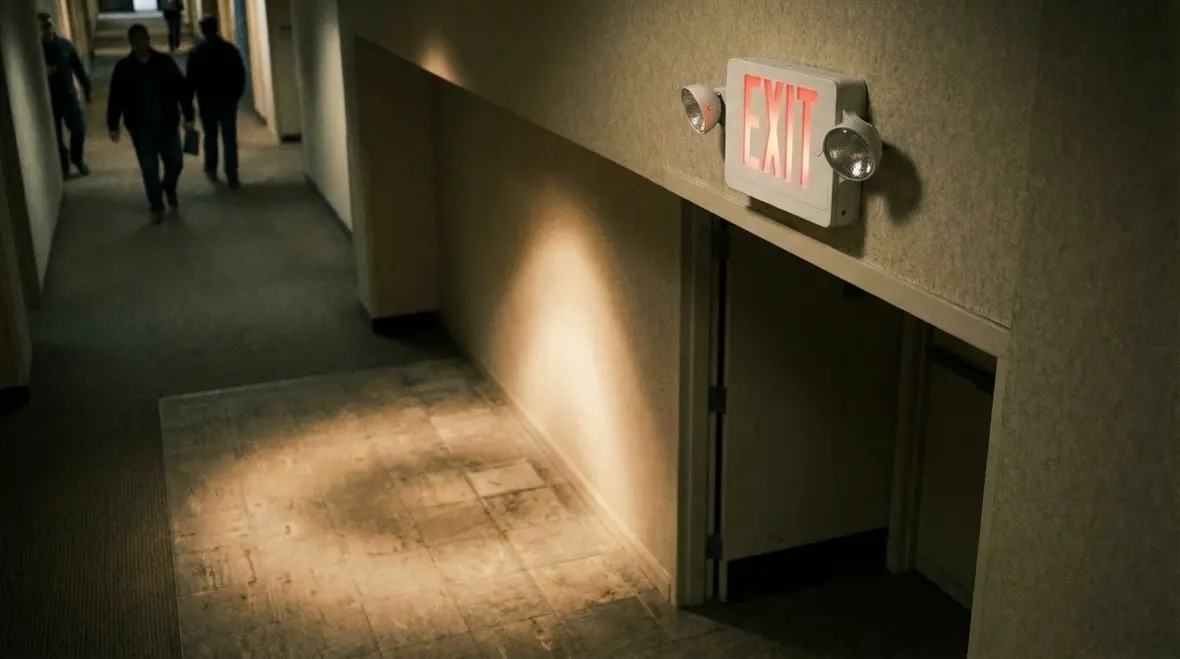
At first glance, an exit sign and an emergency light seem like distant cousins at a family reunion. One points. The other shines. However, when combined into a single unit, they create a powerful safety tool that saves space and increases efficiency.
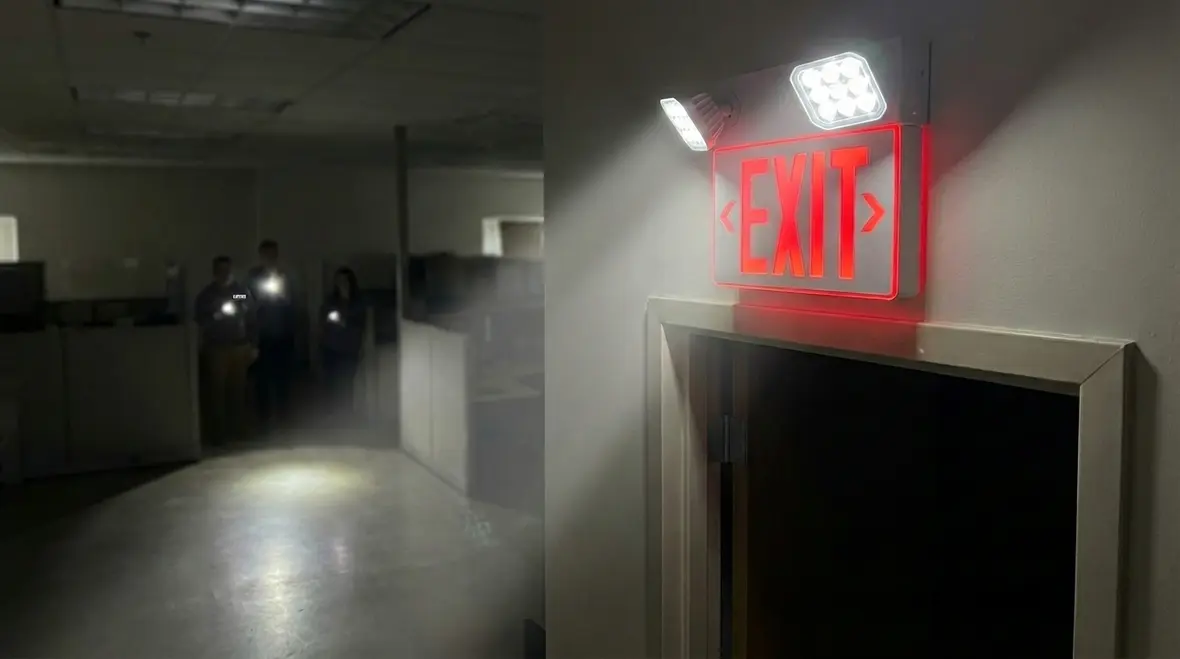
A combo exit sign emergency light integrates illuminated exit lettering with adjustable emergency lamp heads. Therefore, when power fails, the unit does two jobs at once. It clearly marks the exit door while casting light along the path of egress. That means fewer devices on the wall and fewer installation points to manage.
Kord Fire Protection technicians often explain that this design simplifies compliance. Instead of wiring and maintaining separate systems, building owners manage one integrated fixture. In addition, these units typically include battery backup systems that activate instantly during outages.
And let us be honest. If safety equipment could win awards for multitasking, this one would at least get a nomination.
They also pair well with broader egress and emergency lighting strategies that Kord Fire technicians review during inspections, from exit path marking to fixture testing. For a wider look at how emergency lighting supports safe evacuation, many businesses also review guides like the San Francisco fire inspection checklist for businesses to see how exit signs and lighting get evaluated together.
Where Combo Exit Sign + Emergency Light Units Work Best
Not every space needs the same type of emergency lighting. However, certain environments benefit greatly from a combined exit and emergency lighting fixture.
Commercial Offices
In office buildings, clean aesthetics matter. A combined unit reduces wall clutter while maintaining safety coverage. Furthermore, hallways and stairwells often require both directional signage and illumination. One fixture handles both needs.
Retail Stores
Retail layouts change. Displays move. Seasonal decor appears out of nowhere like holiday music in October. Because of this flexibility, store owners appreciate fixtures that cover more ground with fewer installations. The dual function system ensures exits remain visible while lighting the way around shelving and checkout areas.
For retailers who are already wrestling with inspections and code requirements, pairing combo units with a broader strategy like the one outlined in Kord Fire’s Retail fire safety compliance guide helps keep both signage and lighting on track.
Warehouses and Industrial Facilities
Large open spaces demand wide light coverage. Adjustable lamp heads on a combo exit sign emergency light can aim toward aisles or equipment areas. Meanwhile, the bright exit lettering remains visible above doors even in dusty or smoky conditions.
Schools and Universities
Educational buildings hold high occupancy loads. During an emergency, clear direction reduces panic. Combined units guide students and staff efficiently while illuminating corridors and staircases.
Healthcare Facilities
Hospitals and clinics cannot afford confusion. Emergency egress must remain visible for patients, staff, and visitors. Kord Fire Protection technicians emphasize that healthcare settings often benefit from integrated solutions that reduce wall penetrations and simplify maintenance schedules.
In each of these environments, the value lies in clarity and reliability. The unit stands ready, even when the building does not.
How Kord Fire Protection Technicians Recommend Placement
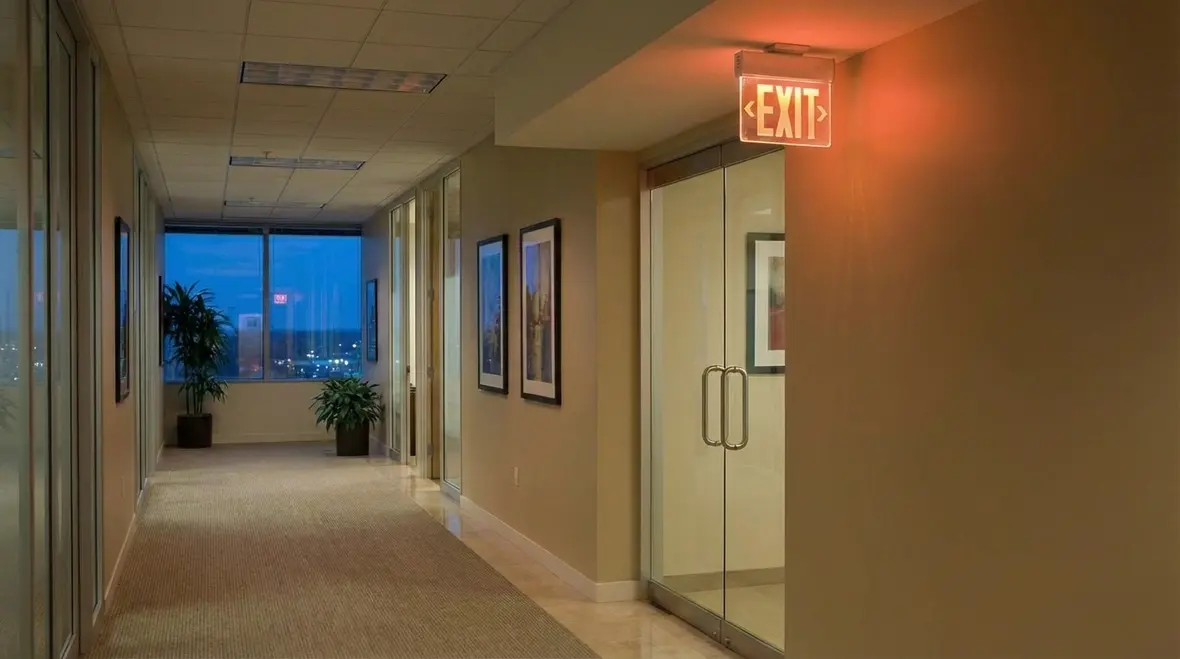
Placement matters just as much as product choice. According to Kord Fire Protection technicians, installing a combo exit sign emergency light without a clear strategy is like putting a smoke detector in a closet. Technically present. Practically useless.
They recommend focusing on:
Exit Doors
Naturally, primary and secondary exits require illuminated signage. The added lamp heads should aim along the egress path, not directly into a wall.
Stairwells
Staircases present trip hazards during outages. Therefore, mounting combined units above stairwell doors ensures both identification and downward illumination.
Corridor Intersections
Intersections can confuse occupants during emergencies. Strategic placement helps guide traffic flow toward safe exits.
Large Open Areas
Warehouses and gymnasiums benefit from positioning units where lamp heads can project across long distances.
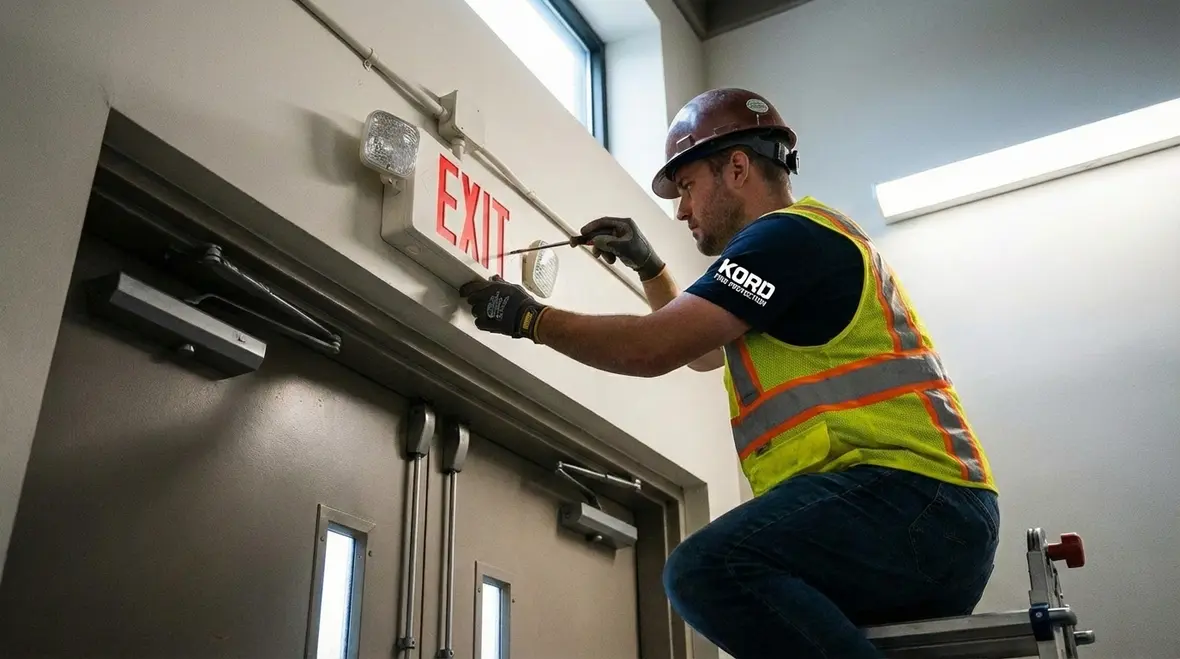
In addition, technicians evaluate ceiling height, wall materials, and battery access. Because while the device itself is dependable, installation determines performance. As they often say, safety equipment deserves more than guesswork and a step ladder.
Understanding Code Compliance Without Falling Asleep
Building codes can read like a bedtime story for insomniacs. However, they serve a vital purpose. Local and national fire codes require illuminated exit signage and emergency lighting with battery backup in most commercial buildings.
A combo exit sign emergency light helps satisfy both requirements when properly rated and installed. Most models provide at least ninety minutes of illumination during a power loss. Additionally, many include self testing features that automatically check battery health.
Kord Fire Protection technicians explain that regular inspections remain critical. Even the best unit needs periodic checks to confirm functionality. Monthly quick tests and annual full duration tests ensure compliance and reliability.
Moreover, some jurisdictions specify brightness levels, letter size, and mounting height. Because of these variations, professionals recommend reviewing local codes before installation. It is better to adjust during planning than after an inspector raises an eyebrow.
If you are unsure where your emergency lights and exit signs currently stand, Kord Fire’s dedicated Emergency Exit Light Services page outlines how testing, repairs, and documentation come together to keep systems compliant and ready.
Dual Column Comparison: Combined Unit Versus Separate Fixtures
Below is a practical comparison often shared during consultations.
Feature
Installation Points
One mounting location
Wiring Complexity
Single integrated connection
Maintenance
One battery system to monitor
Wall Space
Compact footprint
Cost Efficiency
Often lower total installed cost
Fixture Approach
Combo Exit Sign Emergency Light
One integrated fixture handles signage and lighting.
Separate Exit Sign and Emergency Lights
Two or more mounting locations and separate devices.
Wiring & Maintenance
Separate circuits, multiple batteries, and more fixtures to track.
Wall Use
More wall area required and more visual clutter.
Installed Cost
Higher material and labor cost in many layouts.
While separate fixtures still serve specific design needs, the integrated option offers efficiency and simplicity. As a result, many facility managers choose it for renovations and new builds alike.
What to Consider Before Choosing the Right Unit
Selecting the correct model involves more than grabbing the first box off a supply shelf. Although many units appear similar, performance varies.
Battery Type
Lithium batteries often last longer and require less maintenance than older sealed lead acid types.
Housing Material
Thermoplastic works well for standard environments. However, metal housings provide durability in industrial settings.
Adjustable Lamp Heads
Flexible aiming improves coverage in wide or irregular spaces.
Damp or Wet Location Rating
Outdoor or humid areas require properly rated fixtures.
Kord Fire Protection technicians assess each environment before recommending a solution. Because a warehouse in Arizona differs from a coastal clinic in Florida. Climate, occupancy load, and layout all influence the best choice.
Can One Device Really Handle Both Jobs?
Yes. And it handles them well.
Modern engineering allows integrated systems to perform reliably under emergency conditions. Once normal power fails, the internal battery activates instantly. The exit lettering remains illuminated, while the lamp heads cast bright light along the path.
Furthermore, many models include LED technology. LEDs consume less energy, produce less heat, and last longer than older bulbs. Consequently, they reduce maintenance frequency.
Kord Fire Protection technicians often remind clients that technology has improved significantly over the past decade. These are not the bulky, dim fixtures from years past. Today units deliver bright, efficient performance in sleek designs.
So yes, one device can handle both jobs. And it does so without complaining.
Maintenance That Keeps the Lights Ready
Even the most reliable fixture needs attention. Therefore, facility managers should establish a routine inspection schedule.
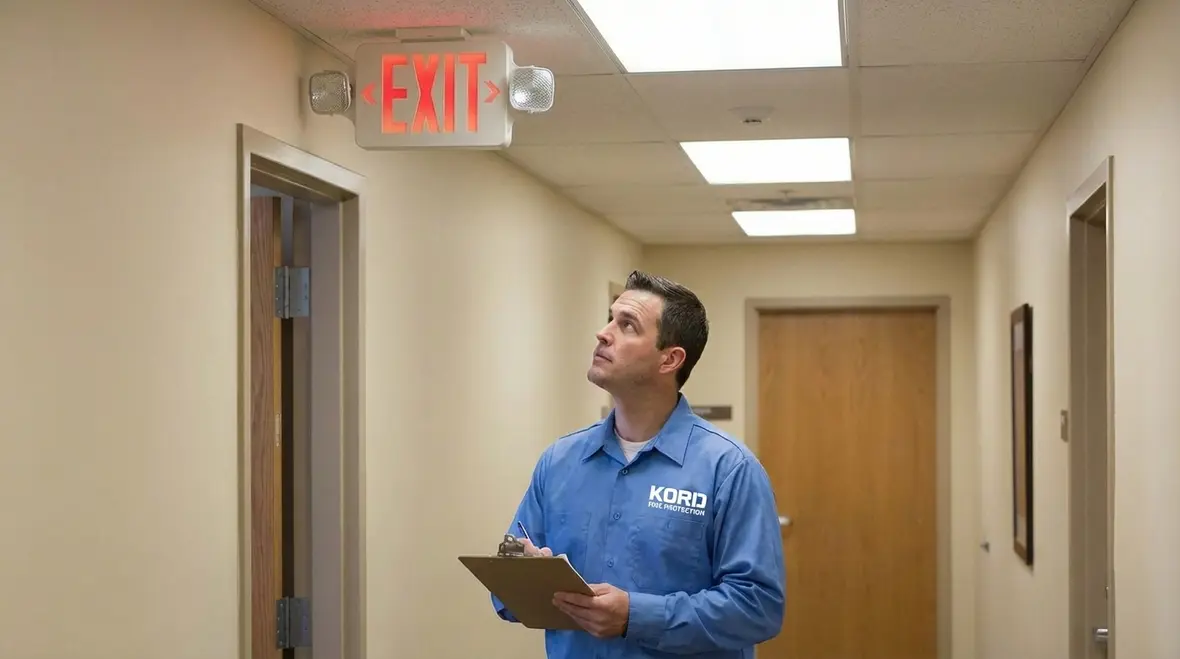
Monthly testing confirms that battery backup activates correctly. Annual ninety minute discharge tests verify full capacity. In addition, visual checks ensure lamp heads remain properly aimed and exit lettering stays unobstructed.
Kord Fire Protection technicians provide maintenance programs that remove guesswork. They document inspections, replace aging batteries, and verify compliance. Because during an emergency, no one wants to discover that a forgotten battery retired early.
Routine care extends lifespan and protects occupants. It also reduces liability. In other words, maintenance costs far less than regret.
Frequently Asked Questions
Lighting the Way Forward
Safety does not ask for applause. It asks for preparation. A well placed combo exit sign emergency light quietly protects occupants, guiding them with steady clarity when conditions turn uncertain. Kord Fire Protection technicians stand ready to assess, install, and maintain these systems with precision.
For businesses that value readiness over reaction, the next step is simple. Connect with professionals who understand that when the lights go out, leadership shines brightest. To align combo fixtures, testing, and documentation under one roof, explore Kord Fire’s dedicated Emergency Exit Light Services and schedule a service visit before the next outage writes its own surprise drill.
Know Your Weapon Before You Fight the Flame
Kord Fire Protection is your go-to when it comes to all things fire protection. For over 20 years, we’ve been serving Southern California with the quality service and equipment to keep your home or business safe at all times. Our competitive prices reflect our unwavering commitment to protecting what matters most in the event of a fire emergency. Give us a call, send an email, or use that form!

Join Our Newsletter!
Get the latest fire safety tips delivered straight to your inbox From our Newsletter.