Bell Gardens Fire Safety Guidelines for Facilities
Fire Safety Guidelines for Bell Gardens Facilities
In Bell Gardens, safety is not a suggestion. It is a shared responsibility. The Bell Gardens fire safety guidelines outline how commercial buildings, warehouses, schools, and public spaces must prevent, detect, and respond to fire risks. Within the first few pages of those local requirements, facility owners find clear expectations for alarms, sprinklers, extinguishers, exit access, and routine inspections. However, rules on paper only matter when they come to life in real buildings. That is where trained professionals step in. Kord Fire Protection technicians often explain that fire protection is not about fear. It is about preparation, discipline, and a little common sense applied every single day.
Now, let us walk through what that preparation really looks like.

Understanding Bell Gardens Fire Safety Guidelines for Commercial Properties
Every facility manager in the city eventually asks the same thing. What exactly do local fire codes require, and how do they apply to this building? The answer begins with classification. Different occupancies face different risks. A restaurant kitchen does not carry the same hazards as a medical office. Therefore, the standards adjust based on square footage, occupancy load, and use.
Kord Fire Protection technicians often explain that compliance starts with three core systems. Detection. Suppression. Egress. First, a building must detect smoke or heat quickly. Second, it must control or suppress flames. Third, it must allow people to exit safely. Remove any one of those pillars and the entire structure of safety weakens.
Moreover, the guidelines require routine inspections and documented maintenance. Fire alarms must function without delay. Sprinkler valves must remain accessible. Exit signs must stay illuminated. While that may sound simple, small oversights cause large problems. A blocked exit door or a painted over sprinkler head can turn a manageable event into a disaster.
In short, compliance is not a one time checklist. It is a living system that needs attention.
For facilities that want extra support interpreting local expectations, partnering with a licensed provider familiar with Los Angeles County fire protection services can make those requirements feel far more manageable.
How Often Should Fire Protection Systems Be Inspected in Bell Gardens
This is the question facility managers type into search bars late at night. And rightly so.
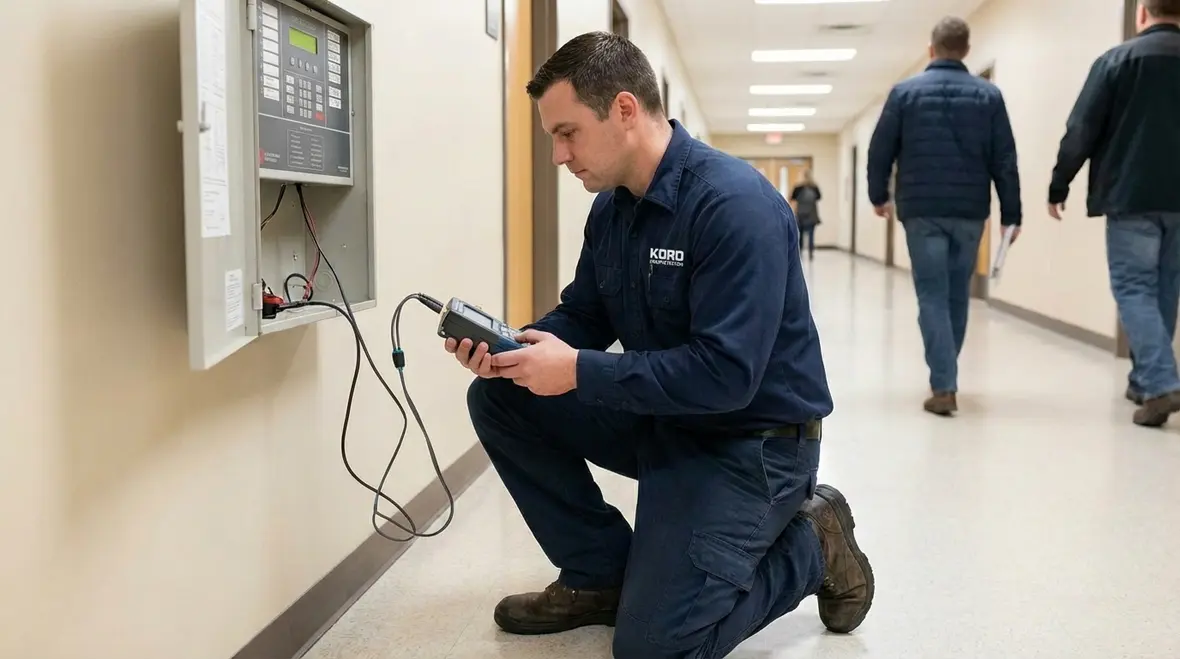
Inspection schedules vary by system. Fire alarm systems typically require annual testing, with additional checks depending on components. Sprinkler systems need quarterly visual inspections, annual testing of devices, and more in depth internal pipe inspections on a set schedule. Fire extinguishers demand monthly visual checks and annual professional servicing.
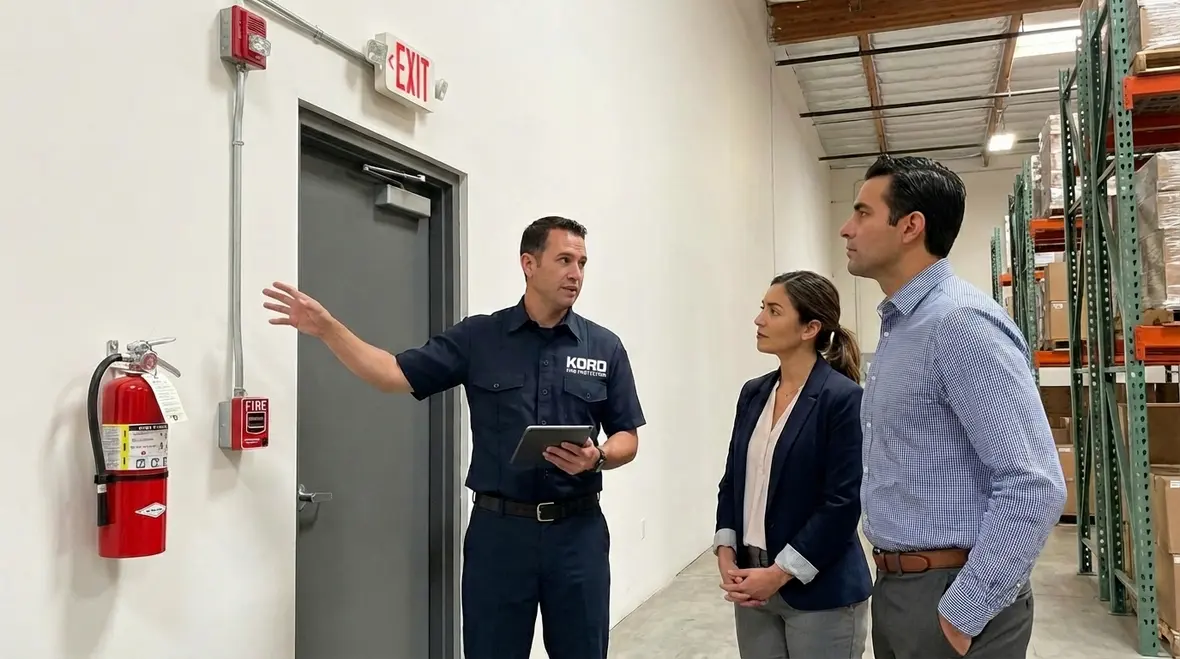
However, frequency alone does not guarantee safety. Quality matters just as much. Kord Fire Protection technicians explain each inspection in plain language. They show property managers where issues exist and why they matter. Instead of tossing around technical jargon, they translate code requirements into practical steps. It is the difference between reading a recipe and watching a chef cook. Both work, but one makes a lot more sense.
Additionally, documentation plays a major role. Inspectors expect organized records. When paperwork is missing, even a fully functional system can raise red flags. Therefore, smart facilities maintain detailed service logs and corrective action reports.
Common Fire Code Violations and How to Avoid Them
Even well managed buildings can slip into non compliance. Usually, the issues are not dramatic. They are small habits that slowly drift out of alignment.
Below is a clear look at common violations and practical solutions.
| Common Issue | How to Prevent It |
| Blocked exit doors or pathways | Keep storage zones clearly marked and train staff to respect exit clearance rules |
| Expired fire extinguishers | Schedule annual servicing and assign monthly visual checks to a team member |
| Disabled alarm components | Prohibit unauthorized adjustments and report trouble signals immediately |
| Obstructed sprinkler heads | Maintain proper clearance below sprinklers and avoid stacking inventory too high |
Interestingly, many violations stem from convenience. Someone props open a fire door to move supplies faster. Someone stacks boxes a little too high to save space. It feels harmless. Until it is not. As Kord Fire Protection technicians like to say, fire does not care about convenience.
Creating a Fire Response Plan That Actually Works
A binder on a shelf is not a fire response plan. A living, practiced strategy is.
Every facility in Bell Gardens should maintain a written emergency action plan. This plan must outline evacuation routes, assembly points, roles for staff members, and procedures for assisting individuals with limited mobility. However, writing it down is only step one. Training transforms paper into action.
Regular drills help employees react with calm instead of panic. During drills, supervisors can identify bottlenecks in stairwells or confusion about gathering areas. Consequently, the plan improves over time.
Kord Fire Protection technicians often walk teams through real world scenarios. They explain how smoke spreads. They demonstrate how quickly conditions can change. And occasionally, they add a light hearted comment to ease tension. Because while the topic is serious, fear does not help anyone think clearly.
Furthermore, coordination with local fire authorities strengthens response efforts. When firefighters understand a building layout in advance, they can act faster in an emergency.
Training Staff to Support Bell Gardens Fire Safety Guidelines
Systems do not save lives. People do. Systems simply support them.
Training programs should cover extinguisher use, alarm recognition, evacuation leadership, and hazard reporting. Employees must understand when to fight a small contained fire and when to leave immediately. That judgment call can define the outcome of an incident.
Importantly, training should feel practical rather than abstract. Kord Fire Protection technicians demonstrate how to pull a pin, aim at the base of flames, and sweep side to side. They also explain when not to attempt suppression. If a fire grows rapidly or fills a space with thick smoke, evacuation remains the priority.
In addition, leadership teams should assign fire wardens for each shift. These individuals guide evacuations and confirm that designated zones clear out. Consequently, accountability increases and confusion decreases.
And yes, some employees may roll their eyes during training. That is normal. Yet when an alarm sounds unexpectedly, those same employees will appreciate every minute spent learning what to do.
Maintenance Strategies That Go Beyond Minimum Compliance
Meeting code is essential. Exceeding it is wise.
Preventive maintenance reduces downtime and liability. For example, facilities can schedule internal sprinkler pipe inspections before required deadlines to identify corrosion early. They can also upgrade older alarm panels to modern systems with clearer notification features.
Moreover, facility managers should conduct periodic self audits. Walk the building. Look at exit signage. Check storage areas. Ask whether new equipment introduces new hazards. These proactive steps align closely with the spirit of the Bell Gardens fire safety guidelines, which aim to prevent emergencies rather than simply react to them.
Kord Fire Protection technicians often emphasize that fire protection is an investment, not an expense. A properly maintained system protects property, business continuity, and most importantly, human life. When viewed through that lens, routine service feels less like a chore and more like responsible leadership.
Integrating Technology Into Modern Fire Protection
Technology continues to reshape safety practices. Smart monitoring systems now alert managers to issues in real time. Instead of discovering a valve closure during an annual inspection, facilities receive immediate notifications. As a result, problems are resolved faster.
Cloud based reporting also simplifies record keeping. Inspection reports, deficiency notices, and repair confirmations remain accessible in organized digital formats. Therefore, compliance reviews become smoother and less stressful.
However, technology does not replace human expertise. Kord Fire Protection technicians review data, interpret trends, and provide recommendations based on experience. Think of technology as the assistant. The technician remains the guide.
In Bell Gardens facilities, blending modern tools with disciplined maintenance creates a strong shield against risk.
FAQ About Fire Safety in Bell Gardens
Conclusion and Next Steps
Fire protection in Bell Gardens facilities demands focus, discipline, and informed action. The Bell Gardens fire safety guidelines provide the roadmap, yet skilled professionals bring that roadmap to life. Kord Fire Protection technicians stand ready to inspect, educate, and strengthen every layer of defense within a building.
Facility leaders who act today protect more than property. They protect people. Schedule a professional evaluation and ensure that safety remains steady, reliable, and always one step ahead of risk.
If your facilities extend beyond Bell Gardens, Kord Fire can also support you through broader Los Angeles County fire protection coverage, including nearby cities like Burbank, Downey, and Commerce.
Need help now?
Request a local assessment and code-compliant service through our dedicated Los Angeles County fire protection services team so your Bell Gardens facility stays ready for the next inspection—and the next emergency.
Know Your Weapon Before You Fight the Flame
Kord Fire Protection is your go-to when it comes to all things fire protection. For over 20 years, we’ve been serving Southern California with the quality service and equipment to keep your home or business safe at all times. Our competitive prices reflect our unwavering commitment to protecting what matters most in the event of a fire emergency. Give us a call, send an email, or use that form!

Join Our Newsletter!
Get the latest fire safety tips delivered straight to your inbox From our Newsletter.