NFPA 52 Section 15.4: LNG Facility Maintenance Requirements
Quick Answer: NFPA 52 Section 15.4 sets the maintenance expectations for LNG systems so equipment stays reliable, safe, and compliant over time. It focuses on inspection, testing, repairs, records, and safeguards that prevent deterioration, leaks, and unsafe operating conditions.
For a practical look at structured inspection, testing, and maintenance support, Kord Fire Protection offers service programs that fit naturally into commercial compliance planning.
What NFPA 52 Section 15.4 is trying to prevent
NFPA 52 Section 15.4 exists to control deterioration and protect against loss of containment, loss of protective functions, and unsafe system behavior in LNG facilities. For operators, the risk is not only an isolated component failure. Maintenance gaps can cascade into degraded pressure regulation, reduced emergency response capability, ineffective vapor control, compromised instrumentation, and delayed detection of abnormal conditions. In practice, NFPA 52 LNG facility maintenance requirements demand disciplined schedules and documented work so safety functions remain dependable through changing environmental exposure, operating cycles, and aging.
Compliance often breaks down in commercial and industrial settings because maintenance programs become “task lists” rather than system performance programs. The standard expects proactive verification that safeguards still work as intended, not simply that equipment was serviced.
Which systems Section 15.4 maintenance typically governs
Section 15.4 maintenance obligations apply to LNG facilities and the systems that support safe liquefied natural gas storage, transfer, handling, and protection. While facility designs vary, maintenance programs commonly cover these categories:
1) Containment and leak prevention barriers
LNG facilities depend on containment integrity. Maintenance activities aim to prevent corrosion, gasket and seal degradation, insulation and support deterioration, and mechanical damage that can translate into leaks.
2) Pressure relief, venting, and protective functions
Relief devices and venting paths must remain operational and unobstructed. Maintenance verifies that these functions can actuate and discharge as required when abnormal pressure or process conditions occur.
3) Detection, alarms, and emergency shutdown interactions
Gas detection and alarm systems connect directly to operational decision making and emergency response. Maintenance verifies sensor performance, calibration stability, and that interlocks or shutdown logic still functions correctly with field wiring, power supplies, and control cabinet health.
4) Pumps, valves, regulators, and transfer equipment
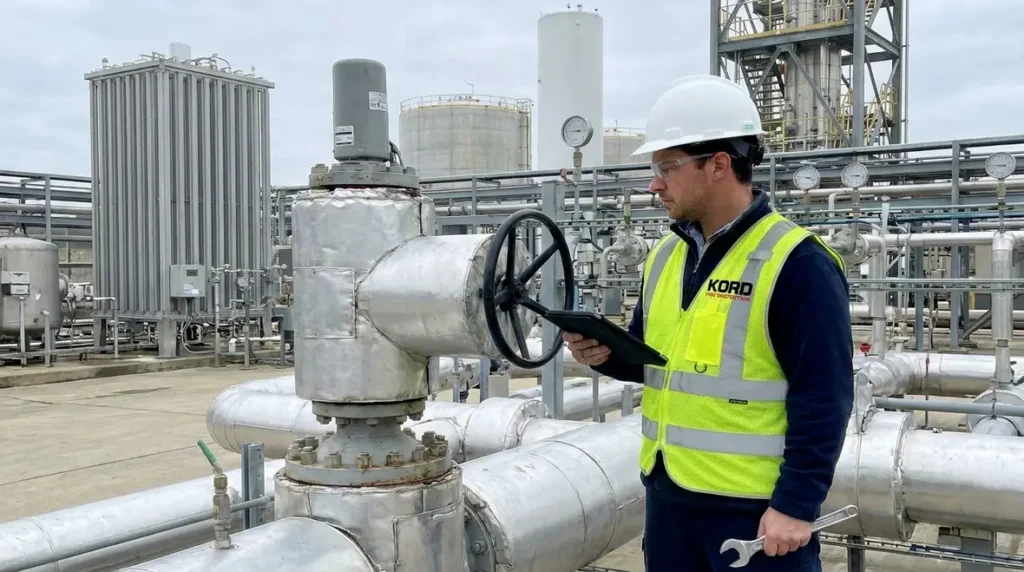
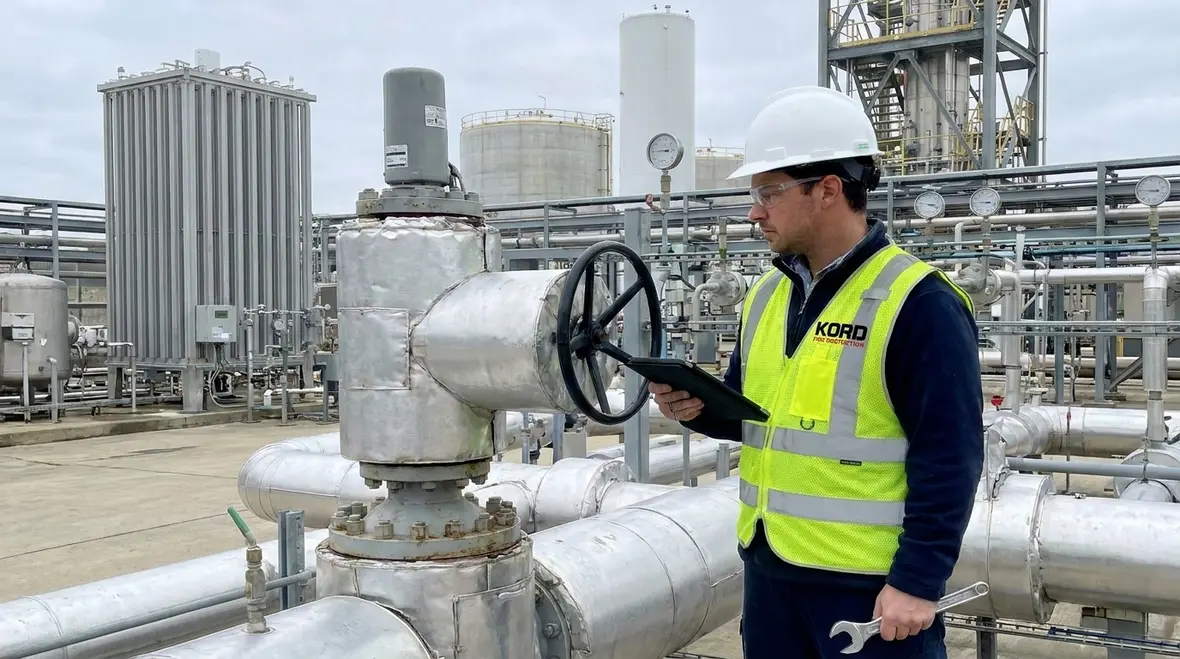
Mechanical components experience cryogenic thermal cycling, vibration, and wear. Maintenance must control actuator reliability, valve seating integrity, actuator response, and regulator stability so operating pressures and flow conditions remain within safe bounds.
5) Fire protection and protective coverage around LNG assets
Even where fire protection equipment serves multiple purposes across a site, LNG maintenance planning must coordinate protective coverage with the facility’s specific hazards. Kord Fire Protection supports ongoing compliance through practical inspection, testing, and maintenance aligned to commercial facility realities.
How to build an inspection, testing, and maintenance program that holds up under audits
NFPA 52 Section 15.4 emphasizes maintenance that sustains safety performance. To meet that intent, operators should design programs around system behavior and failure modes, not only component checklists.
Start with a risk informed equipment map
Create an inventory that links each safety critical component to its function, failure mode, and the consequences if it degrades. Then assign maintenance methods and frequencies that match how components age in your environment, whether that is coastal corrosion risk, industrial particulate loading, vibration exposure, or high cycling during deliveries.
Define clear acceptance criteria for “pass or fail” testing
Maintenance records should show measurable results where testing applies. Auditors look for evidence that equipment met required performance thresholds and that failures triggered corrective action. Avoid vague entries such as “inspected” without results when the standard expects verification.
Control work authorization and lockout boundaries
Commercial LNG facilities must coordinate maintenance windows with operational safety. Procedures should clearly define isolation steps, verification steps before restart, and how control system logic is managed during maintenance. When equipment is removed from service, temporary bypass conditions must be controlled and documented to prevent unsafe operation.
Plan for cryogenic specific failure points
Cryogenic service introduces unique risks:
- Seal and gasket hardening from thermal cycling
- Valve actuator response changes due to lubrication or temperature effects
- Sensor drift and calibration changes in harsh environments
- Insulation degradation that increases heat leak and impacts safe operation
- Corrosion under insulation or in sheltered areas that reduces detectability
Maintenance plans that ignore these patterns tend to fail during periodic verification. Incorporate targeted checks that confirm the system remains in its safe operating envelope.
Recordkeeping, corrective actions, and “show me” compliance
Audits and incident investigations typically turn on documentation quality. NFPA 52 Section 15.4 maintenance requirements support traceability. Facilities should maintain records that demonstrate:
- What maintenance or testing occurred and when it occurred
- Who performed the work and qualifications where applicable
- What readings, test results, and inspection outcomes were observed
- What corrective actions were taken for any failures or deficiencies
- That the system returned to service only after verification
Corrective action processes should include root cause analysis for repeat failures. If the same valve, detector, or relief related component fails frequently, the facility should assess upstream contributors such as installation alignment, operating conditions, power quality, or process contaminants.
Because LNG facilities often operate in commercial and industrial environments with mixed stakeholders, record clarity matters. A well structured maintenance history shortens downtime and reduces compliance friction during contractor handoffs and authority having jurisdiction reviews.
Common maintenance gaps that trigger noncompliance
Across commercial, industrial, and retail adjacent sites, these issues appear repeatedly:
- Calibration schedules that do not reflect actual sensor drift behavior, leading to delayed detection and late corrective action.
- Testing that verifies the component but not the integrated safety function, such as alarms without confirming interlock response.
- Insulation and support areas treated as “visual only”, despite insulation degradation being an insidious contributor to performance loss.
- Relief and vent paths treated as “set and forget”, even though obstructions and equipment misalignment can develop.
- Maintenance records lacking measurable outcomes and not showing corrective action closure.
Kord Fire Protection helps facilities address the practical side of compliance: ensuring that fire protection related components and safety critical inspection and testing activities stay aligned with commercial standards and available downtime constraints. For operators under regulatory pressure, a partner that can coordinate testing windows, documentation, and recurring maintenance reduces the risk of “missed evidence” during inspections.
If you are planning fire protection maintenance or need structured inspection support, review Kord Fire Protection resources here: Kord Fire Protection.
Frequently Asked Questions
Next step: strengthen your maintenance and documentation today
Operational readiness depends on more than scheduled service. Align your LNG maintenance program to NFPA 52 Section 15.4 with system based testing, clear acceptance criteria, and audit ready records. Contact Kord Fire Protection to coordinate reliable inspection and testing support for commercial safety systems, reduce downtime, and improve compliance confidence across your maintenance cycle.

Join Our Newsletter!
Get the latest fire safety tips delivered straight to your inbox From our Newsletter.