
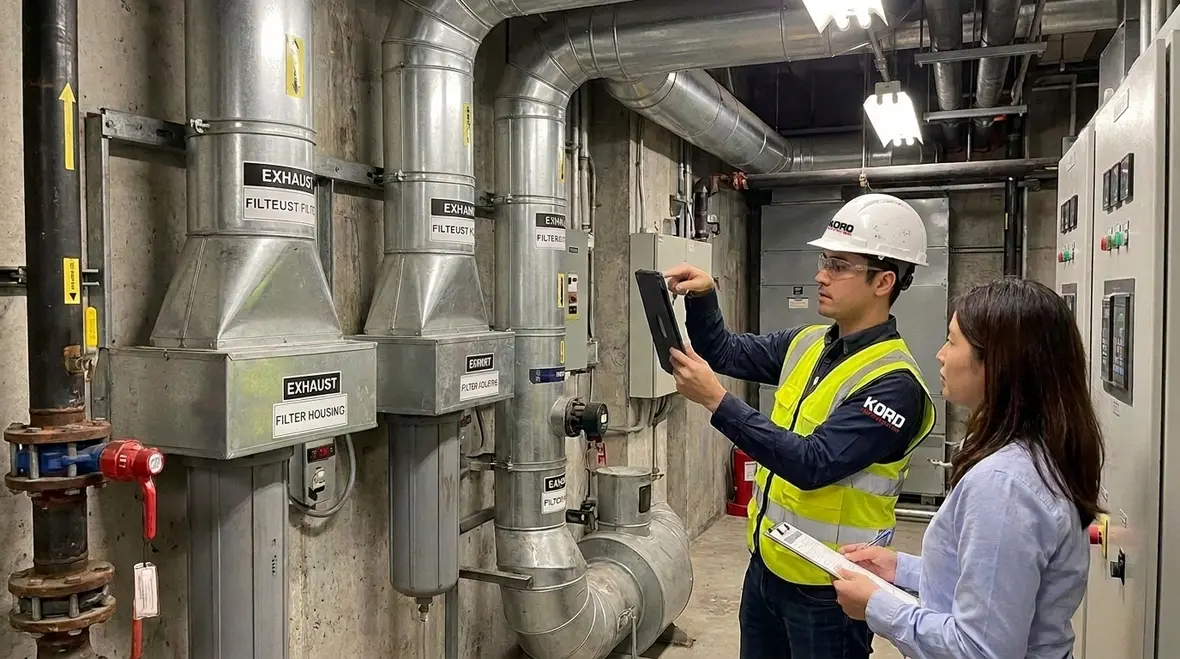
NFPA 45 Section 13.3: Hazard Identification for Exhaust Systems
Quick Answer
NFPA 45 Section 13.3 requires facilities to identify hazards associated with industrial exhaust systems based on the specific processes, exhaust contents, operating conditions, and system design. The goal is to prevent ignition, manage abnormal conditions, and support effective protection, inspection, and maintenance.
For facilities that need coordinated fire protection support tied to documentation, testing, and ongoing system upkeep, fire pump testing requirements and inspection planning offer a useful example of how Kord Fire Protection approaches compliance work in the field.
What NFPA 45 Section 13.3 Means for Exhaust Systems
NFPA 45 addresses fire protection in laboratories and other similar industrial environments, where exhaust systems can transport flammable, combustible, corrosive, or otherwise hazardous contaminants. The NFPA 45 exhaust system identification requirements in Section 13.3 focus on building a hazard understanding before selecting controls.
In practical terms, compliance starts with knowing what the exhaust system is actually pulling, where those vapors and aerosols travel, and what can go wrong during normal operation, startups, shutdowns, and upset conditions. Commercial facilities often struggle here because process changes occur faster than documentation updates, and maintenance teams inherit systems without clear hazard narratives.
Step 1: Identify the Exhaust Hazards Based on Process and Exhaust Contents
NFPA 45 Section 13.3 hazard identification begins with the process. Fire safety teams typically review equipment, chemical inventories, and operating modes to determine what the exhaust stream contains. The hazard profile changes with concentration, particle size, temperature, moisture, and whether the system removes gases, vapors, dust, fumes, or mists.
Key identification outputs should include:
- Exhaust composition: flammable or combustible vapors, combustible dust, metallic particulates, oil mist, solvent aerosols, corrosive gases, or reactive contaminants
- Potential ignition sources within the exhaust path: rotating equipment, hot surfaces, static discharge, friction points, control devices, and electrical components
- Operating states: normal duty, startup and shutdown transients, batch processing, idle periods, and any scheduled or unscheduled bypass conditions
- System configuration: duct routing, bends, drop legs, plenums, fans, filters, dampers, and any explosion or fire suppression interfaces
Commercial and industrial facilities frequently miss “real world” variations, such as solvent changes, filter media substitutions, or added equipment that shares the same exhaust header. These changes can shift the hazard category without any visible ductwork changes, creating a gap between design intent and current operation.
Step 2: Evaluate Conditions That Intensify Risk Inside the Exhaust Path
Hazard identification does not stop at what leaves the process. Section 13.3 expects assessment of conditions that can escalate fire and explosion potential within ductwork and handling equipment. The exhaust system becomes a moving hazardous environment, and the fire risk depends on how it behaves.
Common condition factors include:
- Temperature and heat transfer: elevated exhaust temperatures can increase ignition probability and damage downstream components
- Airflow and ventilation performance: restricted airflow can increase residence time of combustible materials and alter concentrations
- Accumulation and deposits: dust, residue, and condensates can form on duct walls, housings, or filter frames
- Oxidant availability: fan operation, makeup air, and leaks can change the mixture characteristics
- Moisture and condensation: water can reduce dust ignition in some scenarios, but it can also concentrate contaminants in other locations
From an inspection and maintenance standpoint, these factors determine what teams must look for during routine checks. For example, deteriorated insulation or failed heating controls can raise surface temperatures. Worn bearings can introduce friction heat. Failed seals can allow air ingress, changing mixture behavior.
Step 3: Document Identification Outputs for Engineering Controls and Maintenance
Once hazards are identified, the facility must use the information to support appropriate design and protective measures. NFPA 45’s structure emphasizes a fire safety system mindset: hazard identification feeds hazard control selection, and controls require verification through inspection and maintenance.
To keep compliance defensible in commercial facility audits, documentation should be traceable and current. A strong hazard identification package typically includes:
- Process to exhaust mapping: which activities connect to each duct run, manifold, or header
- Exhaust stream hazard summaries: documented hazard categories and the basis for categorization
- System boundary descriptions: where the exhaust system starts, ends, and includes fans, filters, dampers, and special devices
- Change management triggers: solvent swaps, chemical substitutions, filter media changes, and additions to duct connections
- Inspection and maintenance linkages: what must be checked, where hazards tend to accumulate, and how findings get corrected
Commercial owners often update process documentation but fail to update the hazard identification narrative. The most successful compliance programs treat Section 13.3 outputs as “living records” tied to work orders and periodic engineering review.
For facilities managing both initial compliance and ongoing upkeep, Kord Fire Protection supports documentation discipline, field verification, and maintenance coordination. This practical approach helps commercial, industrial, and retail environments keep systems aligned with current operations.
Where Inspections Commonly Find Gaps (and How Teams Prevent Them)
Even when hazard identification exists, gaps frequently appear during inspections. These issues can undermine the intent of NFPA 45 Section 13.3 and the controls that depend on hazard classification.
1) Unknown or untracked exhaust connections
Facilities sometimes discover equipment additions that tie into existing exhaust headers. Without updated hazard identification requirements, protection strategies can lag behind operational reality.
2) Degraded filter and duct condition
Filters accumulate contaminants that change ignition risk, and duct deposits can support smoldering or flame propagation. Identification must inform inspection frequency and acceptance criteria, and maintenance must actually correct abnormal conditions.
3) Fan and control component wear
Friction heat, damaged belts, failing bearings, and loose electrical connections can create ignition sources inside the exhaust path. Hazard identification should incorporate where ignition sources can emerge over time.
4) Maintenance shortcuts that change exhaust chemistry
Substituted filter media, bypassed interlocks, altered damper settings, or unapproved duct repairs can change system behavior. These changes must trigger a reassessment under Section 13.3 hazard identification principles.
Kord Fire Protection helps commercial operators close these gaps through field observation, maintenance verification, and compliance support that ties back to hazard identification. This reduces the likelihood of audit findings and helps ensure corrective actions remain consistent with the original fire safety intent.
Frequently Asked Questions
Conclusion and Call to Action
NFPA 45 Section 13.3 hazard identification determines whether exhaust protection stays effective as processes evolve. Commercial facilities should ensure hazard mapping is current, inspection points match identified risk, and maintenance updates trigger reassessment. Kord Fire Protection can help validate system boundaries, confirm field conditions, and strengthen ongoing compliance through practical documentation and on site support. Start with a hazard identification review and inspection plan tailored to each exhaust system and process change cycle.
If your broader compliance planning also touches water based fire protection equipment, Kord Fire Protection’s NFPA 20 fire pump acceptance testing requirements resource adds helpful context for documentation, field verification, and readiness planning.

Join Our Newsletter!
Get the latest fire safety tips delivered straight to your inbox From our Newsletter.



