NFPA 37 Section 6.4: Installation Criteria for LPG Fuel Tanks
Quick Answer: NFPA 37 Section 6.4 sets minimum installation requirements for liquefied petroleum gas (LPG) fuel tanks to control fire and explosion risks. Compliance focuses on tank placement, clearances, protection from damage, and alignment with safe piping, valves, and operating conditions.
For a broader look at how commercial teams document site conditions and prove readiness during reviews, see fire protection compliance auditing.
What NFPA 37 Section 6.4 is trying to prevent
NFPA 37 Section 6.4 governs NFPA 37 liquefied petroleum gas fuel tank installation by addressing the most common pathway to catastrophic loss: a release of LPG followed by ignition, escalation, and exposure of nearby equipment. For commercial, industrial, and retail facilities, the installation phase becomes the highest leverage point for reducing risk because field conditions can differ significantly from design assumptions.
Section 6.4 expectations typically intersect with facility realities such as vehicle impact hazards, pedestrian access patterns, loading dock traffic, corrosion environments, roof or curb constraints, and ongoing maintenance practices. A compliant tank installation also supports safe inspection access and reliable protection system testing.
Where the installation criteria apply in real facilities
NFPA 37 Section 6.4 applies to the installed condition of LPG fuel tanks, including how they are sited, supported, protected, and integrated into the fuel system. In practical terms, facilities must ensure the tank assembly is installed in a manner that maintains safe operating conditions and reduces ignition sources and escalation hazards.
Key compliance pressure points for commercial owners
- Site layout and clearances: Tank positioning must respect separation distances and ensure safe access for operation, inspection, and emergency response.
- Physical protection: The installation must account for impact, vehicle strikes, and potential damage from nearby operations and equipment.
- Environmental exposure: Corrosion, drainage, and weather exposure can degrade components over time, increasing leak risk.
- Maintenance access: Poor access creates maintenance workarounds, which often lead to missed inspections and delayed corrective actions.
Installation fundamentals under NFPA 37 Section 6.4
The NFPA 37 liquefied petroleum gas fuel tank installation must be executed so the tank and associated components remain stable, protected, and safely connected to the LPG system. While facilities commonly focus on the tank vessel itself, Section 6.4 compliance depends on the full installed assembly and its interaction with the surrounding environment.
1) Placement, support, and stability
The tank must be installed on appropriate foundations or supports that prevent shifting, settlement, or stress on valves and piping. Uneven support can create chronic stress at flanges, fittings, and shutoff valves. Over time, vibration from nearby equipment and thermal cycling can amplify these issues.
Commercial sites often retrofit tanks into existing yards or equipment areas. Retrofit layouts frequently introduce alignment problems and require careful verification that final orientation and support conditions match the safety intent of Section 6.4.
2) Protection from damage and unauthorized interference
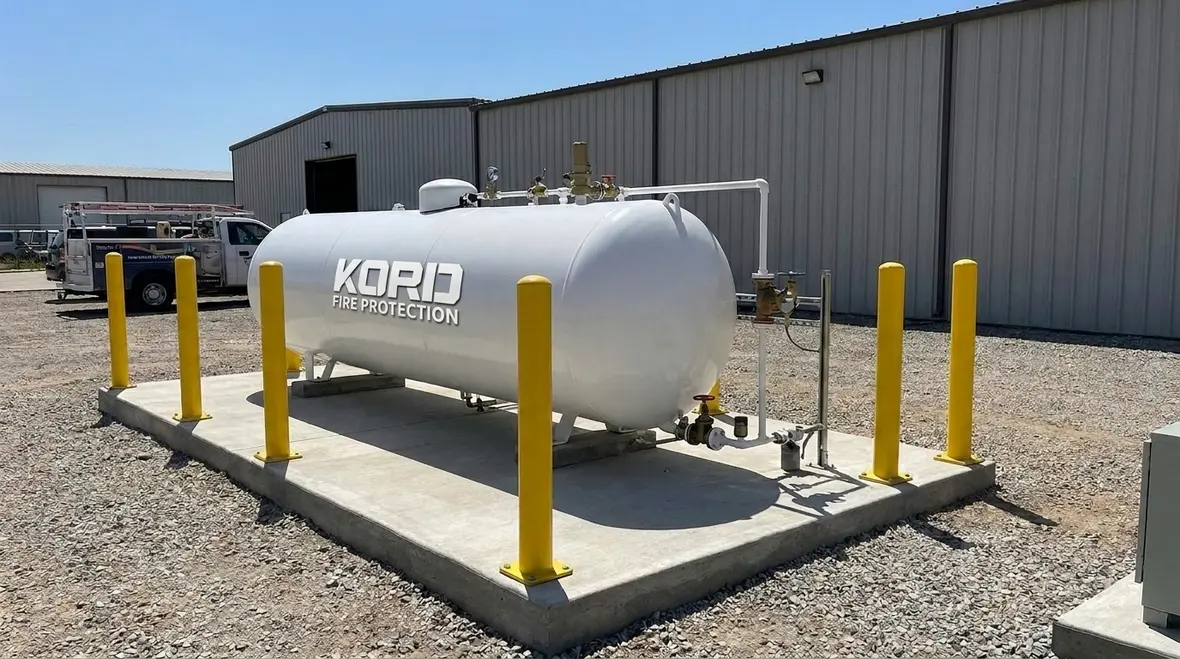
Impact protection matters because LPG systems can fail when external loads damage relief devices, protective housings, or piping connections. Typical protective measures include physical barriers designed to prevent vehicle contact and guard arrangements that do not obstruct required inspection points.
Equally important, facilities must avoid configurations that invite tampering or accidental contact, such as placing shutoff valves, regulators, or access panels in areas routinely used for storage or foot traffic.
3) Venting, discharge management, and ignition control
Even when a release is small, discharge behavior governs severity. Section 6.4 installation criteria align tank systems with safe discharge and separation from ignition sources and building openings. In practice, this requires coordinating the tank location with HVAC intakes, doors, loading bays, and adjacent equipment that can act as ignition sources.
Facilities with shared utilities and multi-tenant sites often underestimate cross exposure. A correct NFPA 37 liquefied petroleum gas fuel tank installation coordinates with building management, electrical maintenance, and operations teams to avoid ignition and exposure conflicts.
4) Piping and connection integrity at the installed state
Installation compliance depends on the integrity of piping runs, connections, and installed orientation. Common failure points include:
- Improper routing that subjects piping to stress, abrasion, or thermal strain.
- Misalignment that increases stress at fittings and can weaken seals.
- Inadequate support spacing that permits movement during thermal expansion or vibration.
- Hidden damage during installation, such as disturbed gaskets or compromised corrosion protection.
From an inspection standpoint, these issues rarely become obvious until functional tests, leak checks, and visual verification confirm the system performance matches the installed design intent.
Operational readiness: tests, documentation, and inspection access
NFPA 37 Section 6.4 does not end at tank set. The installation must support ongoing safe operation through documented commissioning steps and inspection readiness. Facilities should expect that compliance reviews will evaluate not only the physical install but also whether the system can be verified in service.
What good looks like during commissioning and periodic checks
- Clear labeling: Identification of shutoff locations, system components, and maintenance points.
- Access for inspection: Adequate working clearance around valves, regulators, and any required testing interfaces.
- Leak verification: Leak checks performed and recorded as part of initial acceptance and routine maintenance.
- Component condition visibility: Arrangements that allow inspection of protective devices and fittings without unsafe workarounds.
In commercial environments, the most frequent operational nonconformities stem from maintenance constraints, not from original design intent. Examples include locked access, blocked clearance, damaged protective barriers, or storage placed too close to required inspection zones.
Common installation noncompliance patterns (and how they get caught)
Many facilities discover gaps during annual reviews, after an incident, or when an insurer or AHJ requests proof of compliance. The following patterns repeatedly appear in NFPA 37 liquefied petroleum gas fuel tank installation assessments.
Pattern 1: Physical protection exists, but inspection access fails
Guards or barriers may meet immediate protection needs but block visual inspection or impede safe leak testing. Inspectors typically evaluate both protection and usability. Solutions include redesigned clearance zones and barrier placements that preserve access.
Pattern 2: Routing and support do not account for thermal and vibration effects
Improper support spacing or rigid routing can cause fatigue and seal degradation. Periodic checks often detect this indirectly through corrosion patterns, surface wear, or repeated nuisance maintenance findings.
Pattern 3: Site changes after installation
Parking expansions, new equipment pads, or changes to pedestrian flow can create new exposure conflicts. A compliant installation requires change management so the installed condition continues to meet Section 6.4 intent as the site evolves.
How Kord Fire Protection supports ongoing LPG compliance
NFPA 37 liquefied petroleum gas fuel tank installation success depends on more than the initial site work. Commercial facilities need recurring technical oversight to ensure the installed condition remains safe, inspectable, and maintainable as systems age and site conditions change. Kord Fire Protection provides practical compliance support that aligns inspection, testing, documentation, and maintenance workflows with real operational constraints.
To strengthen your internal program and document readiness, Kord Fire Protection also supports broader life safety and fire protection planning. If your facility manages multiple fire and safety systems, review related guidance here: Kord Fire Protection.
Teams that need stronger records and repeatable workflows can also review fire safety compliance management with automated documentation for a practical next step.
Frequently Asked Questions
Next step: schedule an installation readiness review
For commercial LPG systems, compliance gaps become expensive when they surface during inspections or after operational changes. Kord Fire Protection can support an installation and maintenance readiness review aligned with NFPA 37 expectations, focusing on access, protection, documentation, and practical verification steps. Contact Kord Fire Protection to plan your next LPG compliance check and maintenance workflow so your NFPA 37 liquefied petroleum gas fuel tank installation stays defensible year-round.

Join Our Newsletter!
Get the latest fire safety tips delivered straight to your inbox From our Newsletter.