
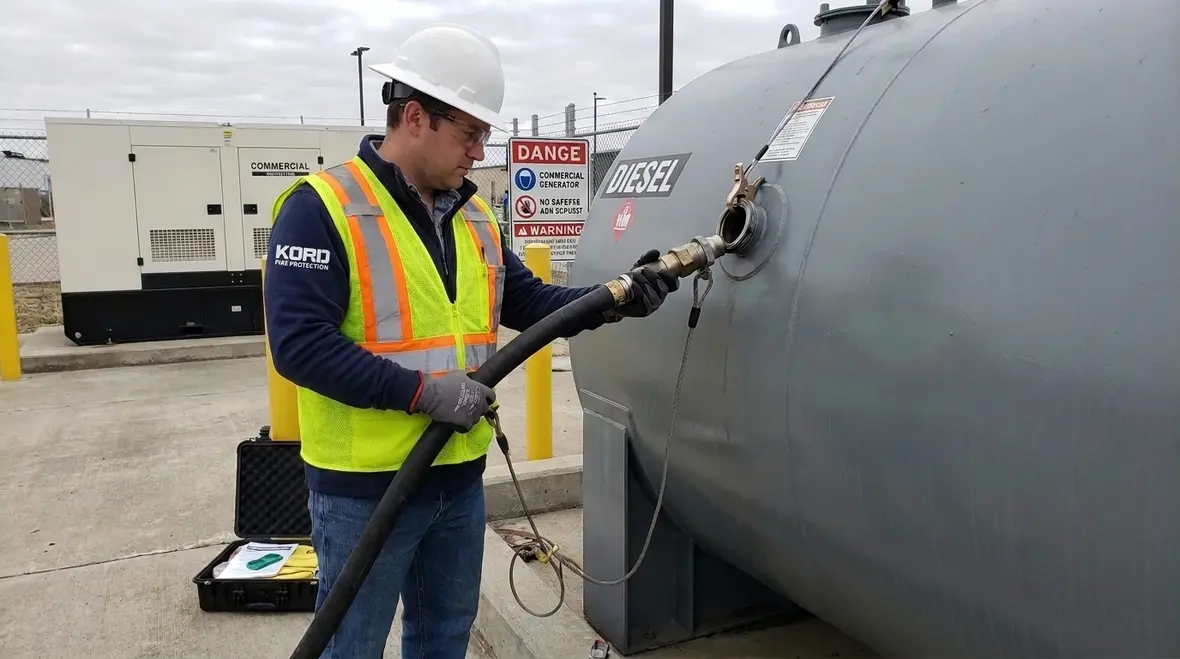
NFPA 37 Section 6.6: Filling Liquid Fuel Tanks Safely
Quick Answer: NFPA 37 Section 6.6 sets safety controls for filling liquid fuel tanks, emphasizing prevention of ignition sources, control of static electricity, proper transfer equipment, and verified procedures. Facilities that manage commercial generators, engines, and fuel systems reduce risk by aligning operations and inspection routines with these requirements.
Facilities that also need a stronger inspection framework across connected protection systems can review fire pump testing protocols for reliable industrial uptime to support a broader readiness strategy.
Why NFPA 37 fuel tank filling requirements matter for engines
Fuel transfer events are high risk because ignition can come from static discharge, hot surfaces, improper equipment, leaks, or control system failures. For commercial engine installations, compliance with NFPA 37 fuel tank filling requirements engines directly supports safer fueling operations, reduces the likelihood of flash fire, and strengthens defensible maintenance documentation during audits and incident investigations.
What Section 6.6 focuses on during tank filling
NFPA 37 Section 6.6 addresses the practical steps and conditions needed to control hazards during filling of liquid fuel tanks. In the field, these requirements typically translate into three operational goals:
- Limit ignition potential in the presence of fuel vapors, mist, or spillage.
- Manage static and flow related hazards during transfer and venting conditions.
- Ensure the fueling process stays controlled through equipment suitability, installation integrity, and verified procedures.
Commercial sites often attempt to treat fueling as a routine contractor task. Section 6.6 encourages a different mindset: it treats fueling as a controlled industrial process that must be performed consistently and verified through inspection and maintenance.
Operational controls: procedures that prevent ignition
Facilities that successfully comply with Section 6.6 implement written fueling procedures, train personnel, and standardize equipment. The most common compliance gap occurs when the written procedure exists but does not match real world operations, such as improvising hoses, bypassing valves, or leaving equipment energized outside of the controlled phase.
1) Establish safe fueling zones and conditions
During filling, personnel should control access and ensure only authorized staff manage transfer. Ignition sources include vehicles, portable heaters, switching equipment, and any activity that can create sparks or hot surfaces. The facility should also maintain clear spill response readiness because even small spills can create vapor hazards and surface contamination.
2) Use compatible transfer equipment
Fuel transfer equipment must be appropriate for flammable liquid handling and consistent with the fuel system design. Practical checkpoints include:
- Correct hose type, condition, and routing to prevent abrasion or strain.
- Proper fittings and seals to reduce leakage during connection and filling.
- Controls that support safe start, stop, and emergency interruption.
In industrial and retail facilities, a frequent failure point is aging hoses, damaged couplings, or nonstandard adapters. These defects often do not trigger alarms until the first time a transfer is attempted under full flow.
3) Control spillage and overfill risk
Overfill, uncontrolled flow, or slow manual monitoring can create a path for fuel release and ignition. Facilities should align tank fill limits, venting conditions, and operational monitoring so that filling ends before a hazardous condition develops. This includes attention to level sensing reliability and alarm response processes.
Static electricity and flow hazards during fuel transfer
Static electricity is one of the most misunderstood mechanisms in fueling safety. During liquid transfer, charge can build as fuel moves through hoses, fittings, and filters. If the system allows rapid discharge into a vapor space, ignition becomes possible.
Key practical steps facilities should enforce
- Bond and ground transfer equipment using verified connection points and integrity checks.
- Use correct connection order to reduce the chance of arcing during coupling.
- Maintain controlled flow consistent with procedure and tank conditions.
- Prevent vapor release escalation by maintaining tank system integrity and appropriate venting operation.
Common commercial issues include missing bonding connections, worn grounding straps, and corrosion at bonding points that defeats electrical continuity. These problems typically become visible only after an incident or a targeted electrical inspection.
Inspection, maintenance, and documentation that auditors expect
Compliance with NFPA 37 Section 6.6 depends on more than one day of correct fueling practice. Commercial facility standards expect repeatable controls, documented inspections, and maintenance that keeps transfer systems and tank components within safe operating condition.
What to verify before and after fueling operations
- Hose condition and coupling integrity: inspect for cracks, degradation, and seal performance.
- Valve alignment and leak checks: confirm correct configuration and verify no seepage at joints.
- Vent and tank system condition: confirm that the system supports safe pressure and vapor management.
- Emergency readiness: ensure spill response materials and procedures match site hazards.
Why commercial service partners matter
Kord Fire Protection supports organizations that need consistent, defensible compliance across fueling, storage, and protection systems. For busy industrial and retail operations, an ongoing inspection and maintenance approach reduces the likelihood that small defects accumulate into a larger hazard at the worst time.
For related guidance on safely managing fire and life safety readiness, see Kord Fire Protection’s resources here: Kord Fire Protection.
Common failure points during tank filling at commercial sites
Even mature facilities can drift away from Section 6.6 intent. The most frequent causes of noncompliance typically fall into these categories.
1) Procedure drift and inconsistent training
Contractors or rotating staff may not receive the same level of training. When procedures are not refreshed, personnel begin to treat fueling as a speed task rather than a hazard controlled operation.
2) Compromised hardware and improvised components
Hoses, fittings, grounding hardware, and tank access components can degrade. Improvised adapters often appear harmless until they interfere with sealing, grounding, or flow control.
3) Level sensing and alarm reliability issues
Overfill and uncontrolled release risk increases when alarms do not function as designed or are ignored. Maintenance should include verification that alarms and interlocks respond properly during realistic checks.
4) Weak integration with emergency response
Many sites plan for general fire response but not for the specific dynamics of liquid fuel release. Section 6.6 expectations are strengthened when fueling procedures connect with spill response and incident escalation plans.
Frequently Asked Questions
Conclusion and next step
NFPA 37 Section 6.6 reduces risk by turning fuel tank filling into a controlled process that prevents ignition, manages static, and maintains reliable hardware performance. Commercial facilities should verify that fueling procedures match site conditions, inspect transfer systems on a defined schedule, and document results. Contact Kord Fire Protection to review fueling related fire safety expectations, strengthen inspection and maintenance routines, and support audit ready compliance for your engine fuel systems.

Join Our Newsletter!
Get the latest fire safety tips delivered straight to your inbox From our Newsletter.



