
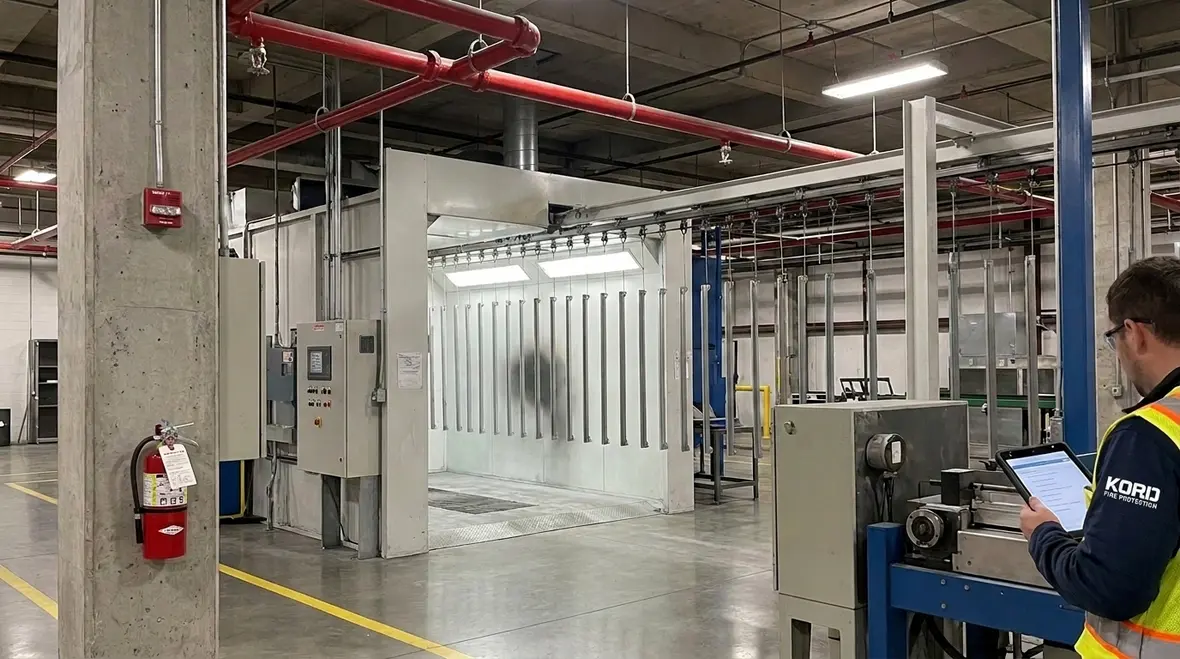
NFPA 35 Section 2.2: Every NFPA Code Cited by the Organic Coatings Standard
Quick Answer: NFPA 35 Section 2.2 pulls in specific NFPA codes referenced by the Organic Coatings Standard. This section functions as the compliance map that facilities must follow for process safety, electrical hazards, fire protection systems, and inspection requirements. Kord Fire Protection helps facilities manage the documentation and testing behind those citations.
Facilities working through referenced-code compliance often benefit from a stronger ITM fire protection inspection, testing, and maintenance program, especially when Section 2.2 citations start affecting documentation, restoration steps, and recurring test intervals.
Why NFPA 35 Section 2.2 matters in real facilities
NFPA 35 Section 2.2 is not a reading exercise. It establishes which NFPA documents the Organic Coatings Standard relies on for additional requirements that may be outside the scope of “coatings process” language. For commercial, industrial, and retail facilities, this creates a practical compliance workflow: facilities must confirm that every cited NFPA publication is implemented in operations, maintenance plans, training, and inspection records.
In day to day operations, the most common failure point is not ignorance of the coating rules. It is gaps in the referenced requirements, such as missing inspection intervals, incomplete impairment documentation, or equipment selections that do not match the cited standards. These gaps often surface during internal audits, insurance underwriting reviews, or authority having jurisdiction (AHJ) inspections.
What the “NFPA 35 list of referenced NFPA publications” actually does
The NFPA 35 list of referenced NFPA publications serves as a cross reference framework. Section 2.2 identifies which NFPA codes apply when NFPA 35 directs the facility to follow them for specific hazards or systems. Rather than duplicating system details, NFPA 35 points readers to the specialized requirements that govern those systems.
Operationally, this means compliance is layered:
- NFPA 35 sets the coating and process safety requirements for organic coatings operations.
- Referenced NFPA codes set the technical rules for things like fire alarm, sprinkler systems, portable extinguishers, impairment handling, electrical safety principles, and other hazard controls.
- Your facility procedures must translate both layers into work instructions, inspection checklists, testing calendars, and documentation.
When facilities treat Section 2.2 as “background,” the documentation chain breaks. For example, a facility may have sprinklers installed correctly but fail to meet the referenced testing and maintenance intervals, or it may document inspections in a way that does not match the referenced standard’s expectations.
How referenced NFPA publications affect fire protection design and maintenance
Section 2.2 citations tend to show up during four recurring lifecycle phases: design intent, installation verification, operational maintenance, and impairment recovery. Facilities can reduce risk by building compliance controls around these phases.
1) Design and equipment selection
Referenced NFPA publications frequently drive requirements for system type, layout intent, and performance expectations. During design or retrofits, teams often focus on NFPA 35 process provisions and overlook how a referenced standard impacts system design. This leads to mismatches such as:
- Fire protection system components that do not meet the referenced standard’s acceptance and performance criteria.
- Detection and notification layouts that do not reflect system coverage expectations.
- Clearance, storage layout, and operational practices that affect system effectiveness.
For coating operations, where flammable vapors and residues can challenge ignition control, system reliability matters. Kord Fire Protection supports commercial facilities by aligning field realities with code intent so that what is built matches what inspectors expect during commissioning and follow up testing.
2) Installation verification and commissioning
Many facilities commission systems using general checklists. The issue is that referenced NFPA publications can include specific acceptance steps, documentation formats, and test procedures. Missed details can produce “partial acceptance,” where the system appears functional but later fails review. Common examples include:
- Test records missing required data fields or not captured at the correct time.
- System operational tests performed without demonstrating all required modes, such as alarm, supervisory status, or water flow functionality.
- Incomplete contractor closeout documentation for AHJ submission and internal audits.
Kord Fire Protection can help coordinate commissioning support and ongoing verification, reducing the chance that compliance issues emerge after turnover.
3) Routine inspection, testing, and maintenance (ITM)
Referenced codes typically establish inspection and testing frequency, minimum recordkeeping expectations, and acceptable test outcomes. Coating facilities face additional operational stressors such as vapor loads, residue buildup, and changing production schedules. These stressors can affect reliability of detection, emergency power behavior, and suppression system performance.
To prevent recurring nonconformities, facilities should ensure their ITM plan covers:
- Correct test intervals and post test restoration steps.
- Documented findings and corrective actions within the required timeframes.
- Clear process for managing impairments so production disruptions do not cause compliance drift.
If impairment procedures are the weak link, it also helps to review Kord Fire Protection’s guidance on fire suppression impairments and fast restoration so the paperwork and the actual return to service stop acting like distant relatives.
4) Impairment handling and risk management
One of the most frequent commercial compliance problems involves impairments. Facilities may take systems out of service during maintenance, contractors’ work, or production upgrades. If impairment documentation and compensatory measures do not match the referenced NFPA requirements, the facility may lose compliance status regardless of how good the system is when fully active.
Kord Fire Protection helps facilities standardize impairment workflows, ensuring documentation completeness, timely restoration, and consistent verification when systems return to service.
Common compliance challenges tied to Section 2.2 citations
Commercial facilities often implement “NFPA 35 compliant practices” without mapping the referenced requirements into day to day controls. The following issues appear repeatedly across industrial and retail environments with coating related processes:
- Incomplete crosswalk documentation: Facilities may cite “NFPA 35 Section 2.2” in internal reports but fail to translate it into a working list of required ITM activities.
- Shared maintenance calendars: Teams reuse sprinkler or fire alarm schedules that do not match the referenced publication’s frequency expectations.
- Contractor misalignment: Outsourced services may perform partial work and not provide closeout documentation required for AHJ or internal audit review.
- Inadequate record retention: Records get stored inconsistently, missing test dates, impairment tags, or corrective action summaries.
- Equipment susceptibility to coating environments: Residue and atmospheric conditions can affect inspection and test performance and require more disciplined cleaning and functional verification routines.
Because these issues are operational, not theoretical, Kord Fire Protection positions compliance support as an ongoing service. The goal is consistent documentation, reliable testing outcomes, and reduced risk of compliance gaps during inspections.
How to use Section 2.2 in an actionable compliance program
Facilities can make Section 2.2 manageable by turning it into a compliance crosswalk that links each cited publication to specific facility assets and responsibilities.
Step 1: Build the crosswalk
Create a table that maps each cited NFPA publication to the asset category it governs (for example, detection and alarm systems, portable extinguishers, sprinklers, emergency power, or impairment and maintenance requirements). This becomes the backbone for your inspection and testing plan.
Step 2: Assign ownership
Assign each asset category to a responsible role. At minimum, the facility should designate a fire protection coordinator and a maintenance supervisor to confirm that testing, repairs, and recordkeeping align with the cited requirements.
Step 3: Validate documentation quality
Before AHJ visits, validate test records for completeness. Confirm that required data elements exist, that impairment documentation is traceable, and that corrective actions are closed with verified outcomes.
Step 4: Conduct periodic internal verification
Use internal audits to confirm that calendars, contractors, and training remain aligned with the NFPA 35 requirements and the referenced publications. If operations change, revisit the crosswalk and update ITM plans accordingly.
For related commercial guidance on fire protection service planning, facilities can also review practical resources from Kord Fire Protection to support testing, maintenance, and compliance readiness.
Frequently Asked Questions
Conclusion and call to action
Section 2.2 turns NFPA 35 into a multi code compliance program. Facilities that build a crosswalk, standardize ITM, and maintain impairment documentation typically avoid late surprises during AHJ and insurance reviews. Kord Fire Protection can support testing, maintenance, and documentation quality so your coatings operations stay aligned with the NFPA 35 referenced requirements. Contact Kord Fire Protection to assess your current ITM calendar and record readiness.

Join Our Newsletter!
Get the latest fire safety tips delivered straight to your inbox From our Newsletter.



