
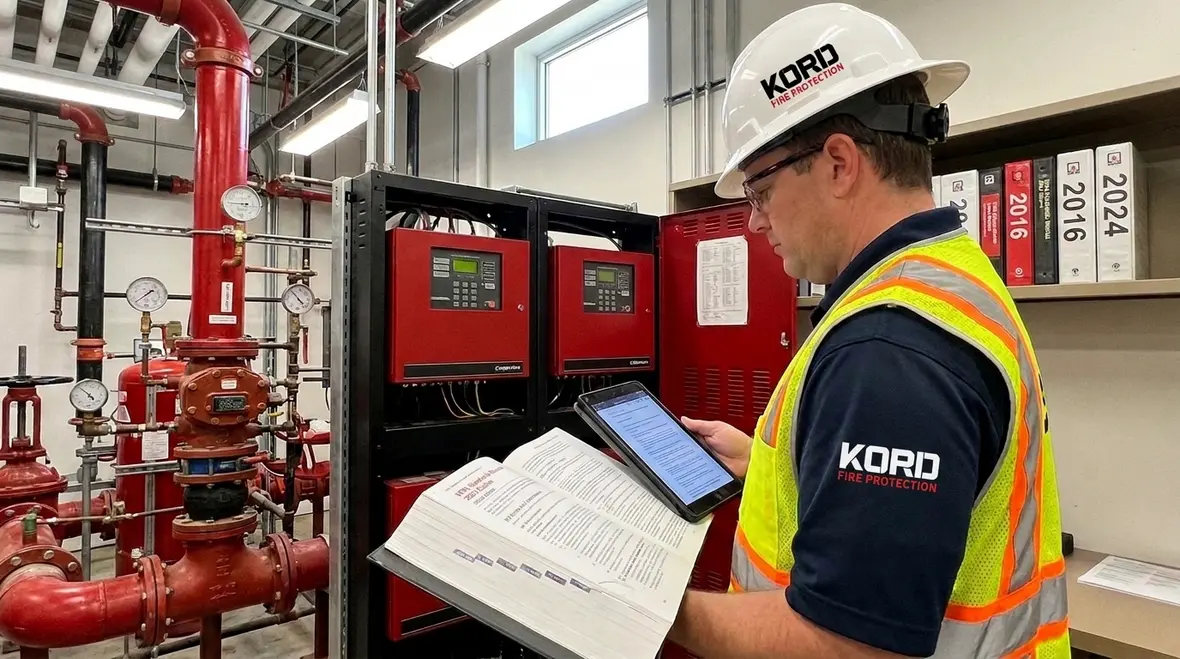
NFPA 35 Section 2.1 General: How Referenced Publication Editions Apply
Quick Answer
NFPA 35 Section 2.1 explains how to determine which edition of referenced standards applies when NFPA 35 cites other documents. The rule controls licensing, design approvals, and inspections by requiring the edition specified by NFPA 35 and addressing how later editions are treated for ongoing compliance.
Why NFPA 35 referenced publications edition rules matter in real facilities
Commercial, industrial, and retail facilities that handle oxidizers, hazardous chemicals, or other regulated processes often rely on NFPA 35 as the governing fire safety standard. During plan review, commissioning, and annual maintenance, authorities having jurisdiction (AHJs) and internal engineering teams look for consistency in the edition of referenced publications.
The core issue is simple: the wrong edition can change system requirements, testing frequency, documentation expectations, and acceptance criteria. This is why NFPA 35 referenced publications edition rules become a practical compliance cornerstone rather than a legal footnote.
What Section 2.1 covers: edition control for cited standards
NFPA 35 Section 2.1 sets expectations for how NFPA 35 treats “referenced publications,” meaning documents NFPA 35 names and incorporates by citation. In practice, facilities must treat referenced standards as part of the compliance chain, not as optional guidance.
Key compliance principle
When NFPA 35 references another publication, the edition matters. Section 2.1 provides the rule logic for determining which edition applies and how that edition requirement controls the design basis, installation criteria, and verification activities.
Operational impact on commercial assets
Edition selection affects how teams implement and maintain life safety and fire protection features such as:
- Storage and handling controls that depend on external technical criteria
- System acceptance testing steps and pass fail documentation
- Inspection and maintenance schedules for components tied to referenced requirements
- Training and recordkeeping expectations used during periodic verification
How facilities determine the “correct” edition during design and commissioning
Most compliance failures do not come from ignoring NFPA 35. They occur when stakeholders apply the latest revision they can find, mix editions across documents, or update equipment without aligning the referenced publication edition basis.
For teams building stronger testing and documentation workflows, it helps to align these controls with broader fire safety testing and maintenance practices so referenced standards traceability does not get separated from real-world system verification.
Step 1: Identify every referenced publication in the applicable NFPA 35 sections
Teams should create an edition map that lists each cited publication, including edition or year, and the NFPA 35 subsection where it appears. This map should live with the commissioning package and the fire safety file.
Step 2: Lock the edition basis for the asset lifecycle phase
Once design is approved, systems should remain aligned to the referenced publication edition basis used during acceptance. If maintenance requires a deviation, the facility should manage it through a documented compliance evaluation rather than an informal substitution.
Step 3: Verify AHJ and internal review expectations before installation
Some AHJs treat referenced editions conservatively and request evidence that the specified edition was used. Facilities should prepare a short “referenced standards traceability” summary for the permitting and inspection process.
Common failure points tied to referenced edition mismatches
Referenced publication edition problems often show up during inspections, impairments, and record audits. The same system can “work” while still failing compliance documentation, and that gap can trigger repeat testing, temporary shutdown risk, or enforcement actions.
Failure point 1: Retrofit work without edition traceability
When a component is replaced, teams may reference a newer manual or standard revision. Without a documented edition alignment check, the maintenance record may not match the original compliance basis.
Failure point 2: Mixed edition references across drawings and procedures
Engineering drawings might cite one edition, while the site procedure uses another. Inspectors frequently look for consistency between the reference basis and what field technicians actually follow.
Failure point 3: Incomplete commissioning documentation
Commissioning reports that omit referenced edition details can become a bottleneck for permit renewals or insurance underwriting. The facility should keep a consolidated record of edition decisions and the rationale used at the time.
Failure point 4: “Maintenance-by-equipment” instead of “maintenance-by-standard”
Maintenance is not only about parts. It is also about the acceptance and verification requirements tied to cited standards. If the procedure follows the wrong edition, the inspection may pass technically but fail compliance expectations.
Field best practices: procedures, labeling, and inspection readiness
Effective teams operationalize NFPA 35 referenced publication edition rules through field-ready documentation. This reduces rework and speeds AHJ discussions.
Create a referenced publication register
A referenced publication register is a controlled document that lists:
- Referenced publication title
- Edition or year applied
- NFPA 35 section or subsection citation
- Where the requirement is reflected in drawings, procedures, and testing forms
- Owner and revision control details
Align test forms and maintenance checklists to the edition basis
Checklists should include the edition basis reference in the header or control block. When technicians complete required records, the form should make the compliance intent obvious.
Maintain “edition-aware” labeling and version control for system software and device documentation
Where applicable, software settings, controller documentation, and device manuals should be stored with the commissioning record. For inspections, this supports quick verification that field configuration follows the intended basis.
Use a proactive maintenance audit before scheduled inspections
Facilities should perform a document and field alignment audit prior to inspections. The audit should compare:
- Referenced editions in the fire safety file
- Referenced editions in operating and maintenance procedures
- Referenced editions embedded in testing witness forms
- Field practice and technician instructions
For practical support with ongoing inspection, testing, and maintenance programs, Kord Fire Protection helps commercial sites maintain documentation discipline and readiness for review cycles. Visit Kord Fire Protection for service resources and compliance support.
How to communicate edition decisions to stakeholders without creating compliance drift
Edition control becomes difficult when multiple vendors and internal departments update documents independently. A clear communication method prevents drift.
Standardize change management for referenced standards
Any time a vendor proposes a substitution or procedure update, the facility should require:
- A statement of which referenced publication edition will be used
- Evidence that the edition aligns with the NFPA 35 requirement basis
- Updated documentation package items needed for inspection readiness
Train cross functional teams on “edition awareness”
Facilities should train engineering, maintenance leadership, and contractors on the difference between using a newer edition as guidance and adopting a newer edition as the compliance basis. NFPA 35 referenced publication edition rules require a controlled approach, not ad hoc adjustments.
Frequently Asked Questions
Next steps: verify your edition traceability now
Facilities should audit NFPA 35 referenced publication edition rules coverage by confirming every cited standard edition is accurately documented and reflected in test forms and maintenance procedures. Kord Fire Protection can support ongoing inspection, testing, and maintenance programs designed to keep commercial sites inspection ready and reduce edition mismatch rework. Contact Kord Fire Protection to start a structured compliance and readiness review.

Join Our Newsletter!
Get the latest fire safety tips delivered straight to your inbox From our Newsletter.



