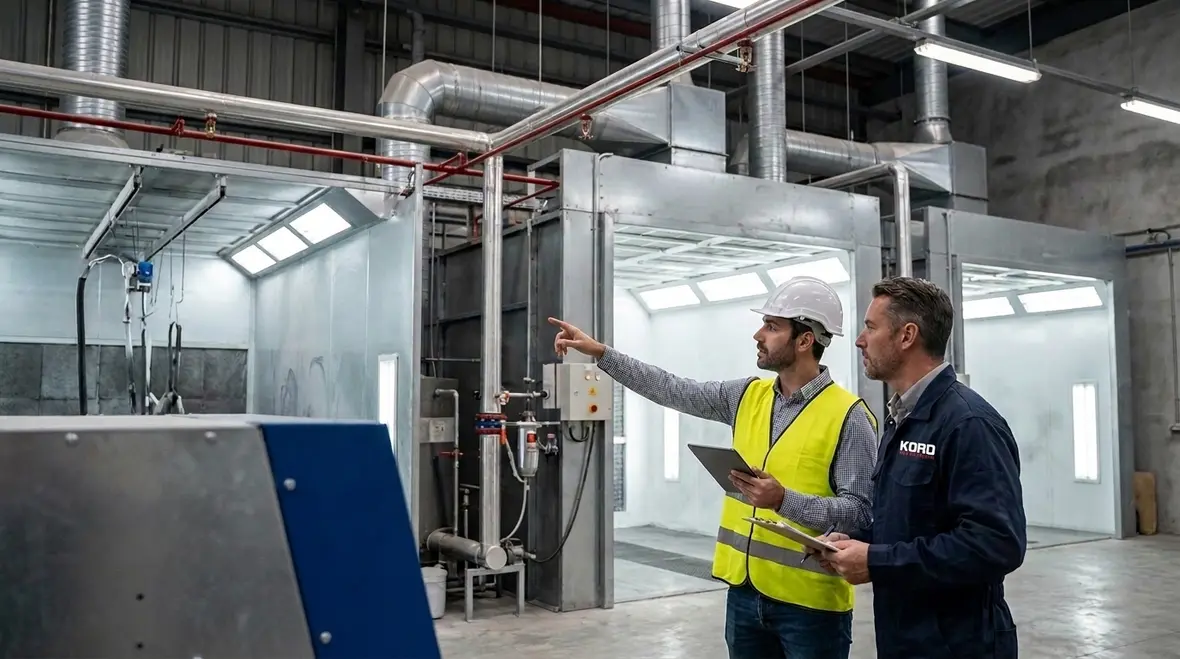
NFPA 35 Section 1.5 Equivalency: Alternative Compliance for Coatings Plants
Quick Answer: NFPA 35 Section 1.5 allows coatings plants to meet fire protection goals through alternative methods when standard prescriptive requirements do not fit. The key is demonstrating equivalency using documented engineering analysis, approved compensating protections, and verified operational performance.
For facilities tightening the paperwork and verification side of compliance, fire safety system documentation for compliance is worth reviewing early, especially when an equivalency request will live or die on records, test results, and follow-through. ([kordfire.com](https://kordfire.com/fire-safety-system-documentation-for-compliance/?utm_source=openai))
What NFPA 35 Section 1.5 requires for an equivalency approach
NFPA 35 Section 1.5 is not a shortcut. It is an approval pathway for NFPA 35 equivalency alternative compliance coatings strategies when a facility cannot fully implement a prescriptive requirement exactly as written. The authority having jurisdiction (AHJ) evaluates whether the alternative method provides an equivalent level of protection for people, property, and operations.
For coatings plants, the equivalency conversation typically centers on the fire risk created by coating materials, solvents, and application processes. The facility still needs a defensible basis for the entire protection chain, including detection, control measures, containment concepts, and mitigation performance under expected operating conditions.
Where equivalency requests commonly arise in coatings operations
Coatings facilities rarely struggle with compliance because of a single element. They struggle because process realities change. Typical equivalency triggers include:
- Mixed materials and changing chemistries: Renovations, new product lines, or supplier changes can affect volatility and heat release characteristics, forcing protection strategy updates.
- Retrofitting constraints: Limited ceiling heights, congested mechanical spaces, or operational downtime requirements may limit how quickly standard systems can be installed.
- Unique application line layouts: Open booths, enclosed booths, transfer points, and automated spray systems can create coverage gaps if standard assumptions do not match the real world.
- Process throughput and airflow dynamics: Changes in ventilation rates or airflow patterns can shift how vapors accumulate and how quickly hazards reach detection and suppression systems.
In practice, these drivers lead facilities to propose NFPA 35 equivalency alternative compliance coatings solutions such as modified detection placement, adjusted ventilation interlocks, alternative suppression configurations, or different means of maintaining safe operating conditions. The AHJ will typically expect a complete, end to end demonstration rather than isolated component equivalence.
How to build a defensible equivalency package (the AHJ will look here)
An equivalency submission performs best when it reads like an engineering proof of performance. Kord Fire Protection often supports this process by translating code intent into testable field requirements, so the facility can maintain compliance day to day.
1) Define the hazard baseline and design assumptions
The package should clearly state:
- Coating product categories used in the process areas, including storage and handling practices.
- Expected maximum quantities and credible worst case operating scenarios.
- Operating envelope assumptions such as ventilation status, start up sequences, and normal process variations.
This step matters because equivalency relies on matching the hazard conditions that the prescriptive code provisions were intended to control.
2) Identify the specific NFPA 35 requirement that is being modified
Ambiguity weakens approval. The submission should identify the exact prescriptive requirement and explain why strict compliance is impractical or impossible. It should then propose the alternative approach with clear boundaries of applicability.
3) Demonstrate equivalent performance, not just equivalent equipment
For coatings plants, the AHJ usually expects proof that the alternative method controls fire and explosion hazards with comparable effectiveness. That can include performance indicators such as:
- Detection reliability and response time under representative airflow conditions.
- Suppression effectiveness and coverage for the specific ignition and fuel distribution scenarios.
- Compensating controls that prevent unsafe states, including interlocks and procedural safeguards.
Common failure points include proposals that focus on the installed system but ignore how it will behave during abnormal operations such as power interruptions, ventilation failures, booth operator deviations, or maintenance downtime.
4) Establish acceptance criteria and field verification tests
Equivalency approval should include measurable acceptance criteria. Examples include:
- Interlock verification procedures for ventilation shutdown and spray enablement.
- Alarm verification tests that confirm audibility and visual notification at operational workstations.
- Coverage or actuation tests for detection and suppression systems.
Without verification, equivalency can drift out of compliance after installation due to recalibration, process changes, and routine maintenance variations.
What operational compliance looks like after approval
Even when an AHJ approves the equivalency, ongoing performance becomes the real compliance test. Coatings plants run multiple shifts, manage changeovers, and continuously adjust process parameters. That operational reality affects fire protection reliability.
Maintenance that protects equivalency over time
To keep NFPA 35 equivalency alternative compliance coatings strategies effective, facilities typically need:
- Documented inspection and testing intervals: Alarm, detection, suppression, and interlock systems must be tested per manufacturer and code driven requirements, not just “when something breaks.”
- Change control: Any process change that alters volatility, airflow balance, or material loading should trigger a review of equivalency assumptions.
- Housekeeping and coating residue management: Accumulated deposits can change ignition potential and fire spread characteristics.
- Training and procedural controls: Operators need clear instructions on safe startup, shutdown, and what to do during abnormal ventilation or alarm conditions.
Inspection and recurring risk review
Commercial and industrial facilities often face recurring inspection cycles from internal safety teams, insurers, and AHJs. Kord Fire Protection helps translate the equivalency narrative into practical inspection checklists, so the same performance basis remains valid at every visit. This reduces the probability of approval conditions being interpreted narrowly during future assessments.
That same discipline shows up in broader inspection planning, where Kord emphasizes organized reports, test results, deficiency tracking, and maintenance logs as the backbone of smoother compliance reviews. ([kordfire.com](https://kordfire.com/fire-suppression-inspection-southern-california-guide/?utm_source=openai))
Common failure points that derail equivalency requests
Facilities usually do not fail because the concept is wrong. They fail because the submission or ongoing controls do not reflect how coatings operations actually run.
- Missing boundary conditions: The alternative protection performs under one set of assumptions but not during realistic variances.
- No linkage to operational sequences: Interlocks and startup procedures are not aligned with the hazard scenario.
- Weak acceptance criteria: The submission describes the system but does not define what “equivalent” means in measurable terms.
- Lack of verification testing plans: Without field testing requirements, the equipment performance cannot be confirmed after installation and maintenance.
- Inadequate documentation for change management: Process updates can quietly invalidate equivalency assumptions.
These are exactly the areas where Kord Fire Protection can add value by aligning engineering intent with inspection, testing, maintenance, and record keeping for commercial compliance programs.
Partnering with Kord Fire Protection for ongoing compliance
NFPA 35 equivalency alternative compliance coatings programs succeed when the facility treats approval as the start of a lifecycle, not the end of a permitting task. Kord Fire Protection supports coatings plants with practical compliance services such as inspection coordination, testing oversight, documentation support, and maintenance planning to preserve the engineered performance basis over time.
If you want additional guidance on system readiness and documentation, review Kord Fire Protection’s fire suppression services to plan inspections and maintain defensible compliance records. Kord describes this page as covering inspections, testing, installations, and maintenance for commercial and industrial facilities, which fits naturally with the lifecycle approach discussed here. ([kordfire.com](https://kordfire.com/all-fire-suppression/?utm_source=openai))
Frequently Asked Questions
Call to action
Plan your NFPA 35 equivalency alternative compliance coatings request like an engineered performance program, then protect it with repeatable inspection and testing. Contact Kord Fire Protection to coordinate verification needs, strengthen your documentation package, and maintain system performance after approval.
Join Our Newsletter!
Get the latest fire safety tips delivered straight to your inbox From our Newsletter.