
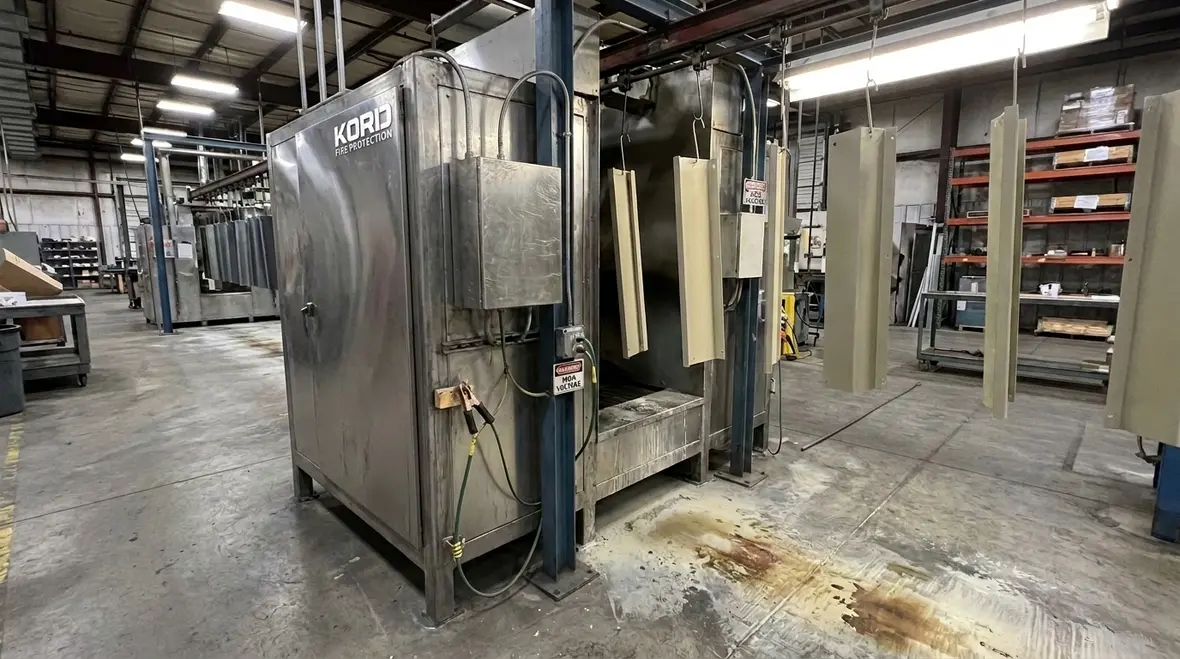
NFPA 34 Section 11.1 Scope: Electrostatic Detearing Apparatus
Quick Answer: NFPA 34 Section 11.1 defines what electrostatic detearing apparatus must cover under the standard, including the conditions where electrostatic systems operate, typical equipment boundaries, and the compliance expectations that protect occupants and facilities from ignition risk.
Facilities that need broader inspection and maintenance support can also review commercial fire suppression systems and services from Kord Fire Protection for a practical look at code-compliant protection, testing, and ongoing readiness.
What does the NFPA 34 electrostatic detearing chapter scope cover?
Within the NFPA 34 electrostatic detearing chapter scope, Section 11.1 focuses on electrostatic detearing apparatus used for industrial material handling, processing, and related operations where static electricity could contribute to hazardous ignition conditions. The scope language matters because it sets the compliance boundary: the standard addresses the equipment, the electrostatic function, and the safeguards expected for safe operation in environments that may contain flammable dusts, fibers, or vapors depending on the facility process.
In commercial and industrial settings, compliance failures typically occur when facilities treat electrostatic equipment as an “auxiliary” system. Audits and incident reviews often show gaps in labeling, inspection records, grounding continuity checks, powder or residue management, and procedure control during startups, shutdowns, and maintenance.
Why Section 11.1 matters in real installations
Electrostatic detearing apparatus can be sensitive to small changes in electrical integrity and process conditions. If grounding pathways degrade, insulators accumulate residue, or control systems drift out of calibration, static charge behavior can change rapidly. That is why the NFPA 34 electrostatic detearing chapter scope is interpreted in practice as both a design and operations requirement, not only an equipment purchase specification.
Operational boundaries: equipment and process conditions included in the scope
NFPA 34 Section 11.1 scope typically directs attention to the apparatus that generates or uses electrostatic effects for detearing functions, along with the interfaces that determine whether the equipment can create or sustain hazardous conditions. Facilities should consider what is “part of the apparatus” versus what is “upstream or downstream process equipment.” That distinction affects commissioning, inspection ownership, and documentation.
Common components considered part of electrostatic detearing apparatus
- Electrostatic charging or control sections that create charge states on surfaces or materials
- Conductive and conductive-to-ground components, including grounding straps and bonding jumpers
- Enclosures, housings, and barriers that influence arcing risk and exposure to combustible atmospheres
- Controls and protective interlocks that regulate energization, fault response, and safe operating modes
- Transfer surfaces and contact points where residue buildup can alter dielectric properties
Process environment factors that drive compliance risk
Even when the apparatus hardware appears correct, compliance can fail when process conditions change. Typical drivers include dust loading, moisture effects, cleaning frequency, ventilation performance, and abnormal material feed rates that can change charge transfer behavior.
- Flammable dust or fiber accumulations that can increase ignition consequence
- Ventilation imbalance that alters local concentrations
- Oil or polymer residues that alter insulation characteristics
- Changes in product formulation that affect conductivity and charge retention
How electrostatic detearing systems create ignition risk
Electrostatic detearing relies on controlled charge effects. However, the same electrostatic energy can contribute to ignition if a failure mode allows an arc, spark, or hot ignition source to occur in the presence of a combustible atmosphere. Risk generally increases when grounding is ineffective, when conductive paths are obstructed, or when insulating contamination builds up.
Practical failure points that inspectors look for
- Grounding discontinuity: loose terminals, corroded straps, painted contact points, or missing bonding jumpers
- Insulator contamination: residue on housings, electrodes, or charge-control components that changes voltage distribution
- Control system faults: interlocks disabled, alarm conditions ignored, or setpoints drifted
- Improper cleaning methods: cleaning that damages conductive coatings or removes grounding labels
- Unauthorized modifications: field wiring changes, replacement components without equivalent ratings, or altered enclosures
Maintenance procedures influence compliance more than many teams expect
NFPA 34 requirements typically translate into inspection and maintenance controls that ensure the electrostatic apparatus continues to operate as intended throughout its service life. Facilities often discover after an inspection that their maintenance program exists, but it does not specifically verify electrostatic performance related conditions such as grounding integrity, protective interlock function, or residue management effectiveness.
Inspection and testing expectations under the scope framework
To meet the intent behind the NFPA 34 electrostatic detearing chapter scope, facilities should align inspection and testing to the risk drivers of electrostatic operation. This includes documenting what gets checked, how frequently, and who is qualified to perform the checks. It also means ensuring the evidence produced by inspections can be reviewed during audits.
What a strong compliance program documents
- Equipment identification: make, model, serial number, installation location, and linked process area
- Grounding and bonding verification records: condition checks, continuity verification where required by the facility program, and corrective actions taken
- Control and interlock status verification: proof of safe modes, fault response, and energization control
- Cleaning and residue management logs: schedules, method descriptions, and verification of no conductive pathway impairment
- Corrective action tracking: documented repairs, retesting results, and sign-off
When to tighten procedures
Facilities should consider additional inspection rigor during changeovers, after maintenance that touches electrical paths, and when product or process parameters change. Auditors commonly expect heightened scrutiny during periods when abnormal charging behavior is most likely.
Common compliance gaps in commercial, industrial, and retail facilities
Electrostatic detearing apparatus compliance is not only an industrial manufacturing concern. Retail and distribution environments that handle combustible dust producing materials can also face scope interpretation problems, particularly when equipment is shared across multiple process lines or when contractors perform maintenance without standardized documentation.
Gap patterns Kord Fire Protection frequently addresses
- Missing cross references: procedures exist but do not clearly tie to NFPA 34 requirements for the electrostatic apparatus boundaries
- Inconsistent ownership: operations staff handle inspections while electrical components receive maintenance from another vendor with no shared reporting structure
- Insufficient evidence: inspections are performed but the facility cannot show records of what was checked and the outcomes
- Outdated labeling: safety labels, grounding identifiers, or fault indicator descriptions do not match the current installed configuration
- Deferred corrective actions: minor grounding defects are treated as operational nuisances until they become a critical issue
For facility teams that need a streamlined, accountable path to ongoing compliance, Kord Fire Protection supports commercial sites with practical fire and life safety testing, documentation readiness, and maintenance alignment. For related guidance on broader industrial compliance strategy, see Fire Suppression Systems from Kord Fire Protection.
Implementation checklist aligned to NFPA 34 Section 11.1 scope
The following checklist helps teams operationalize the NFPA 34 electrostatic detearing chapter scope for day to day control. Facilities should tailor frequency and depth based on equipment design, operating conditions, and documented risk assessments.
| Scope Item | What to verify | Evidence to keep |
|---|---|---|
| Apparatus boundary and identification | Installed configuration matches equipment documentation and scope boundaries | Equipment datasheets, site map, serial number records |
| Grounding and bonding integrity | Conductive paths are intact, corrosion controlled, and contact points are not insulated by paint or residue | Inspection photos, continuity or condition test records as required by site program |
| Protective interlocks and controls | Fault response operates as intended and safe states engage during abnormal conditions | Test logs, alarm history, corrective action reports |
| Residue and contamination control | Cleaning prevents buildup that changes insulation behavior or inhibits conductive performance | Cleaning schedules, method SOPs, verification checklists |
| Maintenance change control | No unauthorized modifications occur and replacements match electrical and safety ratings | Work orders, parts documentation, retest sign-offs |
If the facility cannot demonstrate each row with reliable records, the compliance effort often becomes reactive at audit time. Building a consistent documentation trail is one of the highest ROI actions for commercial fire safety management.
Frequently Asked Questions
Conclusion and call to action
Facilities that interpret NFPA 34 Section 11.1 scope correctly treat electrostatic detearing apparatus as a controlled safety system, not a routine accessory. Build a clear boundary for what equipment is included, verify grounding and interlocks, manage residue with disciplined cleaning, and maintain proof through strong documentation. Kord Fire Protection can help commercial sites validate testing processes, close evidence gaps, and keep maintenance aligned for ongoing compliance. Contact Kord Fire Protection today to plan a compliance and maintenance review.

Join Our Newsletter!
Get the latest fire safety tips delivered straight to your inbox From our Newsletter.



