
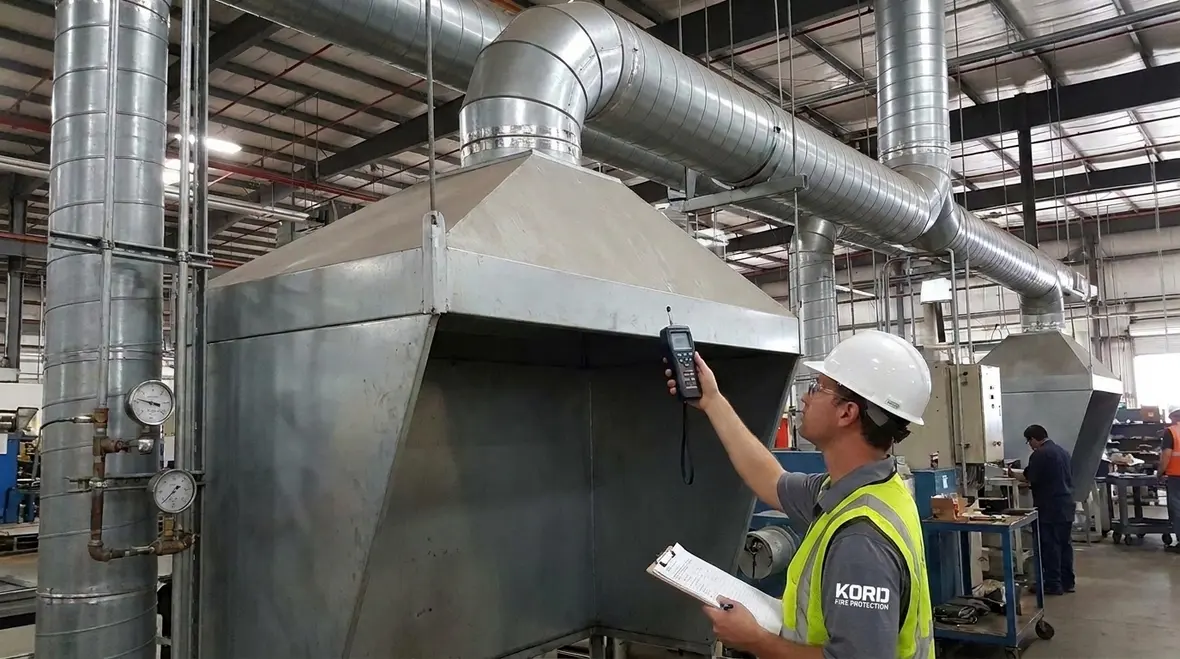
NFPA 34 Section 7.3: Performance Requirements for Process Ventilation
Quick Answer
NFPA 34 Section 7.3 establishes how process ventilation systems must perform to control hazards, maintain safe operating conditions, and support the process design. Compliance focuses on airflow, ducting integrity, equipment reliability, and verified performance through documented inspection and testing.
For a closely related look at ventilation compliance in adjacent process environments, see NFPA 33 Section 13.8 ventilation requirements for drying, curing, and fusion processes.
Why NFPA 34 ventilation performance matters in real facilities
In commercial, industrial, and retail occupancies where process ventilation supports hazardous operations, the ventilation system becomes a life safety and property protection control. NFPA 34 ventilation performance requirements process systems are not treated as “set and forget” utilities. Facilities must demonstrate that the system delivers the intended control function, and that it continues to do so under expected operating conditions, maintenance conditions, and process changes.
In practice, the most common compliance problems involve drift in airflow performance, degradation of fans and dampers, damaged ductwork, sensor inaccuracies, and management of change gaps when production or layouts change. Section 7.3 provides the framework to verify performance and to maintain the designed safety function through ongoing operational readiness.
What Section 7.3 demands: performance, not just installation
NFPA 34 Section 7.3 focuses on performance requirements for process ventilation systems. Rather than confirming only that equipment is present, the standard expects the ventilation system to operate in a way that supports safe control of contaminants and hazardous atmospheres consistent with the approved design basis.
Performance verification is the center of compliance
Performance requirements typically translate into measurable outcomes such as maintaining required airflow rates, ensuring ventilation effectiveness at the point of control, and confirming that system components respond properly to process conditions. Facilities should expect performance checks that validate both normal operating conditions and required response during nonroutine scenarios where the process ventilation function is critical.
Documented procedures and controlled operation matter
Even when the hardware is properly selected, compliance fails when operations do not run within the expected envelope. NFPA 34 ventilation performance requirements process systems are tied to how the system is operated and maintained. Written procedures, training, and interlocks aligned to system intent form part of performance assurance.
How process ventilation performance is evaluated in the field
Auditors and fire protection professionals typically look for evidence that the ventilation system meets its intended performance targets. This includes verifying the system configuration, measuring performance, and confirming operational readiness.
Airflow and balance: the most visible performance requirement
Airflow delivery often becomes the primary metric because it connects directly to contaminant capture and dilution. Testing commonly includes verifying supply and exhaust flow, verifying pressure relationships where applicable, and confirming that dampers and controls do not drift from set points over time.
Common failure points include clogged filters, buildup in duct runs, fan belt slippage, damper sticking, actuator wear, and incorrect balancing after maintenance. These issues can reduce capture effectiveness even when the system still “runs.”
Equipment reliability and control logic
Performance relies on fans, motors, drives, dampers, and control sequences operating correctly. Facilities must verify that control logic actuates ventilation when required, maintains ventilation during intended operating conditions, and fails safe in accordance with the system design.
Commercial operations often face control drift when technicians change set points without evaluating downstream effects. For example, adjusting damper positions to “improve comfort” can undermine exhaust capture at hood points and create a performance gap relative to the original design.
Duct integrity and installation details that affect performance
Ductwork condition directly impacts ventilation performance through leakage, restriction, and unintended flow paths. Section 7.3 expectations drive attention toward duct integrity, routing and supports, penetration sealing, joint tightness, and material condition.
Field issues include loose flange connections, corrosion and pinholes, collapsed sections from mechanical damage, and duct modifications that do not reflect the original performance calculations.
Inspection and maintenance practices that keep performance intact
NFPA 34 ventilation performance requirements process systems require a maintenance approach tied to performance, not a calendar-only schedule. A strong program connects inspection scope to known degradation mechanisms and to how ventilation systems fail in service.
Operational readiness checks before testing
Before any performance measurement, technicians should confirm the system is in the correct mode, the process operating state matches the test scenario, and set points and alarms reflect the intended design. This avoids “validating” a system under conditions that do not represent normal operation or the required performance state.
Maintenance items that commonly cause performance failures
-
Filters and strainers: Restriction increases energy use and reduces delivered airflow.
-
Fans and drives: Worn bearings, belt slip, misalignment, and motor degradation reduce capacity.
-
Dampers and actuators: Stiction, air leaks in pneumatic systems, and actuator miscalibration affect flow control.
-
Sensors and controls: Calibration drift can shift system operation away from required targets.
-
Ductwork: Leaks and internal buildup reduce capture and raise uncertainty in airflow measurements.
Management of change as a compliance safeguard
Ventilation performance can change without any “obvious” equipment failure when the process layout, work practices, or chemical usage changes. A documented management of change process helps ensure that modifications trigger revalidation of performance when required.
This is where many facilities struggle, particularly across retail and light industrial operations that retrofit displays, reroute product lines, or adjust staging areas while assuming ventilation remains “equivalent.”
Common compliance challenges with process ventilation performance
Commercial facilities often experience recurring gaps that undermine NFPA 34 ventilation performance requirements process systems. Identifying these issues early reduces inspection risk and operational disruption.
1) Testing without acceptance criteria
Some facilities conduct measurements but do not define acceptance thresholds aligned to the design intent. Without criteria, results cannot demonstrate compliance. Performance evidence must tie measurements to the ventilation function described in the design and operating requirements.
2) Inconsistent documentation and traceability
Inspection and testing reports should include measurement points, instrument identification, calibration status, and conditions during testing. Missing documentation can prevent reviewers from trusting the performance data.
3) Poor coordination between operations and maintenance
Production schedules can limit testing windows, leading to shortcuts. A reliable plan schedules testing when the process can run to represent actual conditions, and it ensures the ventilation system operates under the correct modes.
4) Neglected verification after repairs
Replacing a fan, adjusting dampers, repairing duct sections, or recalibrating sensors changes system performance. NFPA 34 ventilation performance requirements process systems should be reverified after maintenance that affects airflow delivery, control logic, or duct integrity.
How Kord Fire Protection supports ongoing compliance
Kord Fire Protection helps commercial facilities maintain defensible compliance for process ventilation and other fire protection program elements. A performance driven approach aligns testing, inspection, and maintenance planning to the real operating conditions that affect ventilation effectiveness.
To support your broader compliance program with inspection and testing strategies, you can review related guidance from Kord Fire Protection: NFPA 34 Section 1.3 application guidance for covered processes and installations.
Frequently Asked Questions
Call to action
Ensure your process ventilation system meets NFPA 34 ventilation performance requirements process systems by building a performance verified program, tightening inspection and maintenance procedures, and revalidating performance after changes. Partner with Kord Fire Protection to align documentation, testing, and operational readiness with real facility conditions. Contact Kord Fire Protection to schedule a compliance focused review and establish a maintenance and verification plan you can defend during inspections.

Join Our Newsletter!
Get the latest fire safety tips delivered straight to your inbox From our Newsletter.



