
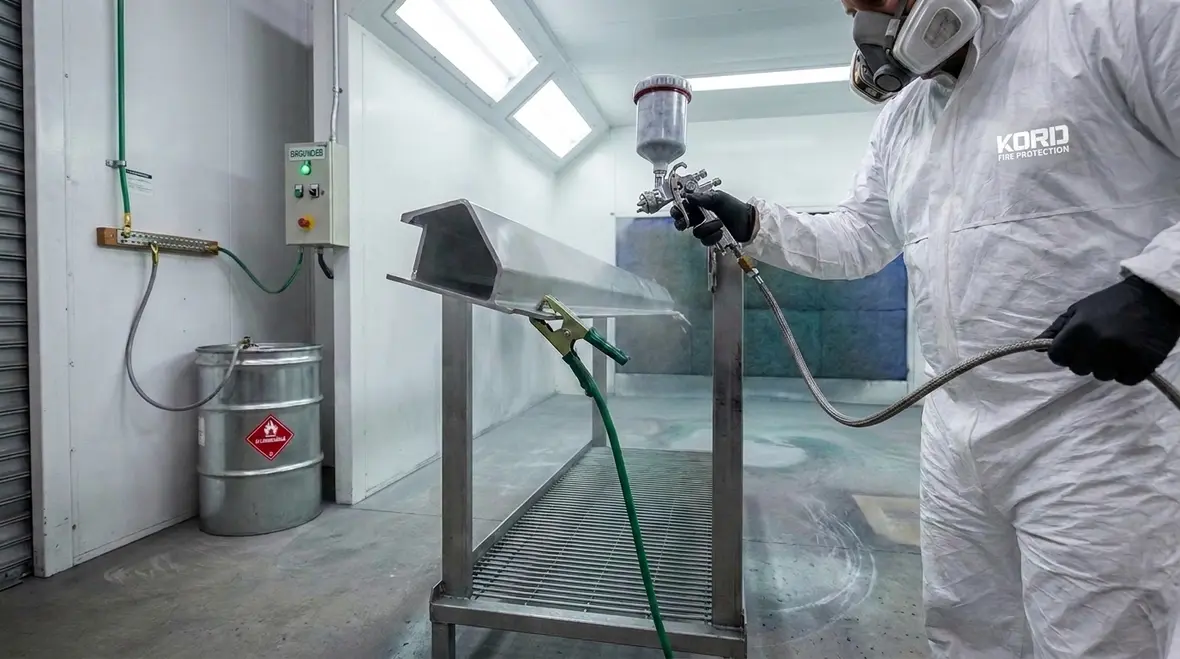
NFPA 33 Section 6.7: Static Electricity Control in Spray Operations
Quick Answer
NFPA 33 Section 6.7 requires spray operations to control static electricity to prevent ignition of flammable vapors and residues. NFPA 33 static electricity spray operation controls focus on bonding, grounding, air flow management, equipment selection, and verified maintenance of control measures.
What NFPA 33 Section 6.7 requires for static control in spray
NFPA 33 addresses fire prevention in spray application of flammable and combustible materials. Section 6.7 concentrates on static electricity hazards that can occur during transfer, atomization, spraying, and overspray handling. In practice, compliance requires facilities to implement control measures that reduce electrostatic charge generation, provide safe pathways for charge dissipation, and verify the system remains effective throughout operating cycles.
In facilities where spray guns, hoses, tanks, pumps, filtration units, or automated spray systems are used, NFPA 33 static electricity spray operation controls typically center on engineered grounding and bonding, controlled spraying conditions, and documentation that the control measures function as installed and as maintained.
Facilities working through broader spray compliance planning can also benefit from reviewing NFPA 33 fire and explosion prevention requirements for spray operations near the start of the process so the static control strategy fits the larger hazard picture.
Where ignition risk actually forms during spray operations
Static electricity becomes a problem when charge accumulation occurs faster than it can dissipate. In spray operations, ignition risk increases when all three elements align: a flammable atmosphere, an ignition source, and an effective ignition pathway. Static can contribute directly or indirectly by energizing flammable mixtures near the point of generation, such as at gun nozzles, within spray enclosures, or during discharge and cleaning processes.
Common high risk points
- Nonconductive or poorly conductive components such as plastic fittings, worn hoses, or degraded conductive liners.
- Improper bonding of mobile equipment like carts, manlifts, or removable spray assemblies.
- Hydraulic or pneumatic transfer configurations where velocities, pressure drops, or turbulence promote charge buildup.
- Overspray and residue accumulation on walls, filters, floors, or ducts, which can alter conductivity and create persistent ignition sources.
- Start up and changeover conditions where equipment is reconfigured but grounding continuity is not verified.
Bonding and grounding: the core mechanics of static control
Bonding and grounding provide a low resistance path for charge dissipation. NFPA 33 static electricity spray operation controls rely on continuous conductive paths that remain intact under normal operating conditions and after routine maintenance.
Practical grounding pathways facilities must validate
- Spray gun to workpiece or conductive support depending on the application method and enclosure design.
- Hose assemblies and couplings with conductive or static dissipative construction that preserve electrical continuity across connections.
- Fluid transfer systems including pumps, strainers, filters, manifolds, and any flexible connections.
- Metal containers and receiving tanks where charge can accumulate during filling, recirculation, or draining.
- Enclosure components such as ducting, spray booth panels, and exhaust plenums when they require bonding due to conductive pathways.
Common failure points that drive noncompliance
- Loose or oxidized bonds at terminals, especially after paint overspray or maintenance cycles.
- Damage to conductive hose elements from kinks, abrasion, chemical attack, or improper storage.
- Unverified continuity after component replacement when a maintenance team substitutes parts without confirming electrical characteristics.
- Paint buildup on bonding surfaces that increases resistance and interrupts the intended dissipation path.
- Inadequate grounding of portable systems that move between workstations in retail and light industrial environments.
Operational controls: keep the spray process within safe electrostatic conditions
Static control does not only involve wiring. Spray operation conditions influence charge generation. Facilities must manage the spray process so that static dissipates as intended and does not form an ignition capable potential near flammable atmospheres.
Key process control practices
- Use approved conductive or static dissipative components for hoses, reels, and connectors.
- Control fluid velocity and turbulence in transfer lines to reduce rapid charge generation.
- Verify that grounding/bonding remains effective during dynamic movement such as hose flexing during spray.
- Manage enclosure and ventilation performance so flammable vapors do not persist near ignition sensitive zones.
- Prevent conductive path contamination by establishing cleaning and residue removal schedules aligned to production.
Maintenance controls that keep compliance “real”
Commercial facilities often lose static protection during maintenance because visual checks do not confirm electrical continuity. A practical compliance program includes documented inspections, testing intervals, and corrective actions. In many environments, Kord Fire Protection supports teams by coordinating inspection testing, providing commissioning assistance, and helping maintain evidence that control measures remain effective between service cycles.
For a deeper look at commercial fire protection program practices and inspection support, see fire suppression inspections.
Inspection, testing, and documentation: how auditors expect proof
NFPA 33 Section 6.7 compliance typically requires more than installing bonding points. Inspectors and internal safety audits expect verification that the system continues to dissipate charge correctly. That expectation translates into a repeatable inspection plan.
What should be included in a static electricity control verification plan
- Inventory of static control components including hoses, reels, connectors, bonding cables, clamps, and conductive fixtures.
- Inspection frequency based on duty cycle, production changes, and cleaning practices.
- Acceptance criteria tied to continuity and connection integrity, using test methods appropriate for the equipment.
- Records that demonstrate when testing occurred, who performed it, what was found, and what was corrected.
- Change control requiring confirmation when components are replaced or engineering changes alter the spray system.
Operational evidence that reduces enforcement risk
Facilities that operate in retail, light industrial, or manufacturing settings benefit from maintaining clear records tied to daily realities: production schedules, changeovers, cleaning cycles, and replacement of consumables. This evidence helps demonstrate that NFPA 33 static electricity spray operation controls remain in place as installed and as maintained.
Kord Fire Protection works with commercial property managers and industrial safety leads to help structure and sustain documentation, testing coordination, and corrective actions that meet typical audit expectations.
Frequently asked questions
Get your spray static control program inspection ready
Commercial spray operations need both installed controls and verified performance over time. Kord Fire Protection can help you assess static bonding and grounding coverage, coordinate testing, and organize compliance documentation for NFPA 33 programs. Request an assessment today so your NFPA 33 static electricity spray operation controls remain reliable through production changes, maintenance cycles, and inspections.

Join Our Newsletter!
Get the latest fire safety tips delivered straight to your inbox From our Newsletter.



