
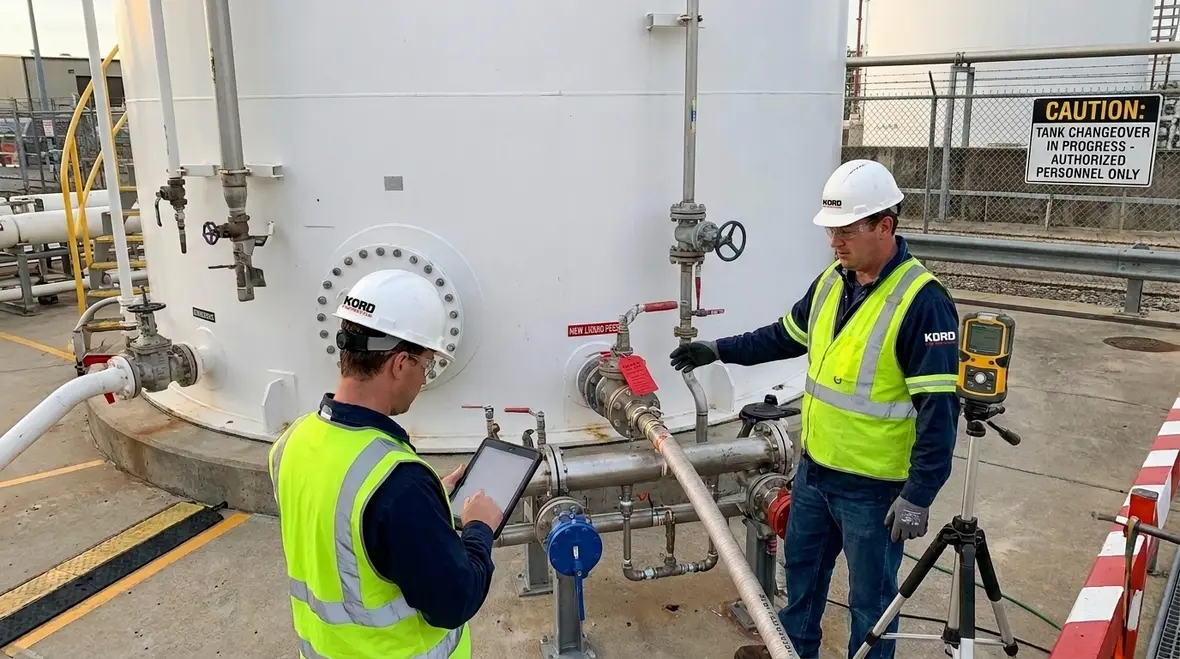
NFPA 30 Section 21.9: Changing the Liquid Stored in a Tank
Quick Answer
NFPA 30 Section 21.9 governs how facilities must plan and control a change in the liquid stored in a tank. It focuses on fire protection, safe handling during product transition, inspection and maintenance readiness, and documenting conditions that can affect tank hazards.
Why NFPA 30 Section 21.9 change of stored liquid matters in real operations
When a commercial or industrial facility switches from one stored liquid to another, the hazard profile can change immediately. The NFPA 30 Section 21.9 change of stored liquid requirements help prevent unintended ignition sources, improper system readiness, and missed inspection gaps that can arise when procedures are rushed or the new product is assumed to be “similar.” For facility managers, contractors, and fire safety professionals, the compliance challenge is not just the tank shell. It includes the entire fire protection and operating system around the tank.
In practice, the transition may require changes to control measures, ventilation assumptions, electrical classification checks, spill control strategy, bonding and grounding practices, and confirmation that alarms, detection, and extinguishing capabilities remain appropriate.
For facilities tightening up compliance planning, it also helps to review fire protection services in Southern California to understand how inspection support, deficiency correction, and system readiness can be coordinated across the full protection scope.
What triggers a “change” under NFPA 30 Section 21.9
Facilities should treat any tank product swap as a compliance event that must be evaluated against NFPA 30 Section 21.9 change of stored liquid. The “change” can include a shift in:
- Flammability characteristics, such as flash point and vapor pressure
- Physical properties that affect vapor generation and stratification
- Chemical reactivity that influences compatibility, residue behavior, and corrosion
- Temperature and handling requirements, including transfer rates and heating systems
- Emissions that impact detection performance and visibility for sensors
Even when the new liquid belongs to the same general category, the facility must avoid “assumption based compliance.” A formal evaluation process supports safe transition planning, documentation, and inspection readiness.
Pre change planning: the compliance checklist that prevents common failures
A strong change plan does not begin at the pump. It starts with hazard and system verification, and it ends with a ready state that inspection teams can audit. Facilities typically face these practical compliance issues during a change of stored liquid:
- Residual contamination and mixed vapor risk: Prior product can remain in lines, sumps, vents, and dead legs. Mixed vapor behavior can differ from the new product alone.
- Vent and breathing configuration mismatch: If the new liquid changes vapor characteristics, venting assumptions can affect pressure, flame arresting effectiveness, and ignition control.
- Inadequate cleaning and confirmation: Cleaning may be performed without verification testing, leaving residues that create unexpected reactivity or odor related complaints that indicate incomplete purge.
- Corrosion and compatibility surprises: The tank coating, seals, and gaskets may not tolerate the new chemical environment over time.
- Fire protection system suitability drift: Detection, shutdown controls, and fire response readiness can become mismatched when the liquid changes.
To reduce risk, facility teams should establish a structured workflow:
- Document the new liquid hazards using current product data, including flash point, vapor pressure, specific gravity, and any reactivity notes.
- Verify tank and system compatibility for coatings, gaskets, seals, transfer hoses, and internal components.
- Review and update operating procedures for transfer, draining, purging, sampling, and emergency response actions.
- Confirm fire protection alignment for detection, alarm set points, monitoring, and water or foam design basis where applicable.
- Plan purge, sampling, and cleaning verification so residues are addressed before operations restart.
During transfer and transition: controlling ignition sources and exposure
The highest risk period is often the operational window when the tank, piping, and vent paths contain a mixture of vapors and possible residues. Compliance efforts should focus on controlling ignition sources and managing vapor accumulation and release pathways.
Bonding, grounding, and static control
During filling and draining, static charge can accumulate at transfer points, especially with hoses, filters, and splash filling. Facilities should ensure bonding and grounding practices match the new liquid properties and transfer conditions. A change of stored liquid should trigger a re-check of:
- Bonding jumpers and continuity verification
- Hose condition and coupling integrity
- Procedural controls for connection order and dwell time before energizing transfer equipment
Vent, flame control, and vapor release management
Vapor control systems can be sensitive to the new liquid’s volatility. Facility teams should confirm that venting devices and flame control components remain appropriate for the changed vapor production conditions. If the facility uses flame arresting components, line routing should avoid bypasses or improperly installed components.
Sampling, inspection access, and monitoring
Sampling ports and inspection openings can introduce ignition risk if they are opened without controls. Facilities should follow a documented sampling and verification process that includes safe atmospheric considerations and mechanical controls. If the facility relies on detection systems, it should confirm that the sensor technology remains suitable based on vapor characteristics and expected concentration ranges.
Post change readiness: inspections, documentation, and maintenance confirmation
NFPA 30 Section 21.9 change of stored liquid compliance should not end when the new product arrives. Post change readiness ensures the facility operates safely under the new conditions and that inspection teams can verify integrity.
Verify operational system performance
After the change, facilities should confirm that control systems support safe operation. This commonly includes:
- Emergency shutdown and interlock functionality checks where applicable
- Alarm and notification system verification
- Visual and functional checks of spill control systems and containment integrity
- Review of abnormal operating data trends during startup
Tank integrity, lining performance, and leak detection
The new liquid may change corrosion rates and how residues interact with tank coatings. Facilities should plan for inspection activities that align with the new product’s behavior, including confirming that leak detection systems, if installed, respond within expected performance criteria.
Update required documentation and training
Commercial, industrial, and retail facilities often fail compliance audits due to documentation gaps rather than mechanical issues. A compliant change package should include:
- Updated hazard communication and operating procedures
- Transfer and purge method revisions
- Inspection and verification records
- Training completion for affected operators and contractors
How Kord Fire Protection supports safer compliance for liquid storage changes
Kord Fire Protection helps commercial and industrial facilities manage the operational and documentation pressure that comes with product changes. The practical goal is to keep your tank systems and fire protection measures aligned with the hazards of the new stored liquid, not just “good enough” for the current production cycle.
For additional context on how NFPA 30 regulates flammable liquids and related controls, facilities can review: How NFPA 30 regulates flammable liquids. Facilities that need broader support with suppression readiness can also review commercial fire suppression systems and services. Kord Fire Protection can assist by coordinating compliance reviews, inspection support, maintenance planning, and readiness checks before and after a stored liquid change, helping teams avoid downtime and audit exposure.
Frequently Asked Questions
Direct next step
Plan the next tank product change with a compliance-ready workflow: hazard evaluation, controlled purge and verification, and fire protection alignment checks. Contact Kord Fire Protection to review your stored liquid change plan, confirm system suitability, and support inspection and maintenance readiness so you stay audit-ready and reduce operational downtime.

Join Our Newsletter!
Get the latest fire safety tips delivered straight to your inbox From our Newsletter.



