
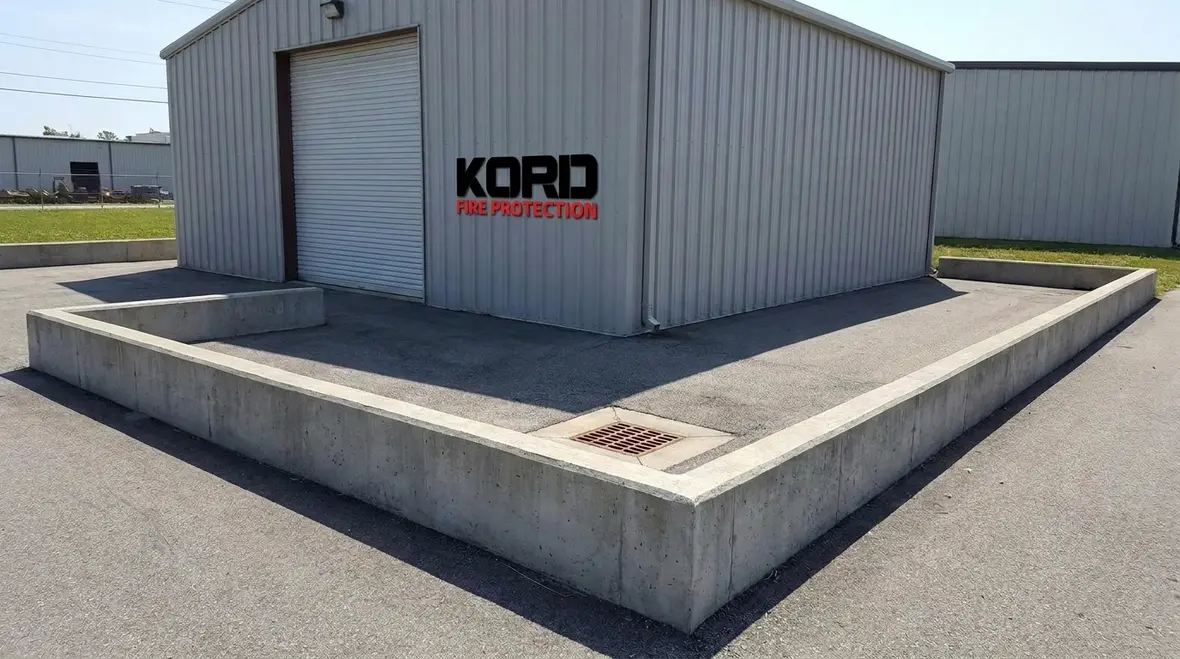
NFPA 30 Section 13.13 Spill Control in Detached Buildings: Compliance, Design, and Maintenance
Quick Answer
NFPA 30 Section 13.13 requires effective spill control for detached buildings storing or handling flammable liquids. The rule focuses on containing spills, limiting spread, and maintaining reliable drainage and diversion features. Facilities meet compliance by designing, inspecting, and maintaining barriers and response readiness.
For broader flammable liquid compliance planning, it helps to connect spill control requirements with the bigger code picture in this NFPA 30 flammable and combustible liquids overview. That context makes Section 13.13 feel less like an isolated rule and more like part of a system that is trying very hard to stop bad days from becoming memorable ones.
What NFPA 30 Section 13.13 covers for detached buildings
NFPA 30 Section 13.13 spill control detached buildings targets one core outcome: when a flammable liquid leak occurs, the facility must prevent hazardous migration beyond the intended area. Compliance planning typically starts with clarifying where the detached building handles liquid (transfer points, storage cabinets, process areas, and dispensing locations) and identifying how spills could leave the building footprint.
For commercial, industrial, and retail operators, the most frequent compliance breakdowns happen after installation. Barriers corrode, drains get reconfigured, sumps get blocked, and maintenance teams do not treat spill control components as safety critical. NFPA 30 Section 13.13 sets the expectations that spill control measures remain functional over time.
How spill control systems work in practice (and what inspectors look for)
Spill control strategies generally rely on a combination of containment, diversion, and controlled drainage. In detached buildings, these measures must also address external conditions such as slope, surface drainage, and landscaping that can channel spilled liquid away from containment.
1) Secondary containment and barrier performance
Spill control typically uses physical containment such as curbs, dikes, retaining walls, or other barriers around tanks and liquid-handling equipment. Effective barriers prevent spilled liquid from reaching drains, soil, stormwater systems, or adjacent structures.
- Common failure point: barrier coatings degrade or crack, allowing under seepage.
- Common failure point: penetrations through curbs or walls are not sealed after repairs or equipment changes.
- Common failure point: stored materials block the intended spill path, causing pooling where it should drain to a controlled point.
2) Drainage control and segregation
Drainage arrangements must prevent spilled liquid from entering uncontrolled collection systems. This typically means isolating drains serving the spill area and ensuring liquids route to an appropriate controlled location for removal.
- Valve alignment issues: drain valves left in the wrong position after routine use.
- Blocked or undersized sumps: sumps filled by debris or prior maintenance residues.
- Misrouted discharge: contractors reconnecting piping during renovations without updating the spill control intent.
3) Impairment controls and operational control
Spill control features should not be treated as optional infrastructure. Operational rules need to ensure barriers remain accessible and drainage control devices are verified. In commercial environments, typical operational control includes ensuring housekeeping prevents pooled residues, and verifying that transfer operations do not bypass containment.
Design and implementation: building the compliance baseline
Facilities should establish a repeatable baseline that shows how the spill control system limits release consequences for detached buildings. Strong compliance documentation reduces the time and cost of corrective actions.
Risk mapping of spill points inside the detached building
Start with a practical inventory of credible release sources: hose connections, pump seals, tank overfill scenarios, manifold leak points, and connections used during delivery. Then link each source to the containment and drainage response sequence.
Surface and slope management to prevent uncontrolled migration
Site and floor grades influence where a spill flows. Even when curbs or dikes exist, a poor grade can cause liquid to bypass barriers through edges, joints, or unexpected low points.
Commercial facilities often discover this after weather or after modifications. Kord Fire Protection supports ongoing site verification through inspection routines that focus on real-world performance, not just installed drawings.
Equipment compatibility and corrosion resistance
Spill control often relies on materials such as coatings, membranes, and sealants. Flammable liquid compatibility matters. Over time, chemical exposure and cleaning agents can reduce barrier integrity.
Operators should confirm that barrier materials, pipe sealants, and drain hardware are compatible with stored liquids and typical spill cleanup products. This prevents “passes on inspection day” followed by early deterioration.
Inspection, testing, and maintenance schedules that prevent drift
NFPA 30 Section 13.13 spill control detached buildings compliance is operational. The system has to perform during the next spill, not just at commissioning. A disciplined inspection and maintenance schedule protects the intent of the standard.
What inspections should confirm during routine checks
- Barrier integrity: cracks, deformation, corrosion, coating loss, missing gaskets, and sealed penetrations.
- Drain control status: correct valve positions, proper closure behavior, and unobstructed flow paths.
- Collection readiness: sump condition, cleanouts, and sufficient capacity for the credible release scenario.
- Housekeeping control: removal of debris that can block containment drains or trap liquid in unintended areas.
Functional testing mindset for spill control components
Where systems include drain isolation valves, diversion hardware, or controlled discharge arrangements, testing should verify function after maintenance activity and after any site work. The most common drift comes from routine plumbing repairs, landscaping changes, and equipment replacement that does not follow the original spill control design.
Maintenance documentation that withstands audits
Audits focus on evidence of ongoing maintenance, not just an initial installation record. Facilities should keep inspection logs, deficiency reports, corrective actions, and updated as-built drawings reflecting changes that affect spill paths.
For an overview of how NFPA 30 influences flammable liquid compliance planning, see how NFPA 30 regulates flammable liquids. Using this framework helps operators connect spill control measures to the broader flammable liquid management requirements.
Common real-world compliance problems in detached buildings
Detached buildings often receive less day-to-day attention than main facilities. That difference increases risk for spill control failure.
1) External migration pathways
Spills can travel along exterior seams, driveway edges, and landscaping channels. Inspect for gaps at expansion joints, compromised sealant lines, and drainage swales that connect to stormwater.
2) Drain modifications after renovation
Renovations frequently involve trenching, piping swaps, or adding new drains. Without formal review of spill control intent, the system can become noncompliant even if the original barriers remain.
3) Sump neglect and “out of sight” accumulation
Sumps can accumulate sediment, rags, and debris from routine operations. When a real spill occurs, the control system can fail because the collection point cannot accept liquid.
4) Barriers blocked by stored goods
Storage around detached building process areas can block flow paths and create pooling hazards. Operational controls must support both safe storage and spill control intent.
Why ongoing partner support matters (Kord Fire Protection)
Detaching a building does not detach the requirement. Facilities still need reliable spill control performance, and that requires a structured inspection and maintenance program. Kord Fire Protection works with commercial operators to keep spill control measures aligned with NFPA expectations through practical field verification, documentation, and maintenance support.
For more about Kord Fire Protection’s broader inspection and maintenance support, visit fire suppression systems services. With the right partner, operators reduce the time between identifying deficiencies and restoring the system to its intended function.
Frequently Asked Questions
Next step: secure your spill control performance
Detached buildings can meet NFPA 30 Section 13.13 spill control detached buildings requirements reliably, but only with disciplined inspection and maintenance. Kord Fire Protection can help validate barrier integrity, drainage control, and collection readiness, and maintain audit-ready documentation. Contact Kord Fire Protection to schedule a compliance-focused review and create a maintenance plan aligned to how your facility actually operates.

Join Our Newsletter!
Get the latest fire safety tips delivered straight to your inbox From our Newsletter.



