
NFPA 13R Section 9.5: All Acceptable Types of Water Supply Explained
Quick Answer
NFPA 13R Section 9.5 defines which water supplies can support a residential sprinkler system, including stored water and pumped supplies. For facilities with dedicated fire pumps and storage tanks, compliance depends on acceptance, sizing, testing, and maintaining reliable delivery during demand.
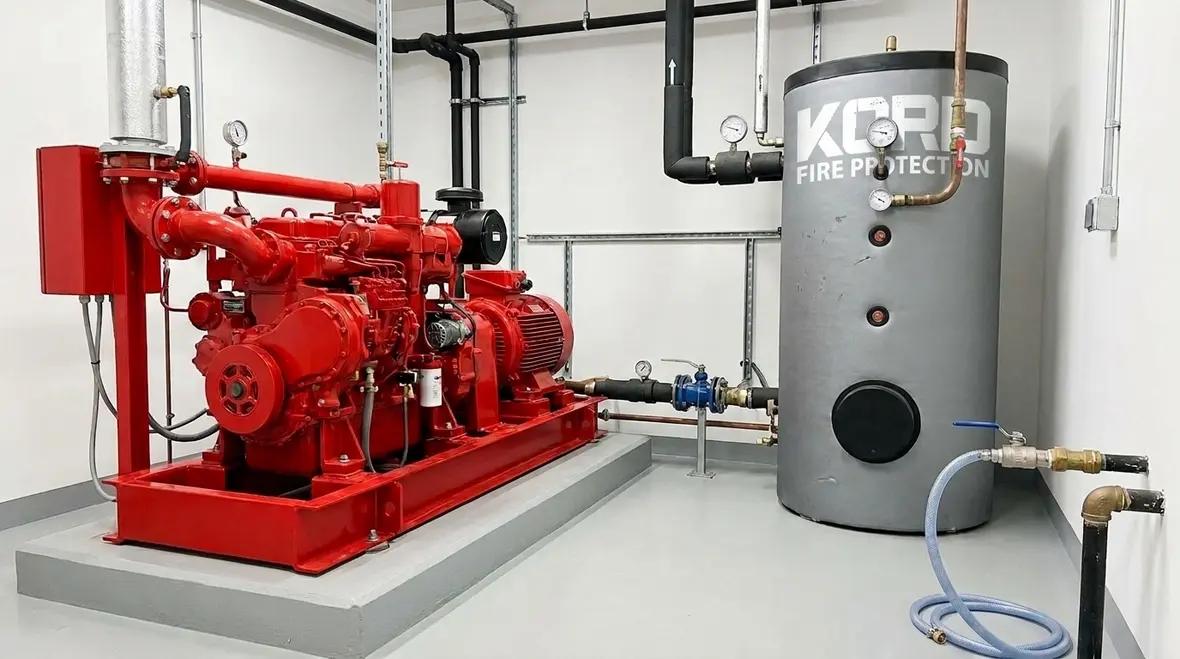
In practice, teams often connect NFPA 13R 9.5 types of water supplies to the real equipment that keeps sprinklers supplied during a fire, including the NFPA 13R 9.5 types of water supplies storage tank fire pump configuration used by many commercial and industrial sites.
Why NFPA 13R 9.5 Water Supply Acceptance Matters
NFPA 13R focuses on ensuring an adequate and dependable water supply reaches sprinklers under fire flow conditions. Section 9.5 is not just a list of acceptable sources. It establishes the acceptance concept that the system designer and installer must demonstrate the supply can meet system demand without unacceptable delay or failure.
Commercial and mixed use facilities face a common compliance challenge. Water supplies that worked for one project phase or one occupancy do not always align with current hazard changes, system hydraulics, or pump and tank maintenance realities. Local authority having jurisdiction (AHJ) scrutiny often increases where buildings mix residential units with commercial spaces, or where water mains are shared with other utilities.
Operational readiness also matters. Even if a water source is “acceptable on paper,” failures typically show up as pump control faults, inadequate discharge pressure, unreliable tank levels, blocked strainers, undersized suction piping, or testing gaps that hide problems until a real flow test is performed.
For a practical compliance roadmap, Kord Fire Protection teams often begin with a full system and water supply review coordinated with the sprinkler engineer and the facility’s fire protection maintenance plan. Near the start of that process, many facilities also benefit from reviewing fire sprinkler system service options to make sure inspections, maintenance, and repair support line up with the system’s real operating conditions. For foundational context on installation and system expectations, see this overview: NFPA 13 overview for automatic fire sprinkler system installation.
What NFPA 13R Section 9.5 Requires: The “All Acceptable Types” Principle
NFPA 13R 9.5 centers on acceptable water supplies that can provide the required flow and pressure to sprinklers. While the exact acceptable category depends on the system design and the edition being enforced by the AHJ, the engineering intent is consistent:
- The supply must be capable of delivering required fire flow within expected time frames.
- Stored water and pump supplies must remain reliable through correct sizing, operable valves, and stable water levels.
- Utilities and pumped systems must pass inspection and ongoing testing that verifies real performance, not assumptions.
For commercial, industrial, and retail operations, the main risk is variability. Tank levels change, pump wear increases, suction conditions degrade with time, and control circuits suffer from nuisance faults or incomplete preventive maintenance. NFPA 13R 9.5 acceptance provides the baseline, but the facility still must keep the supply dependable year round.
Municipal Water Supply: When a Main Is Used as the Water Source
How acceptance typically works
When a municipal main provides the water supply, the project typically relies on available hydrant or main performance data and the system’s hydraulic calculations. The AHJ may require documentation that the supply can meet the calculated demand, including adequate pressure during fire flow.
Common operational and inspection failure points
- Pressure drop during sustained flow due to aging mains or nearby concurrent use.
- Valve mismanagement including partially closed gate valves, locked valves with incorrect keys, or inoperable check valves.
- Strainers or screens not maintained where required, causing reduced effective flow to the fire system components.
Facility teams often underestimate how quickly a “good” static reading can become inadequate under flow conditions. Kord Fire Protection supports compliance through coordinated inspections and documented maintenance that verifies valves, checks, and system interface points remain in the correct operational state.
Stored Water Supplies: Tanks as the Backbone for Pumped Fire Protection
Why storage tanks remain critical
Where municipal supply performance cannot be relied upon, stored water provides a dependable reserve. Tanks introduce operational requirements that do not exist with a direct main. The tank must maintain sufficient water level and quality, and the tank delivery piping must remain ready to supply the pump and system during demand.
Key tank and system interface controls
- Tank water level monitoring must be accurate and protected from tampering or sensor drift.
- Fill and make up reliability must ensure tank refilling after demand and after scheduled operations.
- Valves and suction condition must support flow without air entrainment or obstruction.
- Freeze protection and environmental protection must prevent failure of piping, valves, and instruments in harsh climates.
In many commercial designs, stored water works in combination with fire pumps. This is where the NFPA 13R 9.5 types of water supplies storage tank fire pump configuration becomes operationally decisive. When properly designed and maintained, it allows sprinklers to receive water even if the municipal main cannot provide adequate flow or pressure.
Fire Pumps and the Storage Tank Fire Pump Setup: What Must Perform
How the pump system actually delivers
A storage tank fire pump system typically includes a pump package, suction piping from the tank, discharge piping to the sprinkler riser, and control devices that start pumps and maintain required pressure during fire flow. The pump controls must respond correctly to system demand signals or prescribed starting conditions.
Operational procedures that prevent failures
- Verification of pump starting sequence with documented functional testing.
- Ensuring discharge pressure stability as flow increases, not just at a single test point.
- Confirming suction conditions including proper priming where required, stable water level in the tank, and unobstructed strainers.
- Maintaining controller integrity including alarms, status indicators, and transfer logic.
One frequent “hidden” issue is suction system performance degradation. Bio growth, sediment, and scale buildup can reduce effective flow and contribute to cavitation, overheating, or diminished delivery pressure. Even when the pump runs, it may not maintain the required discharge characteristics under system demand.
For additional pump technical context and failure mode awareness, teams often reference guidance from this fire pump acceptance testing guide.
Kord Fire Protection emphasizes performance verification through ongoing inspection and maintenance that targets the real failure points: controls reliability, suction cleanliness, valve alignment, and pressure and flow confirmation during testing.
Documentation, Testing, and Maintenance: Keeping NFPA 13R 9.5 Compliance Real
NFPA 13R 9.5 is only useful if the facility can demonstrate ongoing readiness. For commercial and industrial operations, AHJs and insurance carriers commonly expect a structured maintenance program that includes both scheduled inspections and documented test results.
Practical compliance artifacts facilities should maintain
- As built and updated drawings for the water supply layout, pump configuration, tank connection details, and control wiring diagrams.
- Testing records for water supply tests, pump acceptance style tests when required, and functional verification of control sequences.
- Valve and control logs showing that critical valves remain in correct positions and controls operate as designed.
- Maintenance history for suction strainers, pump impellers, seals, controllers, and any tank related components.
Maintenance challenges common in occupied buildings
Many facilities operate continuously, which drives partial testing schedules or equipment lockouts that inadvertently defer critical checks. This increases risk when demand occurs at an unfavorable time such as during unusual seasonal conditions, construction disruptions, or after a maintenance contractor changes lock systems and valve labeling.
Kord Fire Protection supports compliance with disciplined documentation practices and field procedures that align with operational realities in occupied commercial and retail environments.
How to Select the Correct Water Supply Path for Your Project
Design teams and facilities should align water supply selection with the building’s actual operating environment. The best selection is not always the simplest connection. It depends on reliable delivery, local water availability, pumping and storage feasibility, and maintainability.
When selecting between municipal supply, stored water, or a combination with a storage tank fire pump arrangement, decision makers should ask:
- Can the available water supply sustain required flow without unacceptable pressure loss?
- Does the pump and suction system have the right configuration to avoid cavitation and performance drop?
- Will tank levels and fill operations remain reliable across seasons and operating schedules?
- Can the facility implement testing and maintenance without creating operational risk?
This approach helps eliminate late AHJ corrections. It also ensures the final system maintains hydraulic performance over time, not just at commissioning.
Frequently Asked Questions
Conclusion and Call to Action
NFPA 13R 9.5 acceptance hinges on water supply capability and sustained operational reliability. For sites using a storage tank fire pump arrangement, compliance depends on correct hydraulics, dependable tank and suction conditions, and verified pump control performance through real testing. Kord Fire Protection can help your team validate the water supply design, confirm readiness, and maintain ongoing inspection and maintenance documentation. Contact Kord Fire Protection to schedule a compliance and performance review.

Join Our Newsletter!
Get the latest fire safety tips delivered straight to your inbox From our Newsletter.



