NFPA 13D Section 9.2: Antifreeze Sprinkler System Rules for Residential Applications
Quick Answer
NFPA 13D Section 9.2 sets the requirements for installing antifreeze sprinkler systems in residential occupancies. It focuses on when antifreeze is allowed, system design considerations, listing and compatibility, and ongoing maintenance to prevent corrosion, leakage, and impaired discharge performance.
What NFPA 13D Section 9.2 covers for antifreeze systems
NFPA 13D Section 9.2 antifreeze sprinkler system rules residential applications NFPA 13D address a narrow but critical scenario: protecting sprinklers and water filled piping where freezing temperatures threaten system integrity. For commercial, industrial, and retail facilities, the same design intent frequently appears in residential style systems used for remote buildings, tenant spaces, or annex structures where freeze risk exists.
In practice, antifreeze systems introduce additional complexity. Technicians must manage solution concentration, ensure compatibility with sprinkler components and valve internals, and verify that the system remains capable of delivering the designed discharge pattern when needed. For an installation baseline, professionals should also review the broader installation expectations summarized in this NFPA 13 overview for automatic sprinkler system installation. Teams that also need ongoing field support can pair that guidance with fire sprinkler system service for inspections, maintenance, and repair coordination.
When antifreeze is permitted and why it matters
Section 9.2 applies when normal water supply protection cannot reliably prevent freezing. The compliance challenge comes from the fact that antifreeze systems are not simply “water with additive.” They require proper system arrangement, listed components, and strict concentration control over the life of the building.
Common real world triggers include:
- Unheated or partially heated residential structures where pipe runs extend into attics, crawlspaces, exterior wall cavities, garages, or unconditioned basements.
- Service spaces with intermittent heat, such as seasonal use or tenant turnover related outages.
- Long branch lines and hidden piping where freeze events may occur unnoticed until inspection time.
- Locations where electrical heat tracing is not practical or not compliant with the system’s risk profile.
For commercial facility standards, the key operational point is continuity. If a freeze event occurs while the system is supposed to be protected by antifreeze, the investigation often expands beyond the piping. Inspectors evaluate sprinkler exposure history, valve body condition, internal corrosion, and whether there is any evidence of partial freezing and damage that can affect future performance.
Design and component rules that drive successful compliance
Listing, compatibility, and system integrity
Section 9.2 requirements center on using listed or approved antifreeze solutions and ensuring the system is compatible with the specific piping materials, sprinkler components, and system valves. Antifreeze type and concentration influence viscosity, corrosion potential, and heat transfer characteristics. If the wrong solution or wrong concentration is used, discharge performance and long term valve operation can degrade.
From a technician’s perspective, the most avoidable failure points include mixing brands, using non permitted antifreeze, or topping off with the wrong product during repairs. Commercial and industrial sites often face this risk when multiple contractors handle plumbing and fire protection over time. Kord Fire Protection supports ongoing compliance by coordinating maintenance documentation and ensuring service work aligns with the system’s listed configuration.
Concentration control as a life safety requirement
Antifreeze systems depend on maintaining concentration at or above the minimum required for the design low temperature. Concentration can drift due to:
- Repeated drain and refill events during maintenance.
- Leaks in valves, unions, or sprinkler connections, followed by replacement with partial refilling.
- Improper mixing procedures during recharge.
Operationally, a concentration verification method must be part of the inspection program. If concentration verification is not documented, the system becomes difficult to defend during impairment checks and insurance reviews.
Air, pressure, and operating characteristics
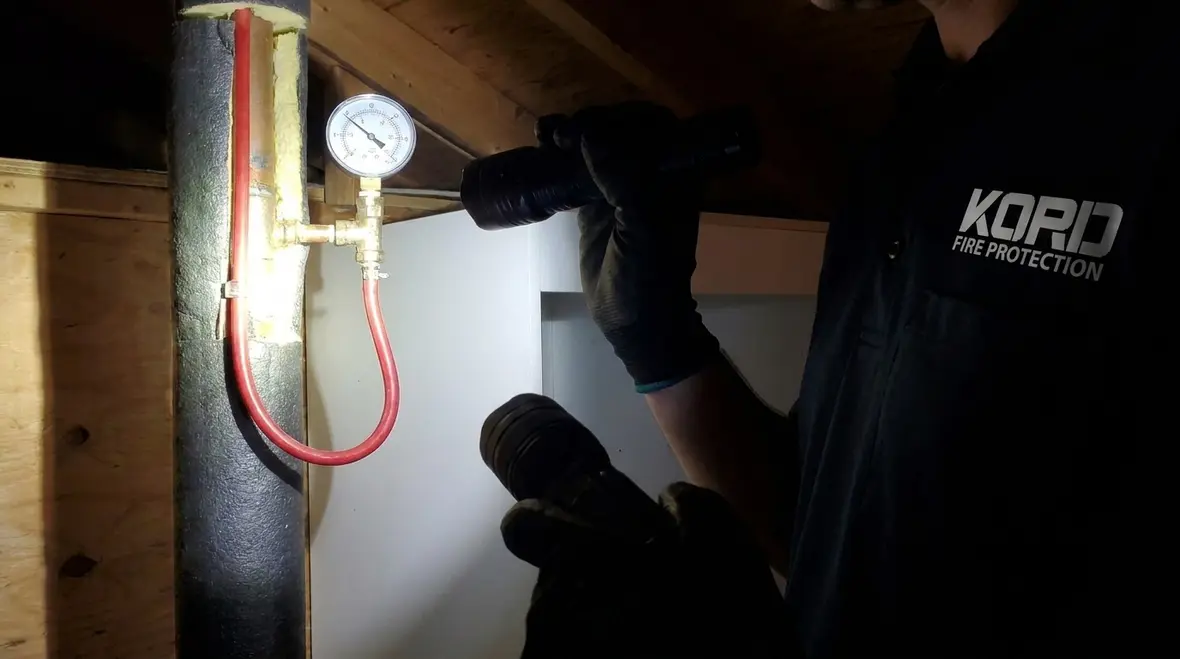
Even when Section 9.2 antifreeze rules focus on the solution, technicians still must maintain correct system pressure conditions and ensure that the system arrangement supports reliable operation. Air entrainment, valve sensitivity, and thermal expansion can complicate water delivery at the time of fire. Inspections should confirm that no unauthorized modifications exist and that gauges and supervisory devices function properly.
Inspection, testing, and impairment management in antifreeze systems
Antifreeze systems add inspection depth because the “standby life safety” depends on more than obstruction free sprinklers. Inspectors and service organizations must evaluate the system’s readiness against freezing conditions and identify loss of antifreeze performance indicators early.
Inspection items that commonly get missed
- Antifreeze concentration verification: Confirm the correct low temperature protection level and document results.
- Valve condition and leakage checks: Inspect for seepage at unions, check assemblies, drain connections, and fittings.
- Corrosion and residue evidence: Look for scale, discoloration, or sludge that can indicate chemistry drift or incompatibility.
- Sprinkler exposure and physical integrity: Verify sprinklers are not damaged and remain properly protected from the environment.
- Proper signage and system labeling: Confirm the system identification and antifreeze type documentation exists at the control valve or system location.
Testing procedures that protect performance
Any testing that drains the system can change concentration unless handled correctly. Service work should follow a controlled recharge procedure using the correct antifreeze formulation and mixing method. Technicians also need to consider that repeated discharge may affect internal valve components and can create new leak points around disturbed fittings.
For commercial, industrial, and retail facilities, the impairment and return to service process becomes a compliance hinge. Kord Fire Protection helps coordinate impairment documentation, validates system restoration, and ensures the antifreeze solution parameters match the required design criteria before the system is declared back in service.
Common failure points that create NFPA 13D compliance risk
Most antifreeze system problems are not dramatic. They appear as slow performance degradation that fails during a freeze or during the first real demand event. The following are recurring issues that increase inspection findings, service call frequency, and liability exposure.
Wrong solution or wrong concentration
Using an antifreeze product that is not compatible with the system design or failing to verify concentration after maintenance is a frequent root cause. This risk grows in multi trade environments where plumbing, HVAC, and fire protection contractors overlap.
Undocumented modifications
Changing valve components, adding drains, altering piping materials, or swapping fittings without documented approval can impact corrosion behavior and valve reliability. Even small substitutions can create long term chemistry issues.
Slow leaks and unnoticed refilling
A minor leak in a hidden section can lead to partial water addition. The system may remain operational for long periods while concentration silently drops below required freeze protection.
Hidden pipe runs and inaccessible areas
Antifreeze systems often run where inspections are difficult, such as ceiling voids or exterior wall cavities. Without a robust inspection plan and clear access provisions, technicians may miss a developing leak or damaged sprinkler.
When facilities require stronger governance, commercial facility teams usually standardize maintenance frequency and reporting. For organizations building that discipline, Kord Fire Protection functions as a continuity partner across installation records, testing schedules, and documentation for ongoing compliance.
How commercial facilities apply these residential antifreeze principles
NFPA 13D is aimed at residential related applications, but commercial environments often inherit the same freeze related operational hazards. Warehouses with residential style annex spaces, retail outbuildings, and industrial support buildings can all require freeze protection decisions that mirror the antifreeze logic in Section 9.2.
To keep compliance strong across a mixed occupancy portfolio, facilities typically implement the following operational practices:
- Centralized system documentation: Keep antifreeze type, concentration targets, and maintenance history accessible.
- Contractor control: Require that only approved fire protection technicians perform antifreeze maintenance and recharging.
- Seasonal verification emphasis: Increase concentration checks before expected cold snaps.
- Impairment governance: Treat drainage and refilling as controlled impairment with return to service verification.
- Freeze risk mapping: Identify unheated spaces, exterior penetrations, and concealed pipe routes at the time of annual inspections.
If facility managers need a broader installation reference to support design review or contractor onboarding, the Kord Fire Protection team can also align expectations to NFPA 13 installation best practices using this resource: NFPA 13 overview for automatic fire sprinkler system installation.
Frequently Asked Questions
Conclusion and call to action
NFPA 13D Section 9.2 antifreeze sprinkler system rules residential applications NFPA 13D demand more than correct installation. They require disciplined maintenance, concentration verification, and impairment controlled service work to keep the system capable of performing under freeze conditions. Kord Fire Protection helps commercial facilities and multi contractor sites maintain defensible records, verify antifreeze parameters, and reduce inspection and failure risk. Schedule an antifreeze system review and maintenance plan today so compliance stays consistent across seasons.

Join Our Newsletter!
Get the latest fire safety tips delivered straight to your inbox From our Newsletter.