
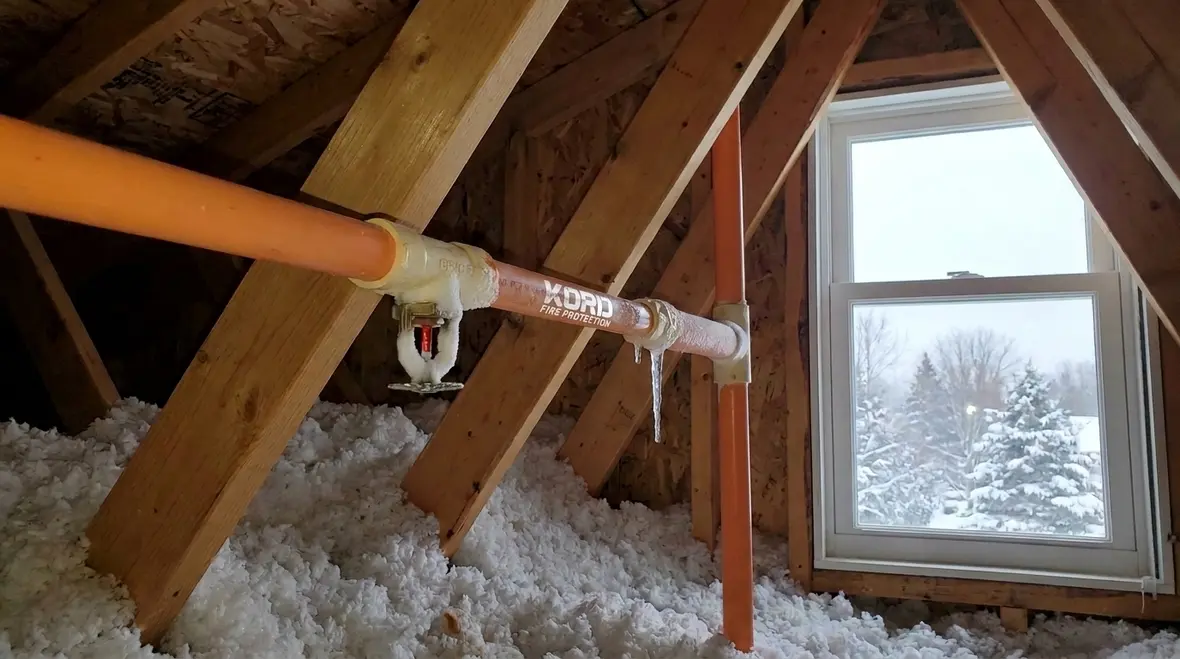
NFPA 13D Section 9.1: Wet Pipe vs Dry Pipe Sprinkler Systems for Cold Climate Homes
Quick Answer
NFPA 13D Section 9.1 addresses how to prevent freeze damage in residential sprinkler systems. In cold climates, wet pipe systems work when water supply and ambient temperatures stay above freezing. Dry pipe systems protect where freezing conditions cannot be avoided, but require additional maintenance and testing.
What NFPA 13D Section 9.1 is actually trying to solve in cold climates
NFPA 13D Section 9.1 focuses on one practical hazard: water freezing inside sprinkler piping. When water freezes, sprinkler fittings and piping can crack, joints can fail, and system operation can become unreliable. For NFPA 13D Section 9.1 wet pipe dry pipe sprinkler systems cold climate homes residential, the core compliance question becomes: can the system remain above freezing for the expected design conditions, or must the system be configured to stay dry until activation?
In the real world, decisions rarely hinge only on weather statistics. They hinge on construction details, occupancy patterns, thermostat settings, insulation levels, and how quickly the space cools during power outages or long absences. Those factors also shape inspection planning, service response time, and the frequency of preventive maintenance.
If you are comparing system readiness and service planning, Kord Fire Protection’s fire sprinkler services and repair support offers a useful practical reference near the start of that conversation. ([kordfire.com](https://kordfire.com/fire-sprinkler-service/?utm_source=openai))
When a wet pipe system meets Section 9.1: water stays in the pipes
A wet pipe sprinkler system keeps sprinkler piping filled with pressurized water during normal conditions. Section 9.1 conditions the use of wet pipe where freezing is not expected. The system’s reliability comes from a simple operating principle: when heat activates a sprinkler, water discharges immediately because the pipe network is already charged.
Operational behavior and what to check
- Static water pressure and flow stability: Wet systems rely on correct supply pressure and demand calculations. Any recurring pressure dips reduce discharge performance and can affect alarm operation if connected to monitoring equipment.
- Pipe insulation and protection at transitions: Cold spots occur at exterior walls, stub outs, attic access points, and areas near unheated spaces. Insulation and listed heat loss strategies can keep pipe temperatures above freezing when designed correctly.
- Valves and drain points: Many failure patterns begin at low point drains, alarm valve accessories, and partially obstructed drains. These issues can worsen during winter service activity.
Common failure points in cold homes (even with wet pipe)
Wet pipe systems generally fail in cold climates due to misassumptions about temperature control or maintenance neglect. Examples include:
- Unheated zones: Garages, crawlspaces, and attic piping sections sometimes receive less conditioned air than expected.
- Interrupted heating: A malfunctioning furnace, tripped breaker, or extended power loss can drop temperatures below freezing faster than expected.
- Delayed detection: Leaks or damaged insulation can go unnoticed until visible water stains appear, by which time freeze damage may already have occurred.
For a practical system installation baseline, refer to Kord Fire Protection’s overview of NFPA 13 automatic sprinkler system installation fundamentals. While that reference covers NFPA 13, it reinforces core installation and commissioning practices that influence long term performance of residential sprinkler piping layouts. ([kordfire.com](https://kordfire.com/nfpa-13-overview-automatic-fire-sprinkler-system-installation/?utm_source=openai))
When a dry pipe system is required: piping stays dry until heat opens a sprinkler
Dry pipe systems keep sprinkler piping uncharged with water during normal conditions. The pipe network contains pressurized air or nitrogen. When a sprinkler operates, the air pressure drops and a valve releases water into the piping to enable discharge.
How the mechanism works and why it matters for maintenance
Dry pipe systems include a control valve, often called a dry pipe valve, air supply equipment, and a water supply that activates after sprinkler operation. This architecture adds components that must function reliably during cold weather.
- Air pressure monitoring: The system depends on correct supervisory air pressure. If air regulators drift or compressors fail, time to readiness can increase or system operation can become abnormal.
- Trip timing and reaction time: The release timing affects water delivery. Valve maintenance and internal inspection procedures determine whether the system meets required operational expectations.
- Valve seating and water leakage control: Minor valve leaks can become major in winter, especially if water collects where it can refreeze.
Common failure points in cold homes with dry pipe
- Air supply impairment: Loss of air due to regulator failure, moisture accumulation, or compressor problems can leave the system out of service.
- Water condensation in components: Cold temperature cycles can cause condensation inside system housings, affecting sensing devices and valve internal components.
- Improper maintenance intervals: Dry systems typically demand more frequent functional checks than wet systems due to more moving parts and supervisory interfaces.
For broader industry reference on fire pump and water supply reliability considerations that affect system readiness in cold weather environments, see FirePumps.org. While dry pipe is not a pump system itself, dependable water supply performance is still essential when the valve releases water.
So which one should a home use? A practical decision framework for cold climate residential
Section 9.1 ultimately expects designers and installers to justify that the selected system type can prevent freeze damage under credible conditions. A sound decision framework looks beyond the label “cold climate” and evaluates how freezing could occur inside the structure.
Key inputs that drive wet versus dry selection
- Design minimum temperature and exposure time: Determine whether the system could experience prolonged below freezing conditions, not just short dips.
- Mechanical room and water supply location: If valves, meters, or risers sit in unheated areas, freeze risk increases even when the dwelling is heated.
- Pipe routing through unconditioned spaces: Attics, crawlspaces, exterior wall bays, and stairwells can create localized freeze points.
- Occupancy behavior and outage scenarios: Extended vacations, generator usage, and furnace service reliability should be evaluated as credible operational realities.
Installation and workmanship considerations that create compliance risk
Even when the intent is correct, poor workmanship can defeat the protective strategy. Common issues include uninsulated pipe segments, missing hangers that shift pipe location, improperly sealed penetrations that allow cold air intrusion, and valve accessories installed without ensuring clear inspection access.
This is where a commercial scale mindset still helps residential compliance. Commercial, industrial, and retail facilities often treat sprinkler readiness as a life safety system that must remain consistent despite seasonal variation. Applying that discipline to cold climate homes reduces the risk of freeze related failure and improves inspection outcomes.
Inspection, testing, and maintenance: where systems usually fail operationally
NFPA 13D systems still require ongoing inspection, testing, and maintenance. The maintenance load differs between wet and dry systems, and cold weather changes how quickly conditions degrade.
Wet pipe system maintenance priorities
- Supervisory features check: Ensure valve supervisory signals function correctly and that tamper seals remain intact.
- Clearance around vulnerable runs: Verify insulation condition and look for damage near exterior wall runs and ceiling transitions.
- Operational readiness during seasonal service: Confirm drains are accessible and that winter service does not introduce blockages or improper reconfiguration.
Dry pipe system maintenance priorities
- Air pressure and integrity checks: Confirm air supply equipment performs within specified supervisory ranges and that moisture control is effective.
- Valve maintenance and internal inspection planning: Dry valves require careful functional testing and periodic service to prevent sticking, improper release, or excessive leakage.
- Accelerating freeze related degradation: Inspect components for condensation, corrosion, and water accumulation points that can refreeze after discharge testing.
Kord Fire Protection supports ongoing compliance through structured testing and maintenance planning, documentation, and readiness verification. That service approach aligns with how commercial, industrial, and retail facilities manage code compliance as an operational process, not a one time project. When homes include cold climate hazards, the same discipline improves system reliability and reduces downtime associated with repeat troubleshooting. ([kordfire.com](https://kordfire.com/fire-sprinkler-service/?utm_source=openai))
Where commercial experience transfers to residential cold climate compliance
Commercial facilities regularly encounter seasonal temperature swings, long facility downtimes, and complex supervisory interfaces. Those realities create a repeatable lesson: sprinkler system readiness depends on more than pipe type. It depends on how the entire system behaves during off nominal conditions.
That includes:
- Documented commissioning: Verify pressures, valve positions, and supervisory signals at handover.
- Seasonal readiness checks: Confirm that insulation, unheated spaces, and protective layouts match design intent.
- Maintenance access planning: Ensure technicians can inspect and test valves and control devices without damaging finishes or missing critical components.
To strengthen installation and commissioning understanding, link your design and inspection team to Kord Fire Protection’s NFPA 13 overview of automatic sprinkler system installation. Even though NFPA 13D governs many residential occupancies, the installation quality principles and acceptance mindset remain highly relevant. ([kordfire.com](https://kordfire.com/nfpa-13-overview-automatic-fire-sprinkler-system-installation/?utm_source=openai))
Frequently Asked Questions
Next step: confirm your freeze risk and maintenance plan before winter
Choosing between wet pipe and dry pipe under NFPA 13D Section 9.1 should follow a documented freeze risk assessment and a clear testing and maintenance schedule. Engage Kord Fire Protection to review system layout, supervisory readiness, and cold climate vulnerabilities, then establish a seasonal inspection plan that keeps the system operational when temperatures drop. Call today to coordinate a compliance focused evaluation for your residential sprinkler system. ([kordfire.com](https://kordfire.com/fire-sprinkler-service/?utm_source=openai))

Join Our Newsletter!
Get the latest fire safety tips delivered straight to your inbox From our Newsletter.



