NFPA 1 Section 15.5 FDSDCE Independent Review
Quick Answer: NFPA 1 Section 15.5 requires a careful, independent look at fire service access and design issues before a project moves ahead. A proper FDSDCE independent review helps confirm compliance, reduce delays, and keep approvals on track. For industrial, commercial, and retail sites across Australia, it can save time, money, and a few gray hairs.
In practical terms, FDSDCE independent review, fire service evaluation review, and concurrency review NFPA all support one goal: making sure a building, site, or development aligns with fire service needs before problems grow teeth. Under NFPA 1 Section 15.5, this work matters because early checks help keep access, protection, and response planning in step with the actual site design. For facilities across Australia, that kind of review can be the difference between a smooth approval and a long, expensive delay that feels like waiting for a streaming service to stop buffering.
For teams that also need a broader compliance partner, fire protection support across Australia fits naturally into the conversation once access review, system coordination, and approval timing all start colliding in the same meeting. It is a practical way to connect the review process with the real maintenance, documentation, and readiness work that keeps facilities moving.
What NFPA 1 Section 15.5 Means for Projects
NFPA 1 Section 15.5 focuses on fire department access, site layout, and the features that affect emergency response. It asks a simple but serious question: can fire crews reach the building and do their job without trouble?
That is where the FDSDCE independent review comes in. It checks whether the site design supports safe access, response, and control. It also helps project teams spot conflicts before construction locks them in. Since changes after the fact cost more, this review often pays for itself in saved time and reduced redesign.
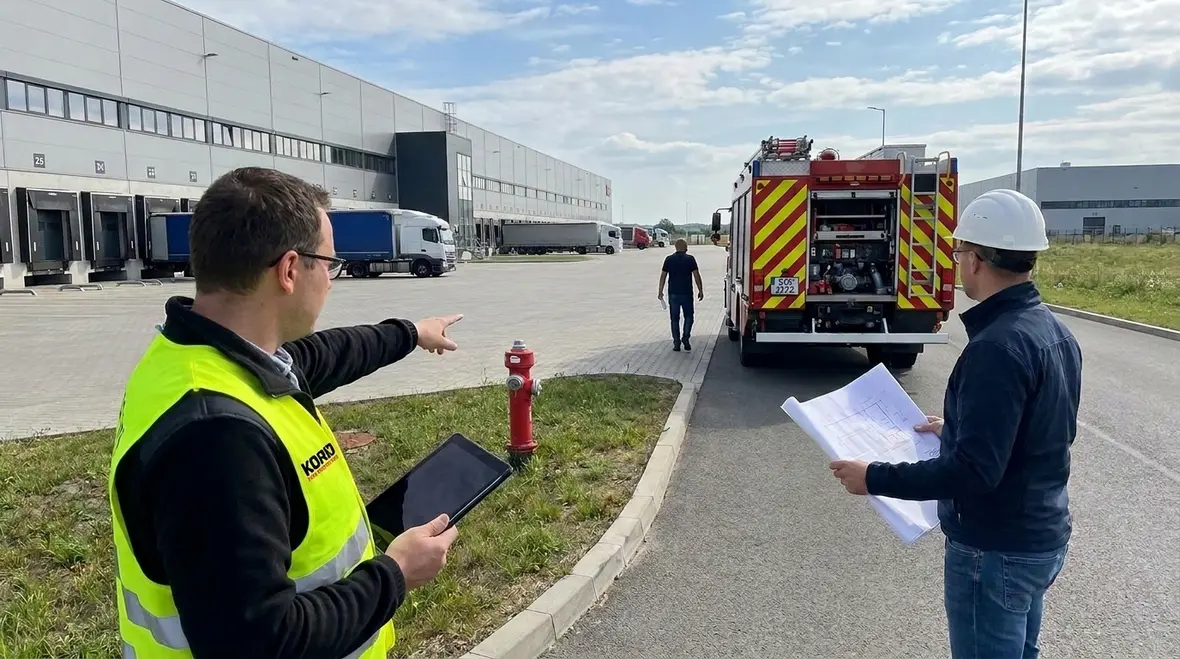
For large industrial sites, warehouses, shopping centres, logistics hubs, and commercial facilities, the review can cover more than just driveways and turning paths. It can also touch on hydrant placement, fire appliance access, sprinkler support systems, and the way the site functions during an emergency. In short, it keeps the fire strategy from becoming a beautiful plan that fails under pressure.
Why early access review matters
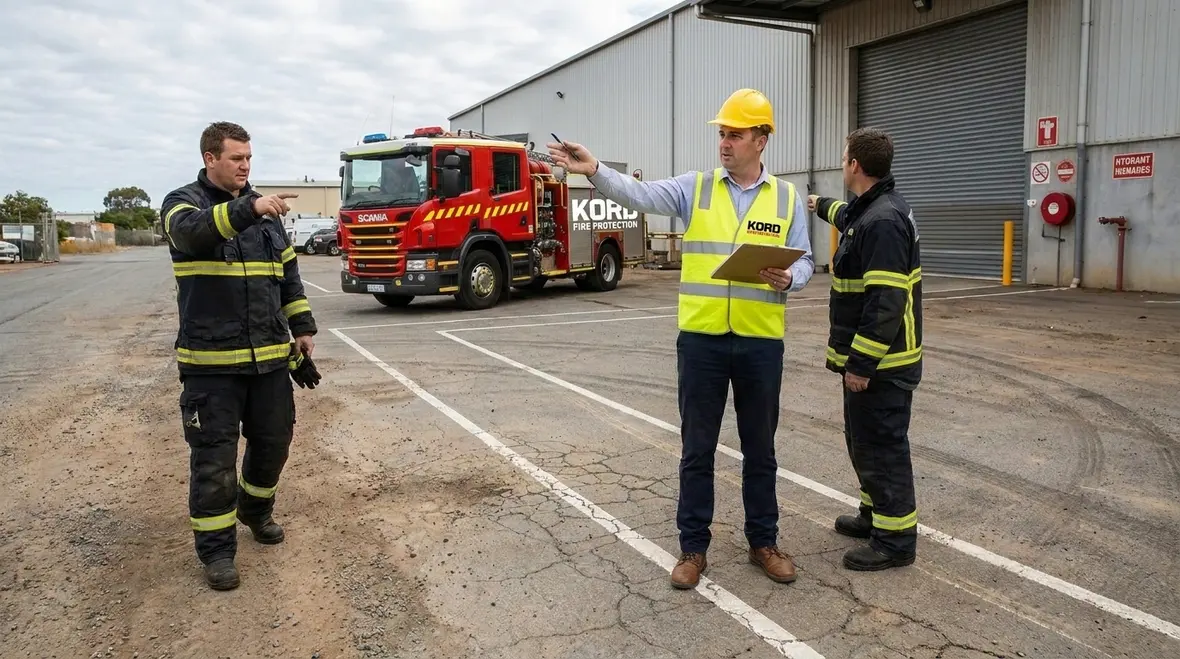
Early review matters because access problems are sneaky. They do not always show up as obvious errors on a drawing. Sometimes they hide inside gate swing conflicts, tight turning radii, loading dock layouts, security barriers, or a neat looking landscape feature that becomes extremely less charming when a fire appliance tries to get around it. A project can look polished in design meetings and still be awkward for emergency operations the moment real wheels hit real pavement.
That is why a disciplined review under this section is more than a paperwork exercise. It gives owners, consultants, builders, and operators a chance to compare intent with function while changes are still manageable. It is much easier to move a line on a plan than a hydrant main, a hardstand, or an entire access road after construction starts spending money like it is trying to win a prize.
How a fire service evaluation review supports compliance
A fire service evaluation review looks at the site from the fire brigade’s point of view. It helps confirm that roads, gates, clearances, and service areas allow emergency crews to move fast and work safely. Because of that, it often becomes a key step in planning and approvals.
When done early, the review reduces back and forth between designers, builders, and authorities. Moreover, it helps the team avoid clashes between fire access needs and other site goals, such as traffic flow, loading, or security fencing. That balance matters, because a site can be secure and still be a nightmare for emergency response if nobody checks the details.
For Australian facilities, the same thinking applies across many sectors. Distribution centres may need truck movement zones that still support fire appliance access. Retail sites may need clear paths around car parks and service yards. Industrial plants may need safe access near process areas without putting crews in harm’s way. The review turns those moving parts into a workable plan.
Common issues an independent review can catch
- Access routes that work for daily traffic but not for emergency vehicle positioning
- Hydrant or service locations that look compliant on paper but create operational headaches on site
- Security gates, bollards, or fencing layouts that slow emergency entry
- Building expansions or tenant changes that accidentally squeeze staging space
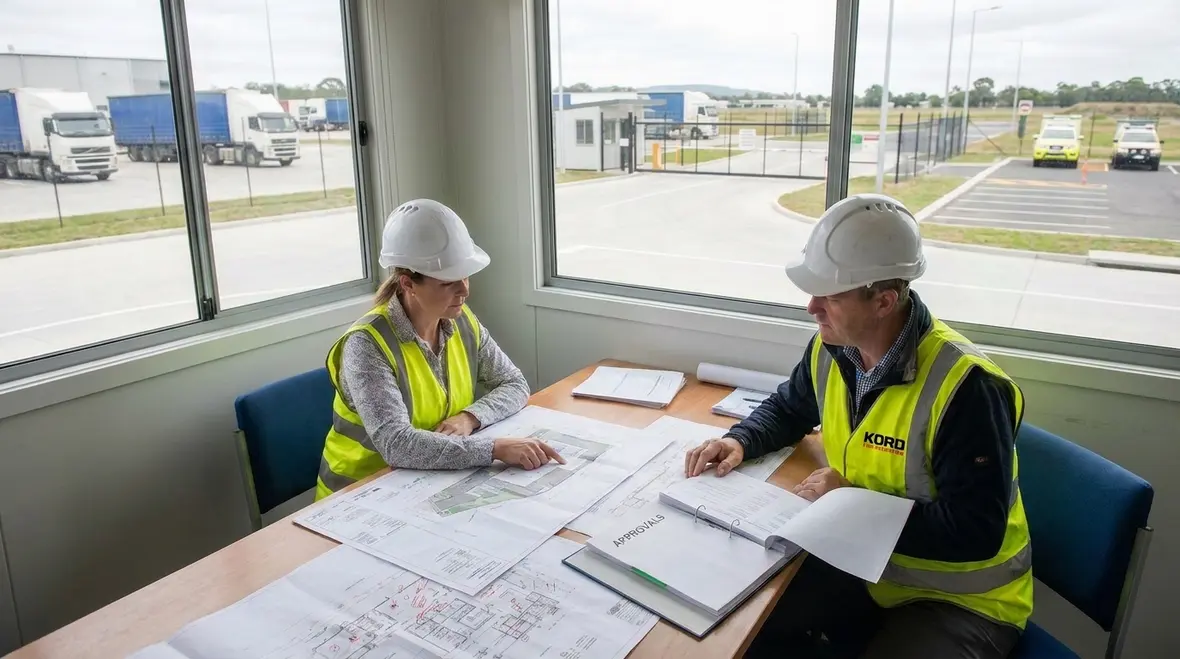
- Drawings that no longer match the latest civil, architectural, or fire protection revisions
Catching those issues early helps protect budgets as much as safety outcomes. It reduces redesign churn, shortens approval drama, and gives the whole team a cleaner story when plans go to review. Nobody enjoys explaining why an emergency route now ends at a decorative island and a very confident hedge.
Where concurrency review NFPA fits in the process
A concurrency review NFPA checks whether the fire protection design and the site development move forward together. In plain language, it asks whether the fire safety features match the site as it is being built, not as someone hoped it would be on a perfect day in a perfect spreadsheet.
This matters because fire protection systems rarely stand alone. They depend on access, water supply, staging space, and clear pathways for response. If one piece changes, the rest may need a fresh look. Therefore, concurrency review helps keep the design in sync with the site works, engineering plans, and authority expectations.
Dual view of the review process
- Design side: confirms the fire safety plan fits the site layout, use, and risk profile
- Operations side: confirms emergency crews can reach, assess, and act without delays
That dual check is useful because it links paperwork to reality. And reality, as every facility manager knows, does not care how neat the drawing looked on page 14.
It also helps during phased construction, tenant changes, and scope adjustments. Those are the moments when a project can slowly drift away from its original fire assumptions. One change to circulation, one equipment relocation, or one revised service yard can trigger a ripple effect through emergency access and system coordination. Concurrency review is the methodical pause that asks, “Does this still work?” before the answer becomes expensive.
Why independent review helps industrial and commercial sites
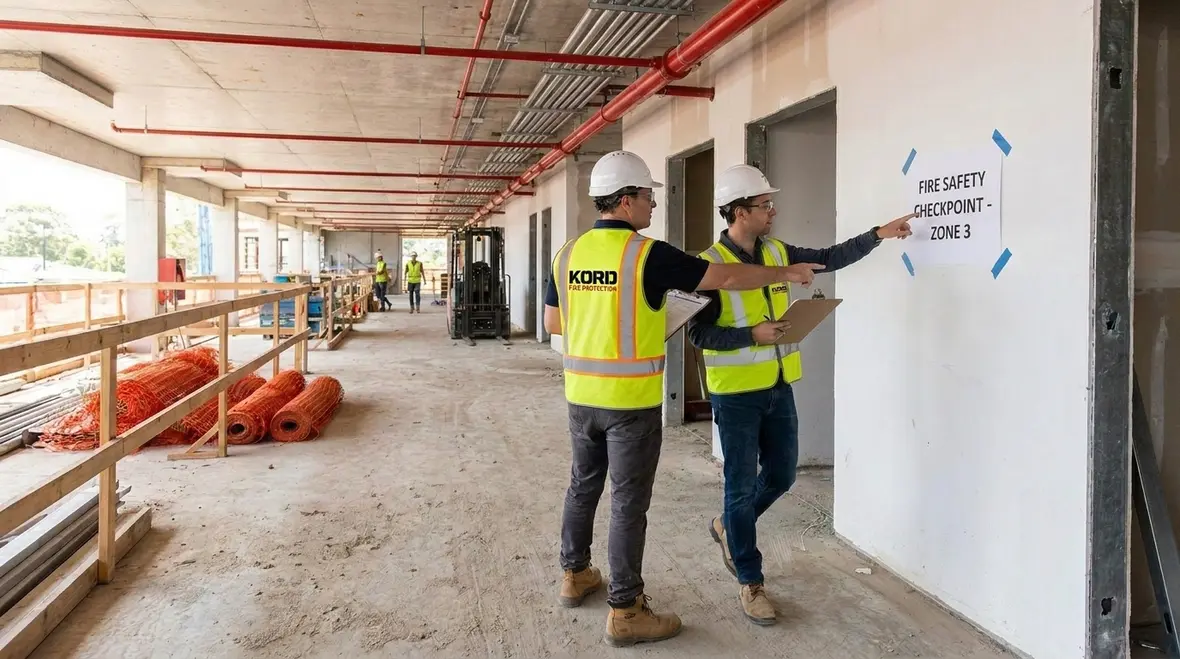
Industrial, retail, and commercial sites often face more moving parts than standard developments. Heavy vehicle access, storage areas, plant rooms, tenant fitouts, and phased construction can all create fire compliance issues. As a result, an independent review becomes a smart risk control tool.
It can identify weak points such as blocked access, poor appliance positioning, or conflicting site levels. It can also catch mismatches between approved drawings and what the site team actually intends to build. In addition, the review can support faster approval by giving authorities a clearer, better structured submission.
For multi site operators across Australia, the value grows even more. A consistent review process helps keep standards aligned from one location to the next. That means fewer surprises, fewer rework cycles, and a much calmer path from design to handover.
Practical value beyond the code language
The real advantage is practical clarity. Independent review gives project teams a shared basis for decision making when competing priorities start elbowing each other for room. Operations wants flow, security wants control, designers want efficiency, and approvals want evidence. Fire access has to live in the middle of all that without turning into the forgotten middle child of the project. A good review keeps the fire strategy visible, understandable, and grounded in how the site will actually be used on a normal day and a very abnormal one.
How kord fire protection becomes a vital partner
kord fire protection can become a vital partner in this work because independent review is not just about checking boxes. It is about understanding how fire safety, access, and site use come together on a live project. When kord fire protection supports a FDSDCE independent review, it can help translate code needs into practical site outcomes.
That support may include reviewing fire service access, checking site layouts, identifying compliance gaps, and helping teams respond before issues reach approval or construction. Moreover, kord fire protection can work alongside designers, builders, and facility managers to keep the fire strategy aligned with real site conditions. That kind of support matters, especially when deadlines are tight and no one wants a redesign ambush three days before sign off.
For complex facilities, this partnership can improve communication between project teams and authorities. It can also reduce risk by making the fire protection approach more complete, more clear, and easier to defend during review.
It also helps to connect this topic with broader code understanding. For teams wanting more context, NFPA 1: a comprehensive guide to fire prevention and safety is a useful related resource because it frames how access, prevention, and site readiness fit into the larger fire code picture instead of living as one lonely clause everyone remembers only when a deadline appears.

Why this service matters across Australia
Across Australia, projects often face different local rules, site constraints, and approval paths. Even so, the core need stays the same: fire service access and emergency response must work in the real world. That is why FDSDCE independent review and related assessment work remain so useful.
Whether the project sits in a warehouse precinct, a retail centre, a manufacturing site, or a mixed commercial estate, the review helps teams avoid gaps that could slow approvals or affect safety. It also gives owners and operators better confidence that the site can support fire response when it counts.
FAQ
Move the project forward with confidence
NFPA 1 Section 15.5 sets a clear expectation: fire service access must work, and it must work early. So, a strong FDSDCE independent review can keep a project compliant, efficient, and ready for approval. For industrial, retail, and commercial sites, kord fire protection can help turn that requirement into a smooth path forward.
When the stakes are high, clear fire review support is not a luxury. It is good business. It protects schedules, supports better site decisions, and gives teams more confidence that their project will work not just during approvals, but when emergency response actually has to happen for real.

Join Our Newsletter!
Get the latest fire safety tips delivered straight to your inbox From our Newsletter.