
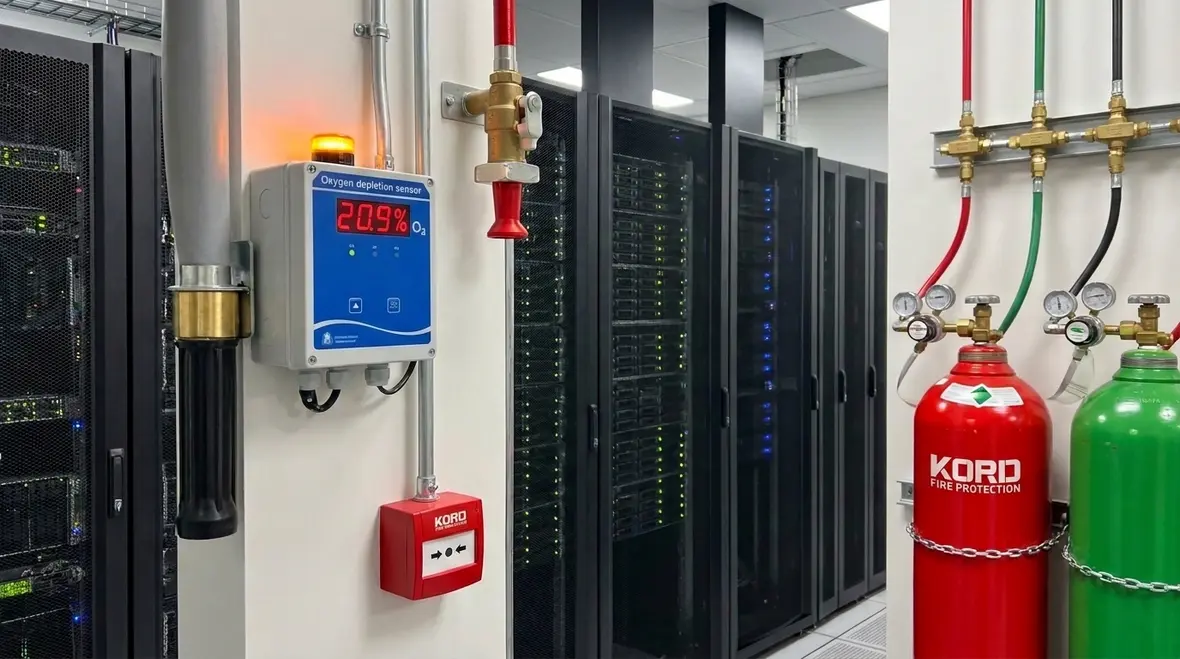
NFPA 2001 Section 5.8 Oxygen Depletion Monitoring for Clean Agents
Quick Answer
NFPA 2001 Section 5.8 requires oxygen depletion monitoring when a clean agent system can reduce breathable oxygen to unsafe levels after discharge. In plain terms, if people may enter or stay in the protected space, monitoring becomes a key safety layer. For Australian industrial, retail, and commercial sites, clean agent fire suppression services from kord fire protection can help assess, install, and maintain the right solution.
NFPA 2001 oxygen depletion monitoring clean agent fire systems protect valuable spaces without water damage, which makes them a favorite for data rooms, switch rooms, archives, and control areas. However, when a clean agent is released, oxygen can drop fast. That is where Section 5.8 steps in, and it does so for a very sensible reason: people need to breathe, even while the fire system is doing its job like a very serious backstage roadie at a rock concert. In Australia, facilities teams often need a clear path from code review to practical installation, and kord fire protection can play a vital role in that process.
What NFPA 2001 Section 5.8 Means in Plain English
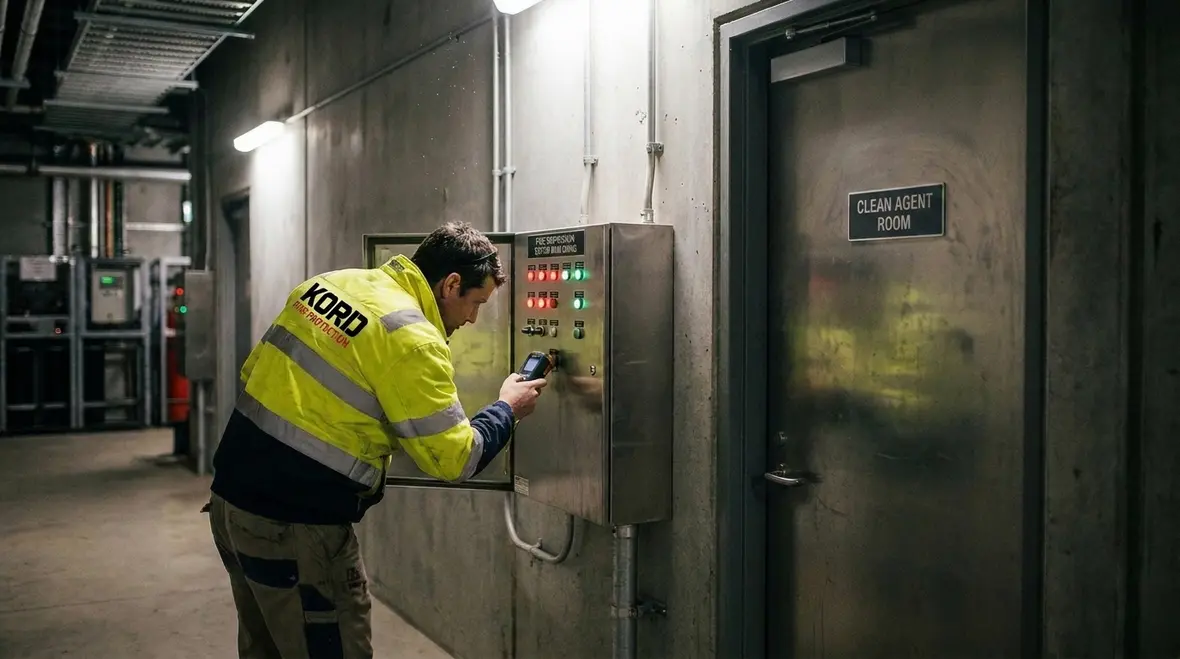
Section 5.8 focuses on post discharge safety. If a clean agent system uses gas that may lower oxygen in an occupied or potentially occupied space, the site must know it. Therefore, oxygen depletion monitoring is required when the hazard and room conditions create a risk of unsafe breathing levels after discharge.
In simpler terms, the system can suppress fire, but it should not trap people in a room that has become unsafe. That would be a bad plot twist, and nobody wants a fire system to act like the villain in a superhero movie. If you want the broader code backdrop, Kord Fire also has a useful resource on NFPA 2001 guidelines for clean agent fire suppression systems.
Why the section exists
The whole point is balance. Clean agent systems are popular because they can stop fire without soaking electronics, records, switchgear, or sensitive controls. That is the good news. The caution is that some agent designs and room conditions can leave a space with less oxygen than people expect. Section 5.8 exists so the fire strategy protects property without quietly creating a breathing hazard after discharge.
When Oxygen Monitoring Is Required
The need for oxygen depletion monitoring depends on how the protected area is used, how the clean agent is stored and discharged, and whether staff may enter during or after activation. It usually becomes necessary when the system can reduce oxygen below accepted safe limits in a space where people may be present.
Common situations that raise the need
- Equipment rooms with regular maintenance access
- Control rooms and switch rooms used during operations
- Archives, labs, and storage spaces where staff may enter soon after discharge
- Enclosed plant areas where ventilation is limited
- Facilities with delayed access control or mixed occupancy
Those examples all share the same problem: people and protected equipment occupy the same story. If the room is entered often, reentered quickly, or has limited natural ventilation, monitoring moves from nice extra to practical necessity. That is especially true when the room is critical enough that someone will want to rush in and check what happened the minute an alarm clears.
Why This Matters for Australian Facilities
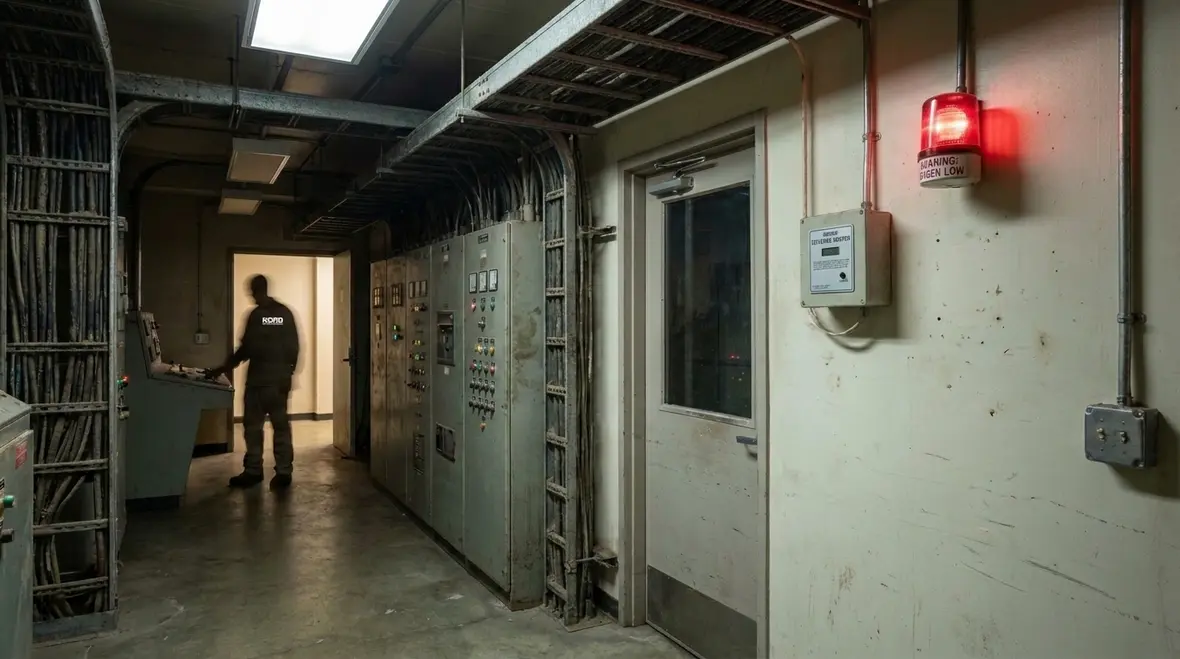
Across Australia, industrial and commercial sites often use clean agent systems to protect critical assets. However, a fire system that protects the building but ignores occupant safety is only doing half the job. As a result, oxygen monitoring supports compliance, safe re entry, and better emergency planning.
It also helps site managers avoid confusion after discharge. If a system activates at 2 a.m., the last thing any team wants is guesswork about whether the space is safe. Clear monitoring gives clear answers, and clear answers save time, stress, and maybe a few grey hairs.
Spaces where this issue shows up most often
The concern tends to show up in data rooms, communications rooms, archives, control spaces, electrical rooms, and plant areas that need clean suppression without water damage. Kord Fire’s resources on data center clean agent fire suppression and related clean agent applications are helpful examples of the kinds of spaces where discharge behavior and re entry planning deserve careful attention.
How a Clean Agent System Works With Monitoring
A clean agent fire system releases a gas based suppression agent to remove heat or interrupt combustion. Meanwhile, oxygen depletion monitoring checks whether the air in the protected room remains safe enough for people. When both work together, the site gains fire protection and a life safety layer.
Typical workflow
- Detection devices identify a fire condition
- The clean agent discharges into the protected space
- Oxygen levels are checked after release
- Warning signals guide safe entry decisions
- The site follows a re entry and ventilation process
That sequence sounds simple on paper, but it only works well when the sensors, alarms, control logic, room integrity, signage, and staff procedures all agree with each other. Otherwise, the site ends up with a very expensive guessing game. Fire systems should reduce chaos, not add bonus rounds to it.
Where kord fire protection Adds Real Value
kord fire protection can become a vital partner because this work needs more than parts and wiring. It needs code knowledge, site review, and practical support from design to maintenance. First, kord fire protection can assess whether a space needs NFPA 2001 oxygen depletion monitoring clean agent fire protection in the first place. Then, the team can help match the monitoring setup to the room layout, occupancy pattern, and risk level.
In addition, kord fire protection can support installation, testing, commissioning, and ongoing service. That matters because a monitoring system only helps when it works on the day it is needed. And that day usually arrives with zero warning, because fire systems have the dramatic timing of a season finale.
If a facility needs a broader look at system planning, Kord Fire also covers related topics in its clean agent standard guide and its overview of fire suppression system design, types and maintenance. Those internal resources fit naturally with a Section 5.8 discussion because oxygen monitoring does not live in isolation. It is part of the whole fire protection strategy.
What Facility Managers Should Check
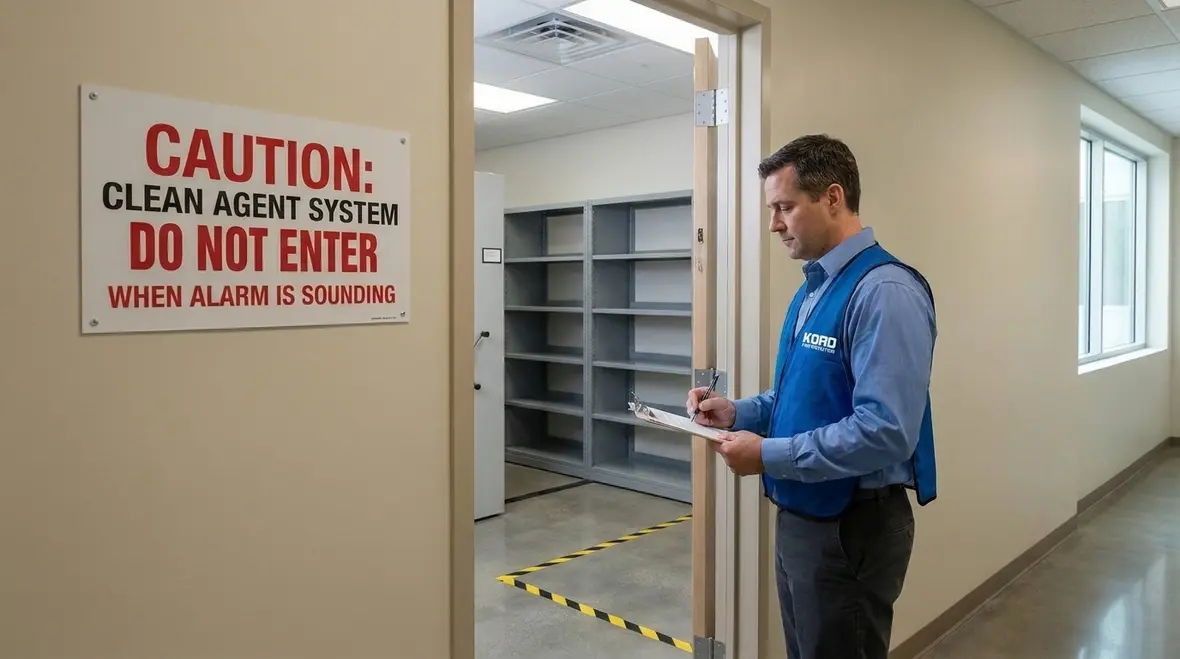
Facility managers should not treat monitoring as an afterthought. Instead, they should review a few practical items early in the project.
Column 1
- Room occupancy and access patterns
- Agent type and discharge impact
- Ventilation and leakage conditions
- Alarm and warning device placement
- Safe re entry procedure
Column 2
- Maintenance schedules and testing needs
- Local code and AHJ requirements
- Staff training and response steps
- Integration with building systems
- Signage for post discharge safety
What good review looks like
A solid review asks a few plain questions. Who might be in the room during normal work. Who might rush in after an alarm. How fast does the room ventilate. What do the alarms actually tell people to do. Can contractors, cleaners, operators, and night staff all understand the signals without needing a decoder ring. The answers shape whether the monitoring plan is merely compliant on paper or genuinely useful when the room goes quiet after discharge.
Common Mistakes That Create Risk
Many sites assume a clean agent system is automatically safe for occupants after discharge. However, that assumption can lead to trouble. Another common mistake is failing to test the monitoring devices with the rest of the fire system. Also, some teams forget to train staff on what the alarms mean and when a room can be re entered.
These problems are avoidable. With proper planning, the system can protect assets without turning the site into a mystery box of safety questions.
Other mistakes worth avoiding
- Treating oxygen monitoring as a separate gadget instead of part of the full life safety sequence
- Ignoring room changes such as new partitions, cable penetrations, or ventilation adjustments
- Placing signs where no one actually looks during an emergency
- Assuming one toolbox talk counts as long term staff training
- Skipping routine service because the room has been quiet for months
Quiet systems can fool people into complacency. Unfortunately, fire protection does not reward optimism without verification. It rewards testing, documentation, and boring consistency, which is not glamorous but does beat explaining avoidable problems after the fact.
FAQ
Conclusion and Next Step
NFPA 2001 oxygen depletion monitoring clean agent fire systems protect property, but they must also protect people. For sites across Australia, the smartest move is early review, proper design, and regular testing. kord fire protection can help turn code requirements into a practical, reliable safety plan.
For facilities that want peace of mind with no drama and no guesswork, that is a partner worth calling. The result is not just a system that discharges when needed, but a site that knows exactly what to do before, during, and after the event.

Join Our Newsletter!
Get the latest fire safety tips delivered straight to your inbox From our Newsletter.



