

NFPA 2001 Section 4.4 Clean Agent System Marking
Quick Answer: NFPA 2001 Section 4.4 requires clean agent systems to be clearly marked so people can identify the protected area, understand hazards, and respond safely during an emergency. Proper labeling supports compliance, speeds up inspections, and reduces confusion. For facilities that need practical support with clean agent fire suppression services, Kord Fire Protection can help deliver clear, reliable, and practical marking solutions.
NFPA 2001 marking requirements for clean agent fire extinguishing systems matter because they guide how a facility communicates risk, system status, and safety steps. In simple terms, the signs and labels must do their job before anyone starts guessing. That matters in warehouses, shopping centres, plant rooms, server spaces, and busy commercial buildings where seconds count and mistakes spread fast. With NFPA 2001 marking requirements clean agent fire extinguishing systems, the goal is not decoration. It is clear communication, strong compliance, and safer action when the alarm sounds.
Proper marking also fits into the bigger picture of system performance. If a protected room is part of a larger strategy involving enclosure retention, discharge timing, and documentation, it helps to review NFPA 2001 guidelines for clean agent fire suppression systems so the labels, equipment, and procedures all make sense together instead of acting like distant cousins at a family reunion.
Proper marking helps teams, contractors, and emergency crews move with confidence. And yes, labels may not look glamorous, but neither does a fire watch at 3 a.m. when nobody can find the right control panel.
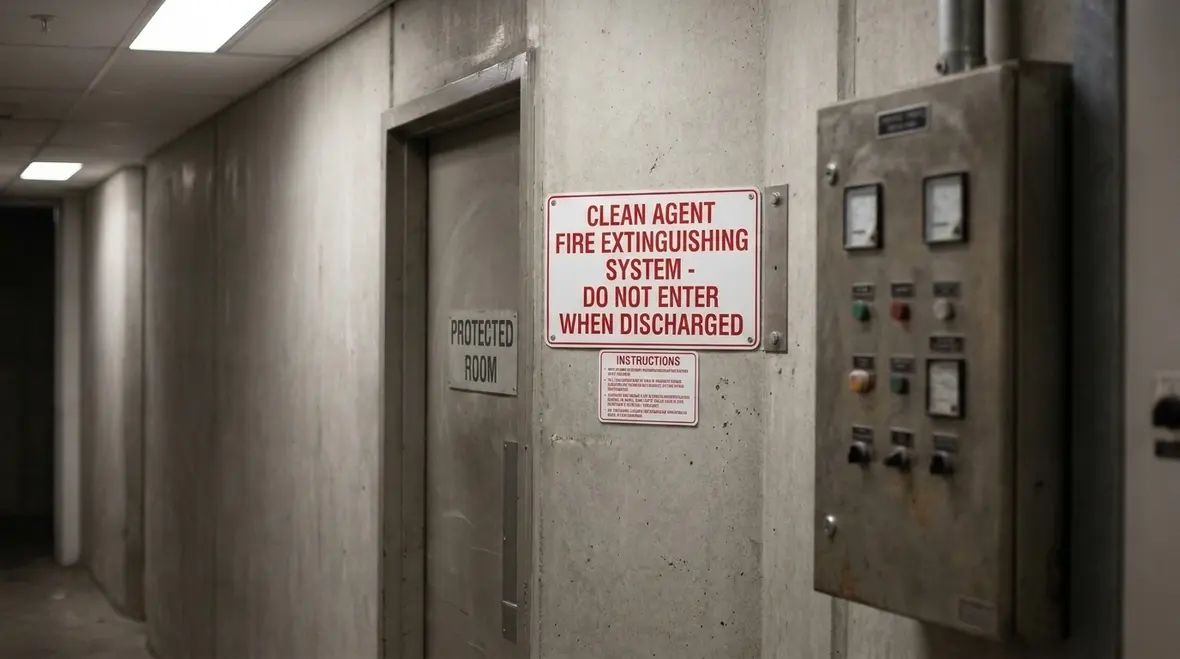
Why marking matters in clean agent systems
Clean agent systems protect valuable equipment and sensitive spaces by releasing an extinguishing agent that puts out fire without leaving mess behind. However, that benefit only works well when the system is clearly identified. Proper marking tells people where protection begins, what the system does, and how to behave if an alarm activates.
In practice, strong labeling supports safer decisions. It also reduces delays during maintenance and emergency response. As a result, staff do not waste time trying to work out whether a room is protected, whether entry is safe, or whether a shutdown is needed. That kind of clarity saves time, and in fire safety, time often acts like the lead character.
Clear information beats panic every time
When alarms sound, people do not stop for a thoughtful seminar on system design. They react. Good signs help shape that reaction before confusion turns into risky behavior. A well-marked protected room can instantly tell staff, visitors, contractors, and responders that special suppression is present and that entry rules matter.
That message matters even more in spaces with sensitive electronics, rotating contractors, or multiple shifts. If the room changes hands three times a day, the labeling needs to carry some of the communication load. Otherwise, the building ends up relying on memory, and memory is not exactly famous for its consistency under pressure.
What NFPA 2001 Section 4.4 expects
NFPA 2001 Section 4.4 focuses on identification and instruction. It requires the system and the protected space to carry the right signs and labels so the purpose and hazard are obvious. The markings should be durable, easy to read, and placed where people will actually see them.
In general, the standard supports labels that show:
- The protected area is covered by a clean agent system
- Entry rules during discharge or alarm conditions
- Any special safety actions for staff or responders
- System controls, valves, and related equipment identification
Just as important, the markings must stay legible over time. A faded sign is not a safety tool. It is wall art with a deadline.

Durability and visibility are part of the job
The best wording in the world does not help if the sign is hidden behind stacked boxes, faded by light, or peeling off a panel like it is trying to resign. Labels need to survive the real environment. That includes dust, routine wear, cleaning, vibration, and the occasional facility change that somehow involves moving everything except the thing that should move.
Visibility matters just as much. Door signs should be seen before someone enters. Equipment labels should be readable before a technician starts tracing piping like a detective in steel-toe boots. The point is simple: the marking has to work in real life, not just on a commissioning checklist.
How to apply clean agent labeling in real facilities
Facility teams should place labels where they support fast recognition. For example, signs near doors, control panels, agent storage areas, and protected room entrances help users understand the system before an event happens. Meanwhile, equipment labels should mark key parts clearly so maintenance teams can inspect and service them without confusion.
The same logic applies across industrial sites, retail centres, and commercial buildings. A server room, a logistics hub, or a major office tower may all need different layouts, yet the need for clear identification stays the same. Therefore, each site should use labels that fit the actual risk, the workflow, and the way people move through the building.
Key marking points
- Protected area signs at each entrance
- Warning labels near discharge zones
- Control panel identification
- Agent cylinder and valve labeling
- Instruction signs for emergency actions
Why they matter
- They tell staff and visitors the room is protected
- They help prevent unsafe entry during alarm or discharge events
- They help technicians find the right components fast
- They support better maintenance accuracy
- They keep emergency response from turning into a guessing contest

Labeling should match the space, not a template
A compact electrical room and a large mission critical area do not communicate risk in the same way, so the signage should not feel copied and pasted from one to the other. The layout, sightlines, occupant habits, and maintenance access all influence where labels belong. Good marking works with the room instead of fighting it.
That is also why updates matter after renovations, tenant changes, or equipment reconfiguration. If the room changes but the labels do not, the system starts telling an outdated story. In safety work, outdated stories are rarely the fun kind.
How inspections stay easier with proper marking
Clear labels make inspections smoother because technicians can verify system parts faster and with less risk of error. Moreover, strong marking helps show that the facility takes compliance seriously. That matters when audits, maintenance visits, or emergency reviews come into play.
Without good markings, even a well designed system can look disorganised. And when safety information looks messy, people start asking extra questions. In a fire system, that is rarely a compliment. Proper labeling keeps the whole setup neat, traceable, and ready for action.
Where Kord Fire Protection adds real value
Kord Fire Protection can become a vital partner for this service because the job is not just about hanging signs. It is about matching the right markings to the right system, space, and compliance need. For industrial, retail, and commercial clients, that kind of support helps reduce risk and keeps projects moving.
Kord Fire Protection can assist with:
- Site checks for existing clean agent system labels
- Advice on placement and visibility
- Upgrades for worn or missing markings
- Support that aligns with NFPA 2001 marking requirements clean agent fire extinguishing systems
- Ongoing help during maintenance, changeovers, or system expansion
That partnership matters because fire protection work often sits at the point where compliance, operations, and safety all meet. When those three line up, the building runs better and the team sleeps easier.
Common mistakes to avoid
Facilities often run into the same problems. First, they place signs where nobody can see them. Second, they use labels that fade, peel, or get blocked by storage racks and plant equipment. Third, they forget to update markings after a system change. Each of these mistakes weakens the value of the whole setup.
Therefore, teams should review markings regularly and treat them as part of the system, not an afterthought. A clean agent system without proper labels is like a superhero without a cape. Technically still useful, but the presentation needs work.
FAQ
Conclusion
Clean agent system marking is a small detail with a big job. It protects people, supports inspections, and keeps emergency response clear. When compliance matters and confusion is not an option, the right label does far more than fill wall space.
Kord Fire Protection can help make sure those markings do their work properly by aligning signage, visibility, and service support with the protected space. That turns a basic label into a real safety asset, which is a pretty good upgrade for something most people only notice when they suddenly need it.

Join Our Newsletter!
Get the latest fire safety tips delivered straight to your inbox From our Newsletter.



