Industrial Fire Extinguisher Placement for Faster Response
Quick Answer: Strategic fire extinguisher placement helps industrial facilities respond fast, reduce fire spread, and meet Australian safety expectations. It also improves inspection outcomes and worker confidence. With the right planning, trained crews can locate the right extinguisher under stress. And yes, that still matters even when the alarms are screaming like a sci fi movie.
For facilities that want placement planning connected to inspections, training, and broader system readiness, Kord Fire Protection’s full fire protection services provide a practical way to tie extinguisher coverage into the bigger life safety picture. Their dedicated fire extinguisher service and certification support also fits naturally into industrial environments where response speed and compliance both matter.
Industrial fire risks demand more than “put one nearby”
Industrial facilities need industrial fire extinguisher placement that makes sense in real life, not just on paper. When equipment, electrical systems, vehicle traffic, and process zones all share the same space, extinguisher locations must support quick access, correct hazard coverage, and safe movement during an emergency. Early action can mean the difference between a small incident and a facility-wide shutdown.
That is where Kord Fire Protection becomes a vital partner. They support facilities with planning, compliance-minded guidance, and practical site awareness so the protection strategy fits the building layout, not the other way around. In other words, the extinguishers don’t just “exist”; they work.
The challenge is simple to describe and surprisingly easy to get wrong. Industrial buildings rarely behave like tidy diagrams. A wall that looks perfect for mounting during a calm inspection may become invisible once pallets stack up, a vehicle parks too close, or a crew is hustling through noise and smoke. Placement has to account for what the site becomes during an actual incident, not just what it looks like at 10:00 on a quiet Tuesday.
Map the site the way firefighters think
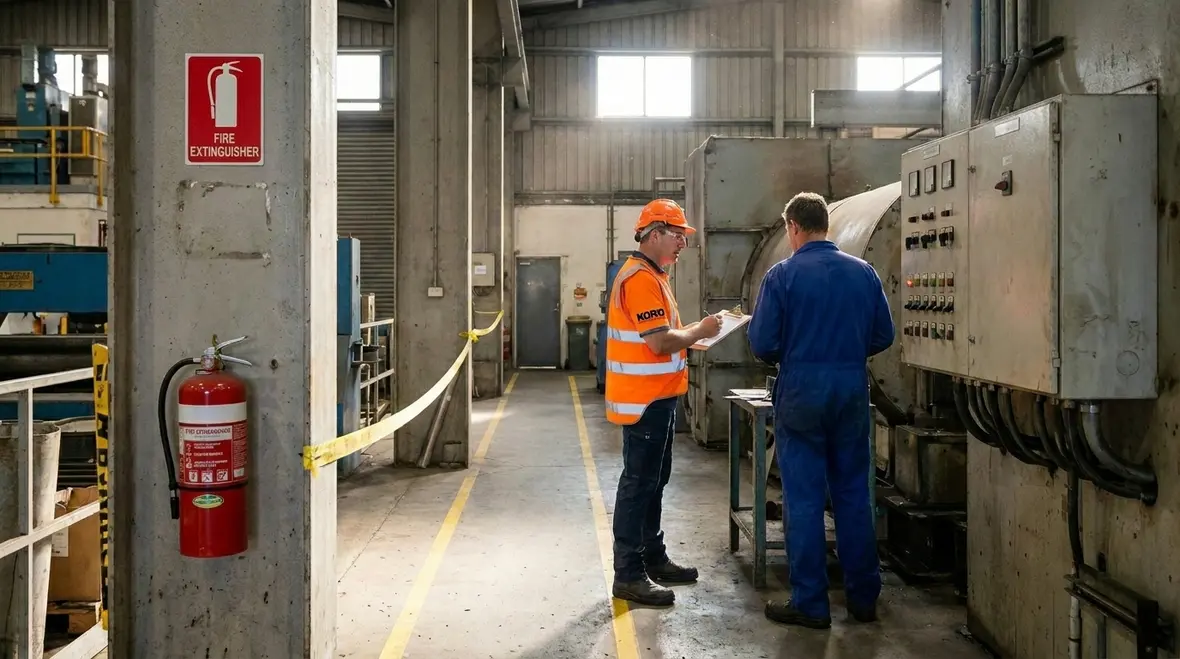
Teams often start by walking the premises and pointing at “obvious spots.” However, strategic placement takes a more deliberate approach. First, they identify hazard zones: loading bays, switch rooms, kitchens, paint areas, machine guarding zones, chemical storage, and places where combustible waste collects. Then they connect each hazard to the right extinguisher type, travel path, and user access point.
Next, they look at human movement. During an emergency, people do not move like robots with perfect posture. They stumble, reroute around blocked aisles, and follow signage that may or may not be obvious in smoke. Therefore, extinguisher placement must support short, clear routes and reduce the need to cross through high-risk areas. If an extinguisher sits behind stacked pallets, it is not “nearby.” It is in witness protection.
Think in zones, routes, and decisions
A strong site map also asks what decision a worker must make in the first few seconds. Can they identify the fire type? Can they reach the correct unit without cutting through danger? Can another person still pass behind them during evacuation? These details sound small until the moment they are not. Placement works best when it supports fast, simple choices under pressure, because nobody becomes a tactical genius just because an alarm went off.
This is also where interlinked planning becomes useful. Kord Fire Protection’s warehouse extinguisher placement guidance reinforces the idea that coverage should follow operational logic, sightlines, and access routes rather than wishful thinking. Even in non-warehouse industrial spaces, that mindset holds up extremely well.
Choose locations around access, not aesthetics
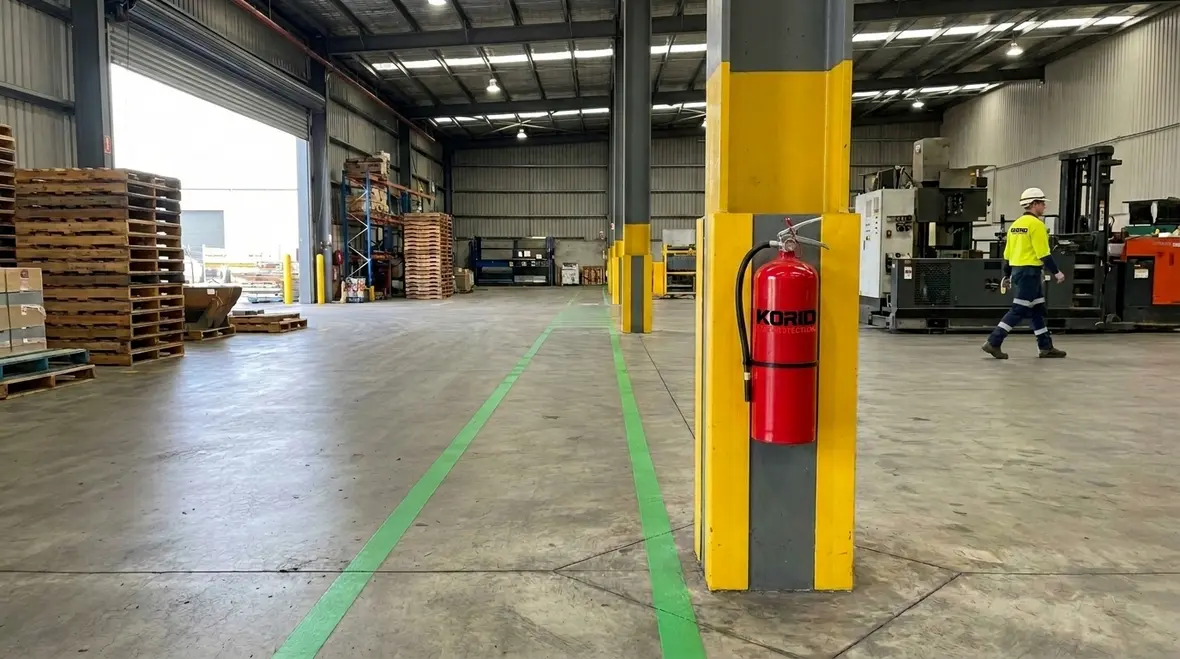
Many facilities place extinguishers where they look neat on a wall. Unfortunately, neatness does not help when someone is moving fast, possibly with gloves on, possibly under stress, and possibly without time to hunt for a device. So facilities should prioritise access and visibility.
Effective placement typically considers these factors:
- Clear approach paths: avoid blocking with shelving, equipment, cords, or storage racks.
- Reasonable viewing: confirm people can spot the extinguisher from where they realistically stand during routine operations.
- Mounted height and protection: ensure the unit stays reachable, protected from damage, and stable in the environment.
- Risk exposure: place units where someone can reach them without passing through the worst of the hazard.
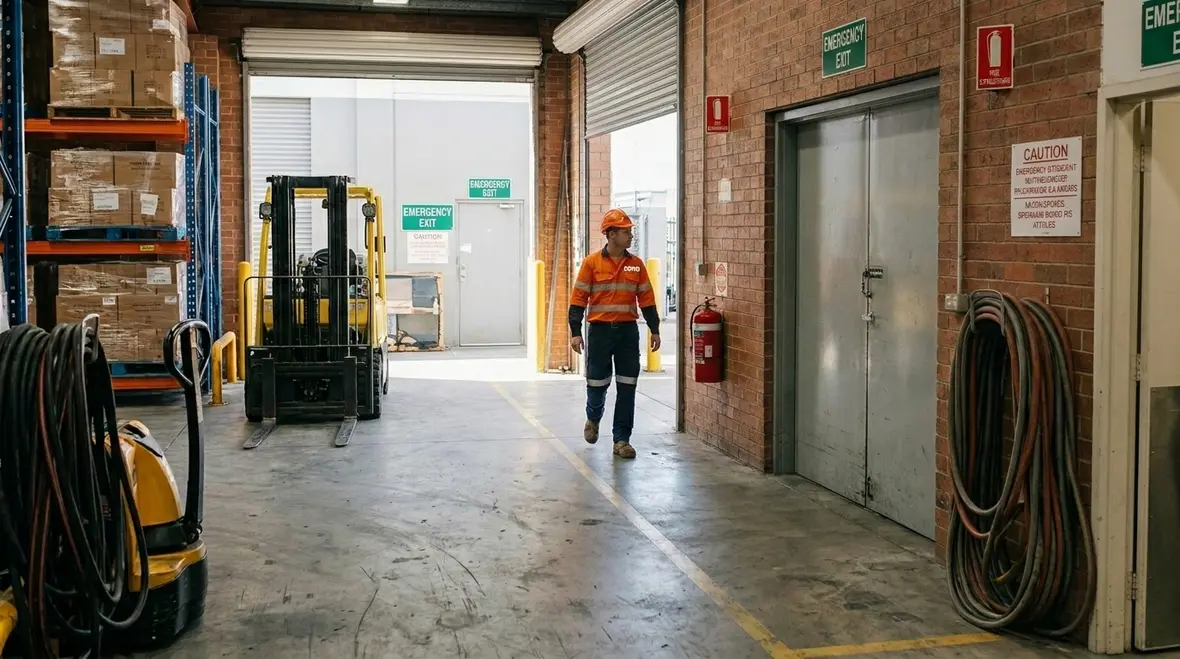
In busy Australian industrial environments, forklifts, conveyors, and dock doors can create “moving obstacles.” As a result, the best locations account for how the site operates across shifts, not only during a calm walkthrough.
Visibility matters just as much as distance. A unit can technically be close enough and still be functionally hidden if signage blends into the background, stock crowds the area, or the wall color swallows contrast. This is why smart placement is rarely a one-person decision. Operations, maintenance, and safety staff each see different blind spots, and those blind spots are exactly where trouble likes to set up camp.
Use fire classes and equipment layout as a placement rule set
Extinguishers are not one-size-fits-all. They must match the fire risk and the likely fuel. For example, electrical hazards require a different response than flammable liquids or ordinary combustibles. Then, in a facility, those hazards appear in different physical arrangements.
Therefore, the placement plan should align extinguishers with equipment layout and activity patterns. A warehouse aisle that runs past packaging materials might need coverage at intervals that match the aisle length and how quickly a worker can reach a unit. Meanwhile, workshops, switchboards, and control rooms often need thoughtful coverage that considers safe access and the likelihood of the fire starting inside equipment areas.
Plus, when facilities use proper industrial fire extinguisher placement, they reduce the temptation to grab the wrong device during the first minute of a fire. That is when people make the most mistakes. They are scared. They are rushing. They are thinking, “Please let this work,” like it is a blockbuster ending. Planning helps turn hope into action.
Match the unit to the task before the task exists
That means looking beyond generic floor coverage and paying attention to the way workstations actually function. Battery charging areas, liquid transfer points, machinery with hot surfaces, and storage for combustible packaging all create different priorities. The right extinguisher in the wrong place is still the wrong answer. Placement should let someone approach, assess, and act without hesitation, not pause for a guessing game with a red cylinder.
Reduce travel time during real emergencies
During an incident, time matters. Smoke reduces visibility, noise raises confusion, and people follow routes that feel instinctive. So facilities should evaluate how long it takes someone to get from a typical working position to an extinguisher, while still staying safe.
They should also consider the way doors open, where partitions block sightlines, and how emergency movement changes during shift changes. For instance, a maintenance area might be clear during the day but cluttered at night. Then the fire risk could occur in that exact window. A placement plan should therefore be reviewed against operational schedules, not only against the building’s static layout.
To support this, Kord Fire Protection can act as a vital partner by helping facilities align extinguisher placement with site realities and operational flows. They bring a practical mindset that moves beyond compliance checklists and toward what workers can actually reach when it counts.
One of the simplest exercises is to stand where a worker normally stands and ask, “What would I reach first?” The answer is often revealing. If the first visible extinguisher is across a traffic lane, behind a door swing, or tucked into a corner that disappears during busy hours, the plan probably needs work. Fast response depends on short travel time, but it also depends on intuitive travel time.
Keep the plan current with inspections and handovers
Placement is not a one-and-done task. Industrial spaces evolve. Racking gets moved. Production lines get reconfigured. New storage appears. Contractors arrive and change access routes. Consequently, a placement plan must keep pace.
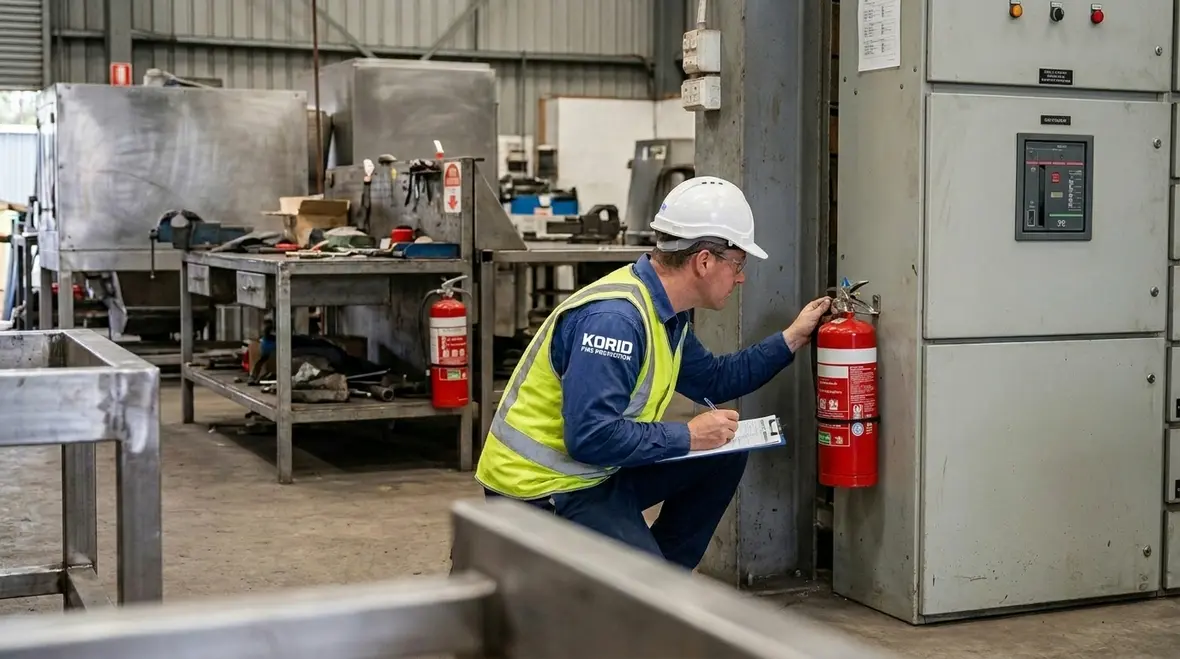
Inspections should check more than pressure gauges and compliance labels. Facilities should also confirm that extinguishers remain accessible, unobstructed, and correctly located relative to risk. If a new pallet lane blocks access, the extinguisher becomes a decorative wall object. And while that might look nice in an office, it does not work during an emergency.
Equally important, handovers matter. When operational teams, safety officers, and contractors change, the knowledge must transfer. Staff should know the extinguisher locations and the basics of why each unit sits where it sits. This prevents the classic “I’ve worked here for years” problem, where experience becomes an excuse to stop checking reality.
Inspection routines should include layout drift
A useful review asks whether anything has drifted since the last check. Has equipment been parked under signage? Has a cabinet become harder to open? Has a route narrowed because storage slowly expanded one pallet at a time? Kord Fire Protection’s annual fire extinguisher inspection guide and its practical advice on fixing blocked extinguisher access both support the idea that readiness depends on access, not just presence.
Coordinate with training and signage for faster action
Even the best layout fails if workers do not understand what to do. Therefore, facilities should pair placement with training that reflects the actual zones on their site. Training should cover which extinguisher types apply to the most likely fire scenarios and how to move safely toward the device.
Signage also plays a role. It should guide people under stress and remain visible in typical lighting conditions. For example, areas near loading docks and plant entrances can have glare or poor contrast. So facilities should verify that signage stays readable when doors open and movement increases.
Here, Kord Fire Protection can support facilities by helping them connect extinguisher location strategy with the practical needs of staff and site leadership across industrial, retail, and commercial environments throughout Australia.
Training also has a confidence effect. People who have physically identified extinguisher locations in their own work zones tend to respond with less hesitation than people who only saw a generic slide deck six months ago. Good signage reinforces memory. Good drills reinforce movement. Good placement reinforces both. When those three line up, the response becomes faster and calmer, which is about as close to a happy ending as fire safety usually gets.

FAQ
Final thoughts on getting placement right
Strategic industrial fire extinguisher placement reduces response time, improves safety, and supports consistent outcomes during inspections. It also aligns protection with how your facility actually runs, not how it looks on a floor plan. When changes happen, the plan should update.
If a facility wants a calmer, smarter approach, Kord Fire Protection can help shape placement and keep it practical. Contact Kord Fire Protection today to review your site and strengthen readiness across Australia.

Join Our Newsletter!
Get the latest fire safety tips delivered straight to your inbox From our Newsletter.