Emergency Fire Pump Power Backup for Outage Readiness
Quick Answer: Backup power keeps fire pumps running when the grid fails by using standby generators, automatic transfer switches, and monitored control systems. When designed and maintained correctly, this emergency fire pump power setup helps meet safety requirements, reduce downtime, and protect people and assets. Partnering with Kord Fire Protection strengthens reliability through proper commissioning and ongoing service.
In industrial sites across Australia, an outage rarely shows up politely. It usually arrives like a plot twist during a movie marathon: sudden, inconvenient, and absolutely not scheduled. That is why emergency fire pump power matters. When the electrical supply drops, fire pumps must continue to deliver water pressure for alarms, sprinklers, and hose systems. However, the difference between a “working” system and a dependable system comes down to engineering choices, testing, and the way the power system is actually managed under stress. This article explains how backup power keeps fire pumps operational during outages, and why Kord Fire Protection can become a vital partner to keep those systems ready when seconds count.
For facilities that want stronger long-term reliability, Kord Fire Protection also offers dedicated fire pump service and support that fits naturally alongside emergency power planning, testing, and maintenance. It is a smart way to treat the pump, controls, and outage response strategy as one connected life safety system instead of a pile of parts that merely happen to live in the same room.
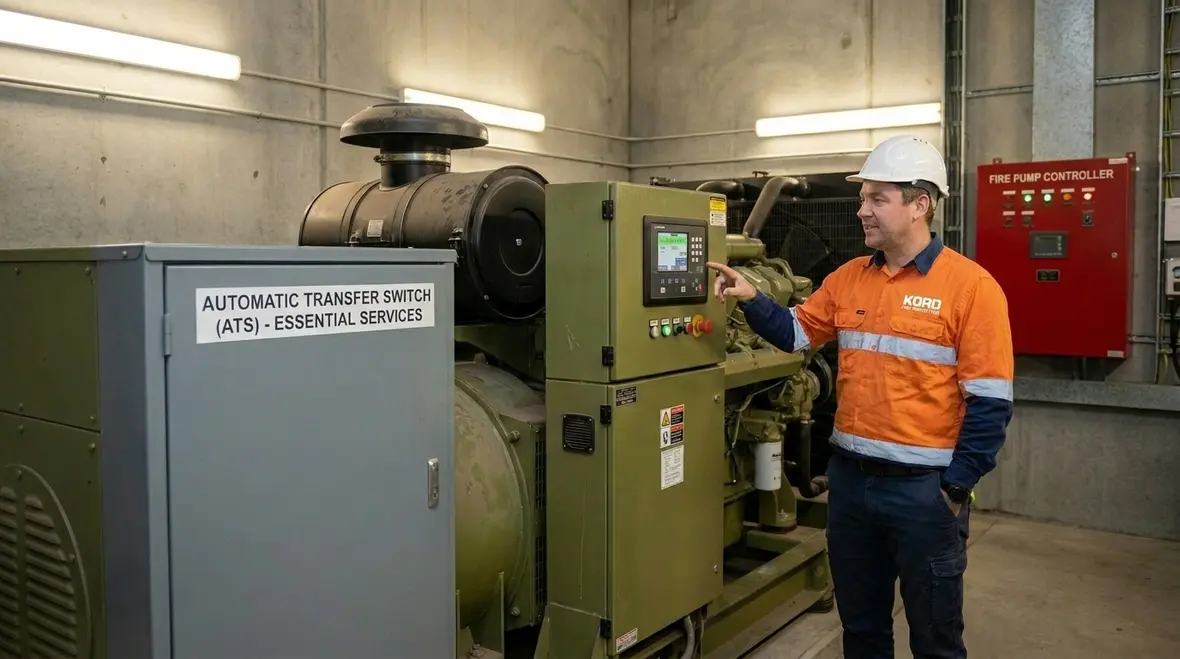
How backup power supports fire pump reliability during outages
Backup power creates a safety bridge between “no grid power” and “fire pump must still run.” First, standby sources such as diesel generators or battery backed systems come online. Then, transfer equipment routes power to the pump controls and motors. After that, the fire pump controller takes over and ensures the pump starts within the required time window. In other words, emergency fire pump power is not just about electricity. It is about coordinated timing.
Also, fire pump systems often rely on more than the motor. Control circuits need stable voltage. Solenoid valves and alarm relays depend on consistent operation. Therefore, the backup design must cover the entire control package, not only the main pump motor. When sites treat it like a simple “power swap,” the system can stumble at the worst moment. And yes, that is the kind of stumble that turns a fire drill into a very expensive lesson.
A dependable design also accounts for what happens in the first few seconds after the outage begins. The utility drops, the automatic transfer switch senses the loss, the standby source starts, voltage stabilizes, and the controller confirms the pump can start without confusion or false trips. If any one of those steps lags, the whole sequence becomes less heroic and more awkward. In a life safety system, awkward is not the vibe anyone wants.
Why power continuity is more than a generator in the corner
People sometimes imagine backup power as a generator parked nearby waiting for its big moment. In reality, the generator is only one member of the cast. The transfer logic, controller behavior, supervision, cabling integrity, and routine testing all determine whether the fire pump actually responds as intended. A shiny generator with poor coordination is a bit like buying a race car and forgetting the steering wheel.
What components make emergency fire pump power work in real time
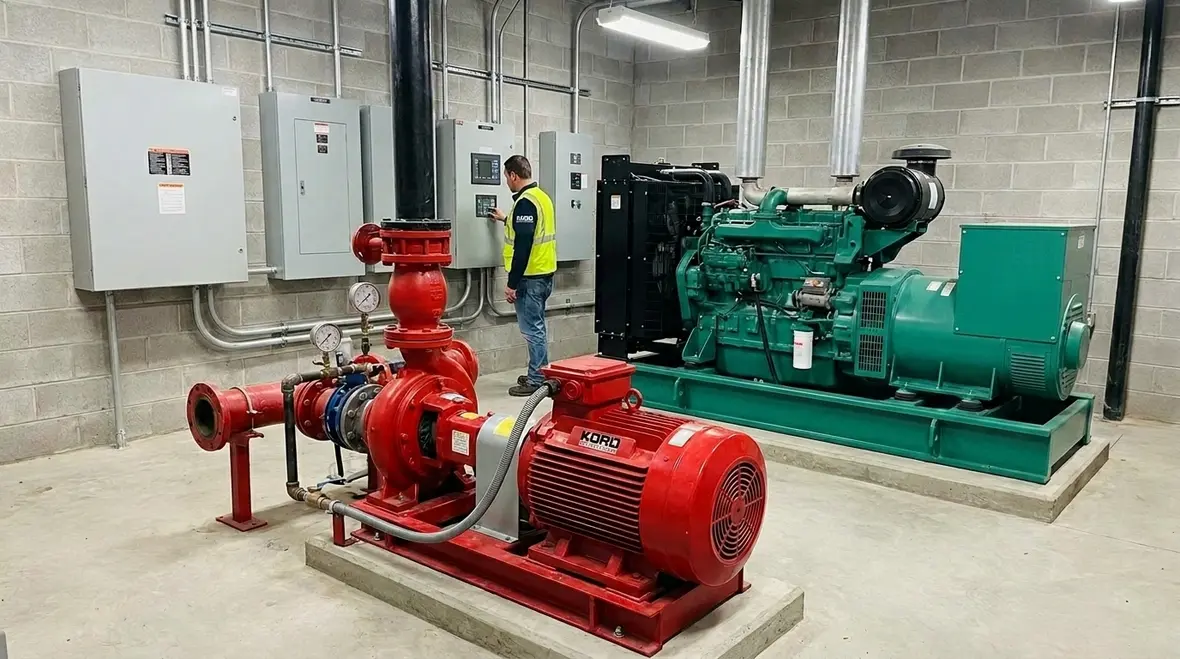
Most operational backup systems include these core elements. And when each piece works as intended, the changeover remains smooth and fast.
- Automatic Transfer Switch (ATS): Detects loss of mains power and switches the fire pump loads to the standby source.
- Standby Generator or Alternative Power Source: Provides current for pump operation, typically with enough capacity for start and run conditions.
- Fire Pump Controller: Manages start logic, detects conditions, and interfaces with alarms and protective features.
- Supervision and Monitoring: Tracks battery chargers, engine health, voltage stability, and controller status.
- Protection and Cabling: Ensures correct protection levels for motors, control circuits, and power distribution.
Because fire pumps start under demand, the system must handle inrush current and starting loads. Furthermore, voltage dips and timing delays can cause starts to fail or repeat. That is why competent design focuses on the generator setpoint, load limits, and the way the ATS sequences the transfer.
It also helps to think about these components as a chain rather than separate products. If the ATS responds perfectly but the controller sees unstable voltage, the start can still fail. If the generator is correctly sized but supervision is weak, a battery charger issue may sit quietly until the worst possible day. Emergency fire pump power succeeds when each link supports the next one, without drama and without last-minute improvisation.
The hidden role of supervision and monitoring
Monitoring rarely gets the spotlight, but it deserves some applause. Supervision helps teams catch charger faults, low fuel conditions, engine alarms, and controller troubles before an actual outage forces the issue. Without it, a facility can walk around feeling very confident right up until the moment the system politely declines to cooperate.
Why sizing and coordination determine whether pumps actually start
Backup power failure often comes down to poor coordination. For example, a generator may run happily on small loads, but fire pump start can be a different world. The motor’s starting characteristics, control power draw, and any connected loads influence generator sizing. In addition, the ATS settings decide how quickly the system transfers and how it handles unstable power conditions.
Facilities that serve industrial, retail, or commercial operations should treat this as a system design exercise, not a one-off equipment purchase. A well sized setup supports reliable start, stable pressure maintenance, and smooth transition of power to the pumps. Then, commissioning proves the system behaves correctly under realistic conditions.
To keep things practical, commissioning should verify that the fire pump starts on simulated mains failure, that alarms behave properly, and that no unexpected interlocks prevent start. Transition planning matters too. After all, when people ask, “Does it work?” they usually mean “Does it work the first time, under stress?”
This is also where interlinking with Kord Fire Protection’s insights on fire pump power supply reliability fits naturally. Strong backup performance depends on more than available electricity. It depends on how the source, switching, and controller logic behave together when the system is asked to perform with zero patience and zero room for confusion.
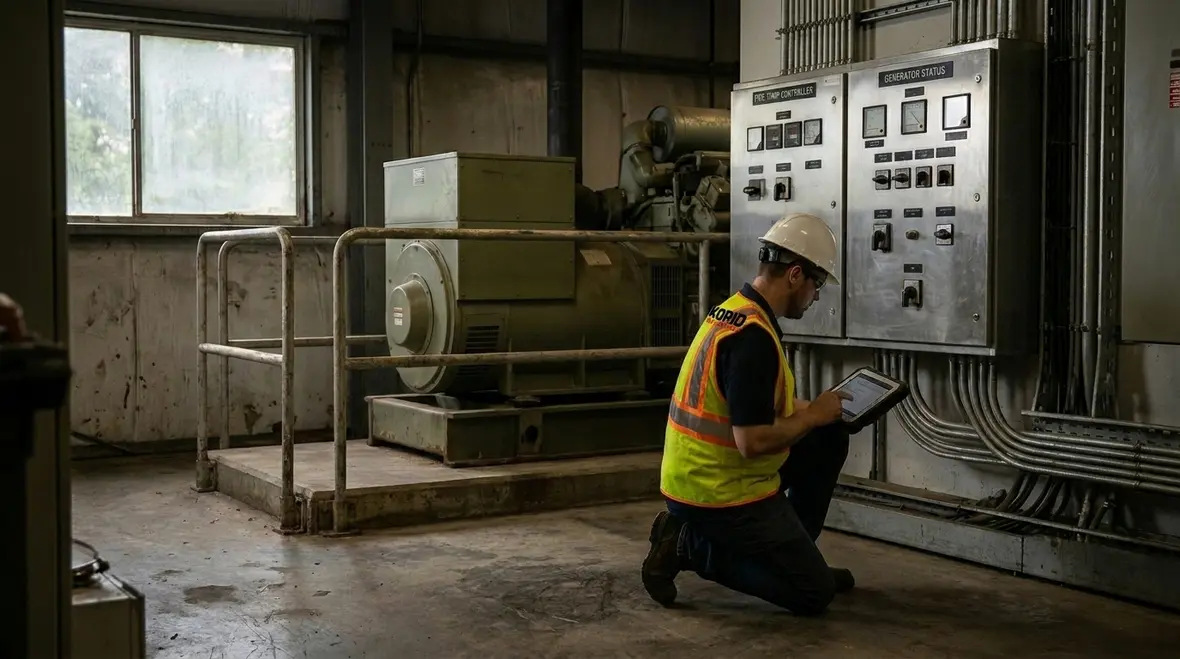
Commissioning separates confidence from guesswork
Commissioning is where assumptions meet reality. Drawings may look tidy, equipment may be properly labeled, and everyone may feel optimistic, but live testing reveals whether the sequence really works. It confirms transfer timing, verifies controller response, checks alarms, and exposes odd little issues that never seem to appear until a team is standing nearby with clipboards and suspicious expressions.
How service and testing keep emergency pump power dependable
Backup power systems degrade quietly when they sit too long without attention. Batteries age. Fuel quality changes. Generator controls can shift. Even good equipment becomes unreliable if maintenance falls behind. Therefore, regular testing and disciplined documentation protect performance.
Effective service typically includes generator load testing, inspection of ATS operation, verification of controller health, and checks of critical wiring connections. Moreover, it includes performance testing that confirms the pump delivers required flow and pressure while on the backup source. This step is what turns a checklist into confidence.
And let us be honest: most people do not get excited about scheduled testing. Yet facilities that handle hazardous operations, high occupancy zones, or valuable stock cannot afford “maybe it will work.” They need evidence. Testing creates that evidence, and it helps keep safety measures aligned with the expectations of authorities and insurers.
Routine checks also reduce the chance that small electrical or mechanical faults snowball into expensive emergencies. A charger issue caught early is manageable. A transfer switch problem discovered during a planned test is inconvenient. The same issue discovered during an actual outage is the sort of plot twist no facility manager wants added to the weekly report.
Where Kord Fire Protection fits as a vital partner
Many facilities already have electricians, mechanical contractors, and maintenance teams. Yet fire pump reliability has its own rules, and it deserves a partner that speaks the language of fire protection systems. Kord Fire Protection can serve as that vital partner by supporting commissioning, inspections, and ongoing service that focus on how the pump system behaves during an outage.
Instead of treating backup power as a separate project, Kord Fire Protection approaches the full job like a single safety system. That means reviewing how controllers interface with power switching, confirming that emergency fire pump power arrangements match the pump requirements, and ensuring that the whole setup stays supervised and compliant. In practice, that reduces the “handover gap” where one team assumes another team covered the details.
Also, when a site changes over time, fire protection systems can become misaligned with new equipment or updated processes. Kord Fire Protection helps sites keep systems current through structured service, practical advice, and documentation that supports audits and operational confidence.
Facilities that want broader lifecycle support can also explore Kord Fire Protection’s full fire protection services for a connected approach to pumps, alarms, suppression, inspections, and ongoing compliance planning. That kind of joined-up support helps prevent the classic safety headache where every vendor knows one chapter of the story, but nobody has read the whole book.
Designing for Australian facilities across industrial and retail settings
Industrial sites often face demanding electrical conditions, including motors, distribution panels, and heavy-duty equipment cycles. Retail and commercial sites might have frequent tenant activity, varied loads, and changes that can affect power pathways. Across Australia, weather and site conditions also influence power system durability and accessibility.
For this reason, emergency fire pump power planning should account for site layout, cable routes, environmental protection for equipment, and the way maintenance crews can access components. Furthermore, it should consider the full operational context. For example, if the facility uses other life safety systems that rely on the same power network, coordination must prevent nuisance failures or overload situations.
When facilities build for real-world conditions, they protect more than the pump motor. They protect the entire response chain, from alarm activation to fire suppression actions. And yes, that is a lot of responsibility. But it is better than explaining to a fire marshal why “the plan was fine on paper.”
Planning for changes after the original installation
One of the biggest challenges is that facilities do not stay frozen in time. Tenants change, production equipment changes, electrical loads change, and access routes change. Emergency fire pump power that worked perfectly on day one still needs periodic review to confirm it remains appropriate for the site as it exists now, not merely as it appeared in a very optimistic design meeting several years ago.
Conclusion: outage readiness depends on performance, not assumptions
Backup power only protects you if it starts the fire pumps when the lights go out. Facilities that want real reliability should plan the whole setup, verify coordination during commissioning, and maintain performance through routine testing. Kord Fire Protection can help your emergency fire pump power arrangement stay supervised, compliant, and dependable across industrial, retail, and commercial sites.
When the goal is not just to own a system but to trust it, the difference comes from disciplined design, realistic testing, and a service partner who understands how every part of the chain behaves under pressure. Contact Kord Fire Protection to review your current setup and strengthen outage readiness before the next unscheduled plot twist arrives.
FAQ

Join Our Newsletter!
Get the latest fire safety tips delivered straight to your inbox From our Newsletter.