History of Fire Extinguishers and Modern Fire Protection
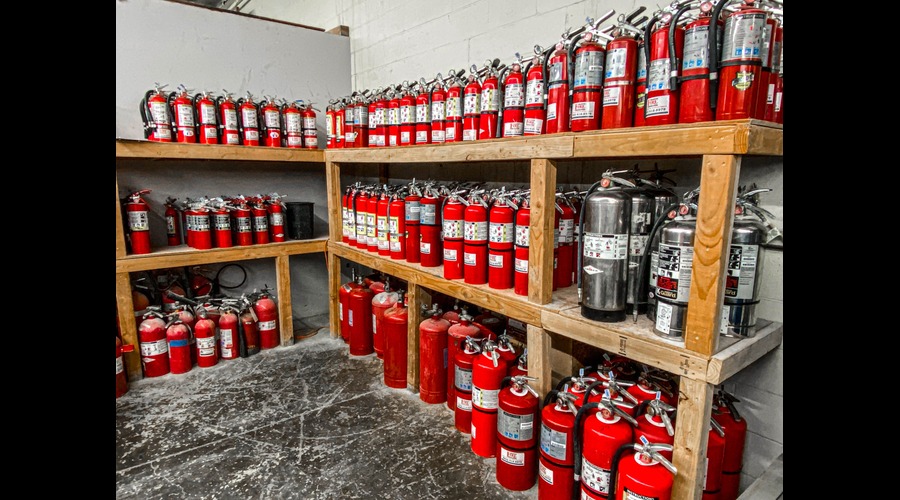
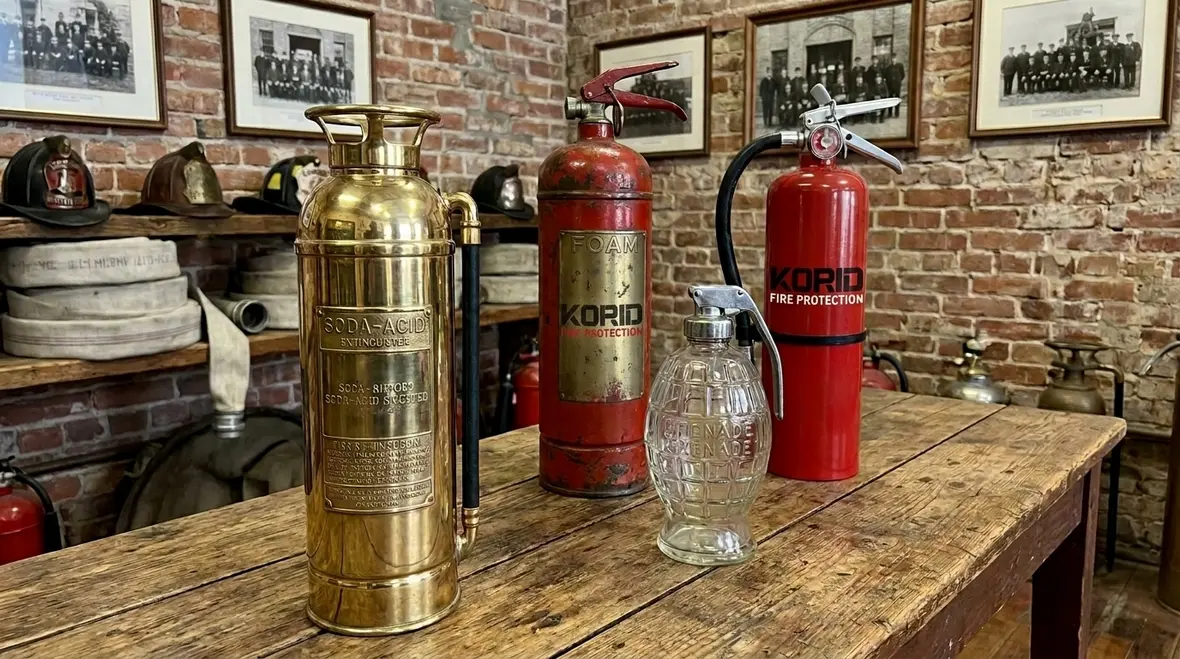
History of Fire Extinguishers goes back farther than most people think, and it tells a story about human stubbornness in the face of fire. Early tools were simple, even a bit clunky, yet they saved lives and businesses long before modern safety standards existed. Over time, inventors learned how different fires behave, how pressure changes performance, and how people actually use equipment under stress. Today, kord fire protection often explain that the best systems are not just “new and shiny,” they are tested, maintained, and matched to real risks. So, while the modern extinguisher feels like a standard part of the workplace, its journey includes experiments, setbacks, and a steady march toward reliability.

How early fire suppression shaped what we use today
Fire suppression started as a practical response to chaos, not as a neat science. Ancient civilizations used water, sand, and blankets, which worked mainly because they either cooled flames or starved them of oxygen. However, people learned the hard way that throwing water at the wrong fire can spread danger. That lesson mattered, because it helped later inventors consider fuel type and fire behavior, not just the presence of smoke.
As cities grew and buildings filled with wood, cloth, and candles, fire risk became a daily concern. Consequently, communities organized bucket brigades and stored basic firefighting supplies. These efforts were brave, but they relied on manpower and speed, which means consistency varied. This is where the idea of portable fire tools began to take shape. Instead of waiting for a crew, someone could grab a device and attack the problem early.
Then came pressure and chemistry, and the entire approach shifted. When inventors could store extinguishing agents under pressure, they could release them quickly and at the right time. That move laid the groundwork for the different extinguisher types that exist now, including those designed for specific hazards.
The long road from buckets to portable response
What makes this early period so important is not that the tools were elegant. They absolutely were not. It is that people slowly realized speed matters just as much as force. The faster a small fire is addressed, the less chance it has to turn a bad afternoon into a historic insurance claim. That basic truth still drives modern fire protection planning, whether the answer is a portable extinguisher, a suppression system, or a full facility inspection program.
The first “real” extinguishers and why they were not magic
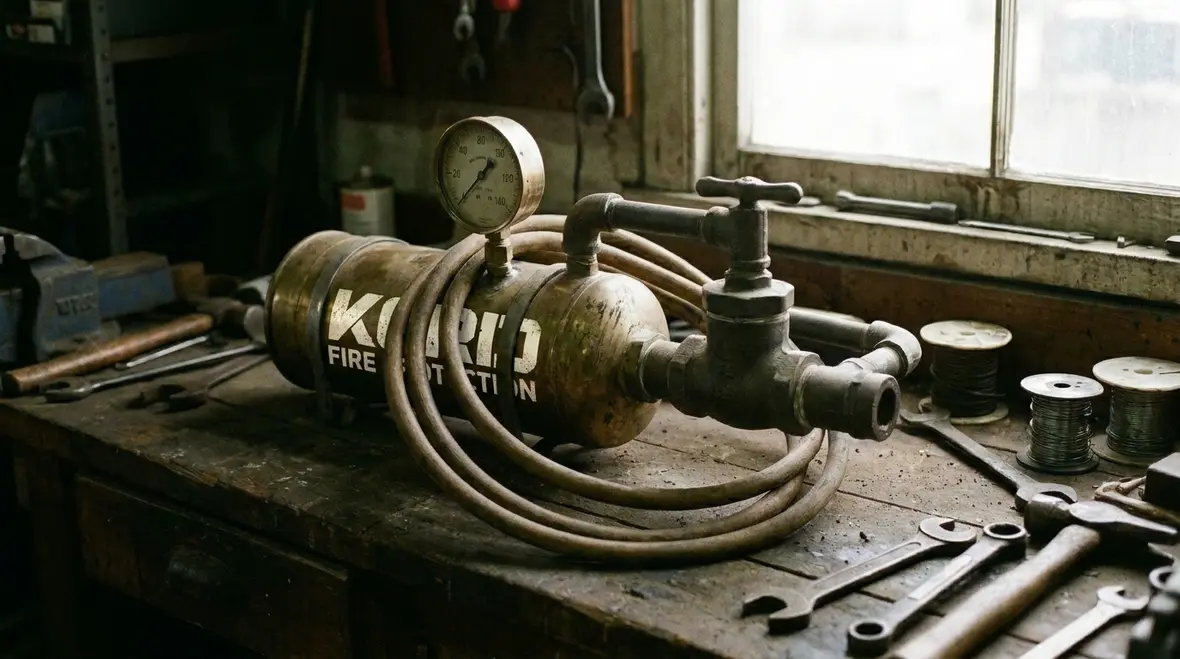
The early commercial devices looked more like lab experiments than workplace tools. Some used compressed gases, some relied on chemical reactions, and many required careful handling. In other words, they did not always work the way people hoped, and when they failed, it was often due to poor maintenance or unclear instructions.
Still, progress happened. Firefighters and inventors tested materials, improved seals, and refined release mechanisms. They also learned that a pressurized stream needs enough momentum to reach the seat of the fire. If the discharge is weak, smoke wins, and humans lose. Yes, that is a little dark, but fire does not negotiate.
At this stage, History of Fire Extinguishers becomes less about one invention and more about a pattern. People observed a problem, tried a solution, and adjusted until the device performed in real conditions. This mindset still guides modern design. Today, kord fire protection technicians stress the same point in training: the best equipment is the one that works when stress hits, not the one that looks impressive in a brochure.
Why reliability beat novelty
That is really the theme of the whole story. A device can be inventive, dramatic, and technically fascinating, but if it fails under pressure, then it belongs in a museum more than a hallway. Reliable operation, clear instructions, and repeatable performance became the standards people actually needed. That shift from clever idea to dependable tool is one of the biggest turning points in fire safety history.
From water to foam: matching the agent to the fire class
As knowledge grew, extinguishers began to reflect the different kinds of fires that occur. Water worked well for many ordinary combustibles, but it did poorly on electrical equipment and could spread burning oils. Therefore, inventors moved toward foam and other agents that could smother flames more safely in certain cases.
Foam changed the game for flammable liquid hazards. Instead of only cooling, foam formed a barrier that reduced vapor release. That meant a fire got less fuel to keep burning. Meanwhile, chemical agents developed to interfere with the combustion process. These advances made extinguishers more versatile, and workplaces could choose based on risk instead of guessing.
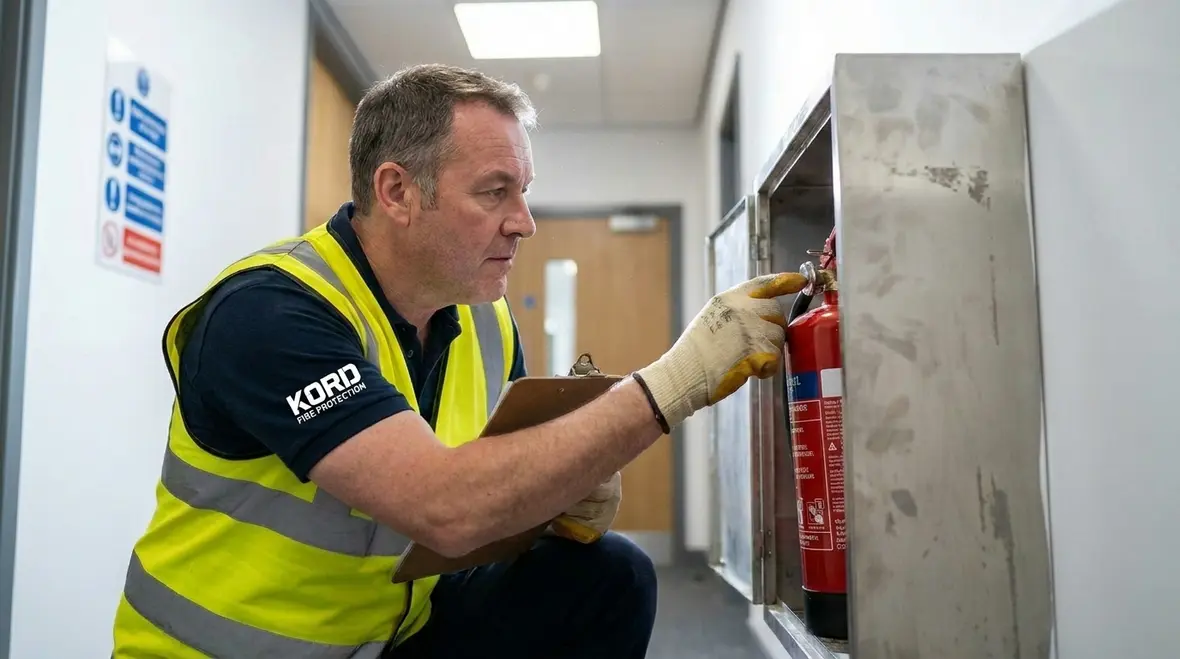
Then came an important operational lesson: a well designed extinguisher is only as effective as the user’s understanding. A person may pull the pin, but if they spray at the wrong angle or from the wrong distance, the fire can bounce right back. That is why training, signage, and inspection matter. In many facilities, kord fire protection technicians also review extinguisher placement and mounting. In their view, the goal is simple: quick access, clear identification, and correct use.
That need for matching equipment to hazard is exactly why businesses benefit from dedicated fire extinguisher training, inspection, testing, and maintenance in Southern California. It is much easier to respond well when the unit on the wall actually makes sense for the fire risk in the room.
Why modern standards moved from “available” to “reliable”
Over time, laws and standards began to define expectations for inspection, maintenance, and performance. Instead of relying on memory, organizations used checklists and schedules. That shift protected the public, because equipment can deteriorate quietly. A gauge can fail, a hose can crack, or a blockage can develop. And no, a fire does not care that the extinguisher “probably works.”
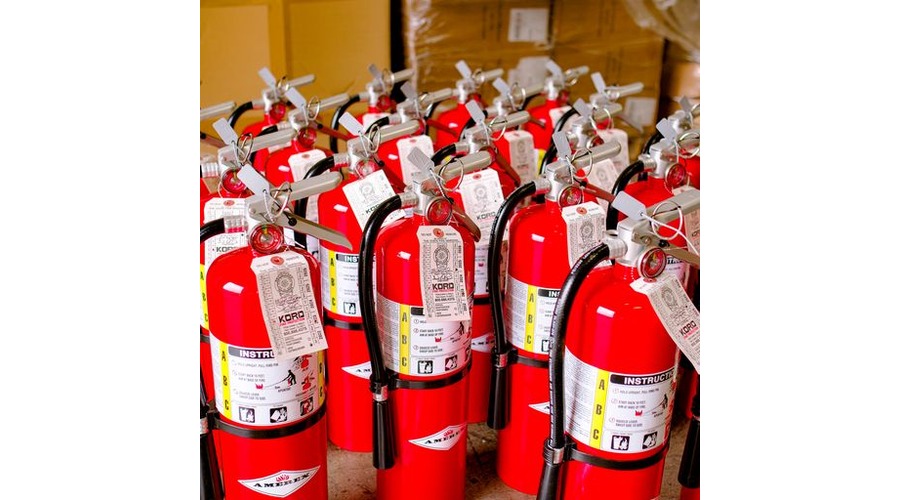
Modern designs use tamper seals, pressure gauges, and durable valves. Even so, routine service stays essential. Inspections confirm that the device is present, unobstructed, and in usable condition. Maintenance checks internal parts and verifies the correct discharge. Some extinguishers also require professional recharge after use, because the agent and pressure levels do not magically refill themselves.
In practice, technicians often connect standards to real outcomes. For example, they may explain how a blocked nozzle reduces reach, and how low pressure can lead to a short discharge. When businesses follow these requirements, their extinguisher becomes a dependable first response, not a “symbol of safety” that only performs during training videos.
Inspection is where theory meets reality
If there is one thing modern fire protection has made painfully clear, it is that untouched equipment is not automatically ready equipment. Kord Fire’s recent guidance on annual fire extinguisher inspection checklists reinforces the same message: readiness lives in the details. A tag, a gauge, a clear path, and a proper service interval may not be glamorous, but they are exactly what turns a wall-mounted cylinder into something useful.
What kord fire protection technicians teach about choosing and using them
When kord fire protection technicians explain extinguisher use, they usually focus on two ideas: correct type and calm action. First, they help people identify the fire class risk in a space. A shop with solvents needs different protection than an office with mostly paper goods. Yet people often install what they can easily order, not what matches the hazard. That mismatch costs time during an emergency.
Second, technicians emphasize simple technique. Many trainings follow a clear approach: keep an exit route behind the person, aim at the base of flames, and sweep steadily. That guidance matters because smoke reduces visibility and confusion increases fast. Humans do not become superheroes during fires. They become stressed animals with decent intentions.
Technicians also discuss location and access. If an extinguisher sits behind equipment, the fastest person still loses precious seconds. Therefore, businesses should mount extinguishers where people can grab them without weaving through obstacles. Additionally, they should label hazards clearly and avoid placing devices where heat or mechanical damage is likely.
Finally, they remind teams that an extinguisher is for small incidents. If the flames grow or the person feels overwhelmed, the best move is to evacuate and call emergency services. That is not cowardice. It is strategy. Fires spread quickly, and strategy beats bravado, every time.
The evolution of extinguisher design and discharge systems
Design improvements did not just add fancy looks. They improved control, visibility, and safety. Modern discharge handles allow smoother activation, and improved hoses support better reach. Some units now feature gauges that help users confirm pressure status at a glance, which reduces guesswork.
Meanwhile, chemistries advanced to provide more targeted suppression while aiming to reduce residue harm when possible. In sensitive environments, companies need agents that limit damage to equipment after the fire. That is where engineering choices matter. For instance, a facility may prefer an agent that reduces cleanup burden while still controlling the flame effectively.
However, history repeats in a new form: even the best discharge system will not perform if a device lacks maintenance. Over time, wear affects valves and seals. Therefore, the lifecycle view becomes critical. Technicians often schedule service before failures occur. That approach keeps businesses ready, and it helps avoid the “it worked last year” myth, which always shows up right before it fails.
Maintenance is part of the design story now
Modern fire protection is not just about what comes out of the nozzle. It is about the full lifecycle around the extinguisher: selection, placement, tagging, inspection, recharge, testing, and replacement when needed. That broader view explains why older “set it and forget it” habits keep fading away. The equipment may be portable, but the safety program around it needs to be deliberate.
FAQ for quick answers on fire extinguisher history and use
Conclusion: make readiness a real plan
The History of Fire Extinguishers shows steady improvement, from basic tools to specialized systems backed by standards. Yet progress only matters if businesses choose the right type, maintain it, and train people to use it calmly. If a facility wants safer outcomes, it should schedule extinguisher inspections and review hazard matching with experienced technicians.
Reach out to kord fire protection technicians to assess current equipment, confirm placements, and align your program with real risks. Explore Fire Extinguisher Service & Certification or review full fire protection services to build a stronger safety plan. When fire shows up, readiness should be automatic, not improvised.

Join Our Newsletter!
Get the latest fire safety tips delivered straight to your inbox From our Newsletter.